 Instalab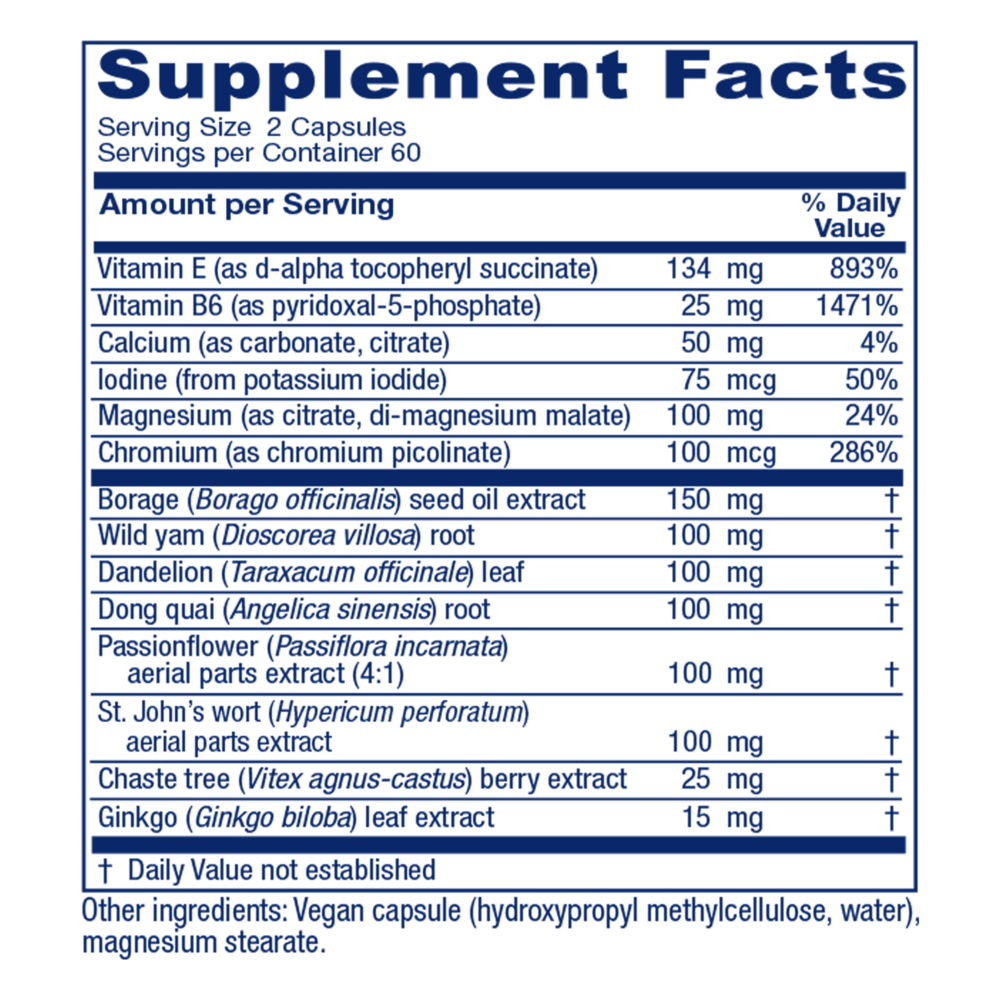
Vitanica
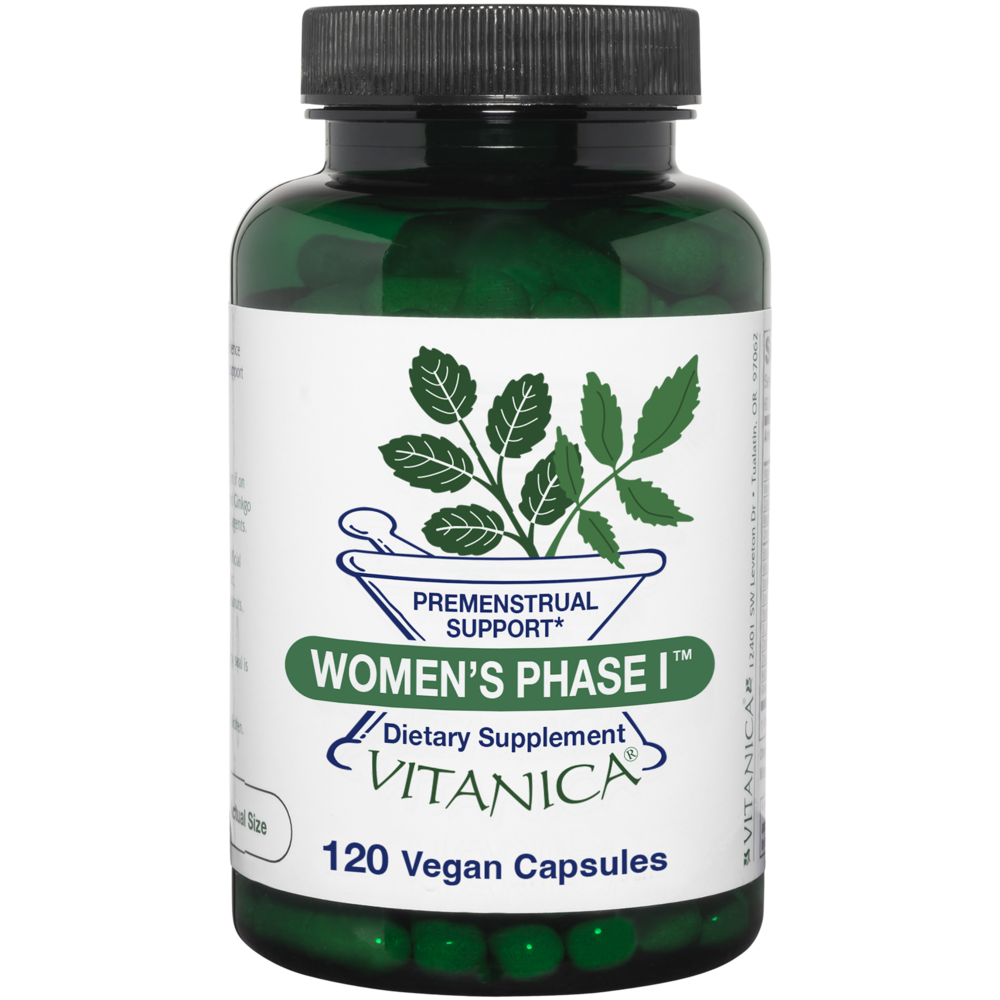
Womens Phase I by Vitanica
120 capsules · 60-day supply
Comprehensive Support for Menstrual Health and Hormonal Balance$36.99
Purchase options
Practitioner-grade brand3rd-party testedFree shipping $50+
Vegan·Vegetarian
Vitanica Womens Phase I overview
If your premenstrual week brings breast tenderness, fluid retention, carb cravings, or low mood, this PMS supplement fits. It’s geared to cyclical symptoms when labs like Prolactin (the hormone tied to breast tenderness) run high-normal, or when thyroid is borderline sluggish on TSH (thyroid-stimulating hormone). Useful for those who want Vitex without separate bottles, and for people whose Ferritin (iron storage) is fine but fatigue is clearly cycle-related rather than anemia.
Vitex (chaste tree) can lower Prolactin via gentle dopamine signaling, easing breast tenderness and irritability. B6 as pyridoxal‑5‑phosphate helps make serotonin and GABA (calming brain messengers), while magnesium citrate-malate supports muscle relaxation and sleep. Borage oil’s GLA shifts prostaglandins (local inflammation signals) toward a less crampy pattern. St. John’s wort addresses low mood, and passionflower adds calm. Dong quai, wild yam, and dandelion have traditional use; evidence is modest, so think of them as supportive rather than primary drivers.
Take two capsules twice daily from mid‑cycle (around day 14) until your period starts, or take two daily consistently. Food helps tolerance. Most people need 2–3 cycles to judge benefit; track symptoms alongside Prolactin if breast pain was the main issue. If thyroid is a concern, check TSH before relying on the small iodine dose here. If cravings dominate, the chromium picolinate may help within 2–4 weeks.
St. John’s wort can reduce the effect of birth control pills and many drugs by speeding liver metabolism, and it can interact with antidepressants, migraine triptans, and certain pain meds, raising serotonin syndrome risk. Ginkgo can increase bleeding with warfarin, newer oral blood thinners, aspirin, or NSAIDs. Vitex may conflict with dopamine-acting drugs. Thyroid disease warrants caution with iodine. Avoid in pregnancy or while breastfeeding.
Frequently asked questions
How long does a PMS supplement like this take to work?
Expect to evaluate over 2–3 cycles. Some notice calmer mood or less breast tenderness in the first cycle, but hormone-related changes typically need more than 4 weeks.
Can I take this PMS supplement with birth control pills?
Not recommended. St. John’s wort can decrease the effectiveness of oral contraceptives by increasing drug breakdown. Choose a non–St. John’s wort formula if you use hormonal birth control.
Is Vitex safe if I have high prolactin?
Vitex can lower prolactin, which is often helpful, but you should first confirm the cause with your clinician. If prolactin is elevated from a pituitary issue, you need medical guidance.
Can I take it with antidepressants like SSRIs or SNRIs?
Avoid combining with St. John’s wort due to serotonin syndrome risk and drug interactions. If you want a PMS supplement while on antidepressants, use a version without St. John’s wort.
Does this help with PMS cravings and bloating?
It can. Magnesium and B6 often reduce fluid retention and tension, while chromium picolinate may steady post-meal glucose swings that drive carb cravings over 2–4 weeks.
Is it better to take this only in the luteal phase or daily?
Both approaches are used. Luteal-phase dosing (mid-cycle to period) targets timing of symptoms. Daily dosing suits those with unpredictable cycles. Consistency matters more than the approach.
Is it safe if I have a thyroid condition?
Use caution and discuss with your clinician. The formula includes iodine from kelp, which can aggravate some thyroid disorders. Check TSH and follow your thyroid plan.
Who should not take this PMS supplement?
Skip it if you’re pregnant or breastfeeding, on warfarin or newer blood thinners, using hormonal contraception, or taking antidepressants, HIV meds, transplant meds, or chemotherapy.
How to take it & ingredients
Suggested use: Two (2) capsules, two (2) times daily from mid-cycle (day 14) until menses OR, two (2) capsules every day.
Active ingredients
2 capsules per serving · 60 servings
Vitamin E
As d-alpha tocopheryl succinate
As d-alpha tocopheryl succinate
200 IU
Vitamin B6
As pyridoxal-5-phosphate
As pyridoxal-5-phosphate
25 mg
Calcium
As citrate-malate
As citrate-malate
50 mg
Iodine
From kelp
From kelp
75 mcg
Magnesium
As citrate-malate
As citrate-malate
100 mg
Chromium
As picolinate
As picolinate
100 mcg
Borage seed oil extract
12.5% GLA, Borage officinalis
12.5% GLA, Borage officinalis
150 mg
Wild Yam root
Dioscorea villosa
Dioscorea villosa
100 mg
Dandelion leaf
Taraxacum officinale
Taraxacum officinale
100 mg
Dong Quai root
Angelica sinensis
Angelica sinensis
100 mg
Passion flower extract
5:5:1, Passiflora incarnata
5:5:1, Passiflora incarnata
100 mg
St. John's Wort tops
Hypericum perforatum
Hypericum perforatum
100 mg
Chaste Tree berry
Vitex agnus castus
Vitex agnus castus
50 mg
Chaste Tree berry extract
.6% aucubin, Vitex agnus castus
.6% aucubin, Vitex agnus castus
25 mg
Ginkgo extract
24% ginkgo flavone glycosides, Ginkgo biloba
24% ginkgo flavone glycosides, Ginkgo biloba
15 mg
Other ingredients: Vegetable cellulose, Water
Certifications
Benefits
Warnings