
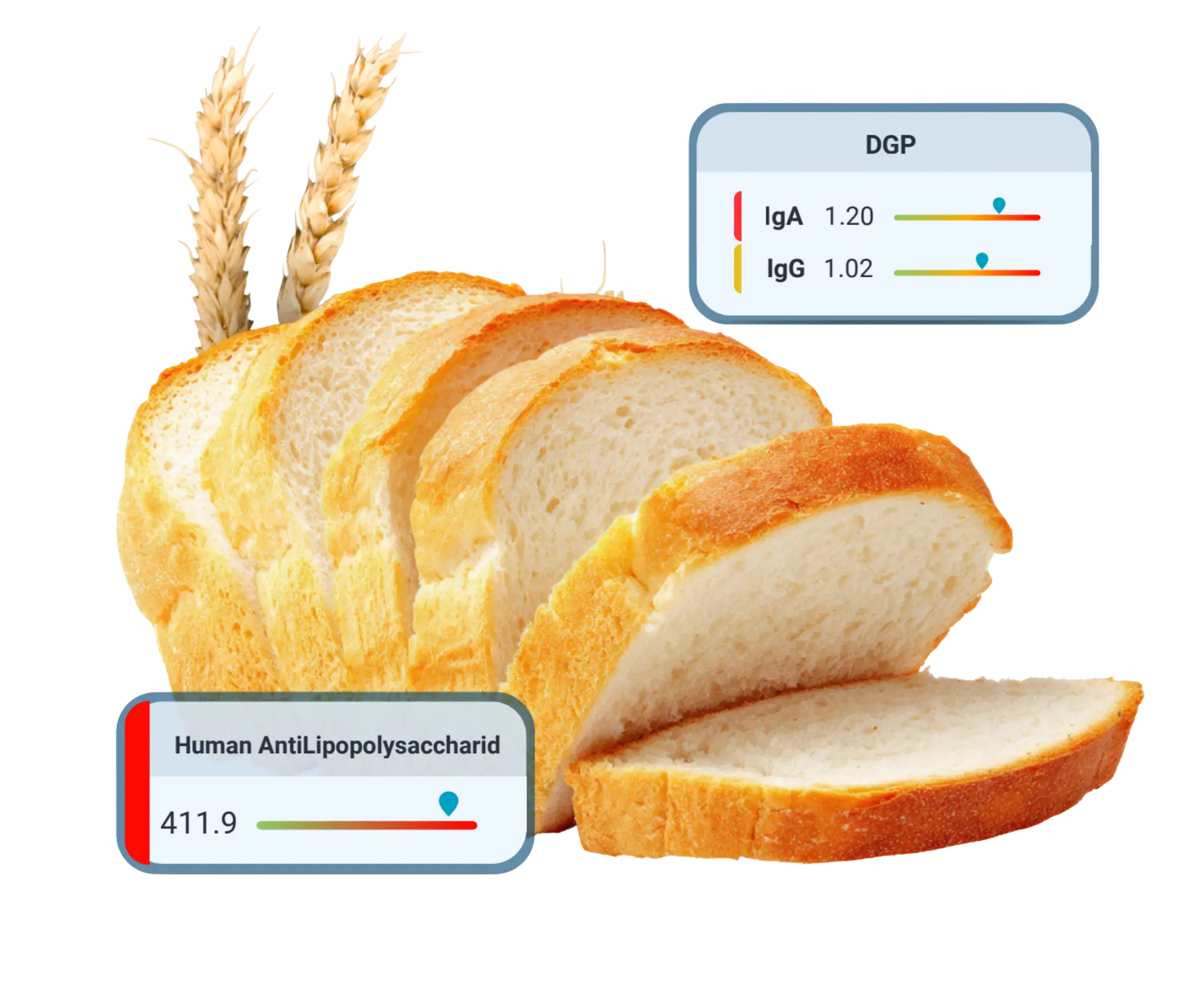

Find out exactly how wheat and gluten are affecting your body
An at-home blood test measuring IgG and IgA antibodies to wheat proteins, gluten peptides, transglutaminases, and gut permeability markers to assess wheat sensitivity, celiac risk, and intestinal barrier health.
How it works


This test is designed for people who
Markers evaluated
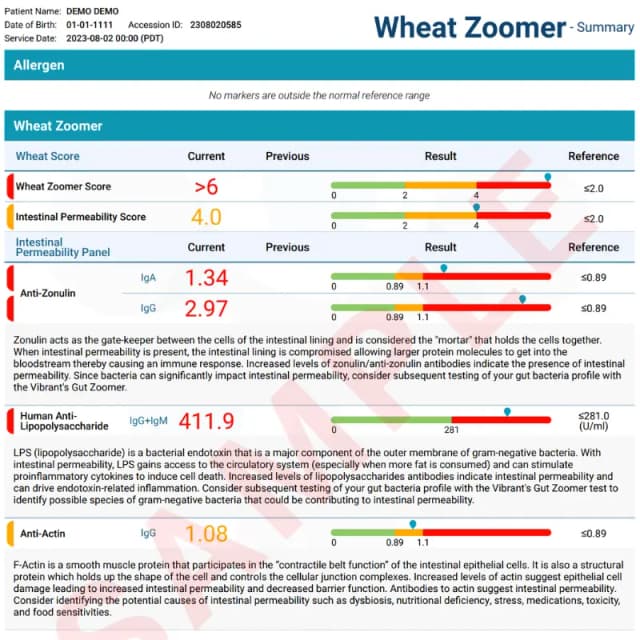
Summary Scores
Unified scores that weight IgE, IgA, and IgG reactivity across all individual antibodies to give an at-a-glance picture of overall wheat sensitivity and intestinal barrier health.
Wheat Allergy (Allergen)
Classic IgE-mediated wheat allergy detection.
Celiac Genetic Typing (HLA)
HLA-DQ2 and HLA-DQ8 isoforms — the genetic prerequisites for developing celiac disease.
Intestinal Permeability Panel
Zonulin and related markers used to assess intestinal barrier function — a key driver of food reactivity and autoimmunity.
Celiac
Deamidated gliadin peptide and tissue transglutaminase 2 — the standard serologic markers for celiac disease.
tTG/DGP Complex
Neoepitope fusion peptide with high specificity for celiac disease.
Gliadin Panel
IgG and IgA reactivity to native gliadin subtypes and gluten-derived opioid peptides.
Glutenin Panel
Antibodies to glutenin storage proteins — linked to baker’s asthma and atopic wheat sensitivity.
Non-Gluten Wheat Panel
Reactivity to wheat components beyond gluten — often missed by standard celiac panels but linked to wheat-driven inflammation.
Wheat Germ Panel
Antibodies to wheat germ agglutinin (WGA), a lectin linked to intestinal permeability and lectin sensitivity.
Transglutaminase Panel
Tissue transglutaminase isoforms tTG-3 (skin/dermatitis herpetiformis) and tTG-6 (neurologic gluten reactivity).