
Can You Actually Lower Your Alzheimer's Risk?
You have more influence over dementia risk than the word prevention usually implies, but less certainty than supplement ads suggest. The best-supported levers are regular exercise, a Mediterranean-style diet or MIND pattern, which blends Mediterranean eating with a blood-pressure-focused diet, treating high blood pressure and other vascular risks, and staying mentally and socially engaged. In older adults at elevated risk, structured programs that combine these habits improve cognitive test scores in randomized trials. What none has yet proven is that any lifestyle plan prevents Alzheimer's disease itself. That gap is honest, and it still leaves a concrete plan worth acting on, especially if your own risk runs high.


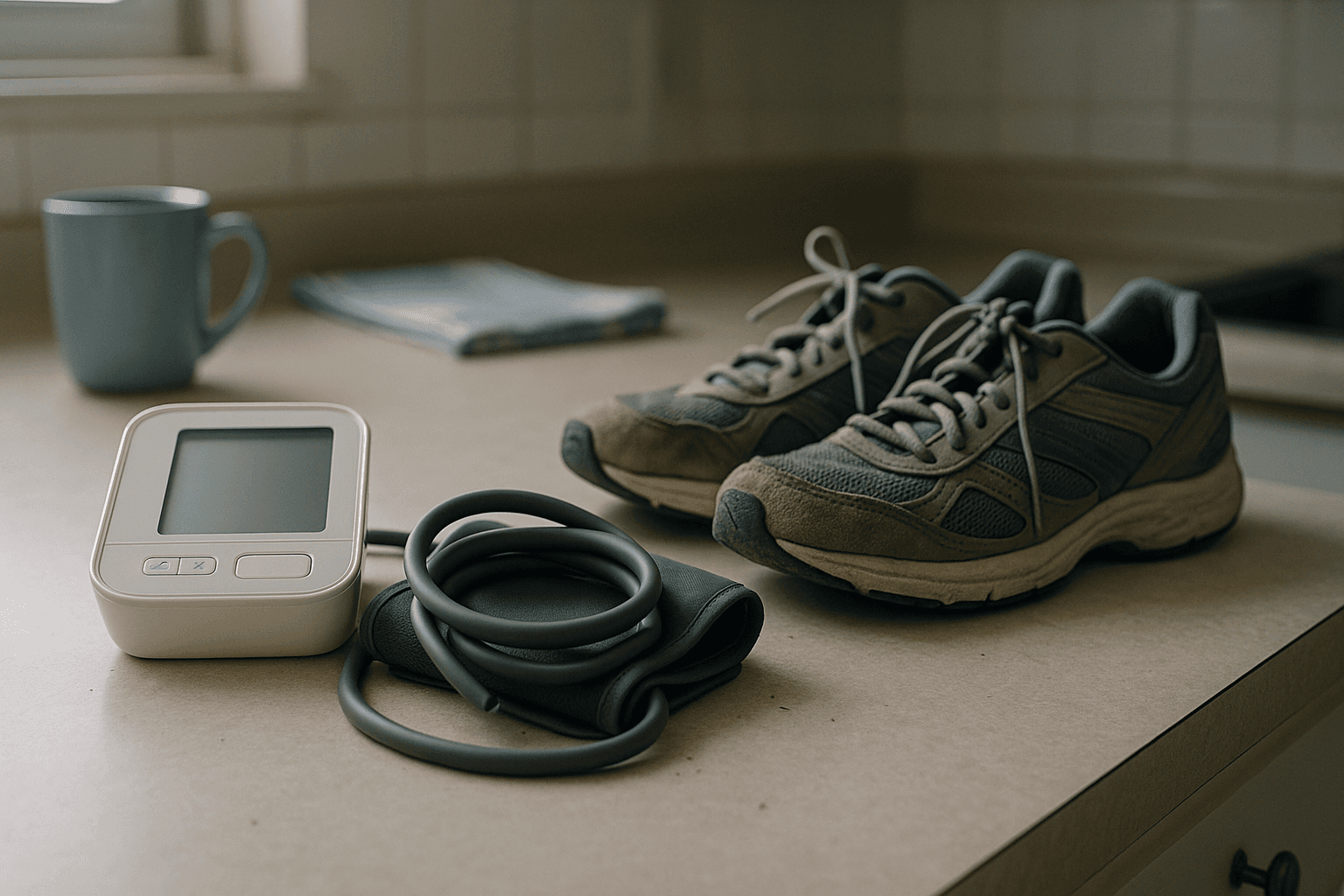
The strongest evidence for lowering Alzheimer's or dementia risk points not to one thing but to a bundle: regular exercise, a Mediterranean-style or MIND eating pattern, which blends Mediterranean eating with a blood-pressure-focused diet, treating high blood pressure and other vascular risks, mental and social engagement, and attention to sleep, hearing, smoking, alcohol, diabetes, and cholesterol where they apply. In older adults at elevated risk, randomized trials show structured versions of this bundle produce modest gains on cognitive tests. What no trial has yet shown is that any lifestyle program prevents Alzheimer's disease itself. Both are true at once, and together they give a clear answer: the plan is worth doing, and it is not a guarantee.
The best trial evidence is a bundle, not a single habit
The landmark trial was FINGER, run in Finland. It tested diet, exercise, cognitive training, and vascular risk monitoring in 1,260 at-risk adults ages 60 to 77 over 2 years. The intervention group did better on a combined cognitive test score than the control group, and a later analysis found the benefit did not vary materially by baseline age, sex, education, cardiovascular risk, or starting cognitive score. FINGER did not prove disease prevention, but it strengthened the case for testing and using the combination rather than treating each habit as a separate bet.
US POINTER, published in 2025, repeated the idea in 2,111 at-risk U.S. adults ages 60 to 79. A structured, higher-intensity program improved overall cognitive test performance more than a self-guided one over 2 years. The catch matters: the endpoint was change in cognitive scores, not fewer Alzheimer's diagnoses. The trial wasn't powered to measure dementia, and there was no true no-intervention group. So it tells you the bundle moves how well an at-risk brain tests, not that it stops the disease.
The signal isn't uniform. Two other large multidomain trials, preDIVA and MAPT, missed their primary targets, although exploratory analyses suggested possible benefit in selected higher-risk groups. A Japanese trial in people with lifestyle-related disease found no difference on its main cognitive outcome over 18 months. Read together, they say the same thing with less certainty than any slogan: the cognitive signal is modest, strongest in people who carry elevated risk, and inconsistent enough that it should not be sold as guaranteed prevention.
The everyday levers, and how much each is really carrying
Physical activity is heavily studied and heavily caveated. In cohort studies, which follow people over time, being active was linked to about 14% lower Alzheimer's risk in a 2022 meta-analysis, a study that pooled results from 58 prior studies. An older, smaller analysis in adults 65 and older put the figure at 39%, though it pooled only 9 studies with a fixed-effect method that can overstate precision when studies differ. The worry is reverse causation: silent early disease may make people move less before any diagnosis. In the Whitehall II cohort, repeated activity measures over 28 years were not associated with dementia. But the same 2022 meta-analysis found the protective signal held even in studies with 20 or more years of follow-up, so reverse causation likely explains part, not all, of it. Exercise is worth doing for the brain and everything else. Just know that some of the apparent protection in short studies may be the disease casting a shadow backward.
Diet tells a similar story. The MIND diet, a Mediterranean-style pattern adjusted to emphasize foods studied for brain health, and Mediterranean diets are linked to lower Alzheimer's risk across cohort studies, with MIND the strongest in one review. But the 604-person randomized MIND trial, run over 3 years in older adults without cognitive impairment and with a family history of dementia, found no cognitive advantage over a comparison diet. The association is strong. The proof of cause isn't there.
Blood pressure has cleaner causal evidence, because it has been tested in randomized trials. In pooled data from 5 placebo-controlled trials covering 28,008 people, blood-pressure-lowering treatment lowered the odds of new dementia by about 13% over a median 4.3 years. Cohort data link midlife high blood pressure to higher later dementia risk. This is the one lever where the story moves from linked to evidence that treatment helps. No single drug class has proved better for the brain, so the point is controlling the pressure with a clinician, not chasing a particular pill.
| Strategy | Best-supported role | What is not proven |
|---|---|---|
| Multidomain lifestyle program | Modestly improves cognitive test trajectories in selected at-risk older adults, including in FINGER and US POINTER | That it prevents Alzheimer's disease or reduces diagnoses |
| Regular physical activity | Associated with lower Alzheimer's and dementia risk in cohort data | Causal prevention; some long-follow-up analyses are null |
| MIND or Mediterranean-style diet | Higher adherence is associated with lower Alzheimer's and dementia risk | Causal prevention; the randomized MIND trial showed no cognitive edge over a comparison diet |
| Blood pressure and vascular risk control | Treating hypertension lowers incident dementia in pooled randomized data; midlife hypertension is a priority risk marker | No drug class shown superior; intensive targets did not significantly lower probable dementia in one major trial |
| Supplements marketed for prevention | None established for prevention; correcting a documented deficiency is different | WHO does not recommend omega-3 fats, B or E vitamins, or multivitamin/mineral supplements for reducing dementia risk without a diagnosed deficiency |
| Anti-amyloid drugs | Treatment of early symptomatic Alzheimer's with confirmed amyloid | No primary-prevention use; risk of amyloid-related imaging abnormalities (ARIA), including brain swelling or bleeding; prevention results pending |
Where the evidence runs out
It's worth being blunt about what doesn't belong in a prevention plan for someone with no symptoms. The anti-amyloid drugs now on the U.S. market, medicines that target amyloid beta plaques in the brain, are lecanemab and donanemab. They are labeled to treat Alzheimer's disease, with treatment started in people who already have mild cognitive impairment, a measurable decline that does not yet meet dementia criteria, or mild dementia, and with amyloid confirmed first. They are not for prevention in healthy adults. Both carry boxed warnings for ARIA: brain swelling and bleeding that can be serious, life-threatening, or fatal. A prevention trial of lecanemab, AHEAD 3-45, is still underway with no posted results as of August 2026. Using these drugs to prevent Alzheimer's isn't supported.
Supplements sold for memory sit in the same box. The FDA warns that many Alzheimer's products marketed as supplements are unapproved, unproven, and may be unsafe or delay real diagnosis and treatment. WHO's 2026 guideline does not recommend B or E vitamins, omega-3 fats, or multivitamin/mineral supplements for reducing dementia risk without a diagnosed deficiency. One Annals of Internal Medicine review found the evidence too thin to recommend any over-the-counter supplement for cognitive protection; a companion review of 51 drug trials found no support for the pharmacologic treatments it studied as cognitive-protection medications in adults with normal cognition or mild cognitive impairment. The evidence does not justify spending money or taking medical risk on these products for prevention.
The honest verdict is hopeful but not absolute. The best-supported part: structured multidomain programs can modestly improve cognitive test trajectories in selected at-risk people, and blood-pressure-lowering treatment lowers new dementia in pooled randomized data. The unproven part: whether those cognitive gains mean fewer people actually get Alzheimer's. That's the finding that would change the answer, a large trial showing a specific plan, drug, or strategy cuts real Alzheimer's cases, not just test scores, with lasting benefit and acceptable safety. Until then, if you carry vascular risk or early cognitive concern, act on the levers that already have evidence behind them, and start sooner rather than later.