
Can Yoga or Pilates Help You Live Longer?
Adults who practiced yoga or Pilates were less likely to die during follow-up in a national study of about 55,000 Americans. That makes both practices serious candidates for longevity research, though it doesn't yet show that starting a class will add years to your life. People who choose these practices may be healthier and more active to begin with. Either one has a good place in your week, as long as the week also covers aerobic exercise and strength work, and the better pick is the one you'll keep doing.


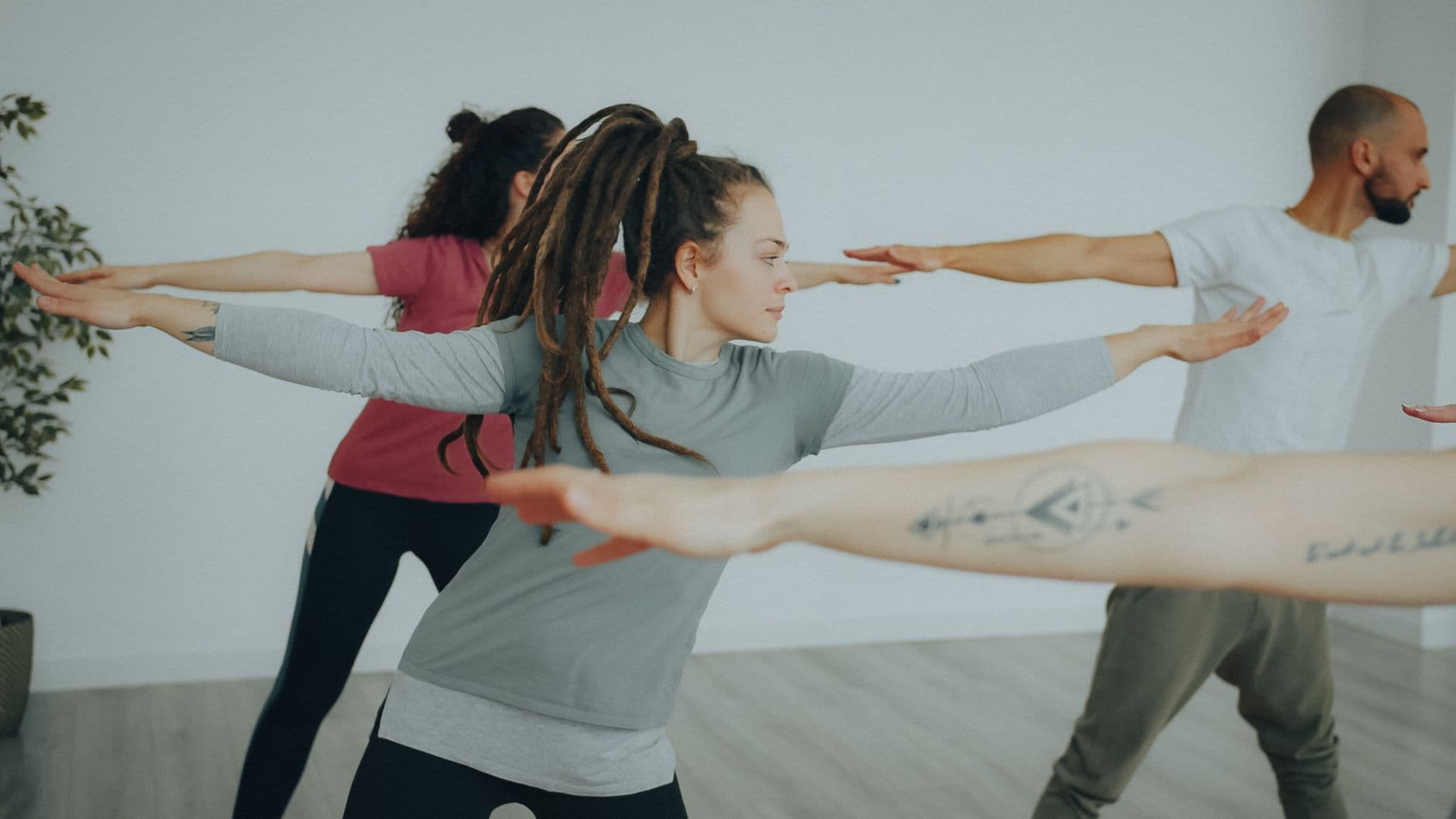
Yoga and Pilates have been studied for pain, stress, and blood pressure. A new analysis in the American Journal of Preventive Medicine asked a bigger question: were the people who did them less likely to die? They were, and the link held after the authors' full statistical adjustment and a correction for testing many practices at once. What the study can't settle is how much of that advantage comes from the practice and how much from the kind of person who signs up for it.
Two movement practices stood out among 21
Connor Sheehan and colleagues pooled answers from the 2007 and 2012 National Health Interview Survey, covering 55,023 US adults, and linked them to death records through 2019. Over that time 5,530 people died. The team looked at 21 complementary practices, and most showed no detectable link with mortality. Yoga and Pilates stood out. Because the authors tested so many practices, they applied a correction that guards against a lucky result turning up by chance. That correction makes the yoga and Pilates signals harder to dismiss as flukes, though it does nothing about the possibility that yoga and Pilates users differ from everyone else in ways the survey didn't capture.
| Practice | Mortality association in the study | What it shows |
|---|---|---|
| Yoga | About 27% lower relative rate of death during follow-up | Users had lower observed mortality, which doesn't prove that yoga extends life |
| Pilates | About 36% lower relative rate of death, with wider uncertainty around the estimate | Users had lower observed mortality, which isn't evidence that Pilates beats yoga |
| Most of the other practices | No detectable link with death | No mortality signal, which says nothing about other benefits such as pain relief |
Broader measures pointed the same way. Each additional practice a person used was linked to slightly lower mortality, and recent users showed a stronger association than people who had only practiced in the past, though the abstract doesn't report a direct test between those two groups. Neither result means that stacking up practices or going to more sessions will lengthen your life. The count measures how many different practices someone reported using, and the authors themselves describe the whole analysis as exploratory.
How much of the gap belongs to the class?
The obvious objection is that people who take Pilates may be more active and more health-conscious in general, and the authors say outright that general physical activity and healthier people choosing these practices remain unresolved explanations. The accessible abstract doesn't give death rates for each practice, the full list of adjustments, or whether early deaths were set aside. That last point matters because serious illness could keep someone out of a yoga class, which alone could make class-goers look longer-lived. The recent-versus-past pattern cuts both ways for the same reason: continued practice might help, or people may stop practicing when they get sick.
Earlier yoga studies were mixed. A 2015 analysis of national NHANES data found that yoga users at first looked far less likely to die, but the link shrank and lost statistical significance once age was taken into account, with only a few hundred yoga practitioners in the sample. A separate 2026 analysis of NHIS data found that adults who met activity guidelines and also did yoga had lower mortality than those who met the guidelines without yoga. That is encouraging, since it tries to separate yoga from overall activity, but its estimate was imprecise, and it draws on some of the same survey waves as the new study, so it isn't fully independent confirmation.
The Pilates estimate suggests a larger association than the yoga estimate, but its uncertainty is wider and the two ranges overlap; the reported percentages don't establish a ranking. A mechanism doesn't settle it either. In pooled randomized trials yoga lowered blood pressure compared with non-exercise controls, without a clear advantage over conventional exercise, but this hasn't been shown to explain why users died less often, and an earlier pooled analysis in people with coronary heart disease found no clear difference in deaths. A later follow-up of a small randomized trial in men after bypass surgery found lower mortality with yoga-based rehabilitation, but that specialized setting doesn't tell you what to expect from routine classes.
Where yoga or Pilates fits in your week
The CDC's adult guidance gives a concrete frame: at least 150 minutes a week of moderate-intensity aerobic activity, or 75 minutes of vigorous activity, or an equivalent mix of the two, plus muscle-strengthening work for all major muscle groups on at least two days. The CDC notes that some yoga postures count toward strengthening, but aerobic credit only comes when the activity reaches moderate or vigorous intensity, which a slow or restorative class usually won't. Pilates gets judged by the same strengthening test: whether it challenges all the major muscle groups enough to strengthen them. You may still need brisk walking, cycling, running, or something similar to cover the aerobic side, and possibly more strength work depending on the style.
The new cohort doesn't establish how many sessions a week would extend life, so frequency comes down to what fits around those aerobic and strength targets. On safety, pooled randomized trials found no clear difference in adverse-event rates between yoga and conventional exercise, though yoga groups had more nonserious adverse events than psychological or educational comparison groups. Pilates trials in people with knee osteoarthritis reported no adverse events, but most didn't report tracking harms systematically, so its safety record is less fully documented.
Yoga and Pilates now have a substantial national mortality association behind them, which gives researchers good reason to keep looking. Whether either one adds years on its own is still open, and the study doesn't identify a winning class. Independent cohorts that measure practice and overall activity repeatedly, report absolute death rates, and account for illness at the start would move the answer, and eventually so would long-term trials comparing these practices with conventional exercise. Until then, a practice you'll keep doing, inside a week that meets the aerobic and strength targets, is a reasonable choice.