
Does Living Near Green Space Lower Your Risk of Dementia?
Older adults in Stockholm whose homes were surrounded by more trees and greenery developed dementia at a lower rate over 16 years. The link was clearest for vegetation closest to home, and it is an association: the study doesn't show that moving or planting more lowers your own risk. The evidence does support using the green space near you as a place to walk, move and unwind. Any additional dementia protection remains uncertain.


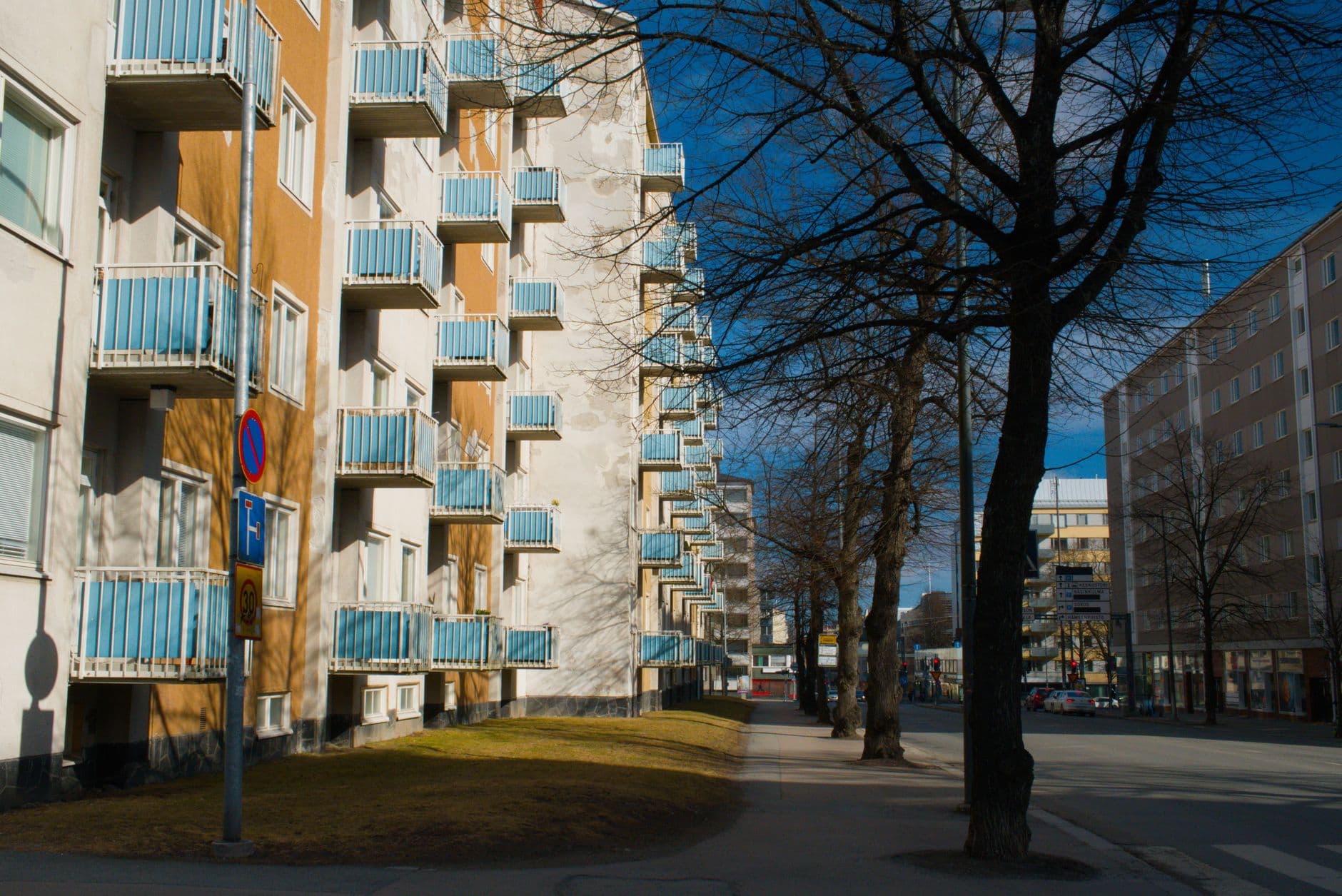
What 16 years of Stockholm data showed
The study drew on SNAC-K, a long-running study of aging in Kungsholmen, a central Stockholm district. Researchers followed 2,993 adults aged 60 and older who had no dementia at the start, and 477 were diagnosed over the 16 years. Diagnoses came from repeated clinical exams reviewed by physicians, plus health registers. Greenery was measured from satellite images each year in circles around each person's home. Each step up in vegetation within 100 meters was linked to a dementia rate about 20% lower. That step is roughly the difference between a home at the less-green end of the typical range and one at the greener end. The result held after accounting for age, education, occupational status, neighborhood income, smoking, physical activity, BMI, air pollution, traffic noise and nearby water.
The idea isn't new, but the earlier evidence was messy. Cohorts in the US, the UK and Australia found some similar associations. Not all of them did: in the US Cardiovascular Health Study, overall greenspace across a wide radius showed no clear link with dementia. A 2026 meta-analysis of greenspace and neurodegenerative diseases rated its evidence as very low certainty, because results disagreed and the underlying studies had serious risks of bias. SNAC-K's contribution is precision. It measured each person's greenery year by year in a tight radius, followed people for a long time, and confirmed diagnoses clinically. That makes it a sharper piece of observational evidence, though on its own it can't establish that greenery causes the lower rate.
The link was strongest right outside the door
The association weakened as the circle around each home widened. The estimates below use greenery averaged over the five years before diagnosis or the end of follow-up.
| Area around home | Estimated dementia rate per step up in greenery | How to read it |
|---|---|---|
| Within 100 m | Lower (the main result) | The one estimate that clearly excluded no association |
| Within 250 m | About 12% lower | Could plausibly be no association |
| Within 500 m | About 6% lower | Could plausibly be no association |
Greenery measured five to ten years earlier showed a weaker pattern that couldn't be told apart from no association, even at 100 meters. None of this sets a protective radius. Satellite greenness captures leaves and grass but not whether anyone spent time among them, so 100 meters isn't a threshold your home needs to meet.
Women accounted for much of the headline. Their dementia rate was about 30% lower per step up in nearby greenery. Men's estimate was small and uncertain enough to be consistent with no association. It's tempting to explain the gap by guessing that women spent more time near home. But the formal test of whether the sexes differed fell short of the conventional bar for statistical significance and cleared only the looser threshold the authors used. The same meta-analysis also found nearly identical associations in men and women. So the sex difference is a lead worth following up, and it gives no basis yet for different advice to women and men. A similar split by APOE-ε4 status also failed its formal test, so your genotype isn't a reason to weigh this decision differently.
Why greenery might matter, and what else could explain it
The authors propose a few pathways. Nature may lower stress and improve sleep, and it invites walking and time outdoors. Vegetation may also buffer air pollution and traffic noise. Adding pollution, noise and nearby water to the model did not meaningfully change the greenspace association, but this was not a direct test of the mechanism. The other pathways are plausible but unproven for this result. In a large Australian study, psychological distress, physical activity, sleep and social support each statistically accounted for only a small share of the link between tree canopy and dementia.
The bigger question is who ends up living on leafy streets. Where people live tracks money, health and habits. The researchers adjusted for education, occupational status and neighborhood income, but adjustment never catches everything. Early, undiagnosed cognitive changes could also shape how people live or whether they move. Some participants dropped out, which the authors addressed with sensitivity analyses. Kungsholmen is an affluent, dense urban district, and the authors say their estimates may apply mainly to similar settings.
One more limit matters for a personal decision. The lower rate describes how often dementia appeared across the cohort over time. It can't be turned into how many percentage points your own risk would drop if you moved or planted trees. The paper didn't report what that calculation requires, and older adults also face competing causes of death.
Using the green space you already have
Other evidence examines outdoor activity alongside residential greenery. A 2025 analysis of UK Biobank participants found that more outdoor physical activity was associated with lower dementia risk. The link was stronger in people with more green space near home. A study of older U.S. adults also tied greener surroundings to lower perceived stress. These findings are observational too, but they point to practical options: a daily walk on a tree-lined route, time in a park, or work in a garden. If you're already weighing a move later in life, trees, grass and parks within a short walk are a reasonable thing to count. The evidence doesn't justify moving specifically to prevent dementia, and it doesn't tell you how much greenery is enough.
Settling the question will take a study that adds greenery and then counts dementia diagnoses. That could be a randomized trial or a strong natural experiment that tracks how much time people spend outdoors, follows them for years, and reports absolute outcomes across different kinds of neighborhoods. Until then, the Swedish findings give a sharper clue that the greenery closest to home may support brain health.