Instalab
logoInstalab
Haven't had a coronary CT angiogram yet? Book a CCTA with Cleerly included.
For a CCTA you've already had

Cleerly Plaque Analysis

Cleerly's FDA-cleared AI measures the plaque in each of your coronary arteries, plaque by plaque, from the CCTA you already have. No repeat scan, nothing to schedule.

$899
HSA / FSA eligibleInstalab+ members pay $799
Simple Process

How it works

From order to report in four steps, with nothing to schedule.
1
Tell us about your scan
Order online and answer a few questions: where and when your CCTA was done, whether you know it's eligible, and whether you have the images. About three minutes.
2
Send a download link to your images
Put the DICOM files (a zipped folder is fine) in Dropbox, Google Drive or WeTransfer and share the link, or send the download link from the imaging center's patient portal. Don't have them yet? Request them from the center; it usually takes a few days.
3
Cleerly analyzes your arteries
Cleerly's FDA-cleared AI builds a 3D model of your coronary arteries from the images and measures the plaque in each one: how much, what kind, and how much it narrows the artery. Usually two to three business days after we submit the study.
4
Review your results and action plan
We email your results with Cleerly's detailed report and what the findings mean for your long-term health. Instalab+ members can review them with a physician who specializes in heart disease prevention.
Is This Right for You?

This analysis is for people who

The first three are what the scan needs; the imaging center that did it can confirm the second and third in one call.
Have already had a coronary CT angiogram (CCTA), anywhere
Had it on a 64-slice or newer CT scanner, or can ask the imaging center
Can get the scan's DICOM images as a download from the imaging center
Want the plaque itself measured, not just whether an artery is narrowed
Are tracking plaque over time to see whether treatment is working
Want the findings explained with clinical context, not just a radiology read
Why plaque, not just narrowing

Measure the disease, not just the narrowing

A standard CCTA read tells you how much each artery is narrowed. Heart attacks come from plaque, and most of the plaques that cause them narrow the artery only mildly. Cleerly measures every plaque in the scan: how much, what kind and where.
  • 50%of people who have a heart attack had no symptoms beforehand
  • 70%of heart attack victims were rated low risk by traditional risk assessment
  • 75%of the plaques that cause heart attacks narrow the artery only mildly

Figures cited by Cleerly: Benjamin EJ et al., Circulation 2019; Akosah KO et al., J Am Coll Cardiol 2003; Chang HJ et al., J Am Coll Cardiol 2018.

How it compares

Calcium score or Cleerly plaque analysis?
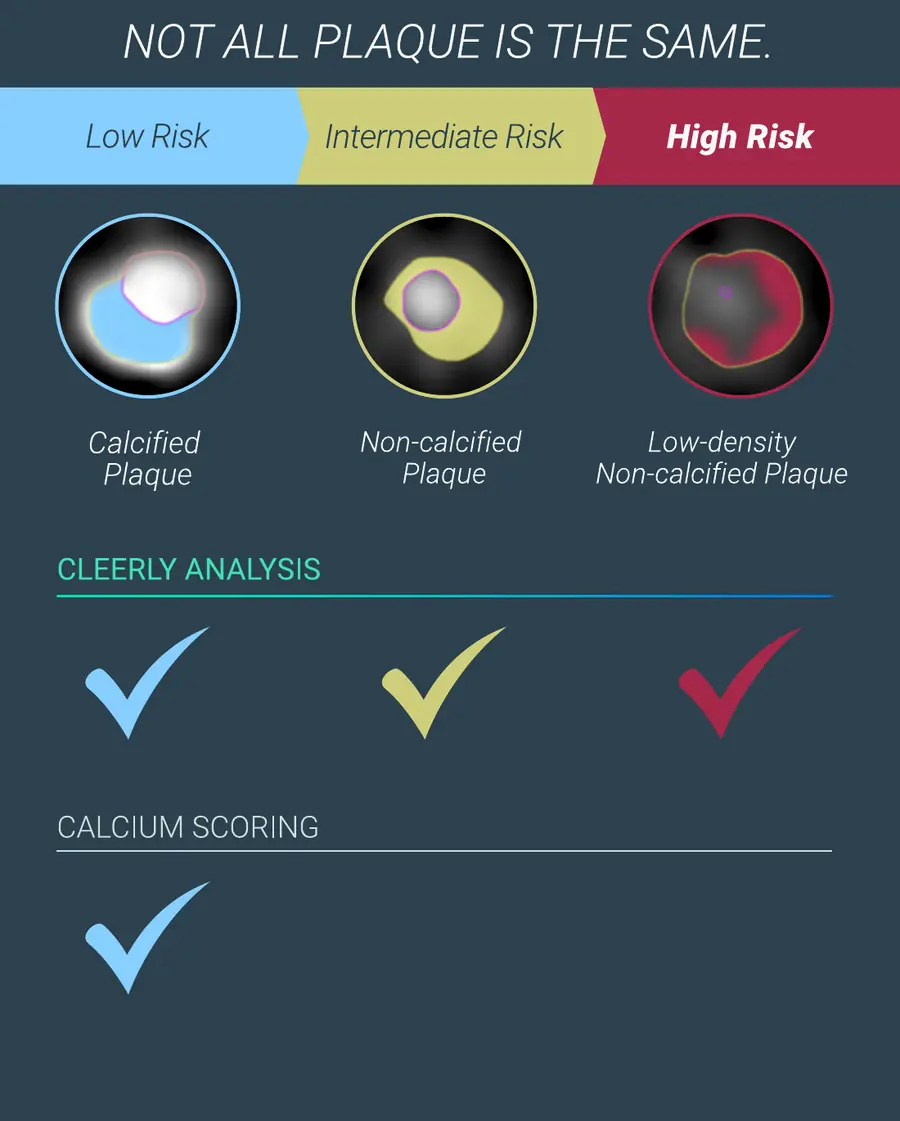
A calcium score counts hardened plaque and nothing else. Your CCTA already shows the arteries themselves; Cleerly measures what it shows, including the soft plaque behind most heart attacks.
Cleerly's three plaque types, from low to high risk: calcified, non-calcified and low-density non-calcified. Cleerly's analysis measures all three; a calcium score sees only the first.
Calcium score and Cleerly plaque analysis compared
TestCalcium scoreCleerly Plaque Analysis
What it looks atHardened (calcified) plaque only, as a scoreEvery plaque in every coronary artery: how much, what kind and where
Soft plaque, the kind most likely to ruptureNot seen. A score of zero does not rule it outMeasured, by type and volume
NarrowingNot measuredEvery artery segment, graded minimal to severe
Change over timeCalcium onlyPlaque by plaque, scan to scan
What it involvesA quick CT, no contrast dyeNothing new: the analysis runs on the CCTA you already had
  1. A calcium score of zero does not exclude high-risk plaque: a CCTA finds plaque in 41 to 53% of people whose score is zero, and 31% of major cardiac events occur in people whose score was zero.

Figures cited by Cleerly: Swedish CArdioPulmonary BioImage Study (J Intern Med 2015); Western Denmark Heart Registry (J Am Coll Cardiol 2018).

What Cleerly measures
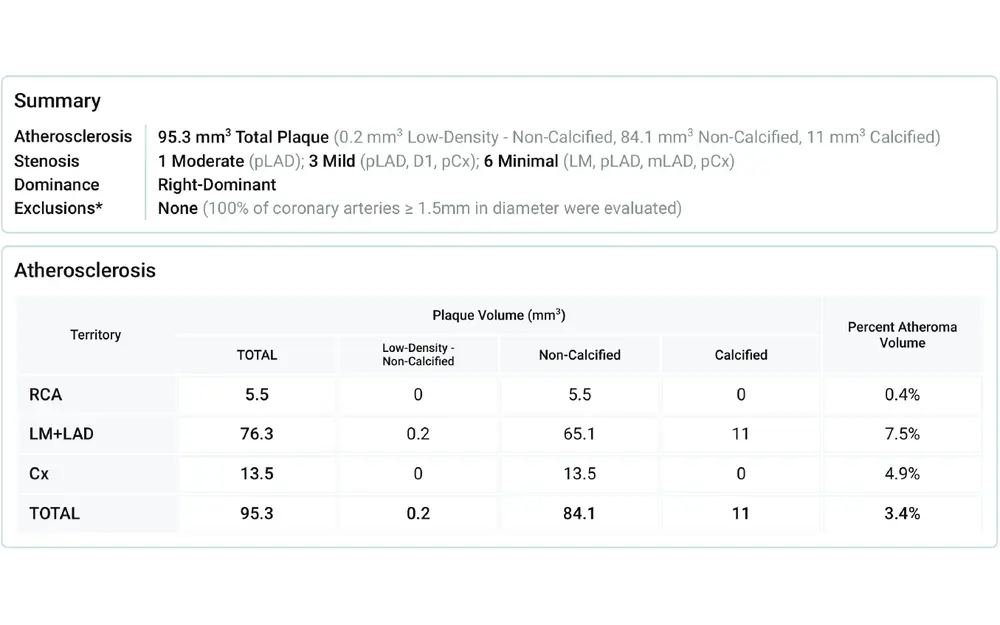
The report quantifies what a standard read describes. The full sample report is behind the button above.
Plaque volume by territory
Enlarge

Plaque volume by territory

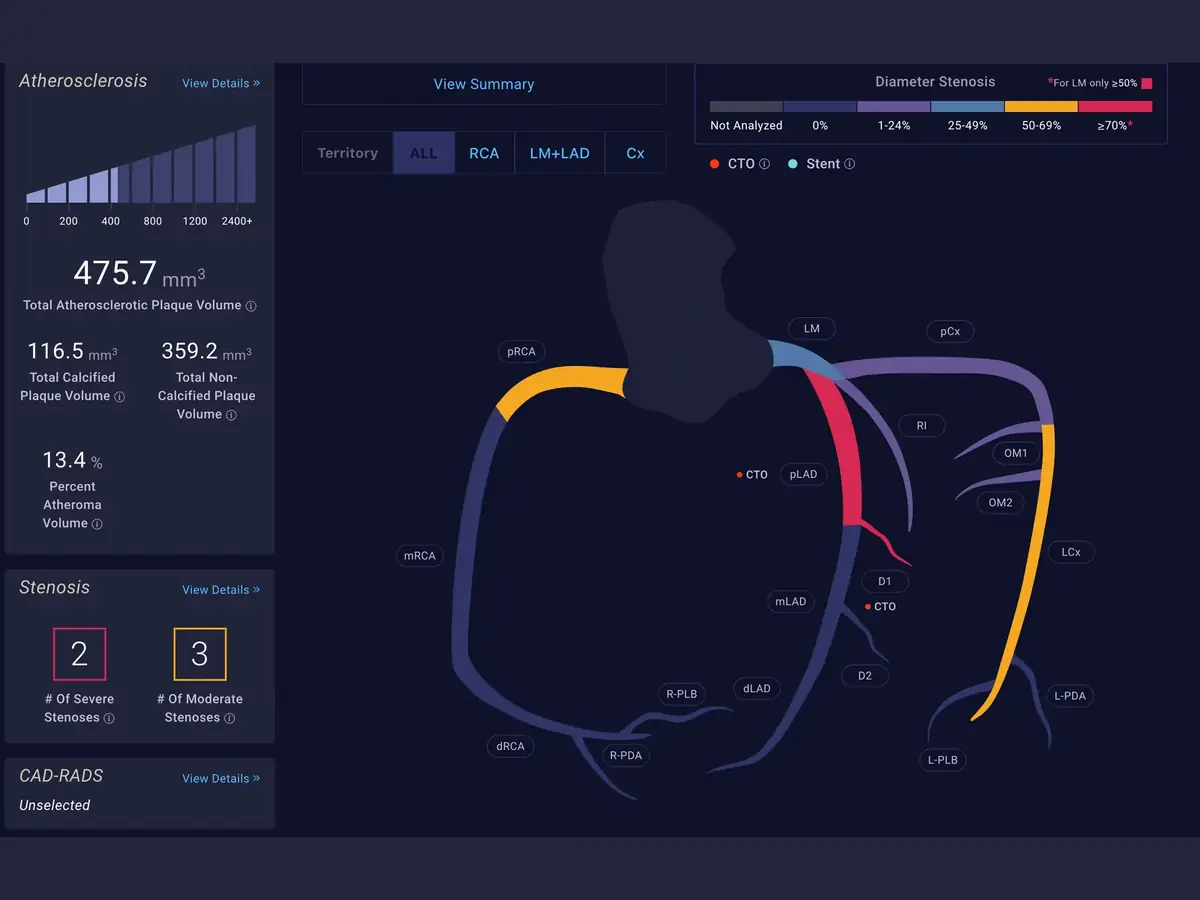
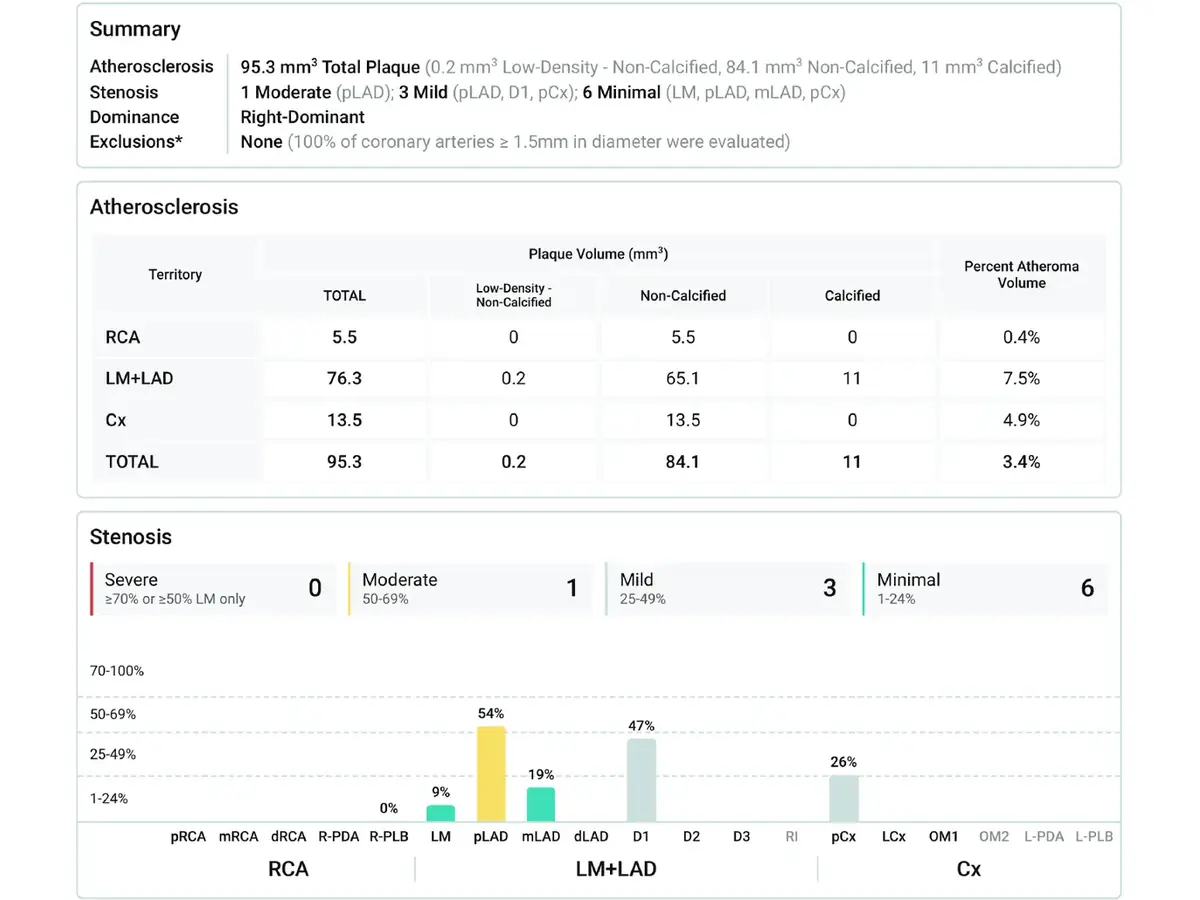
How much plaque sits in each of the three coronary territories and in total, staged from 0 to 3. Total plaque volume is one of the strongest predictors of a future heart attack, and your baseline for the next scan.
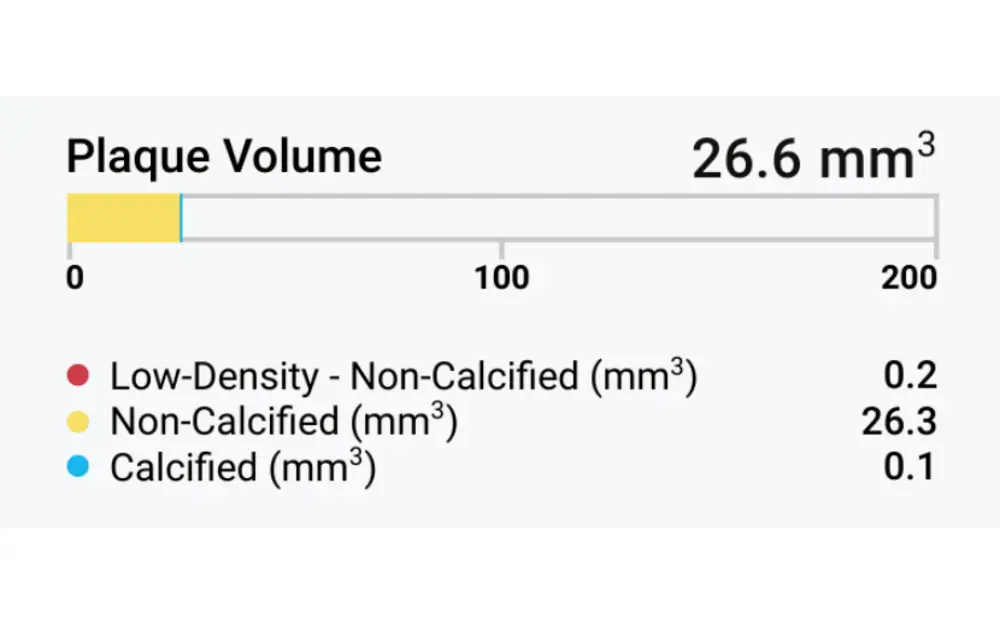
Plaque composition
Enlarge

Plaque composition

Each plaque split into calcified, non-calcified and low-density non-calcified, colored blue, yellow and red in the report. The soft, low-density kind is the most likely to rupture, and a calcium score can't see it.
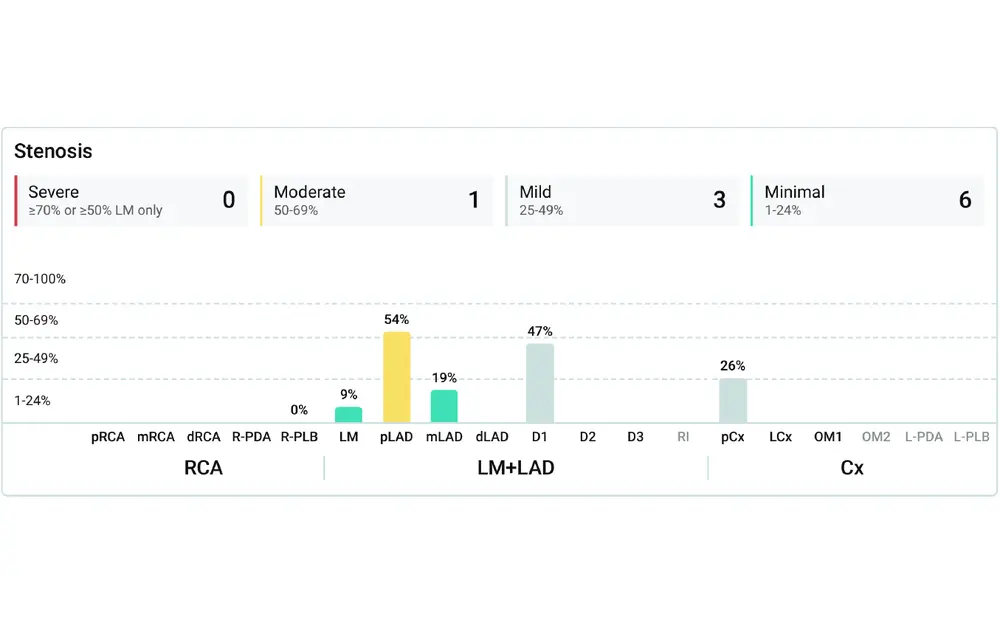
Narrowing, vessel by vessel
Enlarge

Narrowing, vessel by vessel

The percentage narrowing in every artery segment, graded minimal to severe, so you know where any blockage is and how much it matters.
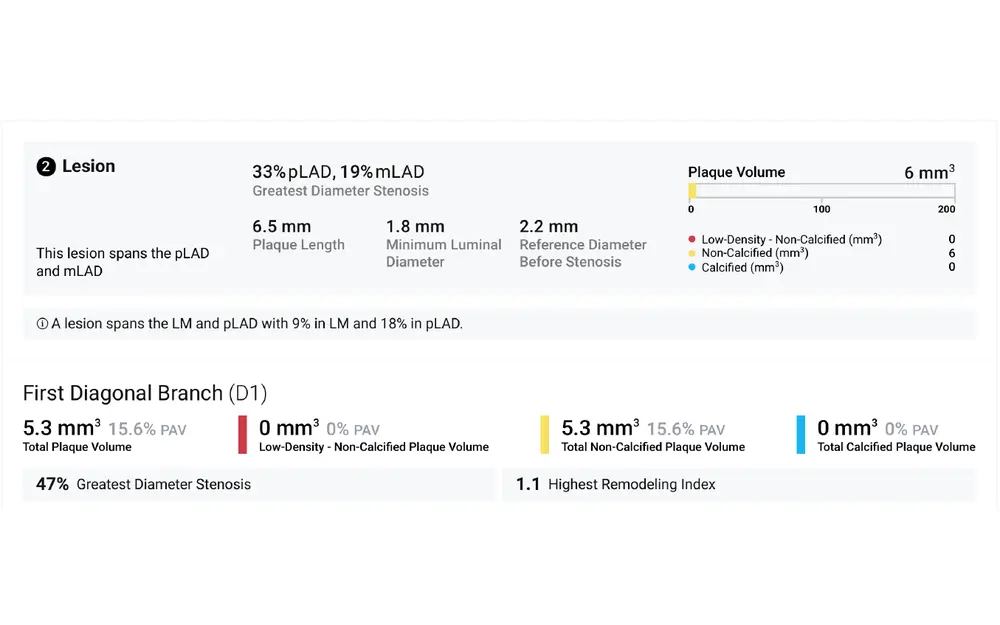
Every lesion measured
Enlarge

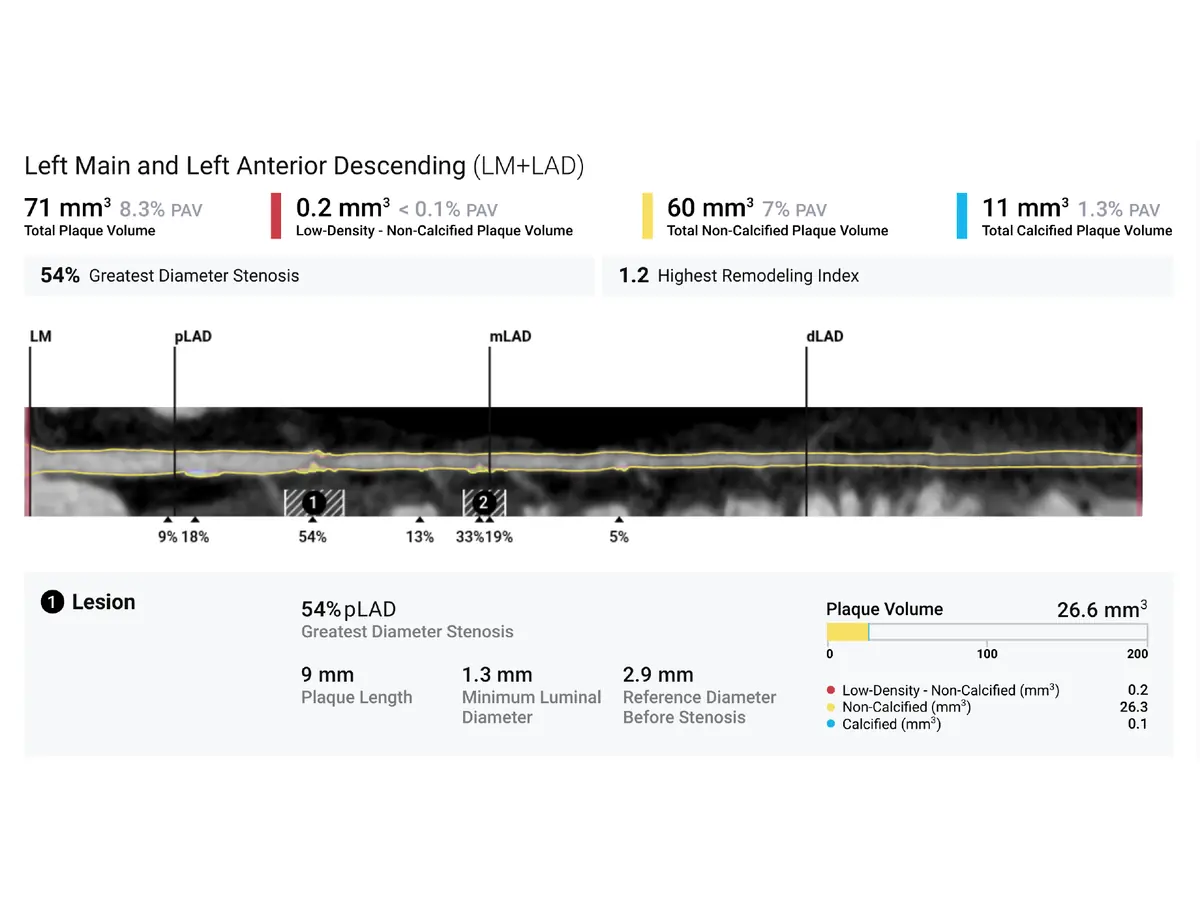
Every lesion measured

For each lesion: where it sits, its length, the narrowest point of the artery, and the plaque volume behind it.
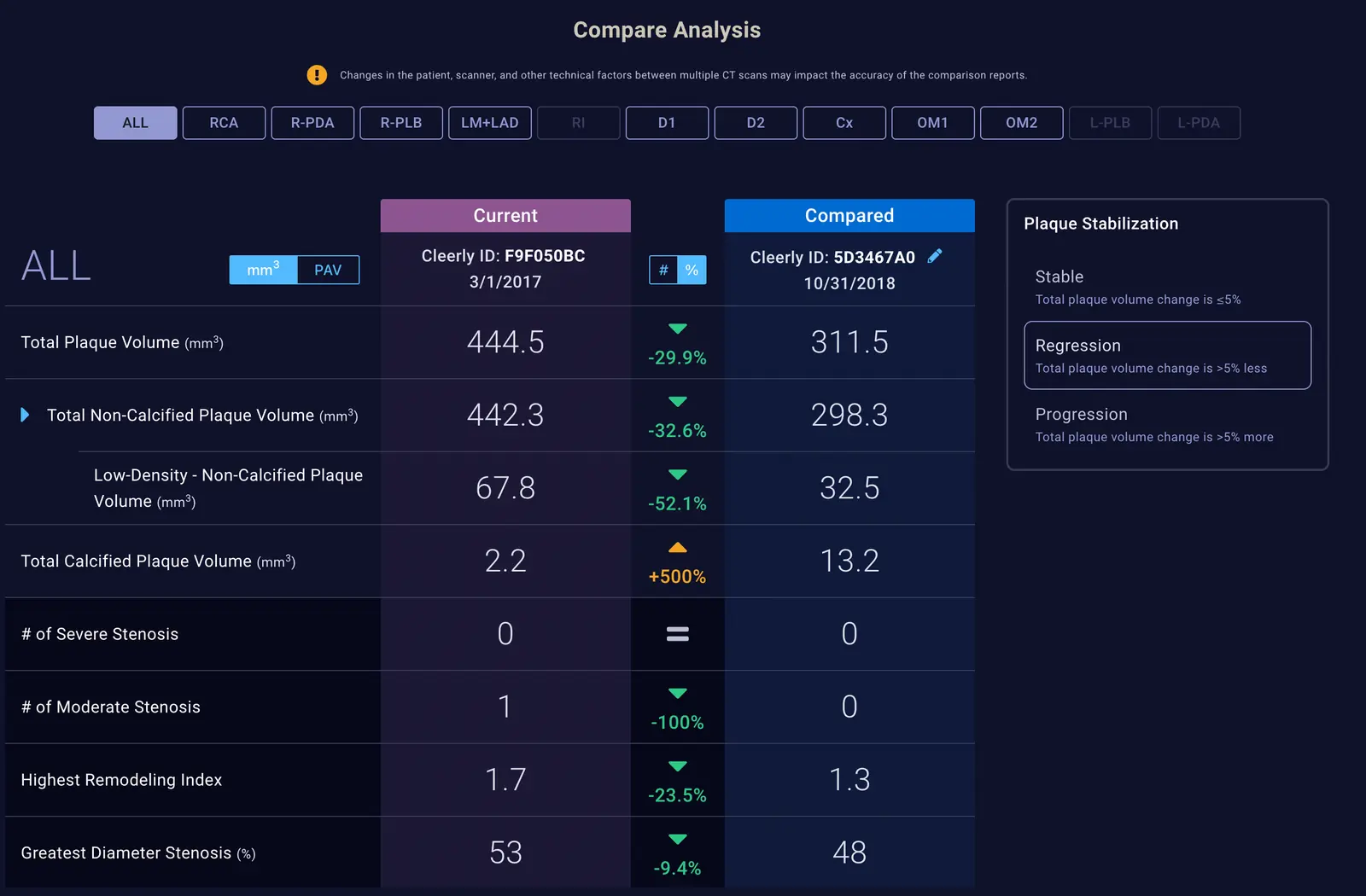
Change between scans
Enlarge

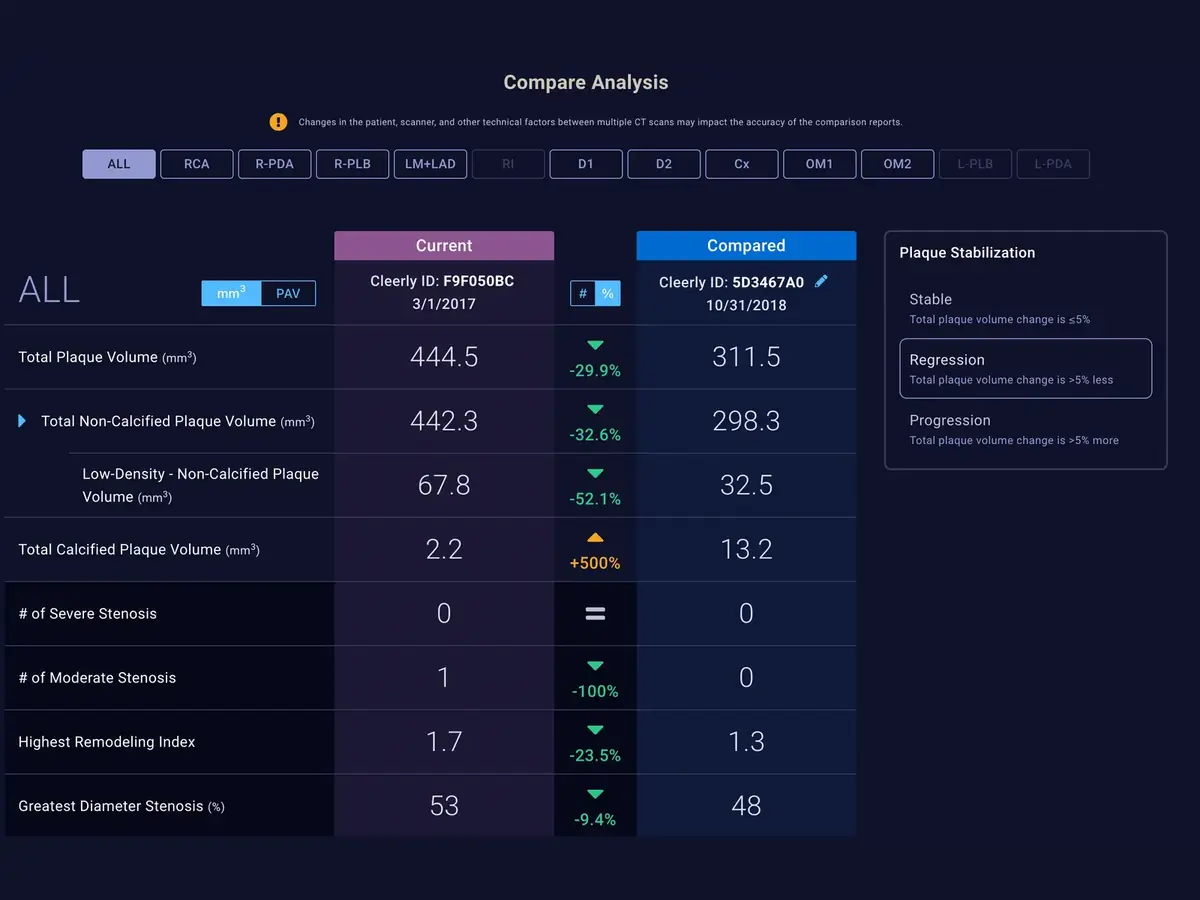
Change between scans

Have a later CCTA analyzed and Cleerly compares it with this one, plaque type by plaque type, so you can see whether treatment is working.

Common Questions

Frequently asked questions

Get Cleerly on the scan you already have

Order in a few minutes, then send a download link to your images whenever you have them.