 Instalab


Allergy Research Group
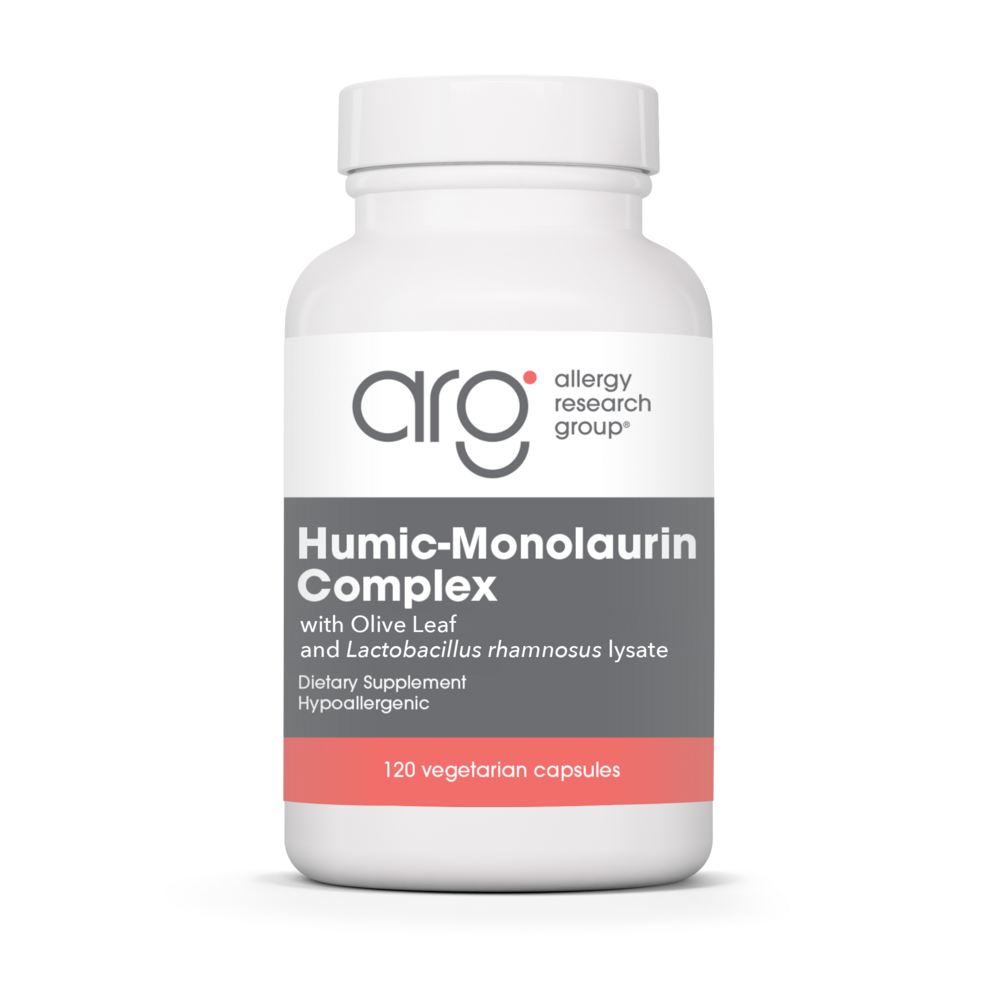
Humic-Monolaurin Complex by Allergy Research Group
120 capsules · 60-day supply
Monolaurin, Olive Leaf and Humic Acid for Immune Support$57.99
Purchase options
Practitioner-grade brand3rd-party testedFree shipping $50+
Vegetarian
Allergy Research Group Humic-Monolaurin Complex overview
This blend suits adults who want short-term immune support through the winter months, around travel or during a demanding stretch, and who prefer one combined product to several bottles. It is not a daily essential, and no lab marker shows a need for it. If you run down often, check Vitamin D (25-hydroxy) and Zinc first: correcting a low level rests on firmer evidence than any immune blend.
Each ingredient comes at immune support from a different angle. Monolaurin is made from lauric acid, a fatty acid found in coconut oil and breast milk; in laboratory studies it disrupts the fatty outer coat of some microbes. Olive leaf extract, standardized here to a minimum of 15% oleuropein, supplies polyphenols with antioxidant activity. Humic acid is a soil-derived compound that binds to metals and, in the lab, to some viruses. Lactobacillus rhamnosus lysate is a powder of broken-down bacterial cells, not a live probiotic. The evidence for all four comes mostly from laboratory work; human trials are limited.
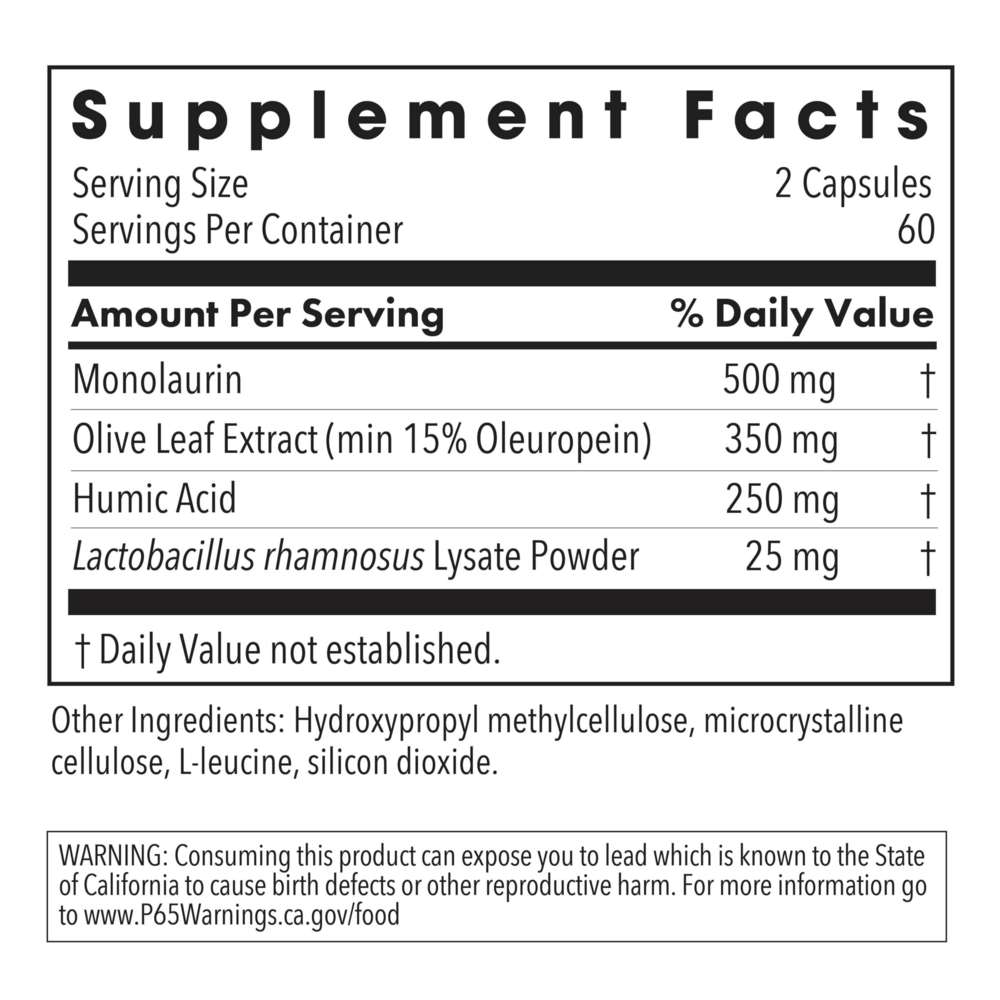
The label directs 2 capsules twice daily. Each 2-capsule serving provides 500 mg of monolaurin, 350 mg of olive leaf extract, 250 mg of humic acid and 25 mg of Lactobacillus rhamnosus lysate powder. The label does not mention food; taking the capsules with a meal and a glass of water is easier on the stomach. Ask your clinician how long to take it: a blend like this is generally used for a defined stretch, not year-round.
The label carries a California Proposition 65 warning: consuming this product can expose you to lead, which is known to cause birth defects or other reproductive harm. The label says to consult your practitioner before use if you are pregnant or lactating, have any health condition or take any medication; given the lead warning, the cautious course is to avoid it in pregnancy and nursing and not to give it to children. Olive leaf extract can modestly lower blood pressure and blood sugar, so check with your clinician before combining it with medicines for either. Humic acid binds other compounds, so taking the capsules about 2 hours apart from prescription medicines is a sensible precaution.
Do not expect a marked effect. The likeliest sign that it suits you is simply feeling well through a demanding stretch, which is hard to credit to any one product. Some people notice stomach upset or loose stools in the first days; taking it with food usually helps. This blend is an add-on to sleep, nutrition and the vitamin and mineral basics, not a substitute for them.
Frequently asked questions
What is monolaurin?
Monolaurin is a compound made from lauric acid, a fatty acid found in coconut oil and breast milk. In laboratory studies it disrupts the fatty outer coat of some microbes. This product provides 500 mg per 2-capsule serving. Research in people is limited.
What is in Humic-Monolaurin Complex?
Each 2-capsule serving provides 500 mg of monolaurin, 350 mg of olive leaf extract (minimum 15% oleuropein), 250 mg of humic acid and 25 mg of Lactobacillus rhamnosus lysate powder. The capsules are vegetarian.
How do I take Humic-Monolaurin Complex?
The label directs 2 capsules twice daily. It does not mention food, but taking them with a meal and a glass of water is easier on the stomach. The bottle holds 120 capsules, which is 60 servings. Ask your clinician how long to take it.
Is Lactobacillus rhamnosus lysate a probiotic?
No. A lysate is a powder of bacterial cells that have been broken apart, so it contains no live organisms and will not colonize the gut. It is included for the bacterial components the immune system responds to. Each serving provides 25 mg.
Can I take olive leaf extract with blood pressure medication?
Check with your prescriber first. Olive leaf extract can modestly lower blood pressure and blood sugar, and the effect may add to that of medicines for either. Your clinician may want you to monitor your readings when you start.
Can I take this while pregnant or breastfeeding?
The label says to consult your healthcare practitioner first, and it also warns that the product can expose you to lead, which is known to cause birth defects or other reproductive harm. The ingredients have not been studied in pregnancy or nursing, so the cautious choice is to avoid it.
Does monolaurin have side effects?
The most common complaints with a blend like this are stomach upset, nausea or loose stools, usually in the first days. Taking it with food helps. Stop and check with your clinician if symptoms persist or anything unexpected appears.
Is monolaurin the same as coconut oil?
No. Coconut oil contains lauric acid, and it is not clear how much of that the body turns into monolaurin. A supplement supplies monolaurin itself in a measured amount, here 500 mg per 2-capsule serving, without the calories of the oil.
How to take it & ingredients
Suggested use: As a dietary supplement, take 2 capsules twice daily, or as directed by a healthcare practitioner.
Active ingredients
2 capsules per serving · 60 servings
Monolaurin
500 mg
Olive Leaf Extract
Min 15% Oleuropein
Min 15% Oleuropein
350 mg
Humic Powder
Humic Acid
Humic Acid
250 mg
Lactobacillus rhamnosus Lysate Powder
25 mg
Other ingredients: Hydroxypropyl methylcellulose, Microcrystalline cellulose, L-leucine, Silicon dioxide
Certifications
Benefits
Warnings