 Instalab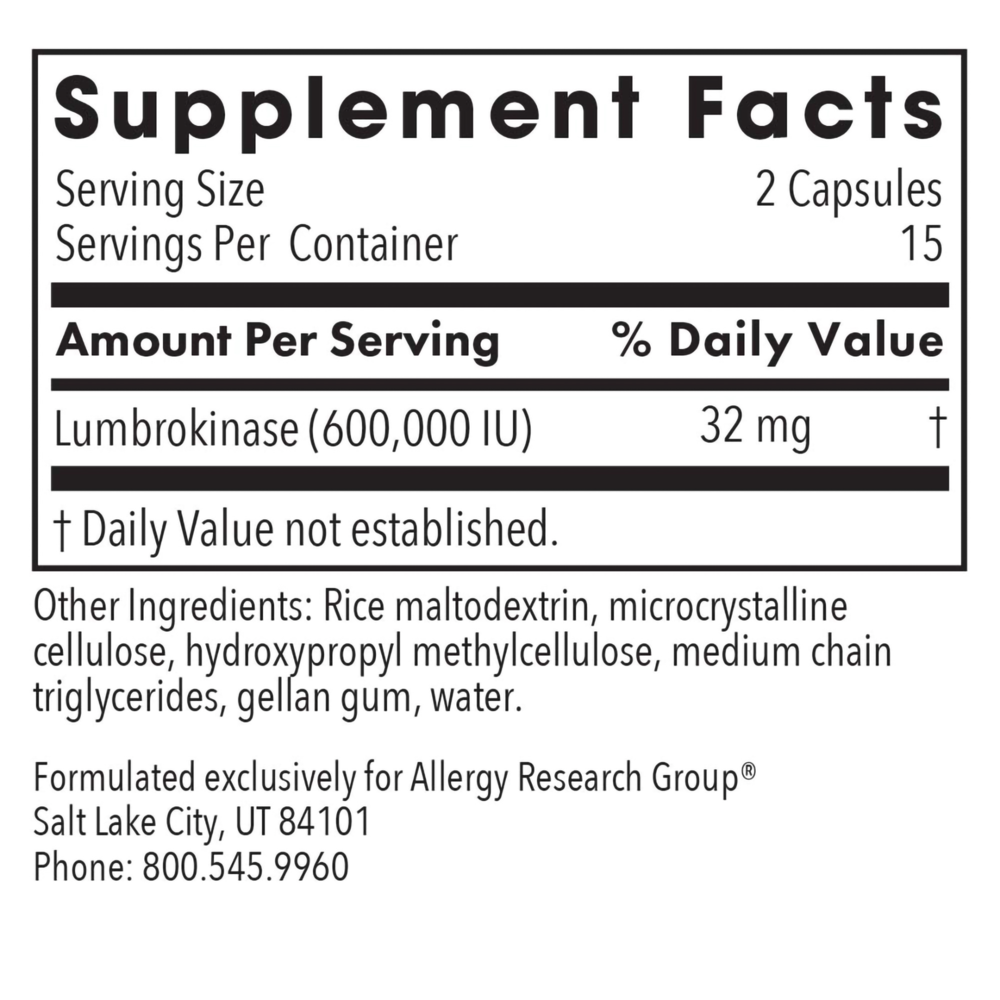


Allergy Research Group
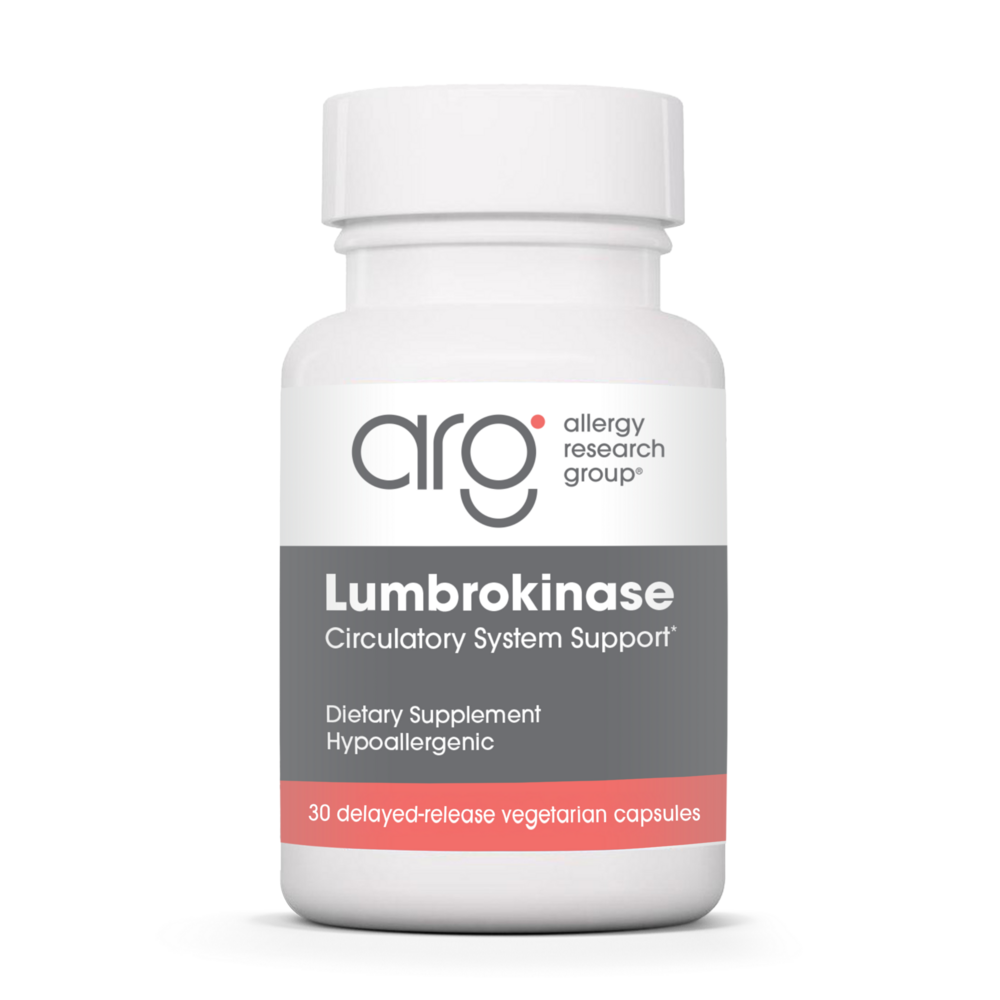
Lumbrokinase Circulatory Systemic Enzymes 32 mg by Allergy Research Group
30 capsules · 15-day supply
Support for Healthy Circulation and Inflammation Management$61.99
Purchase options
Practitioner-grade brand3rd-party testedFree shipping $50+
Gluten Free·Soy Free·Dairy Free·Egg Free·Tree Nut Free·Fish Free·
Allergy Research Group Lumbrokinase Circulatory Systemic Enzymes overview
This fits people looking at lumbrokinase for blood flow when clotting tendency or sluggish circulation is the concern, not cholesterol. It’s most relevant if your clinician is tracking fibrin-related labs like D-dimer (a breakdown fragment of clots) or Fibrinogen (the protein clots are built from), or if you have a history of leg heaviness after travel or prolonged sitting. It’s also used by patients with high platelet activity, though platelets (the cell fragments that start clots) are best monitored with your clinician.
Lumbrokinase is a complex of enzymes from earthworms that targets fibrin, the mesh that stabilizes blood clots. Unlike broad proteases, it favors fibrin over other proteins, which is why many clinicians choose it over nattokinase or serrapeptase. It can both enhance plasmin (the body’s main clot-dissolving enzyme) and reduce fibrin formation, which can lower blood viscosity. In practice, responders see shifts in D-dimer or Fibrinogen within 4 to 8 weeks alongside steadier circulation.
Allergy Research Group suggests splitting doses across the day with water. Many clinicians prefer taking systemic enzymes away from protein-heavy meals so they act in the bloodstream rather than the gut. Start at the low end for a week to watch for easy bruising, then titrate. If you and your clinician are targeting lab changes, recheck D-dimer or Fibrinogen after 4 to 8 weeks. If you need a higher total daily amount, multiple capsules are typically used.
Skip lumbrokinase if you’re on prescription blood thinners like warfarin, apixaban, rivaroxaban, or dabigatran, or if you take daily aspirin or clopidogrel, unless your prescriber is directly supervising. Avoid with active bleeding, a history of hemorrhagic stroke, retinal bleeding, bleeding disorders, or active stomach ulcers. Stop 1 to 2 weeks before surgery or dental work. Pregnancy and breastfeeding: avoid. If you bruise easily, get nosebleeds, or see black stools, discontinue and contact your clinician.
Frequently asked questions
Does lumbrokinase thin your blood?
It doesn’t thin blood the way warfarin does, but it can reduce fibrin and make clots less stable. That adds bleeding risk, especially when combined with aspirin, clopidogrel, or prescription anticoagulants. Use only with clinician guidance if you’re on those drugs.
How long does lumbrokinase take to work?
For responders, lab shifts in D-dimer or Fibrinogen are often seen within 4–8 weeks. Symptom changes like leg heaviness or post-travel swelling tend to track with those labs. If nothing moves by 8 weeks at a full dose, re-evaluate with your clinician.
Should I take lumbrokinase on an empty stomach?
You can take it with or without food, but many clinicians prefer away from protein-heavy meals so more enzyme is available systemically rather than digesting food proteins. Water helps the capsules move through the stomach consistently.
Is lumbrokinase safe with aspirin or fish oil?
Combined with aspirin the bleeding risk increases, so involve your prescriber. Fish oil adds a mild antiplatelet effect; the combo is common but should still be monitored for easy bruising or nosebleeds, and paused before procedures.
What’s the difference between lumbrokinase and nattokinase?
Both act on fibrin, but lumbrokinase is more fibrin-specific and often used at lower milligram amounts. Nattokinase has broader activity and more food-origin data. Clinicians choose based on lab goals, tolerance, and patient history.
Which labs should I monitor while taking lumbrokinase?
D-dimer and Fibrinogen are the most relevant. Some clinicians also follow Platelet count and hs-CRP (an inflammation marker). If you’re on warfarin, do not use lumbrokinase; INR monitoring doesn’t prevent the interaction risk.
Do I need to stop lumbrokinase before surgery or dental work?
Yes. Stop 1–2 weeks before procedures to lower bleeding risk, and restart only when your surgeon or dentist says it’s safe. Tell your care team you’re using a fibrinolytic enzyme.
How to take it & ingredients
Suggested use: As a dietary supplement, 1 or 2 capsules in the morning, 1 or 2 capsules in the afternoon, and 2 capsules at bedtime, or as directed by a healthcare practitioner. Take with 8-10 oz of water, with or without food.
Active ingredients
2 capsules per serving · 15 servings
Lumbrokinase
32 mg
Other ingredients: Rice dextrin, Medium chain triglycerides, Hydroxypropyl methylcellulose, Water, Gellan gum
Certifications
Benefits
Warnings
Customers also considered

Advanced Digestive Enzymes
Thorne
180 capsules
$56.00$50.40 with Subscribe & Save
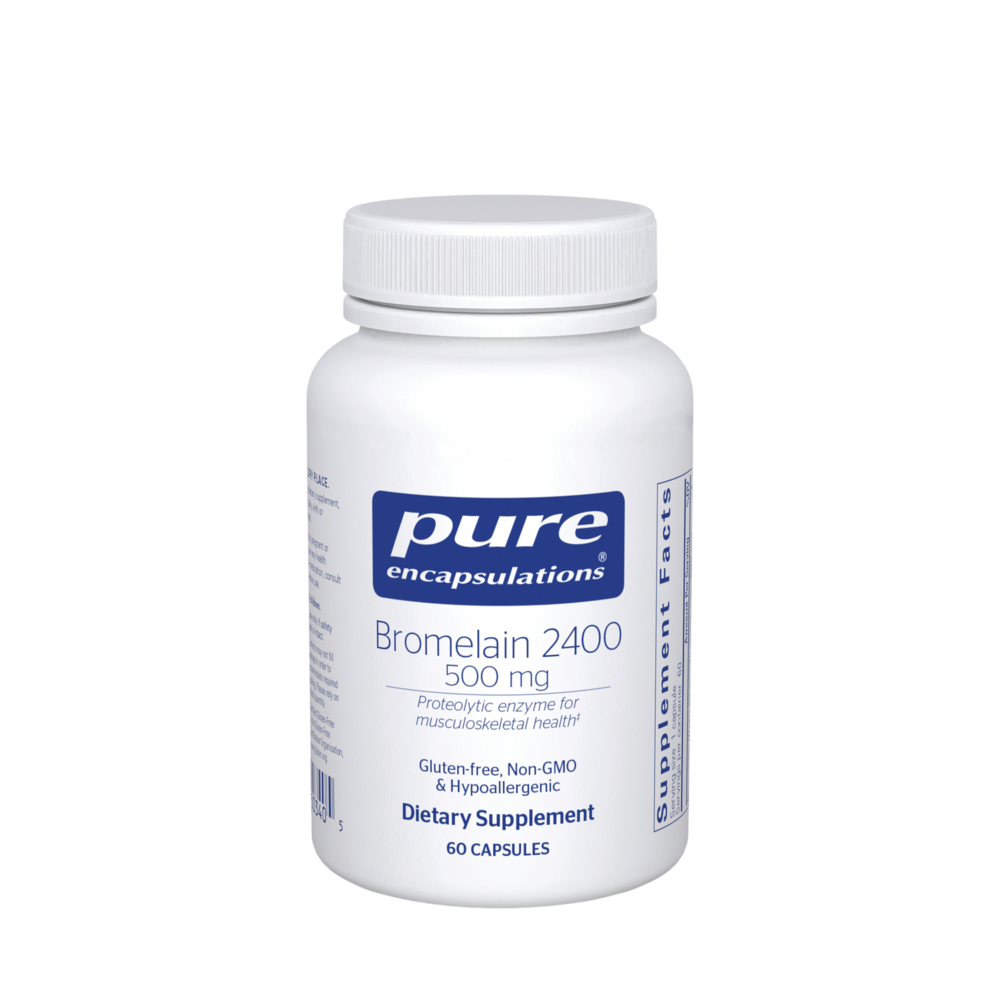
Bromelain 2400 500mg
Pure Encapsulations
60 capsules
$40.00$31.99 with Subscribe & Save
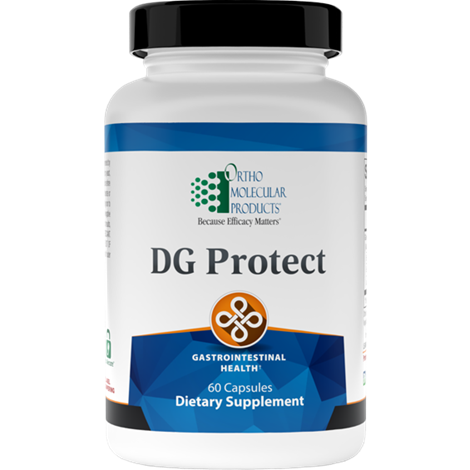
DG Protect
Ortho Molecular Products
60 capsules
$64.44$58.05 with Subscribe & Save

Digestion GB
Pure Encapsulations
90 capsules
$36.50$28.99 with Subscribe & Save