 Instalab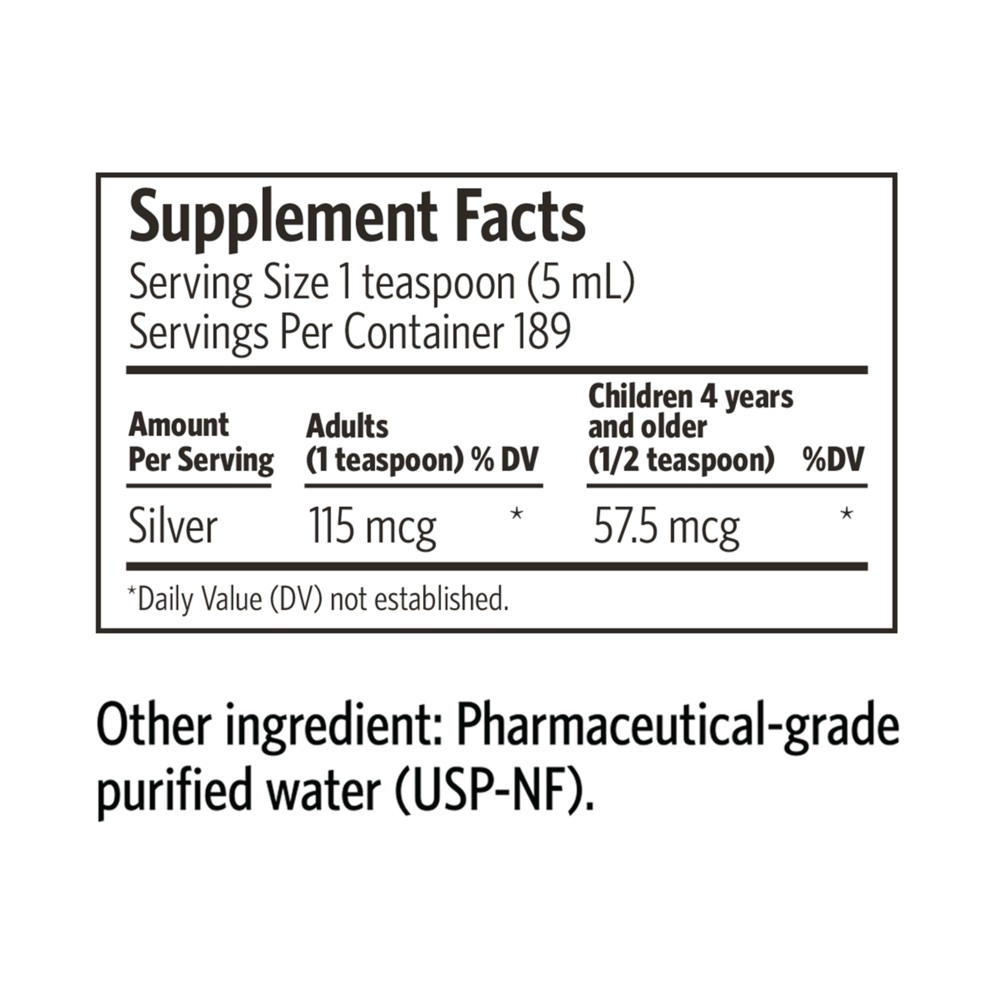
Argentyn 23
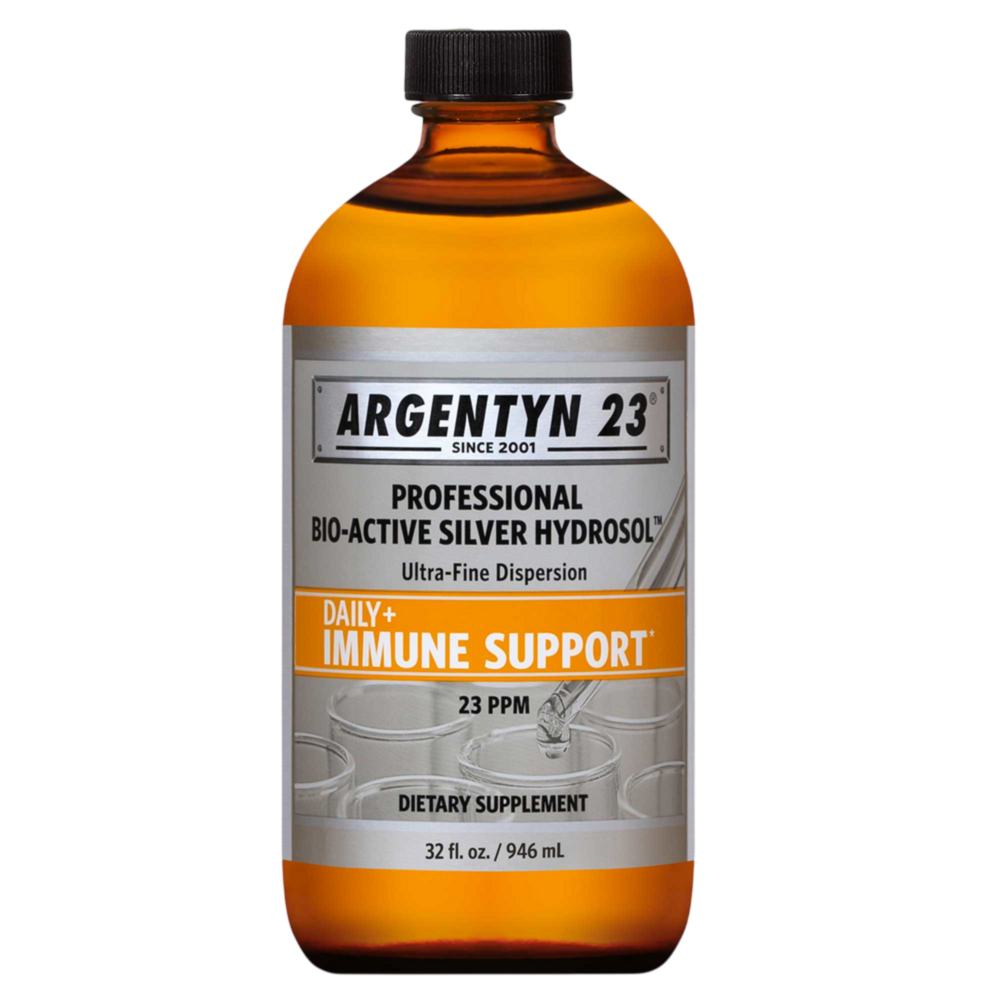
Silver Hydrosol Argentyn 23 Pro 115 mcg by Argentyn 23
946 milliliters · 189-day supply
Pure Bio-Active Silver Hydrosol with Sub-Nanometer Particle Size$149.99
Purchase options
Practitioner-grade brand3rd-party testedFree shipping $50+
Gluten Free
Argentyn 23 Silver Hydrosol Argentyn 23 Pro overview
This 32 fl oz pro bottle is the extended-supply size of Argentyn 23 Bio-Active Silver Hydrosol, useful when several adults in a household want to keep a daily teaspoon on hand or when a practice wants a single bottle for in-office use. It is the same 23 ppm hydrosol as the smaller pro bottle, simply scaled up: roughly 189 teaspoon doses per bottle. If you are new to silver hydrosol, the 4 fl oz bottle is the better starting size; the 946 mL bottle is for people who already use the smaller size routinely and want fewer reorders.
The hydrosol contains greater than 98% bio-active silver ions and silver nanoclusters as small as 0.8 nanometers, validated by Transmission Electron Microscopy. Two ingredients only: 99.999% pure silver and pharmaceutical-grade purified water that meets USP-NF standards. The amber glass bottle limits ultraviolet exposure, which protects the hydrosol from degradation. Honest framing: silver has a long, well-documented role in topical wound dressings, and human evidence for routine oral use is limited. Use it as a short-course addition to immune-season basics, not as a stand-in for medical care.
Label directions are 1 teaspoon held under the tongue for 30 seconds, then swallowed, up to several times daily. Take it away from meals and from mineral-containing supplements so it does not bind in the gut. With the 946 mL bottle, transfer a few days' worth into a smaller dispensing bottle so the main bottle stays sealed and stored away from strong electromagnetic energy and direct sunlight. Limit each course to a few days at a time; reassess rather than running it indefinitely.
If you are pregnant or breastfeeding, on prescription antimicrobials or thyroid hormone, or considering use for a child, talk to your clinician first and review the warnings below.
Frequently asked questions
Why choose the 946 mL bottle instead of the 118 mL bottle?
The 946 mL pro bottle is the same hydrosol scaled up. It suits multi-adult households or practices that go through hydrosol fast enough to justify fewer reorders. New users are usually better off starting with the 118 mL bottle and stepping up only after the routine is established.
How long does the 32 fl oz bottle last at one teaspoon a day?
About 189 daily doses, or roughly six months for a single adult taking one teaspoon a day. Two adults sharing a daily teaspoon gets you about three months of supply per bottle.
Is oral silver hydrosol proven for immune support?
Topical silver has a long, documented role in wound care. Routine oral use has limited high-quality human evidence. Treat it as one short-course tool alongside basics like sleep and proper nutrition rather than a primary intervention.
Why limit use to short courses?
Continuous daily use of oral silver over months or years raises the risk of argyria, a permanent blue-gray skin discoloration. Brief courses with breaks in between are the safer pattern.
Can it be combined with other supplements?
Take it on its own, away from meals and mineral-containing supplements like iron, calcium, magnesium, or zinc. Metal-mineral binding in the gut reduces what the body absorbs.
How should the bottle be stored?
In a cool, dark place away from direct sunlight and strong electromagnetic sources. The amber glass helps with ultraviolet exposure, but storage habits still matter for a 32 fl oz bottle that will be open for months.
Is it safe for children?
The label allows reduced doses from age 4, but pediatric clinicians generally avoid systemic silver. Talk to your child's clinician before any oral silver use in kids.
How to take it & ingredients
Suggested use: Adults: 1 teaspoon, hold under tongue for 30 seconds, then swallow. Children 4 years and older: 1/2 teaspoon.
Active ingredients
1 teaspoon = 5 milliliter per serving · 189 servings
Silver
115 mcg
Other ingredients: Pharmaceutical-grade purified water
Certifications
Benefits
Warnings
Customers also considered
Laktoferrin 350mg
Allergy Research Group
90 capsules
$131.99$105.99 with Subscribe & Save
NK-Stim
Ortho Molecular Products
60 capsules
$72.54$65.35 with Subscribe & Save
OrthoMune®
Ortho Molecular Products
120 capsules
$67.10$60.45 with Subscribe & Save
Phytocidal
Ortho Molecular Products
120 capsules
$100.07$90.15 with Subscribe & Save