 Instalab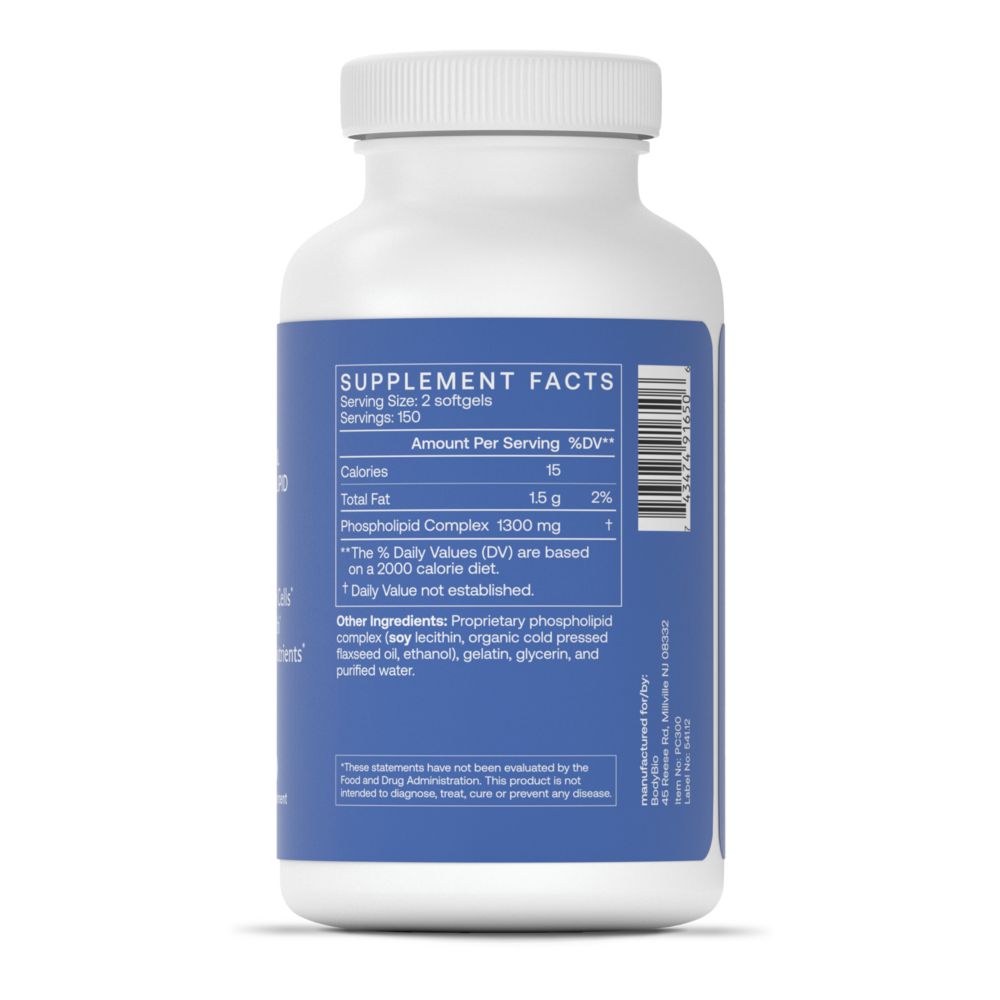
Body Bio
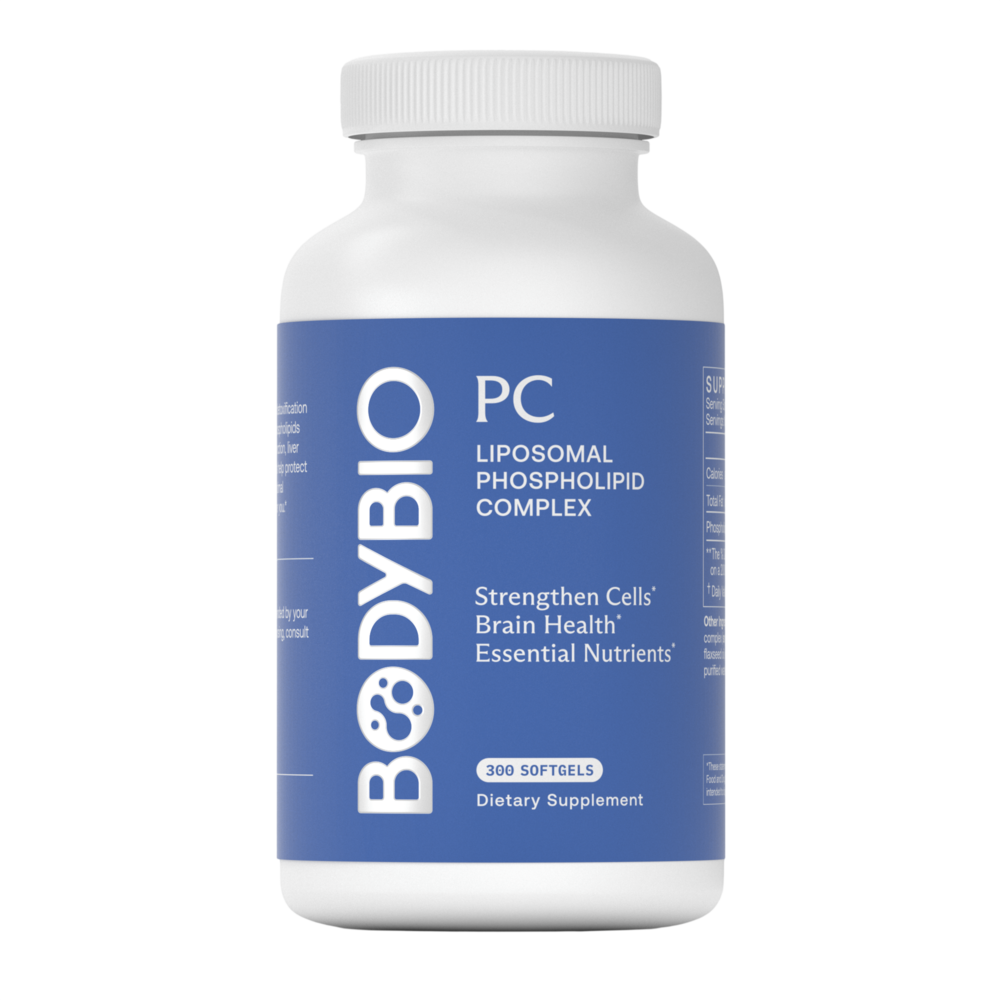
BodyBio PC 1300 mg by Body Bio
300 softgels · 150-day supply
Support Cellular Function and Brain Health with Essential Phospholipids$199.99
Purchase options
Practitioner-grade brand3rd-party testedFree shipping $50+
Gluten Free
Body Bio BodyBio PC overview
If your ALT or AST (liver enzymes on a basic panel) run high and your diet is light on choline-rich foods like eggs, a phosphatidylcholine supplement is a pragmatic pick. It also fits vegans, light eaters, and those with nonalcoholic fatty liver risk who want to support fat export from the liver. People noticing brain fog or memory lapses sometimes use it as maintenance, especially if their homocysteine (a methylation marker tied to choline status) is high-normal.
Phosphatidylcholine (PC), phosphatidylethanolamine (PE), phosphatidylserine (PS), and phosphatidylinositol (PI) are the lipids your cells use to build membranes. Extra PC supplies choline, which your liver needs to assemble VLDL particles (the form your liver packages fat into for transport), so inadequate PC tends to trap fat in the liver. Choline also feeds acetylcholine (a memory neurotransmitter), while PS has independent evidence for recall in aging. In trials of essential phospholipids, responders often see ALT, AST, or GGT drift toward normal within 8 to 16 weeks.
Take two softgels or 1/2 teaspoon with food. Meals improve absorption and reduce burping. Expect membrane changes over 4 to 12 weeks; liver enzyme shifts, if they happen, typically take 8 to 16 weeks. Pairing phospholipids with omega-3 fish oil can enrich membranes with DHA and EPA, while PC supplies the membrane backbone. Track progress with ALT, AST, GGT, and homocysteine rather than how you feel in week one.
Skip this if you have a known soy or sunflower lecithin allergy, depending on source. If you have trimethylaminuria (fish-odor syndrome), added choline can worsen odor; avoid unless your clinician approves. Pregnancy and breastfeeding increase choline needs, but dosing should follow your prenatal plan. If your primary goal is memory, standalone phosphatidylserine often has stronger data at targeted doses.
Frequently asked questions
What does phosphatidylcholine do for the liver?
PC provides choline your liver uses to package fat into VLDL particles for export. In people with elevated enzymes, essential phospholipids have shown gradual improvements in ALT, AST, and GGT over 8–16 weeks.
How long does phosphatidylcholine take to work?
Membrane turnover is slow, so give it 4–12 weeks. For liver-related goals, plan on 8–16 weeks before judging labs. Cognitive changes, if they occur, usually show up after steady daily use, not a single dose.
Is phosphatidylcholine the same as choline bitartrate?
No. Choline bitartrate is a salt that raises free choline quickly. Phosphatidylcholine is a membrane lipid, absorbed differently, and integrates into cell membranes while still supplying choline to the liver and brain.
Can I take phosphatidylcholine with omega-3 fish oil?
Yes, and they complement each other. PC provides the membrane structure, while EPA and DHA from fish oil determine the membrane’s fatty acid makeup. Many clinicians pair them when aiming at liver or brain goals.
Does phosphatidylcholine increase TMAO?
It can raise TMAO (a liver- and gut-derived metabolite) in some people, though usually less than free choline. If you’re tracking TMAO or have cardiovascular concerns, discuss dosing and lab monitoring with your clinician.
Are there side effects from phosphatidylcholine?
Most tolerate it well. Mild nausea, loose stools, or burping can occur, especially on an empty stomach. Rarely, people sensitive to lecithins report rash or GI upset. Taking with meals and starting low helps.
Is phosphatidylcholine vegan?
Usually yes, since it’s commonly derived from soy or sunflower lecithin. Check the label for source and any gelatin in softgels if you need a fully plant-based option.
How to take it & ingredients
Suggested use: Take 2 softgels or 1/2 teaspoon with food, unless otherwise suggested by your Healthcare Professional.
Active ingredients
2 softgels per serving · 150 servings
▼
Phospholipid Complex
1300 mg
Phosphatidylcholine (PC)
-
Phosphatidylethanolamine (PE)
-
Phosphatidylinositol (PI)
-
Phosphatidylserine (PS)
-
Other ingredients: Proprietary phospholipid complex, Minor glycolipids, Essential fatty acids, Flaxseed oil, Ethanol, Gelatin, Glycerin, Water
Certifications
Benefits
Warnings