 Instalab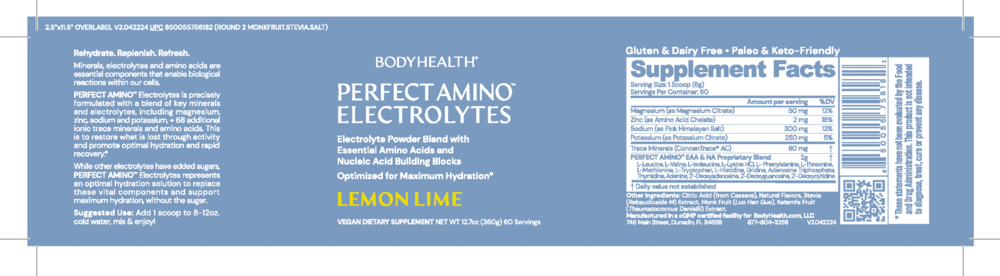

BodyHealth
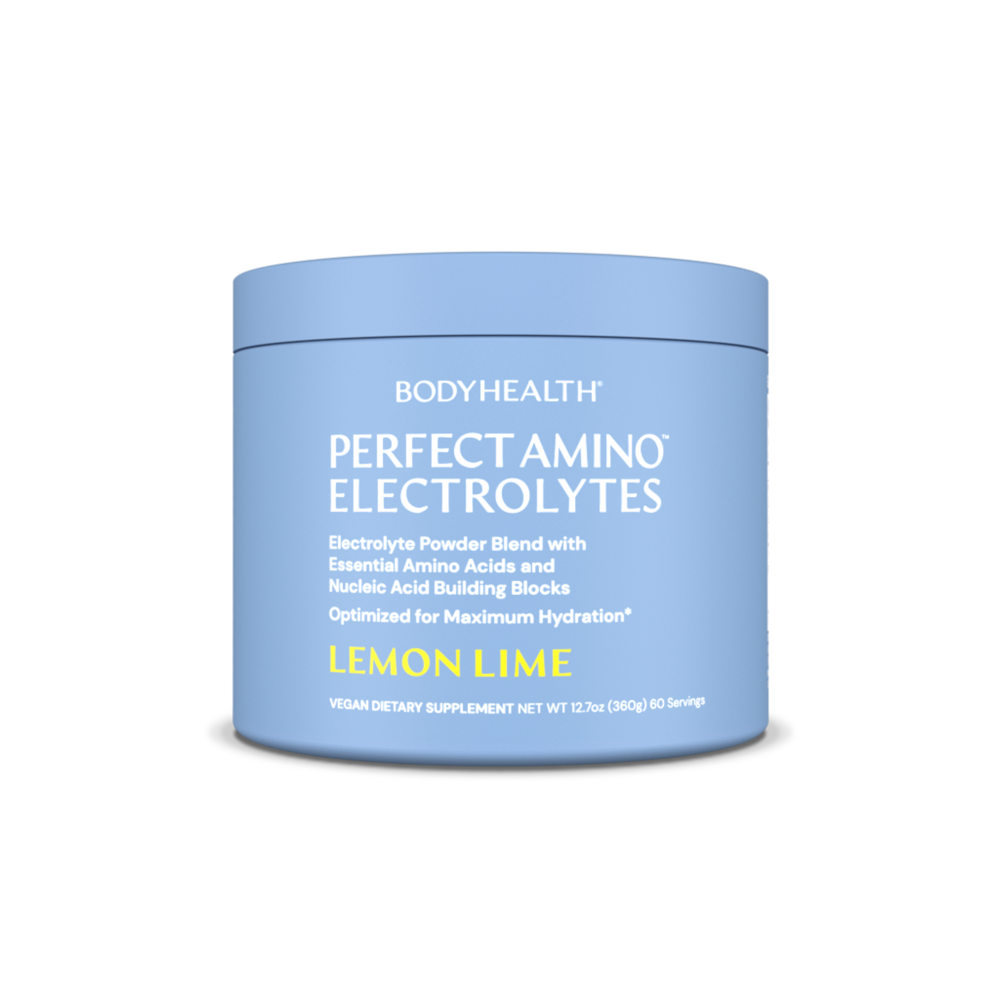
PerfectAmino Electrolytes Lemon Lime by BodyHealth
360 grams
Essential Electrolytes and Amino Acids for Optimal Hydration and Performance$XX.XX$54.99retail
Purchase option
20% below MSRP3rd-party tested for purity & potencyFree shipping $50+
Vegan·Vegetarian·Gluten Free·Dairy Free·Keto Friendly·Paleo Friendly
BodyHealth PerfectAmino Electrolytes Lemon Lime overview
Hot-weather runners, cyclists, and HIIT athletes who finish workouts lightheaded or crampy are the right fit for this electrolyte powder. Each scoop brings 300 mg sodium, 250 mg potassium, and 50 mg magnesium, enough for steady hydration during moderate sweat. If your Basic Metabolic Panel tends to show low-normal sodium or you follow keto and drop water weight quickly, this is practical. Heavy “salty sweaters” may still need more sodium per hour than one scoop provides.
Sodium and potassium maintain plasma volume and nerve signals to muscle, so you hold onto fluid and keep contractions coordinated. Magnesium supports muscle relaxation and enzymatic energy steps, though 50 mg is a light dose. The essential amino acids (2 g) provide building blocks that nudge muscle protein synthesis, but this is far below the 6–10 g commonly used for a measurable anabolic bump. Expect hydration and smooth pacing more than muscle building from this formula.
Mix one scoop in 8–12 oz cold water before or during training. For sessions over 60–90 minutes or in high heat, use one scoop per hour based on sweat rate, then add plain water to thirst. If you track labs, aim to keep your Basic Metabolic Panel steady and avoid post-race dips. Pair with a separate EAA or whey serving post-workout if muscle repair is the priority, since 2 g EAAs is maintenance-level only.
If you take blood pressure drugs that affect potassium or sodium, talk to your clinician first. That includes ACE inhibitors, ARBs, spironolactone, and loop or thiazide diuretics (risk of abnormal potassium or sodium). Kidney or heart failure, or a sodium-restricted diet, also warrant caution. Magnesium can bind some antibiotics; separate by 2 hours. Cramping from low magnesium usually needs higher daily magnesium, guided by a Magnesium, RBC test.
Frequently asked questions
Is this electrolyte powder good for runners?
Yes for most training runs. It delivers 300 mg sodium and 250 mg potassium per scoop, which suits moderate sweat. Very heavy sweaters often need 500–1,000 mg sodium per hour, so they may add an extra scoop or a higher-sodium option on hot, long efforts.
Does it help with muscle cramps?
Electrolytes reduce heat- and sweat-related cramping by maintaining fluid and nerve signals. If cramps stem from fatigue or low conditioning, electrolytes alone won’t fix it. Persistent nocturnal cramps can reflect low magnesium intake, which usually needs higher daily magnesium than the 50 mg here.
Can I take it fasted or on keto?
Yes. There’s no meaningful sugar, and electrolytes help counter keto-related water and sodium loss. Many low-carb athletes feel better adding 1–2 scoops across long sessions to keep energy and blood pressure stable during fasted training.
How many scoops can I use per day?
Most athletes use 1–3 scoops spread around training based on heat and sweat rate. If you’re salt-restricted or on blood pressure medications, confirm a safe ceiling with your clinician. Watch for swelling or unusual thirst as signs you overshot sodium.
When will I feel a difference?
Hydration and steadier pacing are typically noticeable in the first workout, especially in heat. If you’re chasing muscle repair, add a separate 6–10 g essential amino acids or a protein shake post-workout, since the 2 g here is too light for a major recovery effect.
Can I combine this with creatine or caffeine?
Yes. Creatine pairs well with adequate fluid and electrolytes. Caffeine is fine for most, but it increases urine output in some people, so match it with fluids and consider one extra scoop in hot conditions.
Is it safe with high blood pressure?
It depends. Added sodium can be an issue if you’re salt-sensitive or on medications like ACE inhibitors, ARBs, or diuretics. Many endurance athletes with well-managed blood pressure tolerate intra-workout sodium, but clear the plan with your clinician first.
How to take it & ingredients
Suggested use: Add 1 scoop to 8-12oz cold water, mix and enjoy.
Active ingredients
1 scoop per serving
Magnesium
As Magnesium Citrate
As Magnesium Citrate
50 mg
Zinc
As Amino Acid Chelate
As Amino Acid Chelate
2 mg
Sodium
As Pink Himalayan Salt
As Pink Himalayan Salt
300 mg
Potassium
As Potassium Citrate
As Potassium Citrate
250 mg
Trace Minerals (Concentrace® AC)
80 mg
▼
Perfect Amino™ EAA & NA Proprietary Blend
2 g
L-Leucine
-
L-Valine
-
L-isoleucine
-
L-lysine HCl
-
L-Phenylalanine
-
L-Threonine
-
L-Methionine
-
L-Tryptophan
-
L-Histidine
-
Uridine
-
Adenosine Triphosphate
-
Thymidine
-
Adenine
-
2'-Deoxyadenosine
-
2'-Deoxyguanosine
-
2'-Deoxycytidine
-
Other ingredients: Citric Acid (from Cassava), Natural Flavors, Stevia (Rebaudioside M) Extract, Monk Fruit (Luo Han Guo), Katemfe Fruit (Thaumatococcus Danielli) Extract
Certifications
Benefits
Warnings
Customers also considered
Thorne
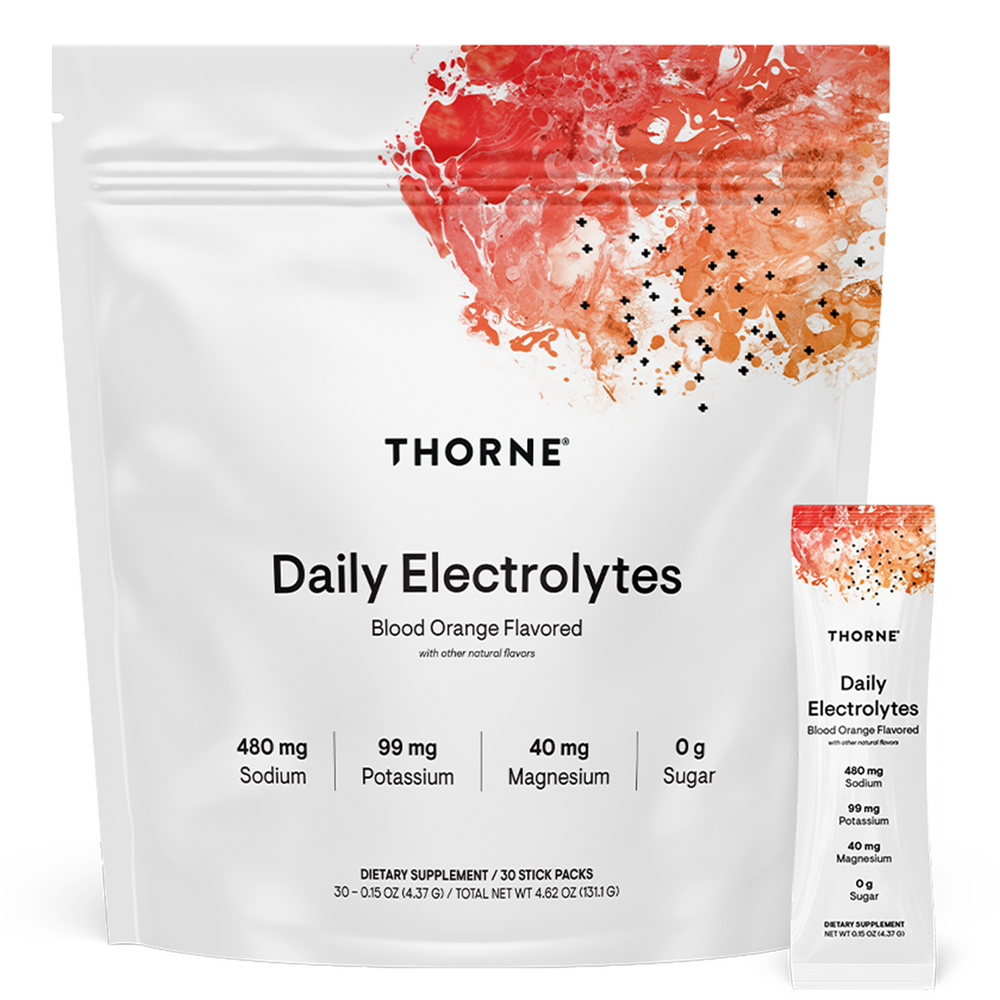
Daily Electrolytes Blood Orange
30 packets
$XX.XX$40.00retail
Add to cart to see your price
Thorne
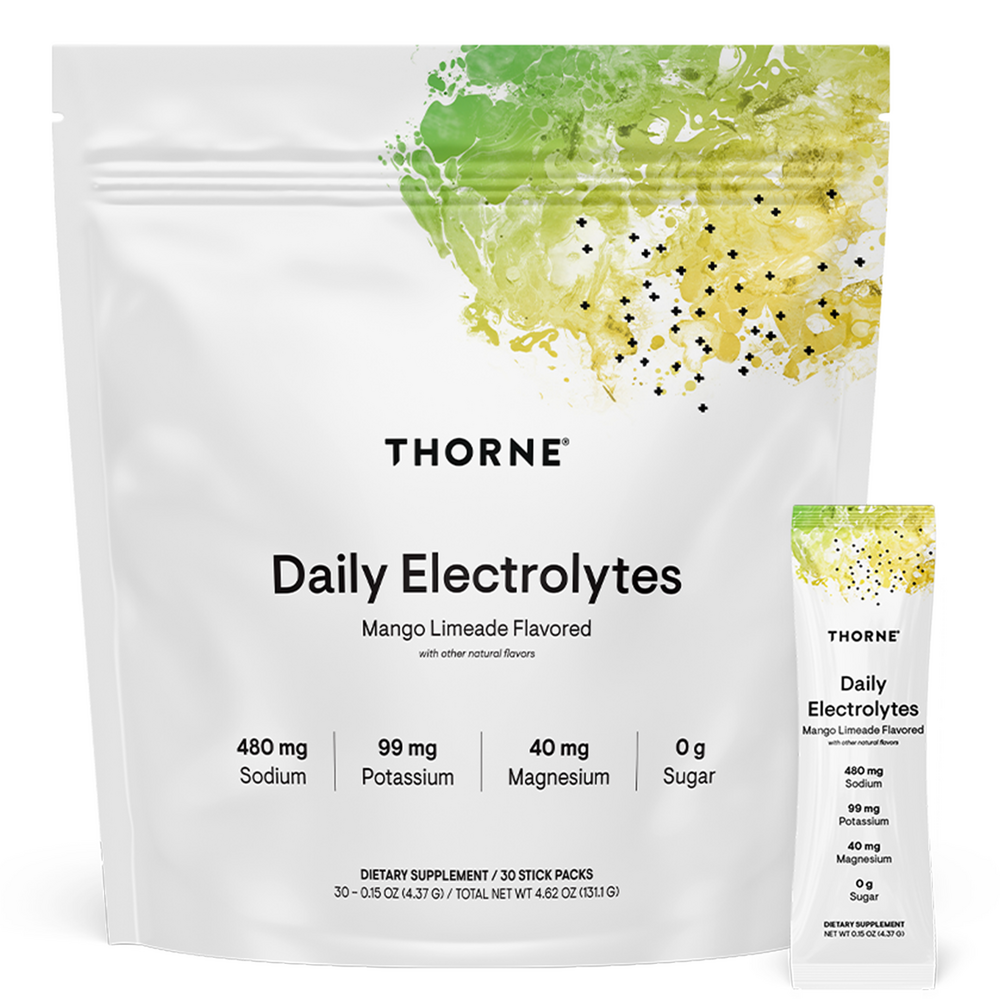
Daily Electrolytes Mango Limeade
30 packets
$XX.XX$40.00retail
Add to cart to see your price
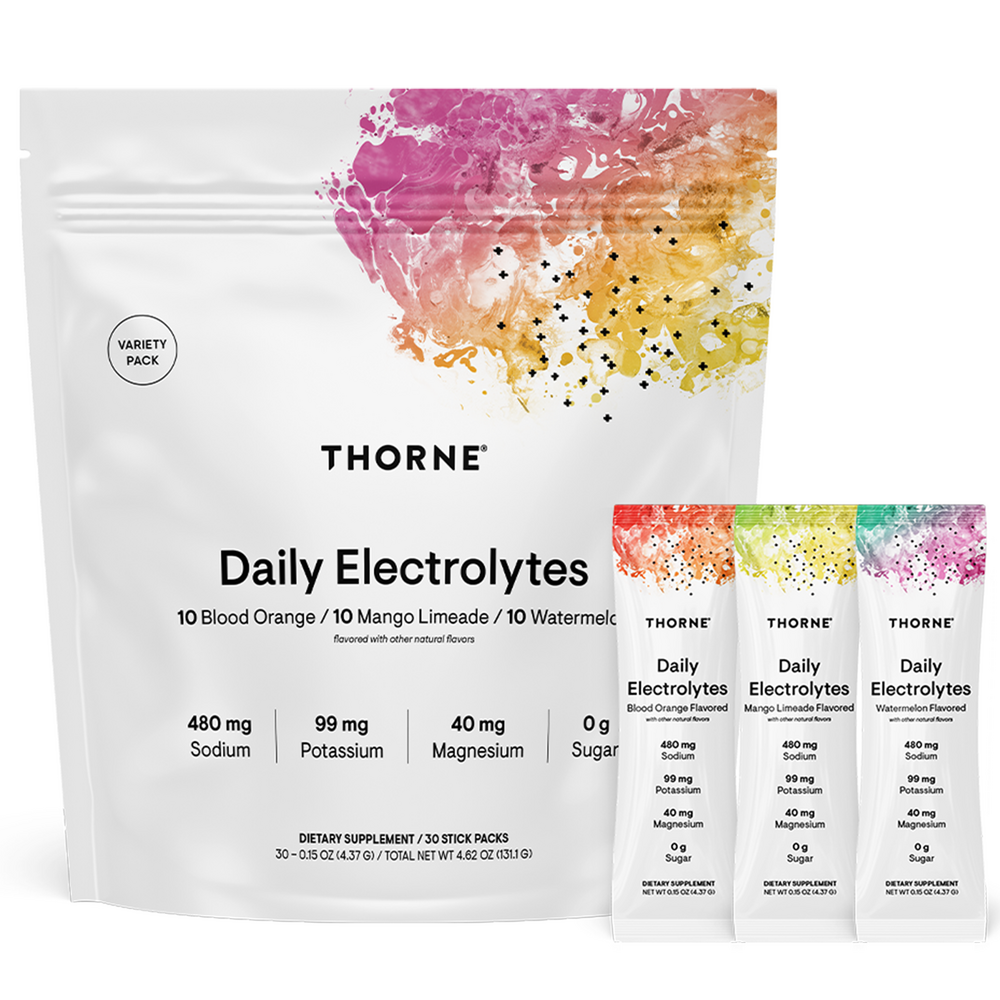
Thorne
Daily Electrolytes Variety Pack
30 packets
$XX.XX$40.00retail
Add to cart to see your price
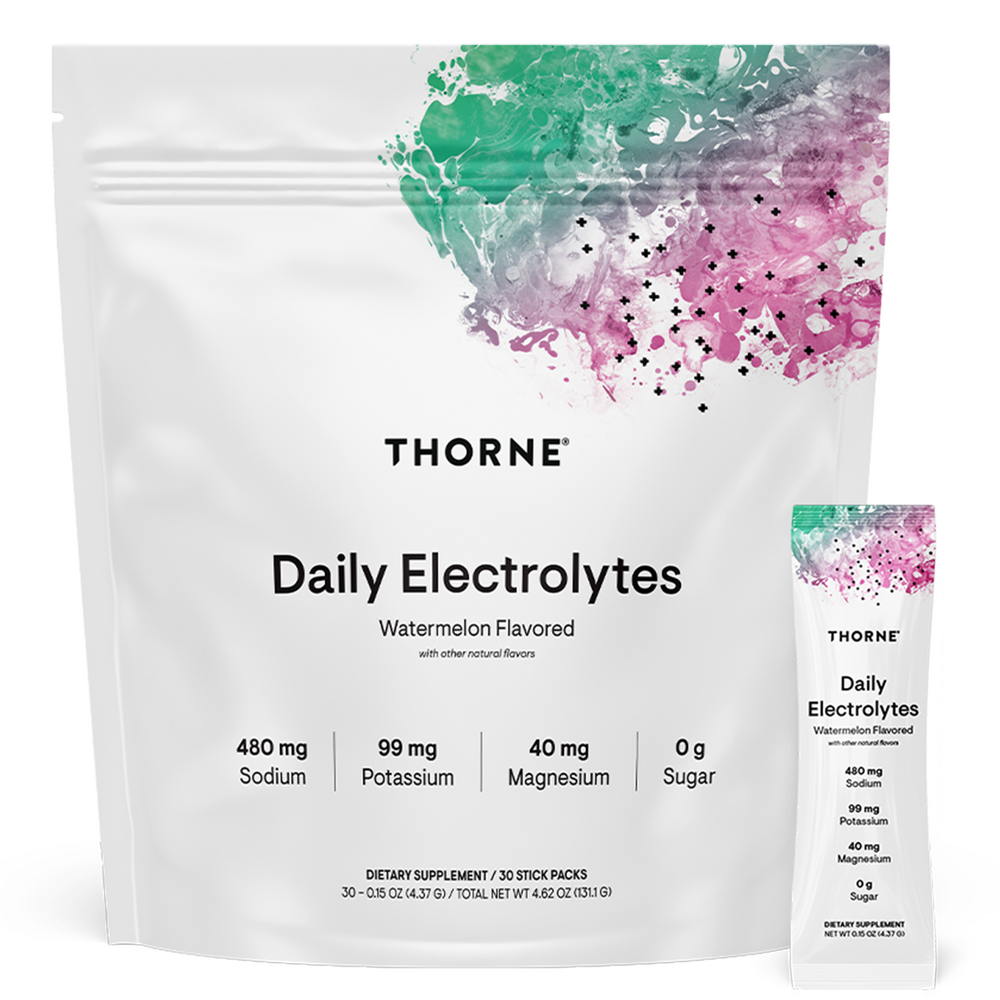
Thorne
Daily Electrolytes Watermelon
30 packets
$XX.XX$40.00retail
Add to cart to see your price