 Instalab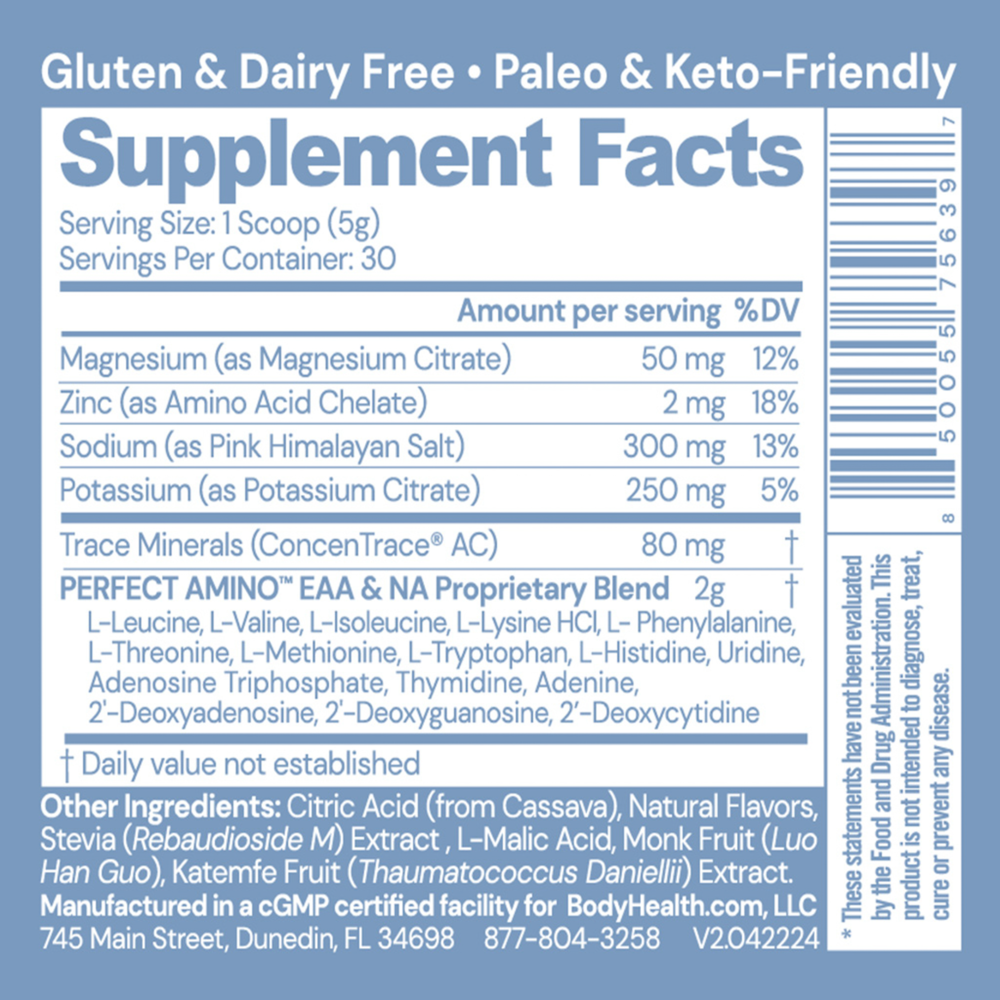

BodyHealth
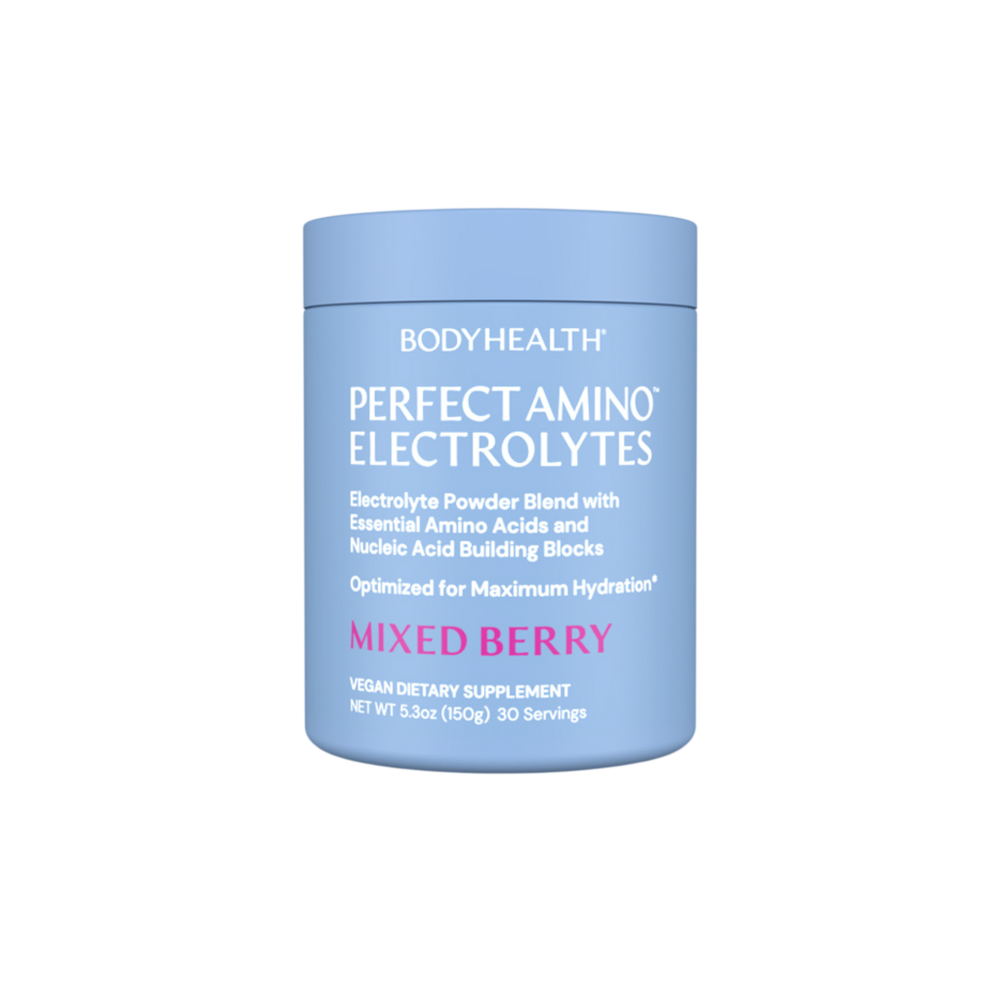
PerfectAmino Electrolytes Mixed Berry by BodyHealth
150 grams
Essential Electrolytes and Amino Acids for Optimal Hydration and Performance$XX.XX$29.99retail
Purchase option
20% below MSRP3rd-party tested for purity & potencyFree shipping $50+
Vegan·Vegetarian·Gluten Free·Dairy Free·Keto Friendly·Paleo Friendly
BodyHealth PerfectAmino Electrolytes Mixed Berry overview
Hot-weather runners, heavy sweaters, and low-carb or keto athletes are the real audience for this electrolyte powder. One scoop gives 300 mg sodium, 250 mg potassium, and 50 mg magnesium, a practical top-up before or during 60–90 minute sessions. If your Basic Metabolic Panel has shown low sodium or potassium, or your Magnesium, RBC trends low-normal, structured electrolytes are smarter than plain water. Ultra-endurance or very salty sweaters often need more sodium than one scoop provides.
Sodium helps your gut pull water into the bloodstream and keeps plasma volume up, while potassium and magnesium stabilize nerve signals and muscle contraction. Citrate forms are easy on the stomach and can buffer acid load. The 2 g of essential amino acids (EAAs, the protein building blocks your body can’t make) provide a light signal for muscle repair, but they are not a substitute for a 20–40 g protein meal after training. No sugar means low osmolality, so this electrolyte powder sits well during hard efforts; add carbs separately for sessions over 90 minutes.
Mix 1 scoop in 8–12 oz cold water. Use 15–30 minutes before training, then about one scoop per hour during longer efforts, adjusting to sweat rate and taste. If you finish salty or get calf cramps, you likely need more sodium from an extra scoop or salty foods. For workouts over 90 minutes, pair with 30–60 grams of carbohydrate per hour. It’s fine with or without food and works well post-sauna or after a GI illness once you can keep fluids down.
If you take potassium-raising drugs like lisinopril or losartan (blood pressure), or spironolactone or trimethoprim (can raise potassium), ask your clinician before using potassium-containing electrolyte powder. Kidney disease, heart failure, or fluid/sodium restrictions warrant supervision. Minerals can bind some antibiotics; separate this by 2–4 hours from fluoroquinolones or tetracyclines. If your Creatine Kinase is spiking from overtraining, fix training and carbs first—electrolytes won’t solve that.
Frequently asked questions
Is electrolyte powder good for runners?
Yes. It replaces the sodium and potassium lost in sweat, helping you maintain blood volume and reduce cramping. Use roughly one scoop per hour in hot conditions, and add carbs for runs longer than 90 minutes.
How much sodium do I need during exercise?
Needs vary widely. Many athletes lose 300–1,000+ mg sodium per hour. One scoop here has 300 mg, so heavy or salty sweaters often use more or add salty foods. Let thirst, salt crust on clothing, and performance guide adjustments.
Does this electrolyte powder have sugar or calories?
It’s a no-sugar mix. That’s ideal for short sessions or low-carb training. For efforts over 90 minutes, add a separate carbohydrate source to maintain pace and spare muscle glycogen.
Will electrolytes help night-time leg cramps?
Sometimes, especially if you’re a salty sweater or dehydrated. Night cramps also relate to training load, low total calories, or low magnesium intake. Check Magnesium, RBC and review training and hydration habits.
Can I use this while fasting or on keto?
Yes. Electrolytes are often more important on low-carb or fasting days because insulin is lower and you excrete more sodium. This mix won’t break a fast in a meaningful way.
Is it safe with blood pressure medications?
Be cautious. ACE inhibitors (like lisinopril), ARBs (like losartan), and potassium-sparing diuretics (like spironolactone) can raise potassium. Check with your clinician and consider monitoring potassium on a Basic Metabolic Panel.
Can I take this with antibiotics or other supplements?
Separate minerals from fluoroquinolone or tetracycline antibiotics by 2–4 hours to avoid reduced absorption. It’s fine with most supplements; if you already take high-dose magnesium, consider your total daily intake.
How fast will I feel a difference?
Hydration effects are within minutes to an hour. Cramp reduction, if due to sodium loss, is often noticeable on the next hot or long session. Muscle recovery depends more on total protein; EAAs here are a light assist.
How to take it & ingredients
Suggested use: Add 1 scoop into 8-12oz cold water, mix & enjoy!
Active ingredients
1 scoop per serving
Magnesium
As Magnesium Citrate
As Magnesium Citrate
50 mg
Zinc
As Amino Acid Chelate
As Amino Acid Chelate
2 mg
Sodium
As Pink Himalayan Salt
As Pink Himalayan Salt
300 mg
Potassium
As Potassium Citrate
As Potassium Citrate
250 mg
Trace Minerals (ConcenTrace® AC)
80 mg
▼
Perfect Amino EAA & NA Proprietary Blend
2 g
L-Leucine
-
L-Valine
-
L-Isoleucine
-
L-Lysine HCI
-
L-Phenylalanine
-
L-Threonine
-
L-Methionine
-
L-Tryptophan
-
L-Histidine
-
Uridine
-
Adenosine Triphosphate
-
Thymidine
-
Adenine
-
2'-Deoxyadenosine
-
2'-Deoxyguanosine
-
2'-Deoxycytidine
-
Other ingredients: Citric Acid (from Cassava), Natural Flavors, Stevia (Rebaudioside M) Extract, L-Malic Acid, Monk Fruit (Luo Han Gau), Katemfe Fruit (Thaumatococcus Daniellii) Extract
Certifications
Benefits
Warnings
Customers also considered
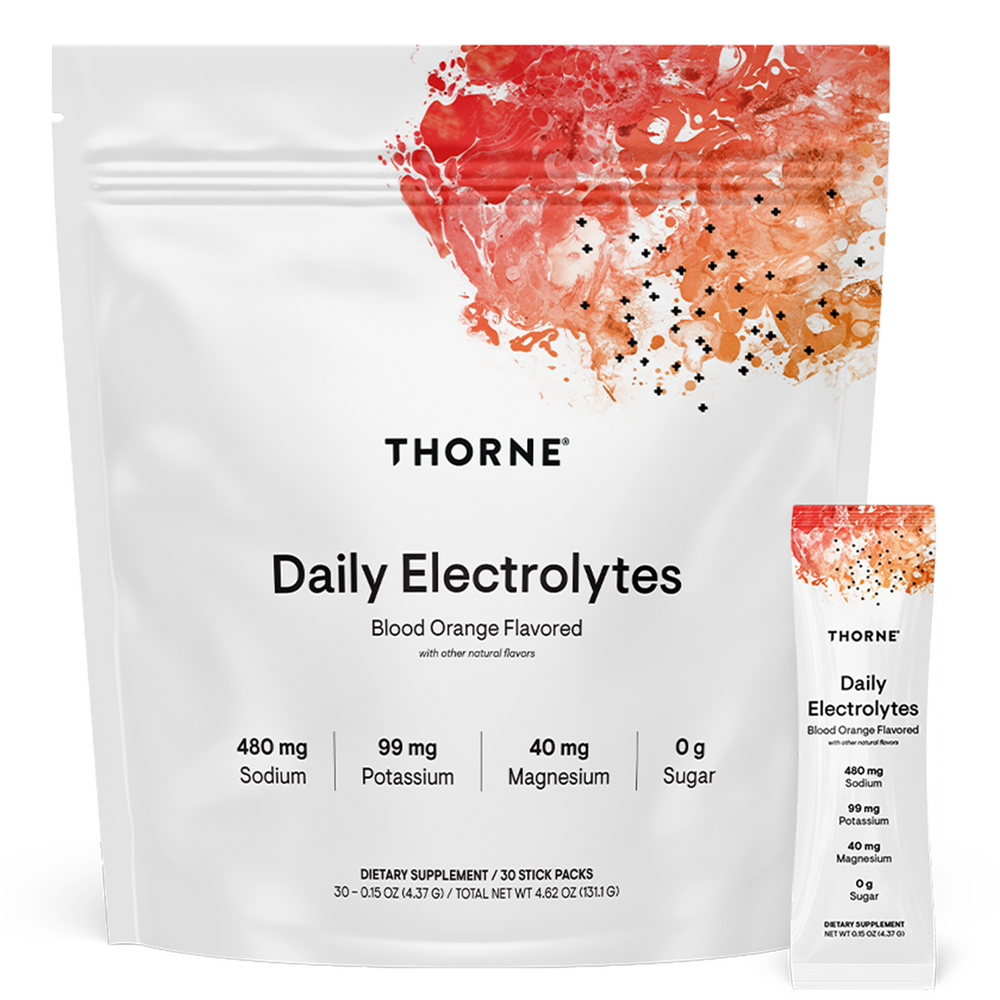
Thorne
Daily Electrolytes Blood Orange
30 packets
$XX.XX$40.00retail
Add to cart to see your price
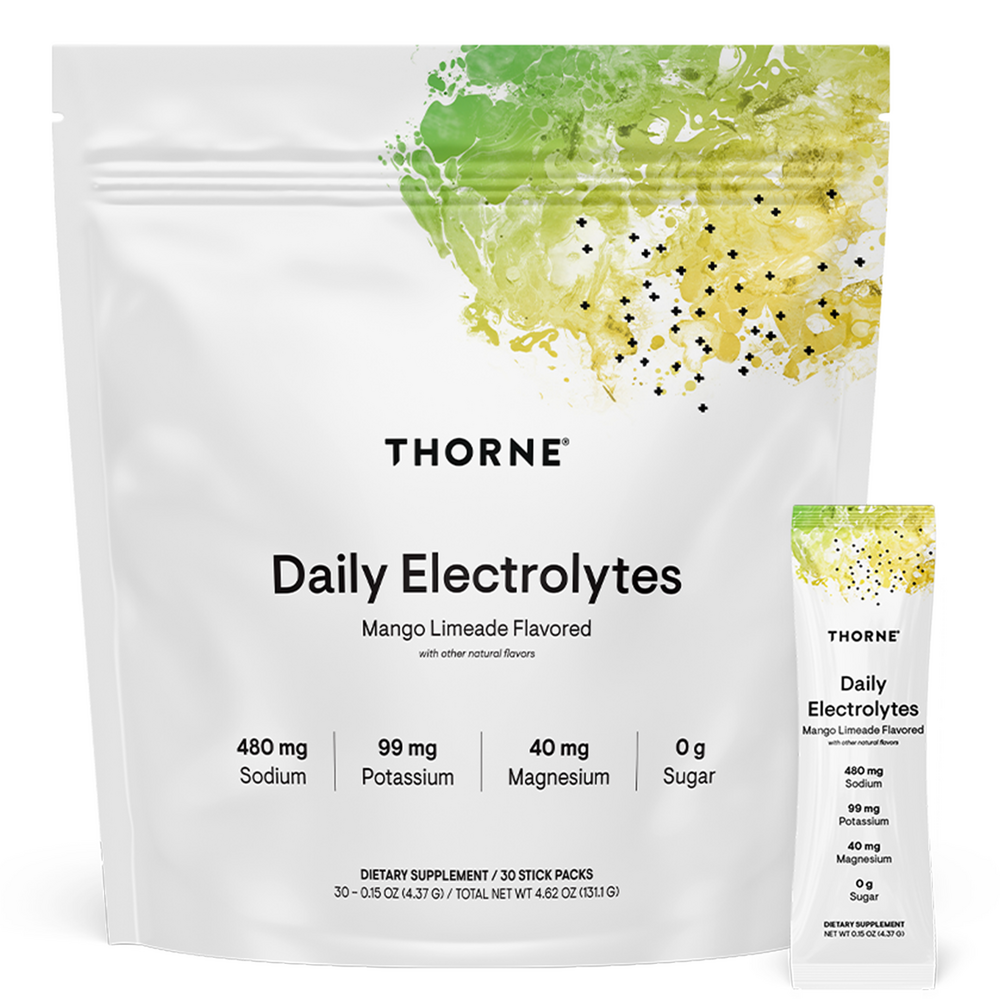
Thorne
Daily Electrolytes Mango Limeade
30 packets
$XX.XX$40.00retail
Add to cart to see your price
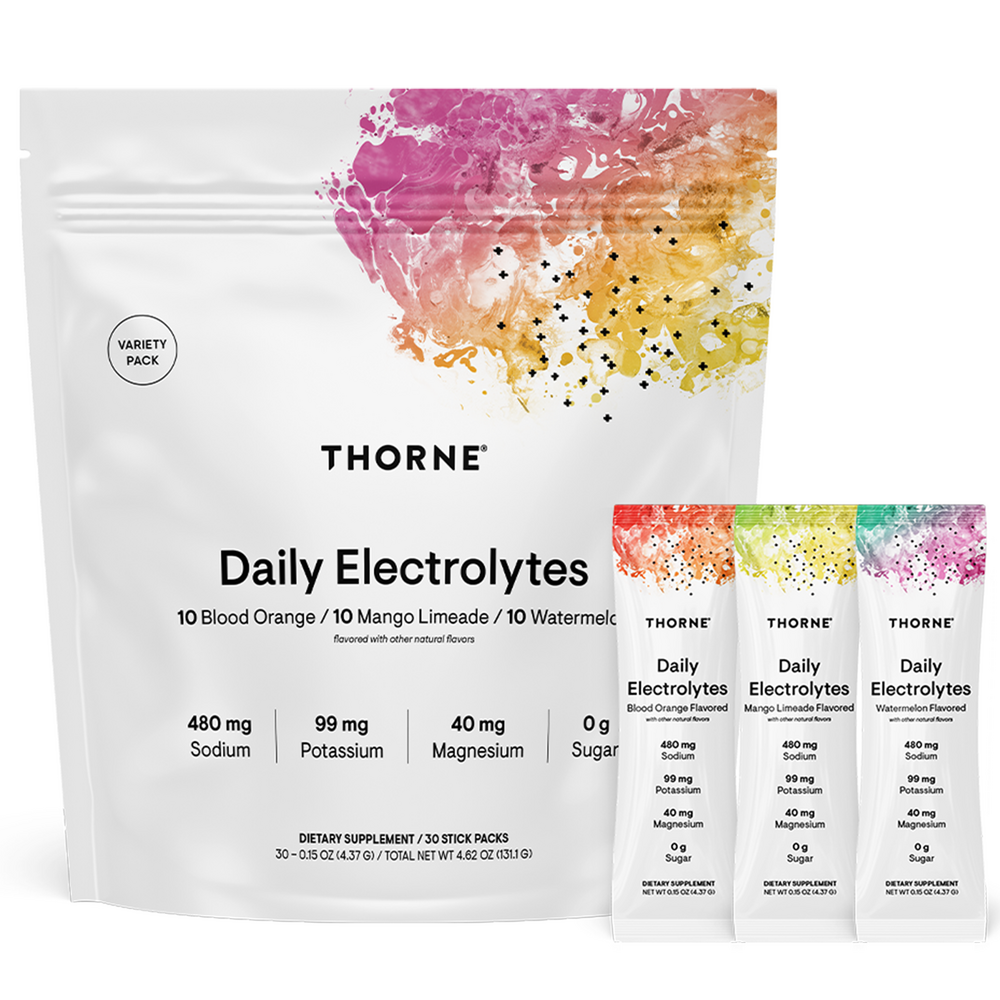
Thorne
Daily Electrolytes Variety Pack
30 packets
$XX.XX$40.00retail
Add to cart to see your price
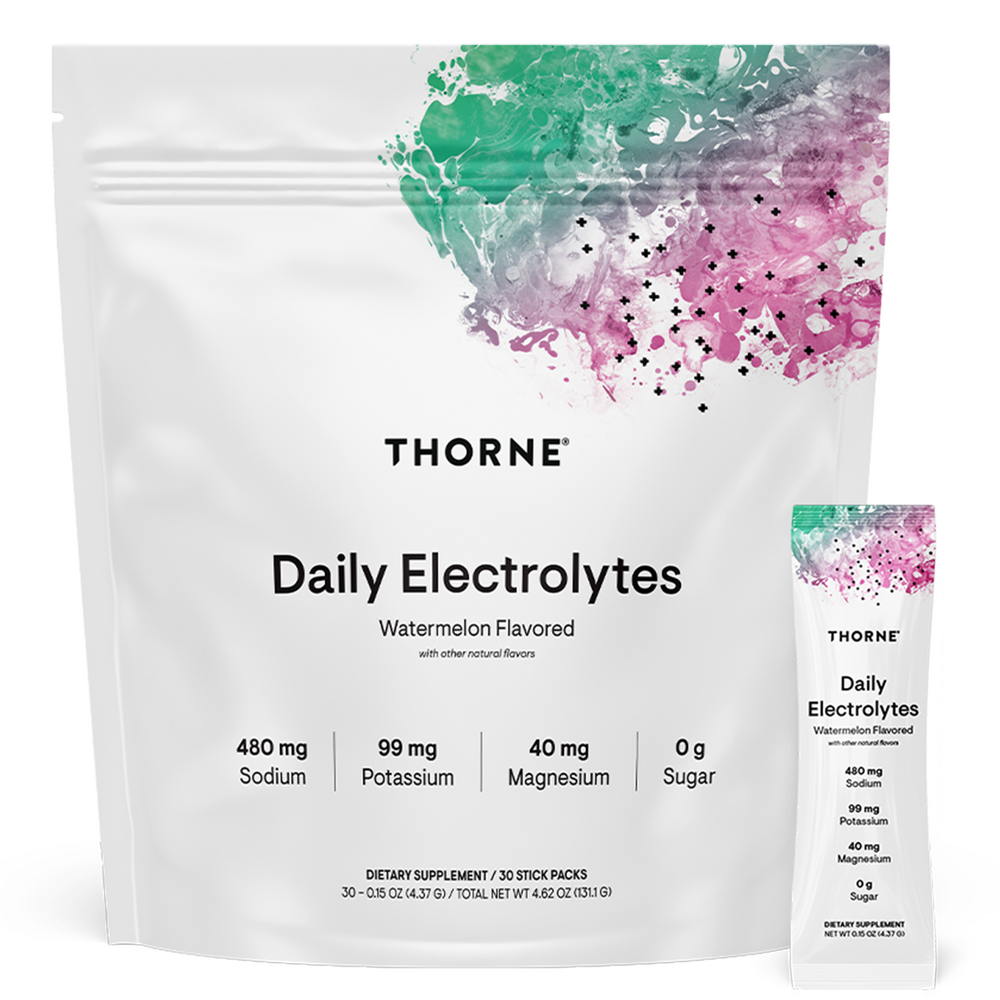
Thorne
Daily Electrolytes Watermelon
30 packets
$XX.XX$40.00retail
Add to cart to see your price