 Instalab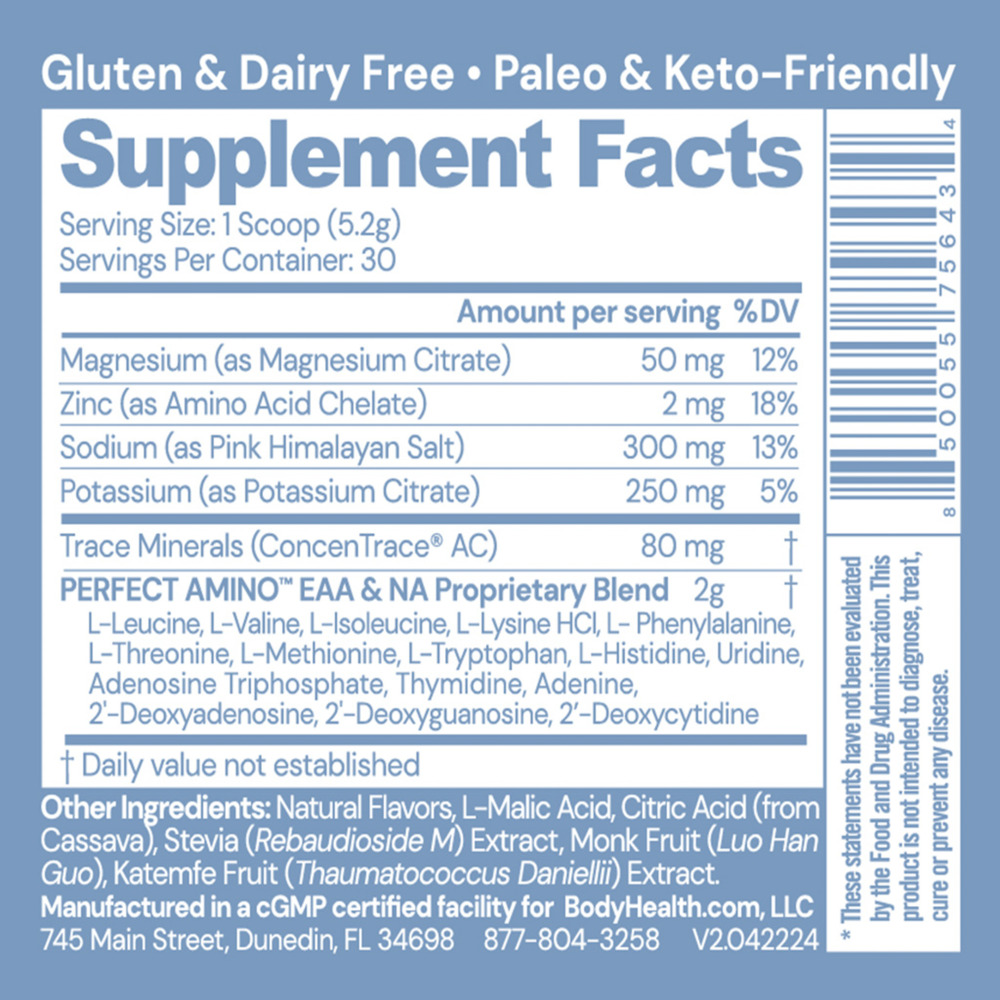
BodyHealth
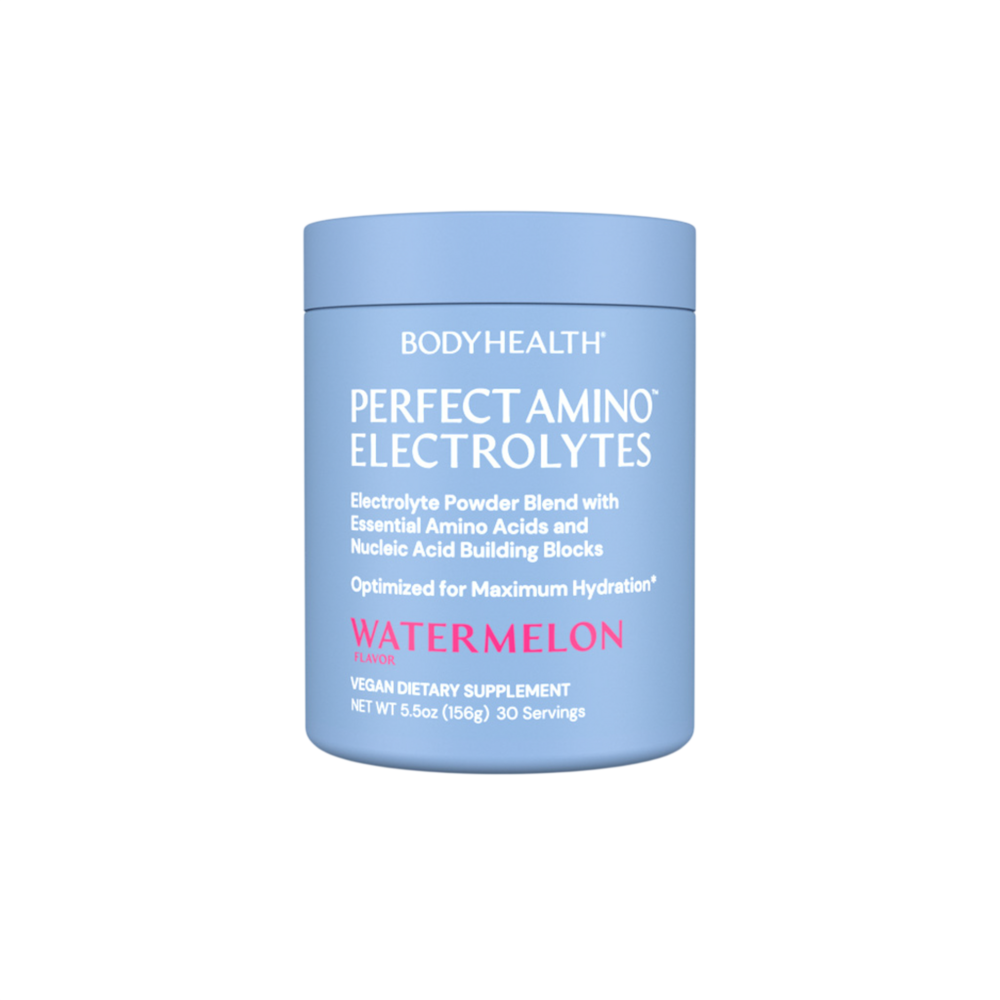
PerfectAmino Electrolytes Watermelon by BodyHealth
156 grams
Hydration and Recovery Support with Essential Electrolytes and Amino Acids$XX.XX$29.99retail
Purchase option
20% below MSRP3rd-party tested for purity & potencyFree shipping $50+
Vegan·Vegetarian·Gluten Free·Soy Free·Dairy Free·Keto Friendly·
BodyHealth PerfectAmino Electrolytes Watermelon overview
Indoor workouts, hot-weather runs, and low‑carb adaptation cramps are the common cases where an electrolyte powder pays off. This formula suits light to moderate sweaters who want steady sodium and potassium without sugar, plus a small dose of essential amino acids. If you log long sessions or your sweat leaves salt stains, you’ll likely need more sodium per hour than this provides. Basic Metabolic Panel results (Sodium, Potassium) can help tailor your plan if you cramp or bonk often.
Sodium and potassium set the electrical gradients that let nerves fire and muscles contract; water follows sodium across the gut, so replacing it helps you hold onto fluid. Citrate salts are easy on the stomach. Zinc and trace minerals replace smaller sweat losses. The essential amino acids supply building blocks for muscle repair when you’re training fasted or between meals, but 2 g is a light dose; it complements, not replaces, complete protein. Expect effects during the current workout, not weeks later.
Mix one scoop in 16 oz cold water and drink before or during training. For sessions over an hour, use one scoop every 45–60 minutes, then adjust by sweat rate: heavy sweaters often add extra sodium or a second scoop. There is no sugar here, so pair with carbohydrate if you need energy. For recovery, use this plus a real protein source; 20–40 g protein or 10–15 g essential amino acids outperforms 2 g alone.
Skip or get clinician guidance if you have kidney disease, are on fluid restriction, or take medicines that raise potassium (ACE inhibitors, ARBs, spironolactone), since added potassium can be risky. If you’ve been told to limit sodium for blood pressure or heart failure, account for the 300 mg sodium per scoop in your daily total. Pregnancy and breastfeeding are usually fine, but confirm with your clinician if you have blood pressure or swelling concerns.
Frequently asked questions
Is this electrolyte powder enough for heavy sweaters?
It’s a light-to-moderate option. One scoop has 300 mg sodium, which suits many indoor or mild-weather workouts. Heavy sweaters and endurance events often need 500–1,000+ mg sodium per hour. In that case, add salt or use a higher-sodium drink, then recheck how you feel and perform.
Does it break a fast?
No meaningful calories or sugar means it won’t break a typical water-only fast for most people. The 2 g of essential amino acids is protein, so if you define a fast as zero protein, save it for training windows or choose plain electrolytes without amino acids.
How quickly will I feel a difference?
During the same workout. Electrolytes are absorbed quickly, improving fluid retention and reducing cramp risk within minutes. If you’re prone to next‑day headaches from dehydration, using this during and after training often helps by the following morning.
Can I take it with other magnesium or potassium supplements?
Usually yes for healthy adults, since each scoop adds 50 mg magnesium and 250 mg potassium. If you already take potassium, or you’re on ACE inhibitors, ARBs, or potassium‑sparing diuretics, ask your clinician to avoid high potassium levels.
Is there sugar or caffeine in it?
No sugar and no caffeine. If you need fuel for sessions over 60–90 minutes, add a carbohydrate source. This blend focuses on hydration and electrolytes with essential amino acids, not energy.
Are essential amino acids better than BCAAs?
For muscle protein building, essential amino acids outperform BCAAs because they include all required building blocks, not just leucine, isoleucine, and valine. The 2 g here is a small adjunct; use a full protein dose post‑workout for best results.
Can I use it if I have high blood pressure?
Possibly, but account for the 300 mg sodium per scoop in your daily sodium budget. If your clinician advised strict sodium limits or you take multiple blood pressure medicines, confirm this fits your plan before using regularly.
Which labs can guide my hydration plan?
A Basic Metabolic Panel (Sodium, Potassium) helps if you have recurrent cramps, dizziness, or are on diuretics. For muscle damage after hard sessions, Creatine Kinase can contextualize soreness, though most athletes don’t need to track it routinely.
How to take it & ingredients
Suggested use: Mix one scoop in 16 fl. oz. of ice-cold water.
Active ingredients
1 scoop per serving
Magnesium
As magnesium citrate
As magnesium citrate
50 mg
Zinc
As amino acid chelate
As amino acid chelate
2 mg
Sodium
As pink himalayan salt
As pink himalayan salt
300 mg
Potassium
As potassium citrate
As potassium citrate
250 mg
Trace Minerals (ConcenTrace® AC)
80 mg
▼
PerfectAmino® Amino Acid Blend
2 g
L-Leucine
-
L-Valine
-
L-Isoleucine
-
L-Lysine HCI
-
L-Phenylalanine
-
L-Threonine
-
L-Methionine
-
L-Tryptophan
-
L-Histidine
-
Uridine
-
Adenosine Triphosphate
-
Thymidine
-
Adenine
-
2'-Deoxyadenosine
-
2'-Deoxyguanosine
-
2'-Deoxycytidine
-
Other ingredients: Natural Flavors, L-Malic Acid, Citric Acid (from Cassava), Stevia (Rebaudioside M) Extract, Monk Fruit (Luo Han Guo), Katemfe Fruit (Thaumatococcus Danielli) Extract
Certifications
Benefits
Warnings
Customers also considered
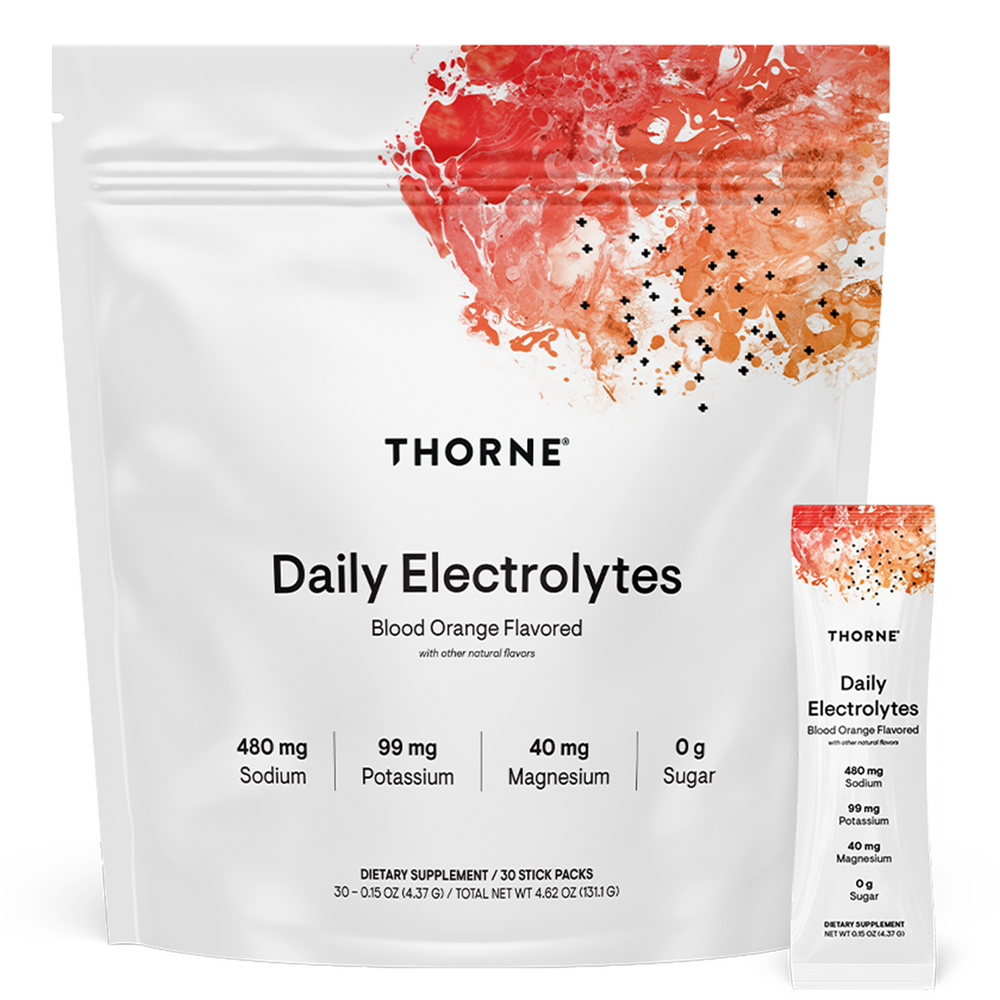
Thorne
Daily Electrolytes Blood Orange
30 packets
$XX.XX$40.00retail
Add to cart to see your price
Thorne
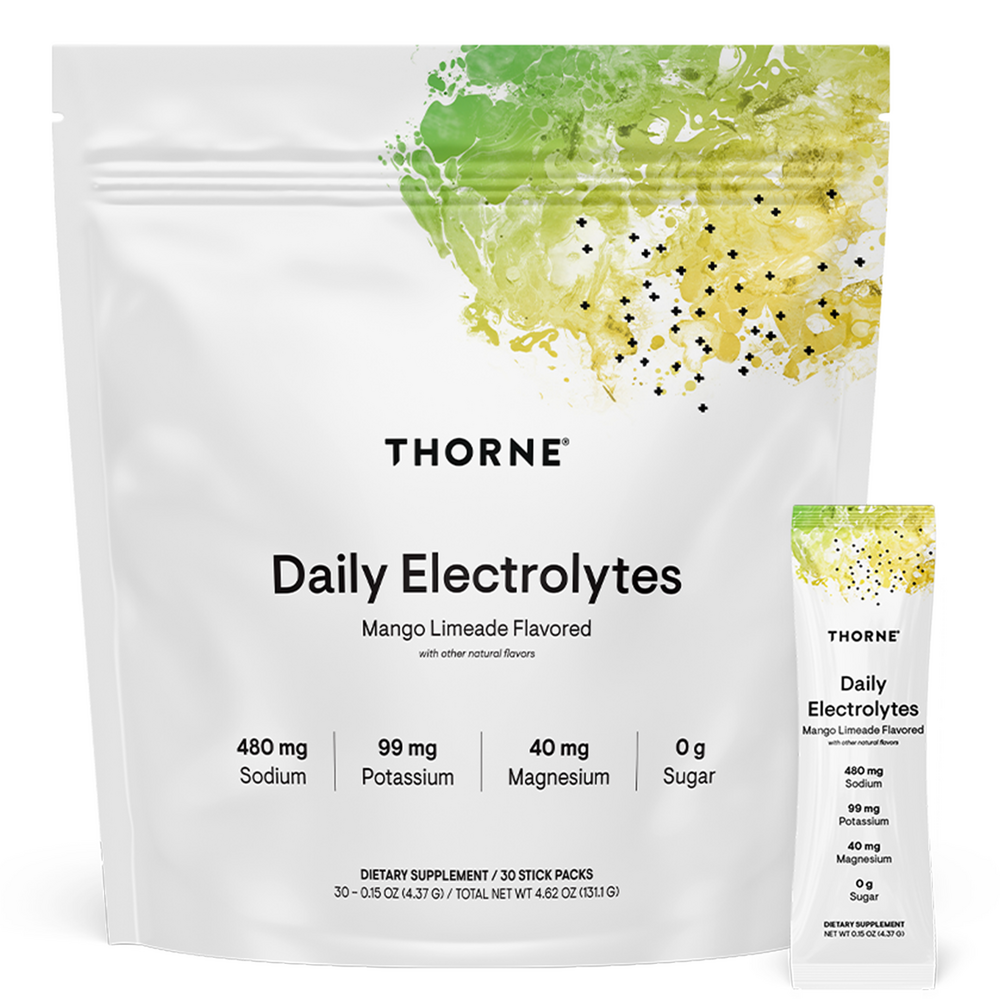
Daily Electrolytes Mango Limeade
30 packets
$XX.XX$40.00retail
Add to cart to see your price
Thorne
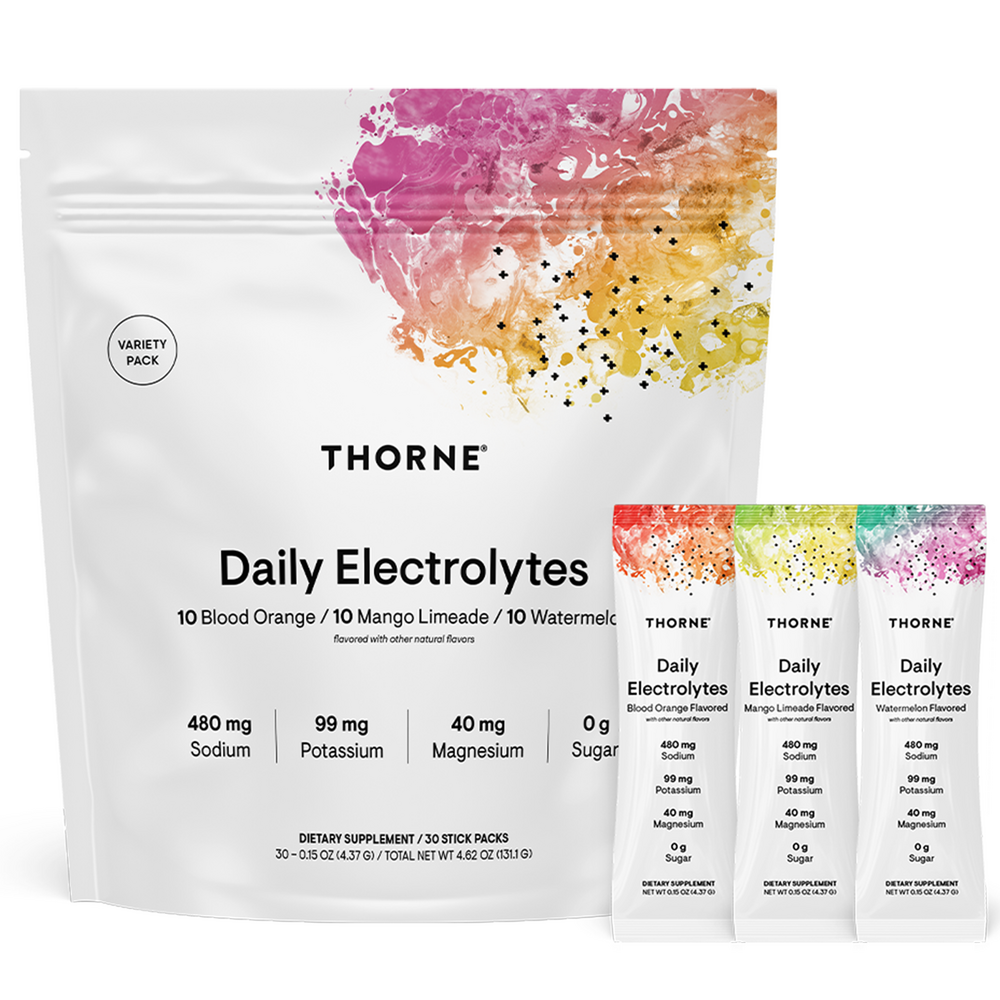
Daily Electrolytes Variety Pack
30 packets
$XX.XX$40.00retail
Add to cart to see your price
Thorne
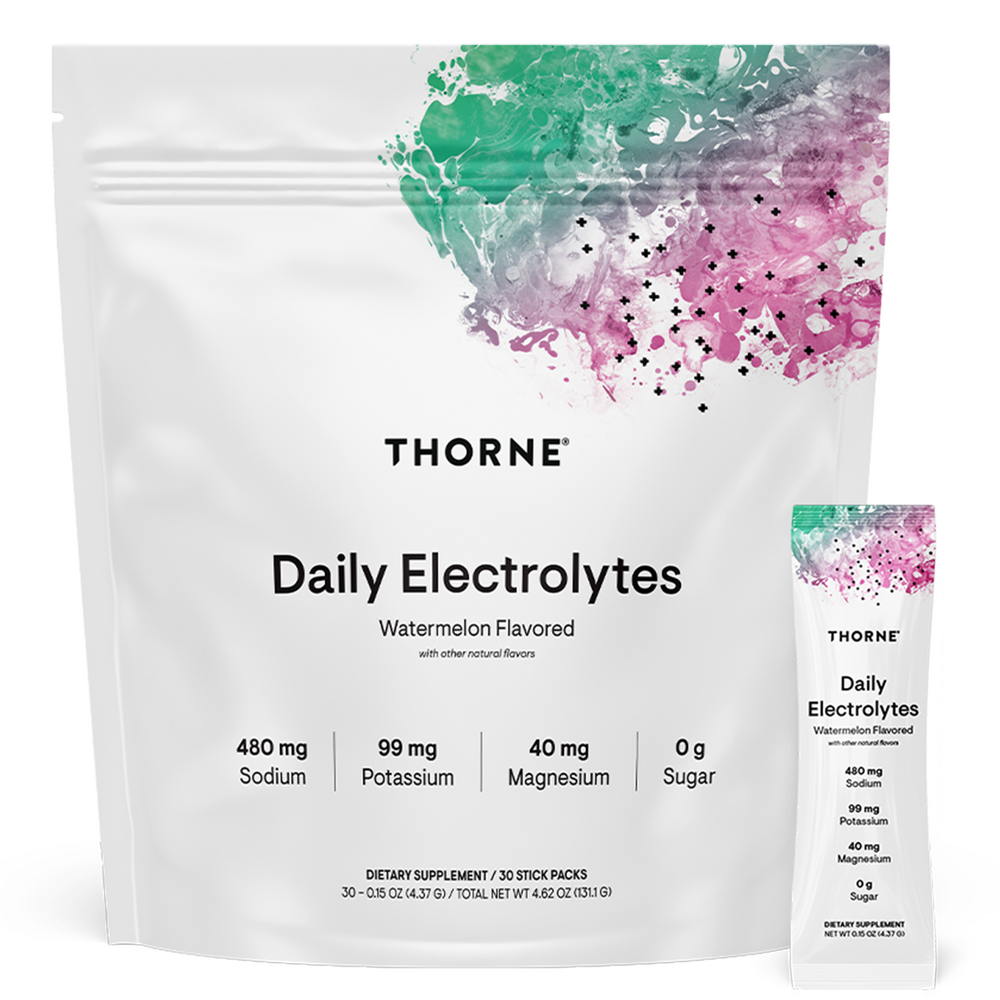
Daily Electrolytes Watermelon
30 packets
$XX.XX$40.00retail
Add to cart to see your price