 Instalab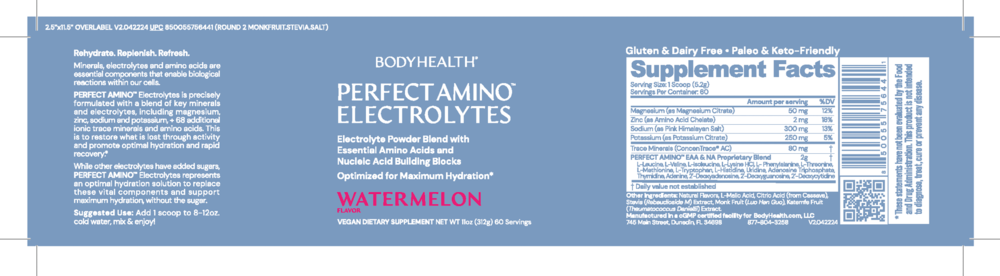

BodyHealth
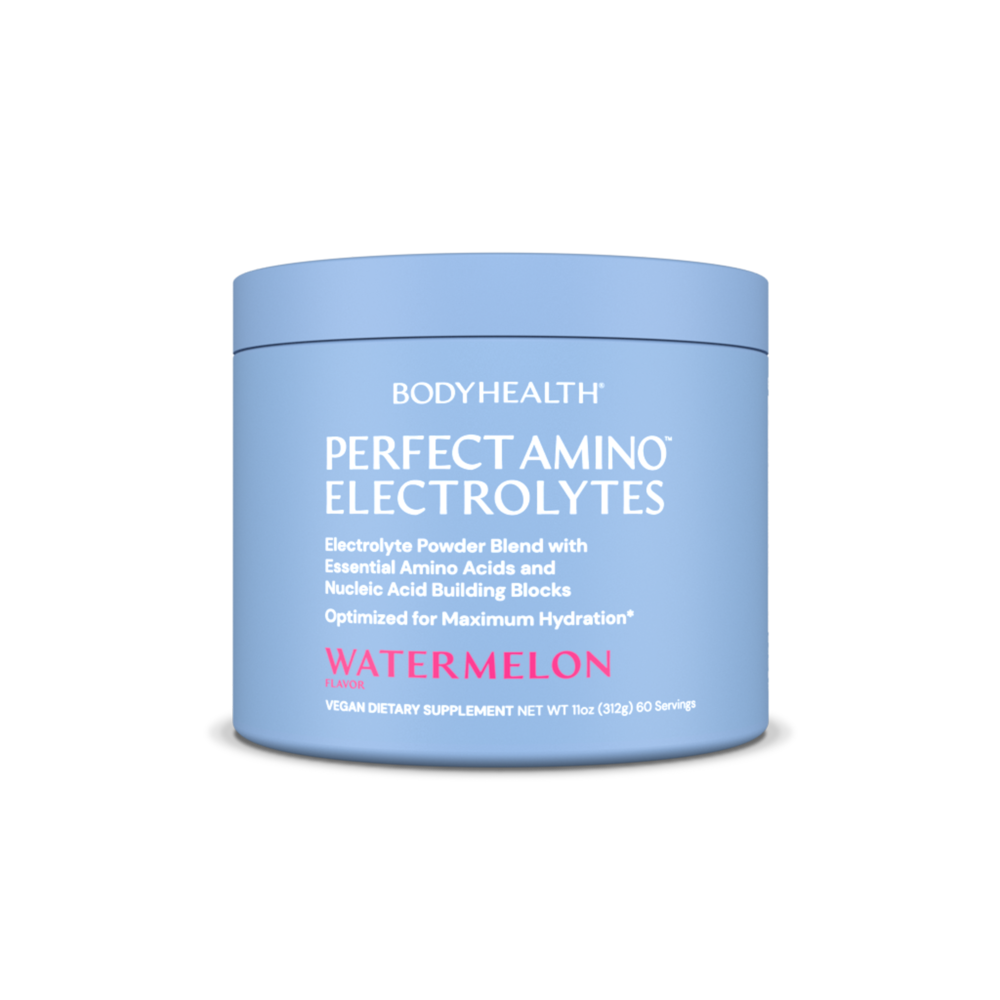
PerfectAmino Electrolytes Watermelon by BodyHealth
312 grams
Hydration and Recovery with Essential Electrolytes and Amino Acids$XX.XX$54.99retail
Purchase option
20% below MSRP3rd-party tested for purity & potencyFree shipping $50+
Vegan·Vegetarian·Gluten Free·Soy Free·Dairy Free·Keto Friendly·
BodyHealth PerfectAmino Electrolytes Watermelon overview
Hot-weather runners, people on low-carb or keto who feel lightheaded, and heavy “salty sweaters” are the ones who actually benefit from an electrolyte powder for hydration. The sodium here (300 mg) helps you retain the water you drink during long sessions or sauna use. If your Basic Metabolic Panel has shown low Sodium or low Potassium after hard training, or you cramp late in workouts, a mix like this is practical. Desk days or short easy workouts usually don’t need it.
Sodium and potassium create the gradient your gut uses to pull water into the body, so including both speeds fluid absorption. Magnesium citrate (a gentler, better-absorbed form than oxide) contributes to muscle relaxation, though 50 mg is a light dose. The essential amino acids (2 g) provide small building blocks for muscle repair; that’s a maintenance level, not a full protein-synthesis dose. Zinc and trace minerals replace smaller losses in heavy sweaters, but they aren’t the main drivers here.
Mix one scoop in 16 oz cold water. Use 15–30 minutes before training, then sip during long or hot sessions. One scoop per hour is typical for steady-state endurance; heavy or salty sweaters can alternate plain water and this mix. If you’re racing over 60–90 minutes, pair electrolytes with carbohydrate for best performance. If you’re rehydrating after illness with fluid losses, small frequent servings work better than chugging a large bottle.
If you’ve been told to limit sodium, have heart failure, uncontrolled high blood pressure, or chronic kidney disease, talk to your clinician before using any electrolyte powder. On potassium-sparing drugs (spironolactone, eplerenone), ACE inhibitors, or ARBs, monitor Potassium on labs and avoid stacking multiple potassium sources. Magnesium citrate can loosen stools; split the dose or reduce frequency if that happens. For repeated severe cramps, also check Magnesium and Vitamin D, 25-Hydroxy, and don’t ignore low Ferritin if fatigue is prominent.
Frequently asked questions
When should I take electrolyte powder for workouts?
Start 15–30 minutes before and continue sipping during long or hot sessions. For short, easy workouts under an hour in cool conditions, plain water is usually enough.
Do I need carbs with this electrolyte mix?
For performance over 60–90 minutes, yes—electrolytes plus carbohydrate outperforms electrolytes alone. Add a sports drink, gels, or real food to reach your target carbs per hour.
Is this good for keto or low-carb?
Yes. Low-carb diets increase sodium and water losses, so added sodium and potassium can reduce headaches, dizziness, and cramps common in the first weeks.
Can I use it on rest days?
If you sweat heavily from heat or sauna, sure. Otherwise, most people don’t need electrolyte powder on rest days—drink to thirst and salt food to taste.
Will this stop muscle cramps?
It often helps if cramps are sweat- and sodium-related. If cramps persist, consider overall training load, carbohydrate intake, and labs like Magnesium and Vitamin D, 25-Hydroxy.
Is it safe with blood pressure medication?
Caution. The sodium content matters if you’re salt-sensitive, and some drugs affect potassium balance. Check with your clinician and monitor blood pressure and Potassium on labs.
How fast does electrolyte powder work?
Absorption is rapid—most people feel better within 15–30 minutes when dehydration or sodium loss is the issue. Full rehydration after hard efforts can take several hours.
Does the 2 g of amino acids build muscle?
It’s a small, maintenance-level dose. For meaningful muscle protein synthesis, most evidence uses 6–12 g of essential amino acids or 20–40 g of high-quality protein post-workout.
How to take it & ingredients
Suggested use: Mix one scoop in 16 fl. oz. of ice-cold water.
Active ingredients
1 scoop per serving
Magnesium
As magnesium citrate
As magnesium citrate
50 mg
Zinc
As amino acid chelate
As amino acid chelate
2 mg
Sodium
As pink himalayan salt
As pink himalayan salt
300 mg
Potassium
As potassium citrate
As potassium citrate
250 mg
Trace Minerals (ConcenTrace® AC)
80 mg
▼
PerfectAmino® Amino Acid Blend
2 g
L-Leucine
-
L-Valine
-
L-Isoleucine
-
L-Lysine HCI
-
L-Phenylalanine
-
L-Threonine
-
L-Methionine
-
L-Tryptophan
-
L-Histidine
-
Uridine
-
Adenosine Triphosphate
-
Thymidine
-
Adenine
-
2'-Deoxyadenosine
-
2'-Deoxyguanosine
-
2'-Deoxycytidine
-
Other ingredients: Natural Flavors, L-Malic Acid, Citric Acid (from Cassava), Stevia (Rebaudioside M) Extract, Monk Fruit (Luo Han Guo), Katemfe Fruit (Thaumatococcus Danielli) Extract
Certifications
Benefits
Warnings
Customers also considered
Thorne
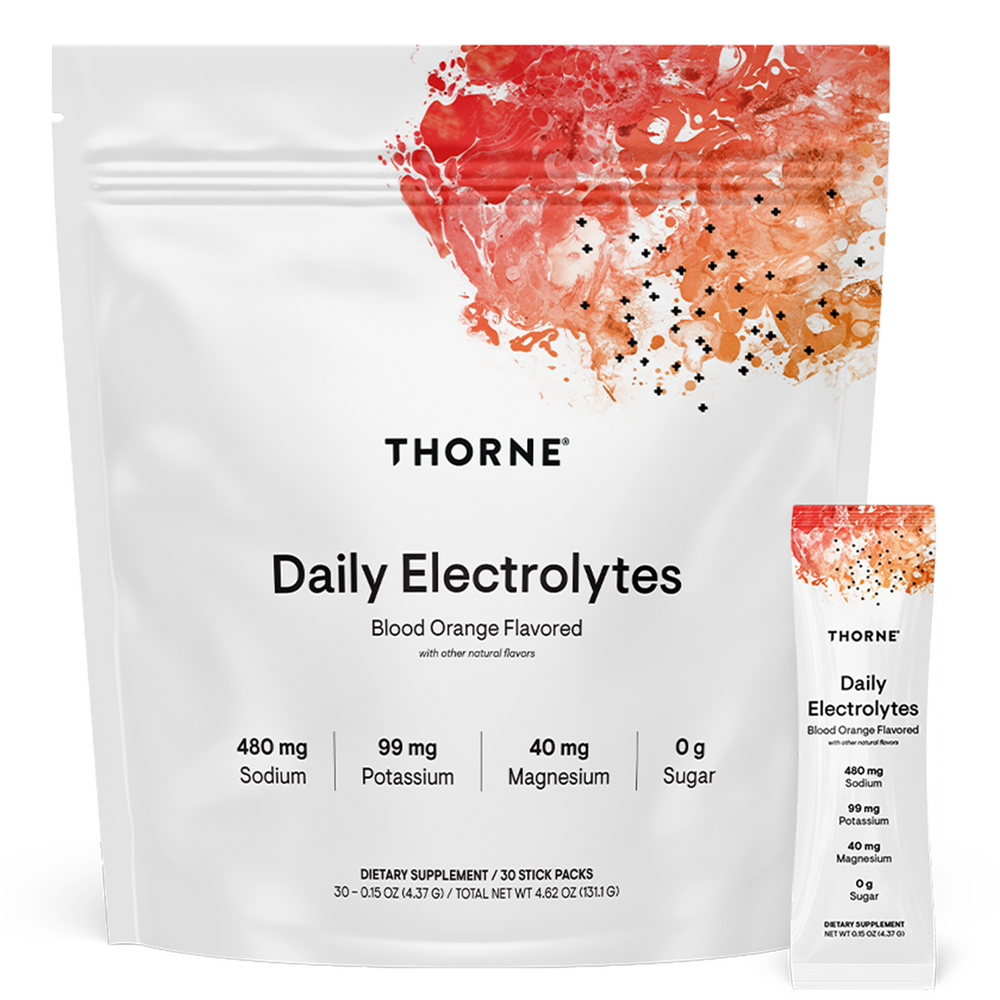
Daily Electrolytes Blood Orange
30 packets
$XX.XX$40.00retail
Add to cart to see your price
Thorne
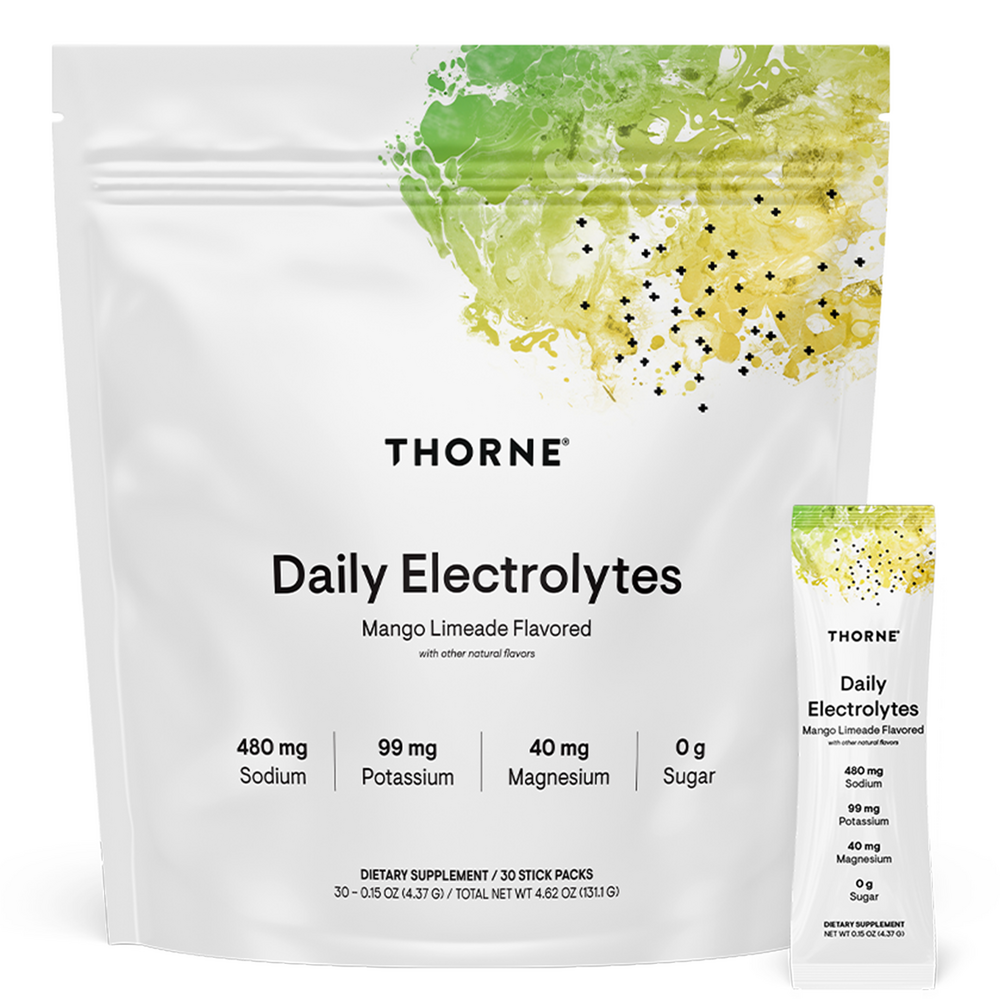
Daily Electrolytes Mango Limeade
30 packets
$XX.XX$40.00retail
Add to cart to see your price
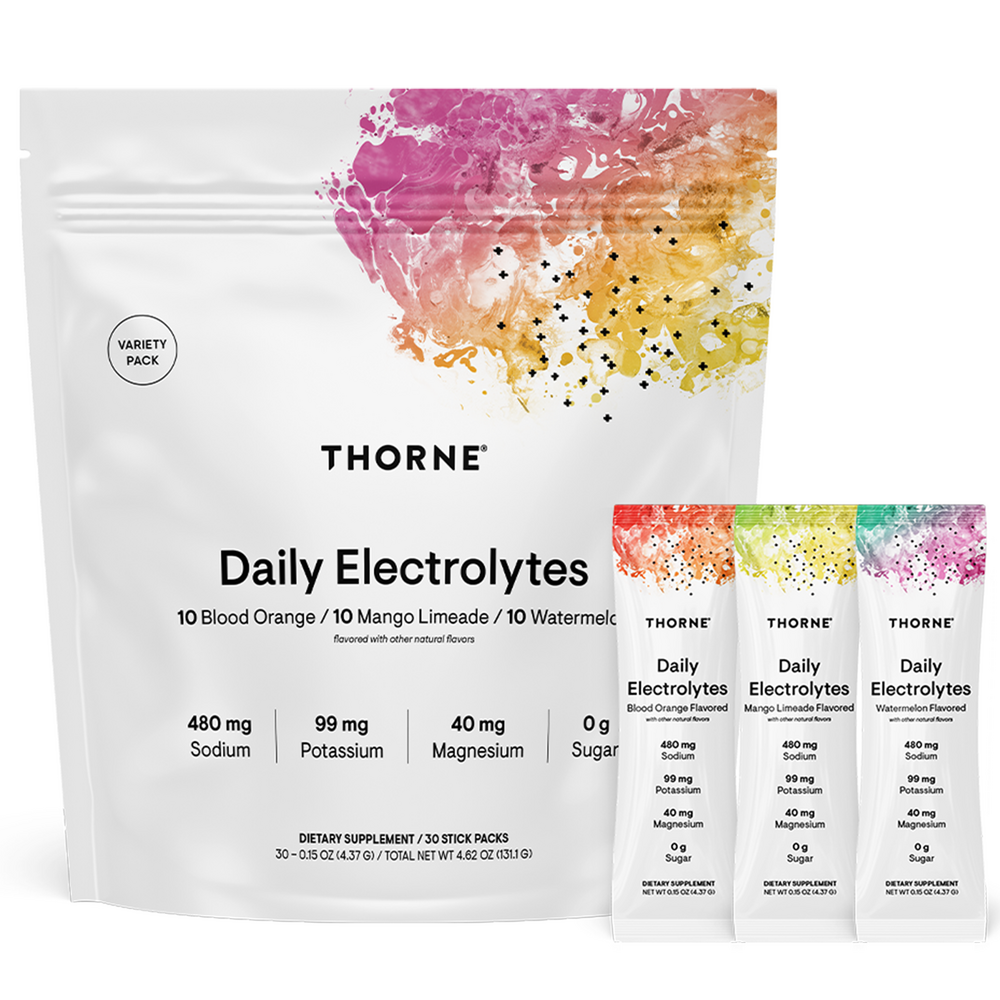
Thorne
Daily Electrolytes Variety Pack
30 packets
$XX.XX$40.00retail
Add to cart to see your price
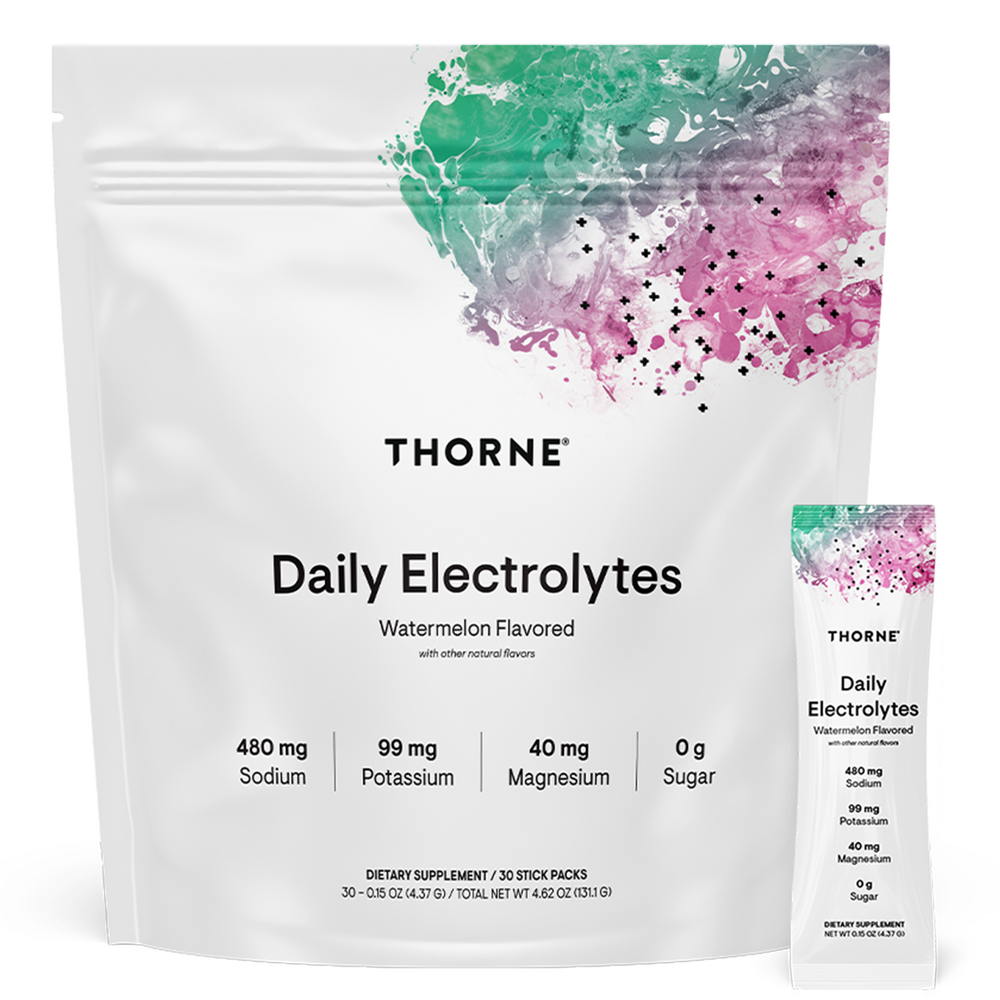
Thorne
Daily Electrolytes Watermelon
30 packets
$XX.XX$40.00retail
Add to cart to see your price