 Instalab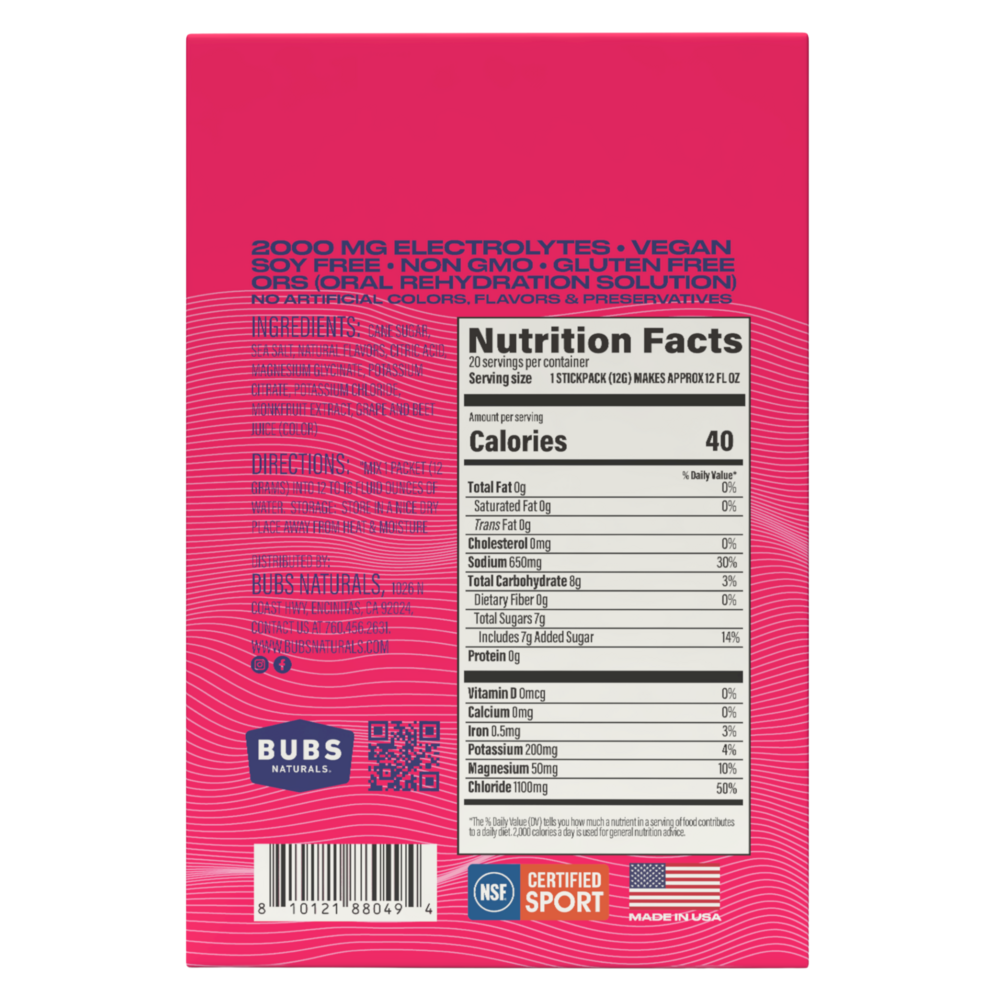

Bubs Naturals
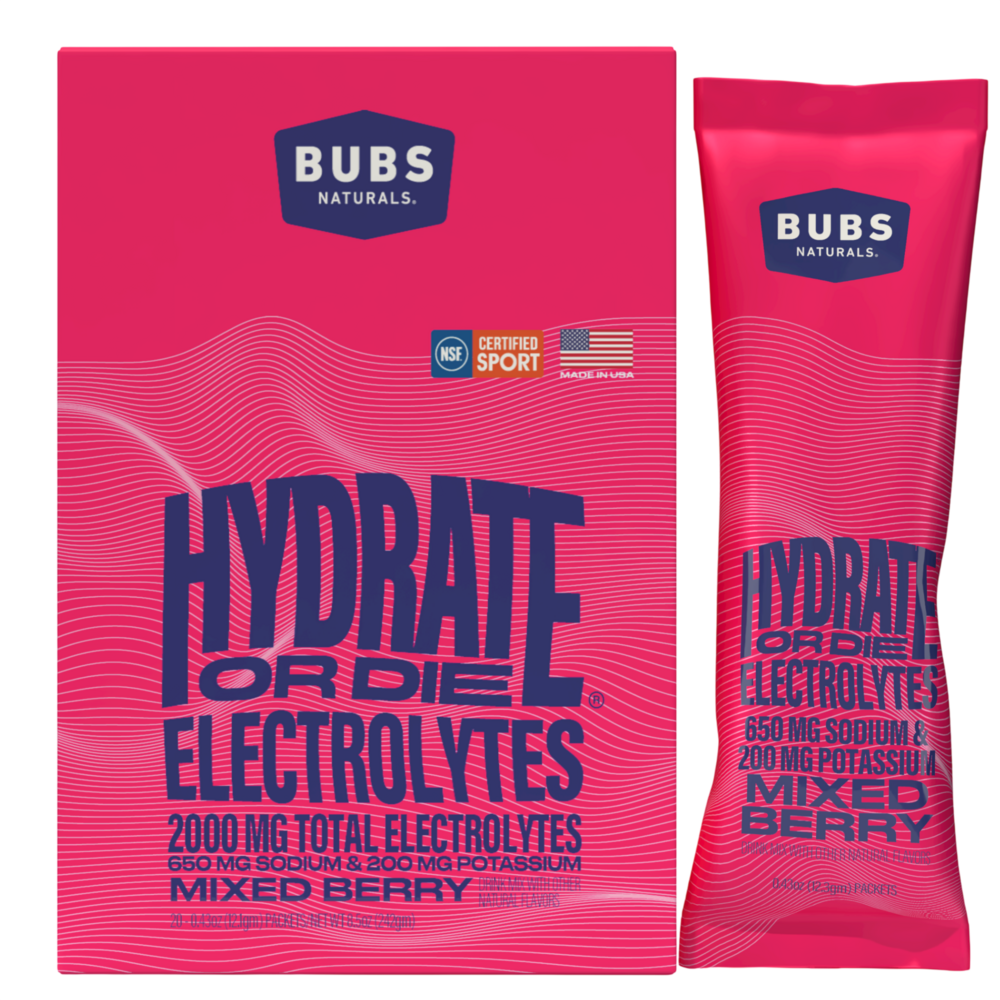
Hydrate or Die Electrolytes Mixed Berry by Bubs Naturals
20 packets · 20-day supply
Essential Electrolytes for Optimal Hydration and Performance$37.99
Purchase options
Practitioner-grade brand3rd-party testedFree shipping $50+
Artificial Preservative Free·Artificial Color Free·Artificial Flavor Free
Bubs Naturals Hydrate or Die Electrolytes Mixed Berry overview
Long, sweaty workouts in heat are where an electrolyte powder for hydration earns its keep. Heavy sweaters, endurance runners and cyclists, outdoor workers, and low‑carb or keto eaters (who lose more sodium in urine) do best here. If you’ve had post‑workout headaches, dizziness, or sloshy stomach from overdoing plain water, the higher sodium in this mix helps. It’s also useful for people with low blood pressure on hot days. If you rarely sweat or have a light training load, you likely don’t need this strength daily.
Sweat is salty, so replacing sodium is the main job. The 650 mg sodium and 1100 mg chloride help pull water from your gut into the bloodstream through sodium-dependent transporters, improving actual rehydration versus water alone. Potassium (200 mg) replaces what muscles lose with sweat and exercise. Magnesium (50 mg) is a low, gut-friendly dose; it won’t fix all cramps by itself, since exercise cramps are usually fatigue-related, but it covers a common shortfall. No added sugar means you can pair it with your preferred carb source for longer efforts.
Mix one stick into 12–16 oz of cold water. Sip during training lasting over 60–90 minutes, or use one stick after a hard session in heat. Heavy sweaters often use 1 stick per hour in hot conditions; lighter sweaters need less. For long endurance days, combine this electrolyte powder with carbs (gels or a separate drink) to sustain energy. If you feel puffy or very thirsty after a stick, space doses out and add more plain water. For daily desk work, reserve it for warm workouts, travel, or illness fluid loss.
If you’ve been told to restrict sodium, have uncontrolled high blood pressure, heart failure, or kidney disease, use this electrolyte powder only with clinician guidance. People on diuretics, ACE inhibitors, ARBs, or potassium‑sparing drugs can accumulate potassium, so the added 200 mg matters in aggregate. Pregnant athletes can use electrolytes, but personalize intake with their obstetric clinician. Gastro‑sensitive users rarely have issues at 50 mg magnesium; if you notice loose stools, split doses and drink with food.
Frequently asked questions
Is this electrolyte powder good for runners?
Yes. The higher sodium (650 mg) matches sweat losses in long, hot runs better than low-sodium drinks. Use during efforts over 60–90 minutes, and pair with carbs for energy.
How many electrolyte packets can I have in a day?
Most athletes use 1–3 sticks on long, hot days, guided by sweat rate and thirst. If you’re salt-restricted or have kidney or blood pressure issues, confirm limits with your clinician.
Does it help with muscle cramps?
It helps if cramps are tied to heavy sweating and sodium loss. Exercise cramps are often from fatigue, so pacing and conditioning matter. The magnesium dose is gentle and unlikely to cause GI upset.
Does it have sugar, and is it keto-friendly?
It’s an unsweetened electrolyte mix without added sugar, which fits keto and low-carb diets. For endurance sessions, take a separate carb source if you need fuel.
Can I take this with creatine or pre-workout?
Yes. Electrolytes can be taken alongside creatine or pre-workout. If your pre-workout already contains a lot of sodium, adjust total intake to avoid overdoing salt.
Is it safe with high blood pressure?
If your blood pressure is well controlled and you’re not on a strict sodium limit, occasional use around heavy sweating is usually fine. If you’re salt-sensitive or restricted, ask your clinician first.
Can I use it for travel, illness, or a hangover?
Yes. Extra electrolytes can help replace fluids after diarrhea, vomiting, long flights, or alcohol. Sip slowly with water. Seek medical care if you can’t keep fluids down.
How to take it & ingredients
Suggested use: Mix 1 packet (12 grams) into 12 to 16 fluid ounces of water.
Active ingredients
1 stick pack = 12 g per serving · 20 servings
Sodium
650 mg
Iron
0.5 mg
Potassium
200 mg
Magnesium
50 mg
Chloride
1100 mg
Other ingredients: Cane Sugar, Sea Salt, Natural Flavors, Citric Acid, Magnesium Glycinate, Potassium Citrate, Potassium Chloride, Monkfruit Extract, Grape and Beet Juice (color)
Certifications
Benefits
Warnings
Customers also considered
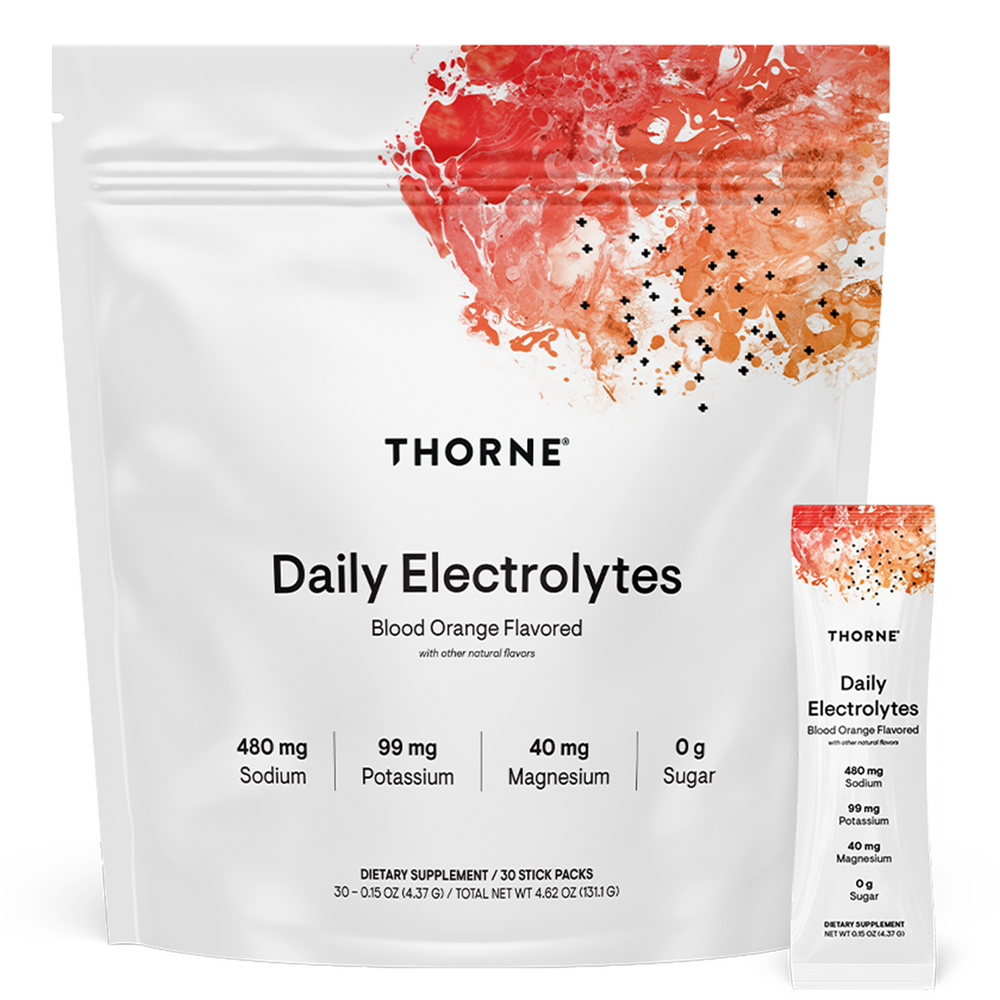
Daily Electrolytes Blood Orange
Thorne
30 packets
$40.00$36.00 with Subscribe & Save
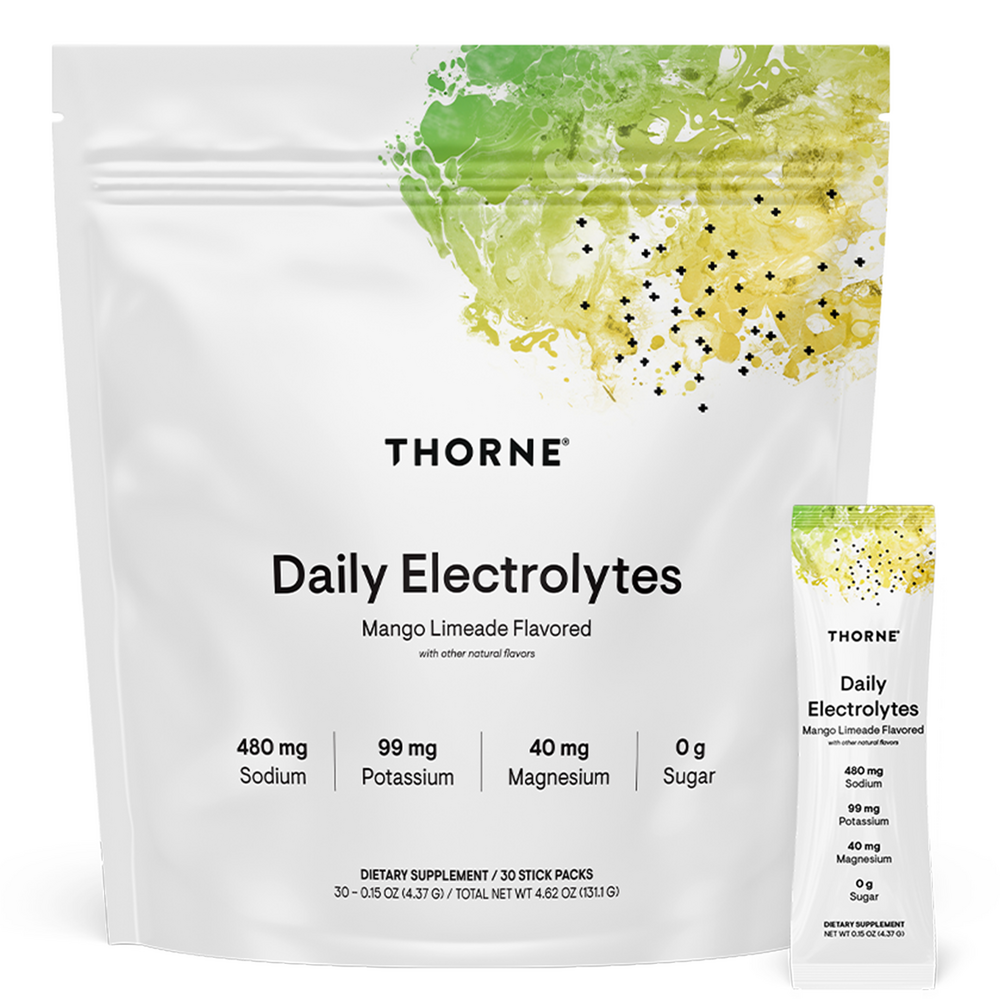
Daily Electrolytes Mango Limeade
Thorne
30 packets
$40.00$36.00 with Subscribe & Save
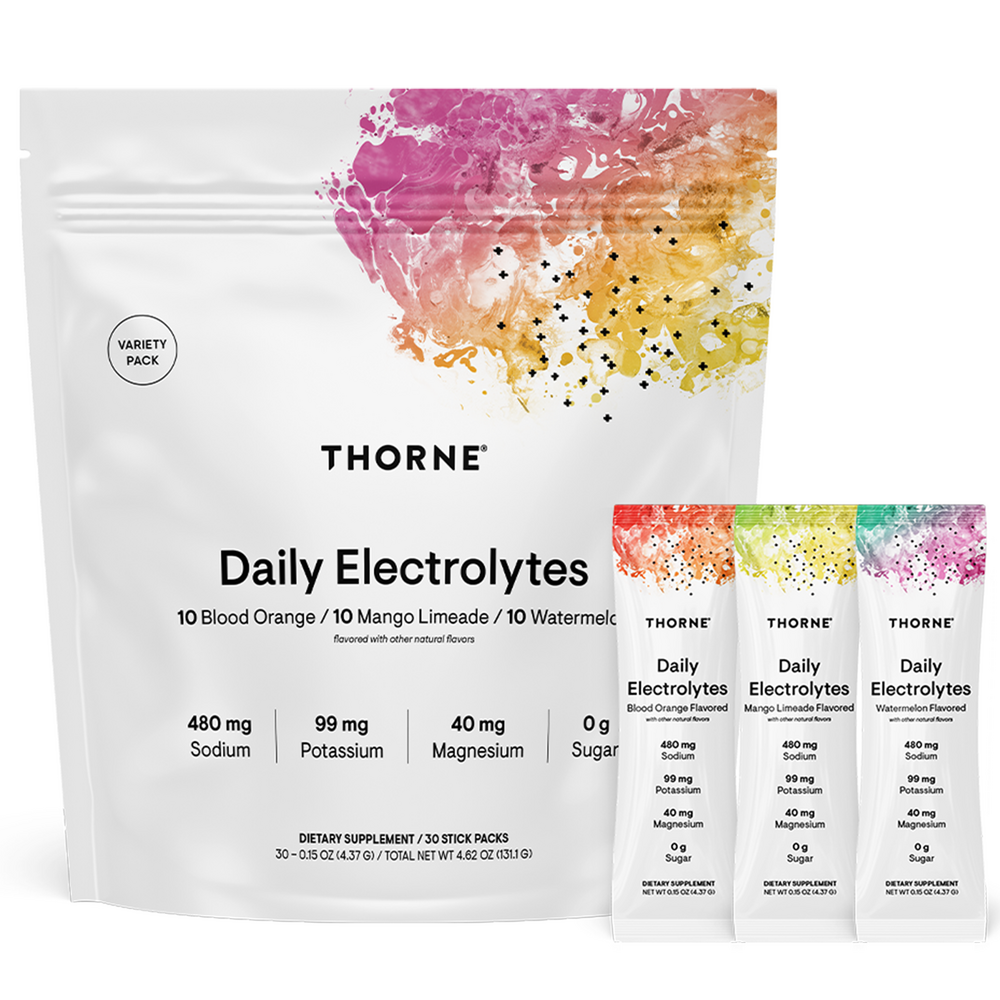
Daily Electrolytes Variety Pack
Thorne
30 packets
$40.00$36.00 with Subscribe & Save
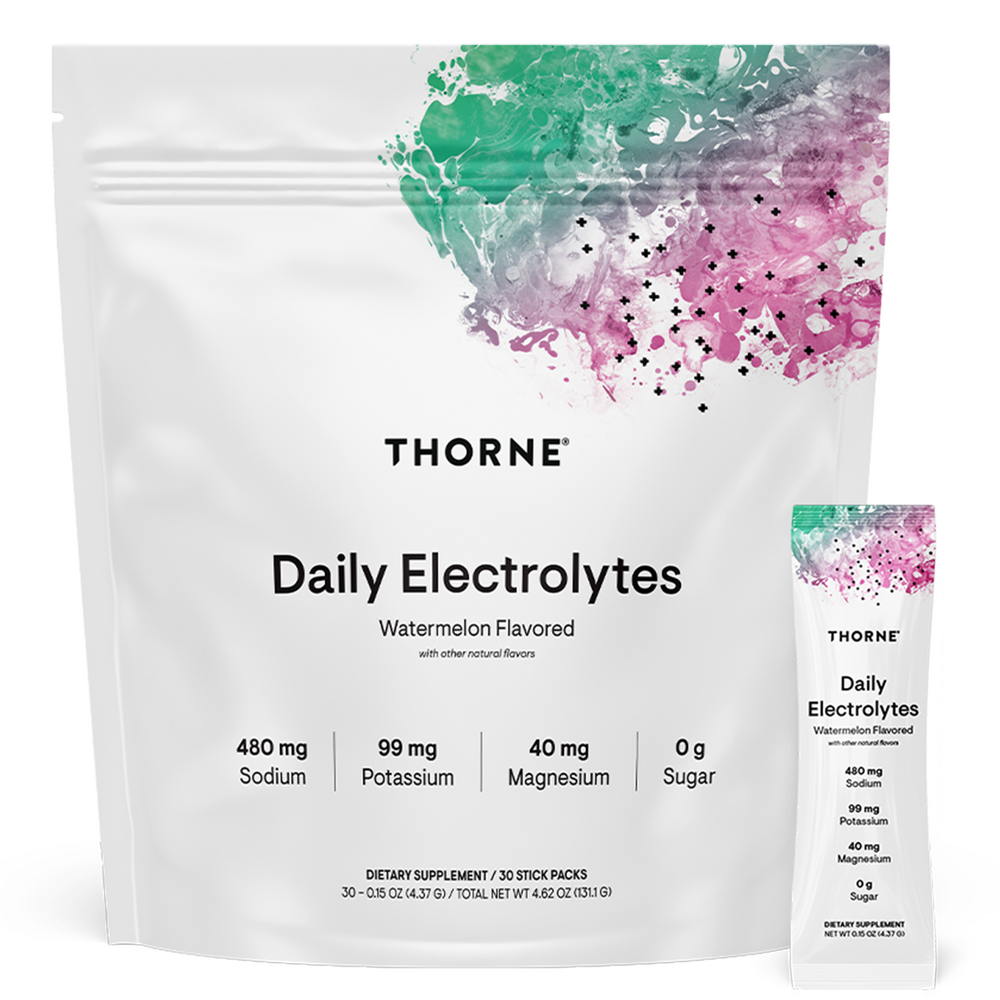
Daily Electrolytes Watermelon
Thorne
30 packets
$40.00$36.00 with Subscribe & Save