
 Instalab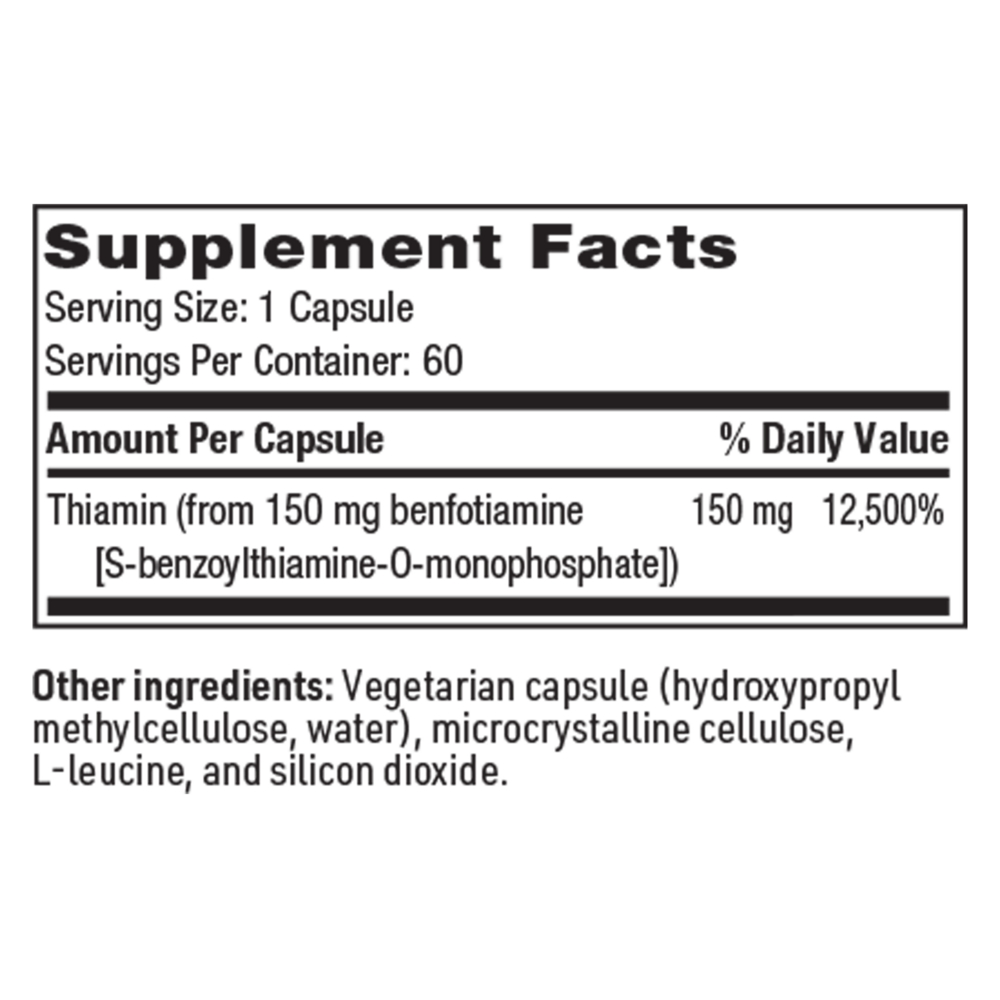

Klaire Lab/SFI Health
Benfotiamine 150 mg by Klaire Lab/SFI Health
60 capsules · 60-day supply
Supports Healthy Glucose Metabolism and Nerve Function$25.99
This item is currently out of stockGet notified when this item is back in stock
Practitioner-grade brand3rd-party testedFree shipping $50+
Vegan·Vegetarian·Gluten Free·Soy Free·Egg Free·Tree Nut Free·
Klaire Lab/SFI Health Benfotiamine overview
If you’re searching for benfotiamine for neuropathy, this 150 mg capsule fits adults with mild nerve symptoms or those maintaining gains after higher dosing. It’s relevant when Hemoglobin A1c, Fasting Glucose, or Fasting Insulin are elevated, since high sugar drives nerve damage over time. It’s also a fit if your Vitamin B1, Whole Blood is low or you use diuretics like furosemide that waste thiamine. For established, painful neuropathy, clinicians usually start higher than 150 mg.
Benfotiamine is a fat‑soluble form of vitamin B1 that absorbs better and gets into nerves more easily than standard thiamine. It activates transketolase (an enzyme that diverts excess sugar into safer pathways), which reduces formation of advanced glycation end products, or AGEs (sticky sugar–protein crosslinks that stiffen tissues and irritate nerves). By dialing down these sugar‑damage pathways, some patients see lower neuropathic pain and tingling, and modest drops in hs-CRP (an inflammation marker) in responders.
Take one 150 mg capsule with food, once daily. This is a maintenance‑level dose; trials that improved diabetic neuropathy symptoms typically used 300–600 mg per day, split with meals, for 4 to 12 weeks, then tapered. If your goal is symptom control rather than upkeep, talk with a clinician about stepping up dose and rechecking Hemoglobin A1c or Vitamin B1, Whole Blood to guide duration.
Benfotiamine is well tolerated, with rare stomach upset or rash. If you use diabetes medications or insulin, monitor glucose more closely at first, since tighter carbohydrate handling can nudge sugars down. Pregnancy and breastfeeding: safety beyond typical dietary B1 isn’t established, so stick to prenatal dosing unless your obstetric clinician advises otherwise. Dialysis or heavy alcohol use warrant clinician-guided thiamine repletion.
Most people who respond notice nerve symptom changes within 4 to 12 weeks. Benfotiamine pairs well with alpha‑lipoic acid or methylcobalamin (vitamin B12) when labs suggest need, but each has a distinct role: antioxidant support, or B12 repletion. If your symptoms aren’t clearly tied to glucose dysregulation, it can still be tried, but set a 12‑week reassessment plan.
Frequently asked questions
Does benfotiamine really help diabetic neuropathy?
Yes, in several trials 300–600 mg per day reduced pain, numbness, and vibration loss over 4–12 weeks. The 150 mg here is a maintenance dose; active symptom control usually uses higher dosing under clinician guidance.
How long does benfotiamine take to work?
Expect 4–12 weeks for nerve symptom changes. Set a check‑in at 8 weeks. If you’re not improving and your Hemoglobin A1c or Fasting Glucose are still high, address glucose control and consider dose adjustment.
What’s the difference between benfotiamine and thiamine (vitamin B1)?
Benfotiamine is a fat‑soluble B1 derivative with better absorption and tissue entry, especially into nerves. Standard thiamine is water‑soluble and may require higher doses to reach similar nerve levels.
Can I take benfotiamine with metformin or insulin?
Yes, they’re commonly combined. Monitor blood sugars more closely at the start, as improved carbohydrate handling can modestly lower glucose in some users.
What dose of benfotiamine should I take?
For maintenance or mild symptoms, 150 mg daily with food is reasonable. For active diabetic neuropathy, clinicians often use 300–600 mg per day for 4–12 weeks, then taper based on response.
Are there side effects or safety concerns?
Side effects are uncommon and usually mild (stomach upset, headache, or rash). Data in pregnancy and breastfeeding are limited; use only standard prenatal B‑vitamin dosing unless guided by your clinician.
Which labs should I track while using benfotiamine?
Hemoglobin A1c, Fasting Glucose, and Fasting Insulin track sugar exposure. Vitamin B1, Whole Blood can confirm repletion. hs-CRP can reflect inflammation trends in responders.
How to take it & ingredients
Suggested use: Adults: 1 capsule daily with food or as directed by a healthcare professional. Children: As directed by a healthcare professional.
Active ingredients
1 capsule per serving · 60 servings
Benfotiamine
S-benzoylthiamine-O-monophosphate
S-benzoylthiamine-O-monophosphate
150 mg
Other ingredients: Vegetarian capsule (hydroxypropyl methylcellulose, water), Microcrystalline cellulose, L-leucine, Silicon dioxide
Certifications
Benefits
Warnings