 Instalab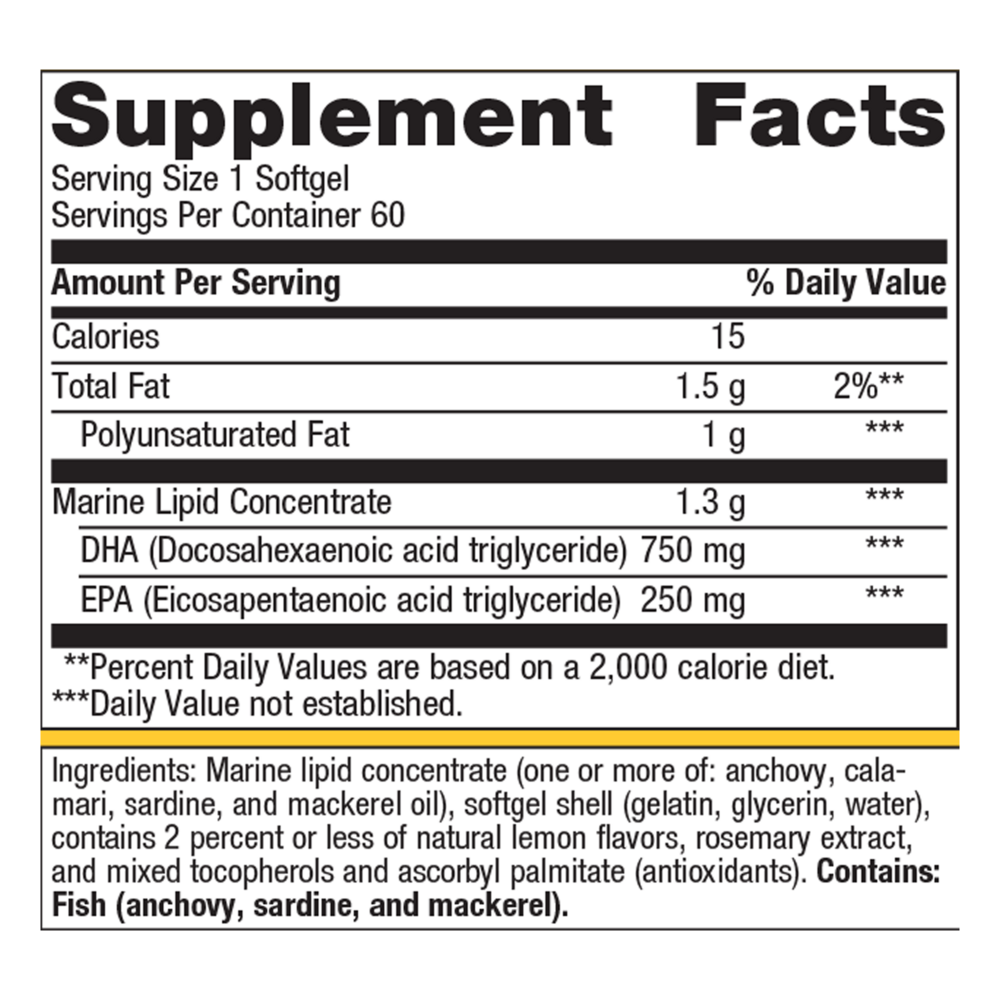

Metagenics
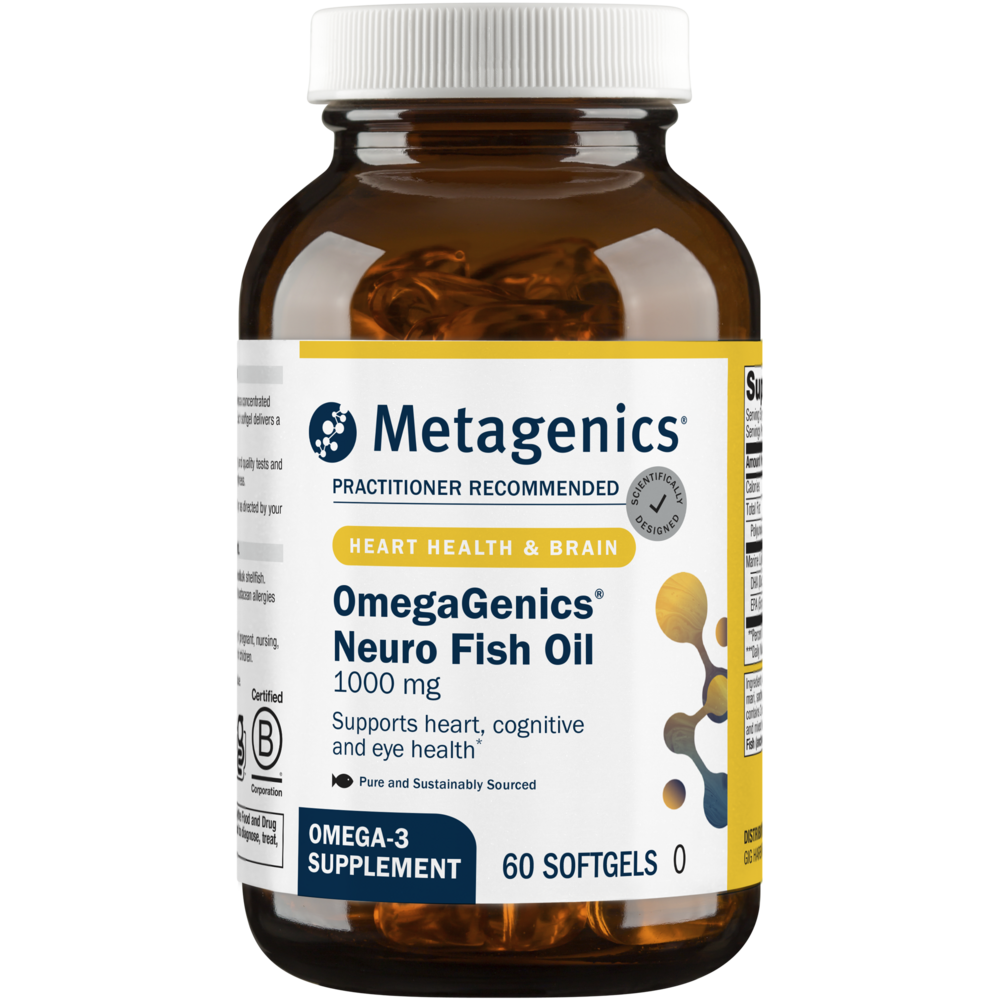
OmegaGenics Neuro 1000 Fish Oil by Metagenics
60 softgels
Premium Fish Oil for Brain Health and Cognitive Support$59.99
This item is currently out of stockGet notified when this item is back in stock
Practitioner-grade brand3rd-party testedFree shipping $50+
Metagenics OmegaGenics Neuro 1000 Fish Oil overview
If you rarely eat seafood and your Omega-3 Index is low, a high DHA fish oil is a direct way to raise DHA, the brain’s primary omega‑3. This is a fit for people focused on memory, attention, or long-haul screen time, as well as pregnancy planning when seafood intake is limited. If your triglycerides are elevated, omega-3s help, but an EPA‑heavier fish oil or prescription icosapent ethyl is usually the faster mover.
DHA is a structural fat in neuron and retinal membranes, shaping how receptors and ion channels signal. High DHA fish oil enriches these membranes and yields mediators like resolvins and protectins (compounds that help wrap up inflammation). EPA, also present, tends to drive the stronger triglyceride and hs-CRP (high-sensitivity C‑reactive protein, an inflammation marker) changes, while DHA leans cognitive and visual.
Take two softgels daily with the largest meal to improve absorption and cut fishy burps. Splitting the dose with breakfast and dinner also works. Expect triglyceride changes within 4 to 12 weeks and Omega-3 Index movement on your next lab draw. For aggressive triglyceride lowering, higher total EPA+DHA intake is typically used; this formula is tuned toward brain DHA repletion.
Fish oil is generally compatible with statins and blood pressure drugs. At higher doses it can slightly increase bleeding tendency; if you use anticoagulants or daily aspirin, check with your clinician. Allergy to fish is a reason to skip. For pregnancy, DHA is beneficial, but choose purified fish oil, not fish liver oil, and share all supplements with your obstetric clinician.
Frequently asked questions
Is high DHA fish oil better for brain health than regular fish oil?
For brain-focused goals, DHA-leaning fish oil is a reasonable pick because DHA is the main omega-3 in brain tissue. For triglyceride reduction, EPA-leaning formulas or prescription EPA often perform better.
How long does fish oil take to help memory or focus?
Membrane DHA builds gradually. Give it 8 to 12 weeks before judging cognition or visual comfort. Lab-wise, you can confirm uptake with an Omega-3 Index after 2 to 3 months.
Does fish oil thin your blood?
It can modestly reduce platelet stickiness at higher intakes, but large trials show no major bleeding signal in most people. If you’re on anticoagulants or have a bleeding disorder, speak with your clinician first.
Will this fish oil lower my triglycerides?
Omega-3s can drop triglycerides 20–30% in many responders, typically at higher EPA+DHA intakes. This DHA-heavy formula isn’t optimized for that, so consider an EPA-forward fish oil if triglycerides are your main target.
Should I take fish oil with food or on an empty stomach?
Take it with a meal that contains fat to improve absorption and reduce fishy burps. If you’re sensitive, split the dose across two meals or try chilling the softgels.
Is fish oil safe in pregnancy?
Yes, DHA from purified fish oil is commonly recommended in pregnancy for fetal brain and eye development. Avoid fish liver oils high in vitamin A, and review dosing with your obstetric clinician.
How do I know it’s working besides how I feel?
Recheck your Omega-3 Index after 8–12 weeks to confirm tissue uptake. If triglycerides are a goal, repeat a fasting lipid panel over the same window.
How to take it & ingredients
Suggested use: Adults take two softgels daily, with food, or as directed by your healthcare professional.
Certifications
Benefits
Warnings