 Instalab

Metagenics
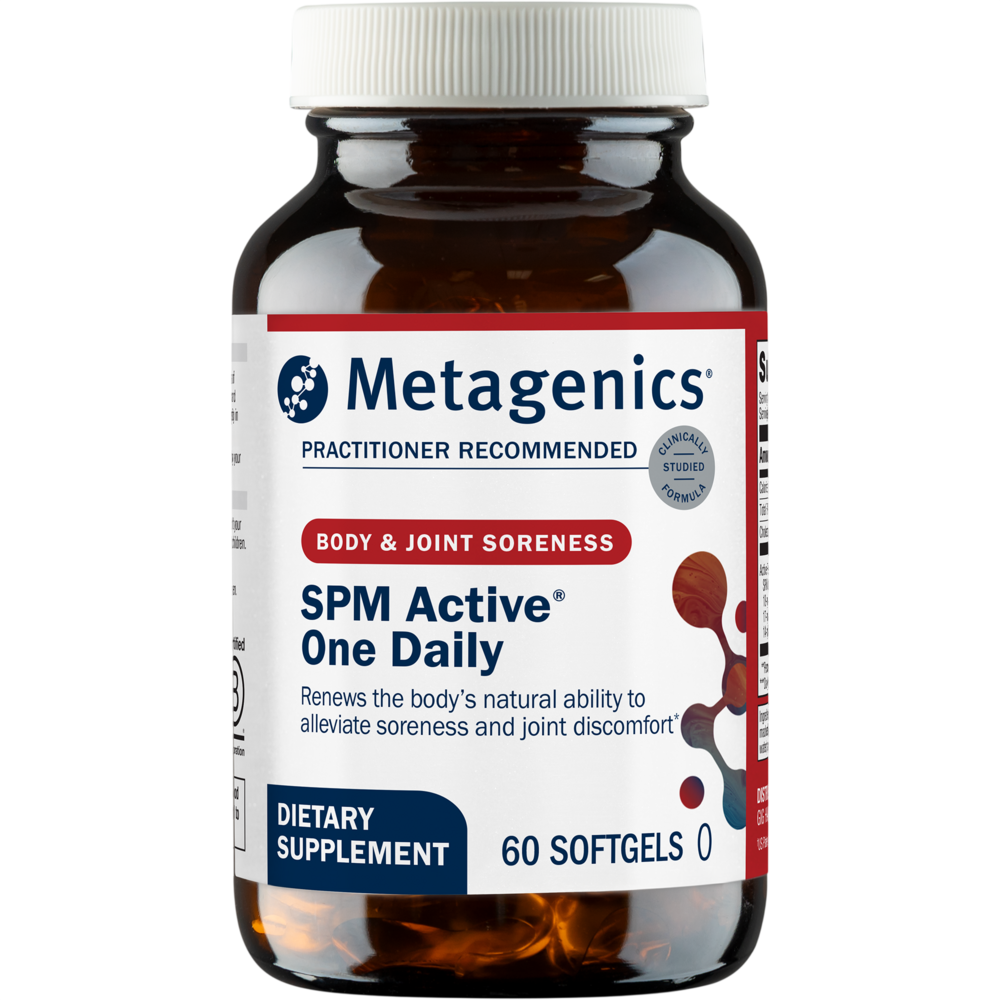
SPM Active One Daily by Metagenics
60 softgels
Support for Healthy Inflammation and Immune Function$124.99
This item is currently out of stockGet notified when this item is back in stock
Practitioner-grade brand3rd-party testedFree shipping $50+
Metagenics SPM Active One Daily overview
If you’ve cleaned up sleep, diet, and training but still feel “inflamed,” an SPM supplement is for the resolution side of inflammation, not generic fish oil. Think lingering aches after hard training, post-dental or orthopedic recovery, or low-grade, whole‑body inflammation where hs-CRP (a blood marker of inflammation) runs high-normal or elevated. It’s useful if your Omega-3 Index is low yet you don’t want high-dose fish oil for lipids, since SPMs act as signals rather than bulk fats.
Specialized pro-resolving mediators (SPMs) are signaling molecules your body makes from EPA and DHA, the long‑chain omega‑3s in marine oil. They help immune cells finish the cleanup phase: macrophages (white blood cells that clear debris) remove dead cells faster, chemical alarms quiet down, and tissue repair proceeds without shutting off normal immunity. Unlike NSAIDs, they don’t block pain enzymes; unlike fish oil, they aren’t dosed to lower triglycerides. In studies, subjective soreness and hs-CRP often improve within 4 to 8 weeks.
Take one softgel daily with a meal that contains some fat, which helps absorption. Any time of day is fine; consistency matters more than timing. If you’re tracking labs, recheck hs-CRP and the Omega-3 Index after 6 to 8 weeks. For people targeting lipids or high triglycerides, use fish oil separately; SPMs are a maintenance-level signal dose, not a triglyceride therapy.
Skip or get clinician guidance if you have a fish or shellfish allergy (SPMs come from marine oil). Use caution with blood thinners like warfarin, apixaban, rivaroxaban, or clopidogrel; bleeding risk appears low, but discuss dosing and monitoring. Safety data in pregnancy and breastfeeding are limited, so avoid unless your obstetric clinician approves. For acute infection or injury pain, don’t replace standard care with SPMs.
Frequently asked questions
What are SPMs in supplements?
SPMs are specialized pro-resolving mediators, the signaling molecules your body makes from omega‑3 fats. They help the body finish the inflammation process and transition to repair without suppressing normal immune defense.
Are SPM supplements the same as fish oil?
No. Fish oil provides EPA and DHA in gram amounts to affect lipids and triglycerides. SPM supplements deliver standardized resolvin precursors in much smaller amounts to influence inflammation resolution signaling, not cholesterol or triglycerides.
How long do SPMs take to work?
Most people who respond notice changes within 4 to 8 weeks. That’s a reasonable window to reassess soreness, function, and labs like hs-CRP with your clinician.
Do SPMs thin your blood?
Clinically, SPMs have minimal effect on bleeding, but caution is sensible with anticoagulants or antiplatelet drugs. If you use warfarin, apixaban, rivaroxaban, or clopidogrel, check with your clinician before starting.
Can I take SPMs with NSAIDs like ibuprofen?
Usually yes, but they work differently. NSAIDs block pain enzymes short term; SPMs cue the body to complete the resolution phase. If you rely on daily NSAIDs, discuss a plan with your clinician.
Do SPMs help high triglycerides?
No. Use fish oil for triglyceride reduction. SPMs aren’t dosed to change lipid panels; they target inflammation resolution. Track triglycerides with a lipid panel and inflammation with hs-CRP.
Are SPM supplements safe in pregnancy or breastfeeding?
Data are limited, so avoid unless your obstetric clinician specifically recommends them. If you need omega‑3s in pregnancy, discuss a prenatal DHA option instead.
Any common side effects with SPMs?
They’re generally well tolerated. Mild fishy taste or burp can occur due to the marine oil base, which taking with food usually minimizes. Stop and seek care for any allergic symptoms.
How to take it & ingredients
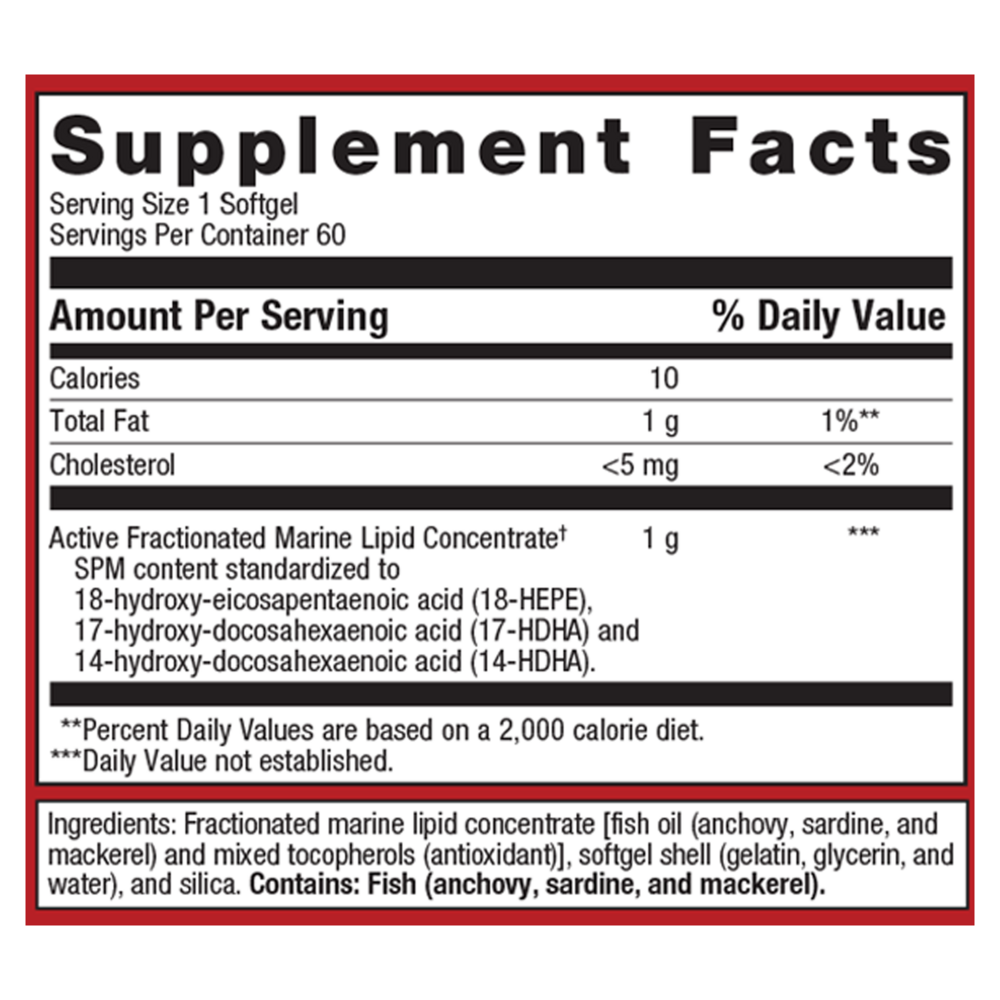
Suggested use: Adults take one softgel daily, with food, or as directed by your healthcare professional.
Certifications
Benefits
Warnings