 Instalab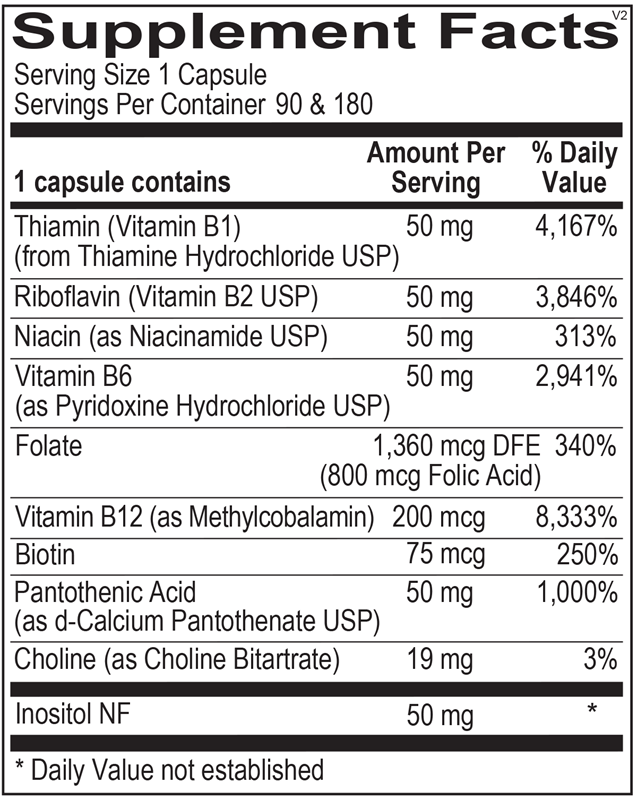

Ortho Molecular Products
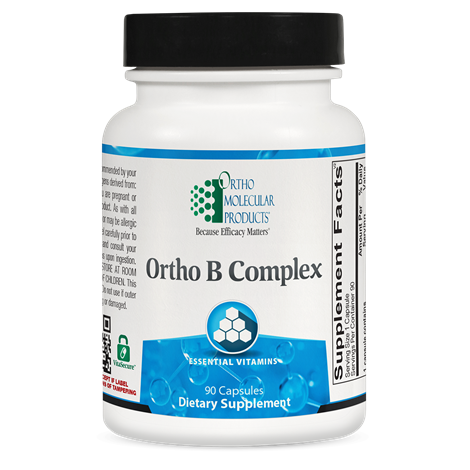
Ortho B Complex by Ortho Molecular Products
180 capsules · 180-day supply
Comprehensive B Complex for Energy, Metabolism, and Overall Wellness$70.10
Purchase options
Practitioner-grade brand3rd-party testedFree shipping $50+
Gluten Free·Yeast Free·Corn Free·Artificial Color Free·Artificial Flavor Free
Ortho Molecular Products Ortho B Complex overview
If you’re searching for a B complex for energy, this fits people with low intake, high demand, or meds that deplete B vitamins. Think heavy work stress, regular alcohol use, metformin or acid-reducing drugs that lower B12, and oral contraceptives linked to lower B6 and folate. It’s also useful if your labs show low Vitamin B12, Folate, or an elevated Homocysteine (a byproduct of protein metabolism tied to methylation and cardiovascular risk). Vegans and post-bariatric patients often benefit from the methylcobalamin form of B12 here.
B vitamins are coenzymes, the “keys” that let your enzymes turn food into ATP, the cell’s energy currency. Thiamine, riboflavin, niacinamide, B6, and pantothenic acid plug into carbohydrate and fat breakdown, which is why fatigue often improves within 1 to 2 weeks. Folate and B12 help recycle homocysteine through methylation, a chemical tagging process that affects DNA repair and neurotransmitter balance. Niacinamide here will not cause flushing, and methylcobalamin is an active B12 form that raises low levels efficiently.
Start with one capsule daily with breakfast to limit nausea and insomnia. If your Homocysteine is high or your intake is very low, some clinicians use two daily for 4 to 8 weeks, then step down. Expect brighter yellow urine; that’s riboflavin, not dehydration. Recheck Vitamin B12, Folate, and Homocysteine after 8 to 12 weeks to right-size the dose for maintenance.
Biotin can skew several lab tests, including thyroid panels and troponin; stop this B complex for 48 to 72 hours before bloodwork unless your clinician says otherwise. High-dose B6 can aggravate neuropathy; avoid taking multiple B6 products long term. Levodopa without carbidopa is inactivated by B6—do not combine. Cancer patients on high-dose methotrexate need oncology guidance for folate. Pregnancy is better served by a dedicated prenatal with iron and iodine.
Frequently asked questions
How long does a B complex take to work for energy?
Most people feel steadier energy within 1–2 weeks. Lab shifts like lower Homocysteine or higher Vitamin B12 typically show up in 4–12 weeks. If nothing changes, check labs and your overall sleep, iron status, and thyroid.
Can I take a B complex at night?
It’s better in the morning. B vitamins can feel stimulating and may disrupt sleep in sensitive people. If evenings are your only option, take it with dinner and reassess your sleep quality.
Will this B complex cause niacin flushing?
No. It uses niacinamide, a non-flushing form of niacin. You may notice bright yellow urine from riboflavin, which is harmless.
Is 50 mg of vitamin B6 too much?
50 mg daily is within common therapeutic use, but long-term high B6 from multiple supplements can cause nerve symptoms. Avoid stacking B6 products and discuss duration with your clinician if you have neuropathy.
Does metformin deplete B12 and should I take this?
Metformin often lowers Vitamin B12 over time. This B complex includes methylcobalamin and is a practical choice. Confirm with a Vitamin B12 and Methylmalonic Acid test and recheck every 6–12 months.
How long should I stop biotin before lab tests?
Hold biotin-containing supplements for 48–72 hours before tests that use biotin-based assays, such as many thyroid labs and troponin. Ask the lab or your clinician if your specific test is affected.
Can I take a B complex with a multivitamin?
You can, but watch total B6 and folic acid amounts to avoid overshooting. If your multivitamin is already robust, consider alternating days or using the B complex short term, then taper.
Will a B complex lower homocysteine?
Often, yes. Folate, B12, and B6 help recycle homocysteine. Many see improvements in 4–8 weeks. Verify with a Homocysteine test and adjust dosing based on response.
How to take it & ingredients
Suggested use: 1 or more capsules per day or as recommended by your health care professional.
Active ingredients
1 capsule per serving · 180 servings
Thiamine (Vitamin B1)
From Thiamine Hydrochloride USP
From Thiamine Hydrochloride USP
50 mg
Riboflavin (Vitamin B2)
USP
USP
50 mg
Niacin
As Niacinamide USP
As Niacinamide USP
50 mg
Vitamin B6
As Pyridoxine Hydrochloride USP
As Pyridoxine Hydrochloride USP
50 mg
Folate
1,360 mcg DFE (800 mcg Folic Acid)
1,360 mcg DFE (800 mcg Folic Acid)
800 mcg
Vitamin B12
As Methylcobalamin
As Methylcobalamin
200 mcg
Biotin
75 mcg
Pantothenic Acid
As d-Calcium Pantothenate USP
As d-Calcium Pantothenate USP
50 mg
Choline
As Choline Bitartrate
As Choline Bitartrate
19 mg
Inositol
NF
NF
50 mg
Certifications
Benefits
Warnings