 Instalab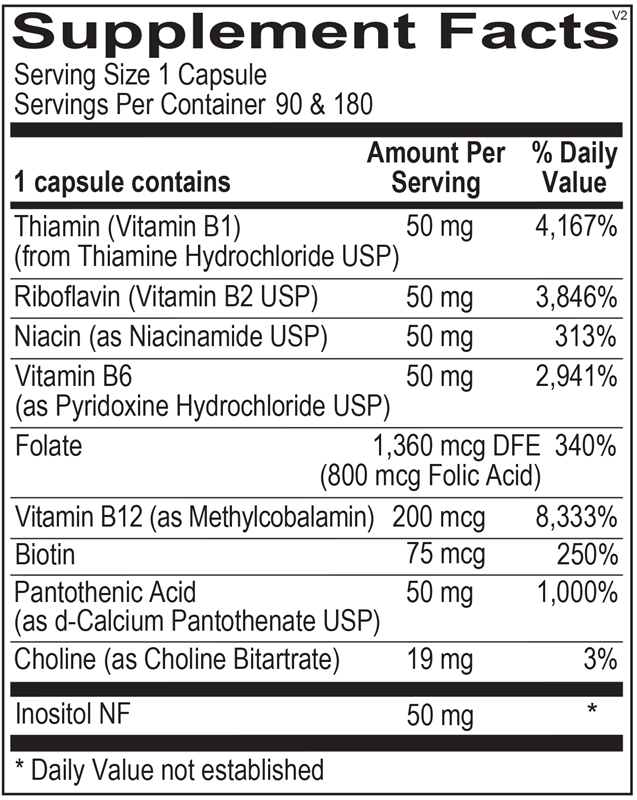

Ortho Molecular Products
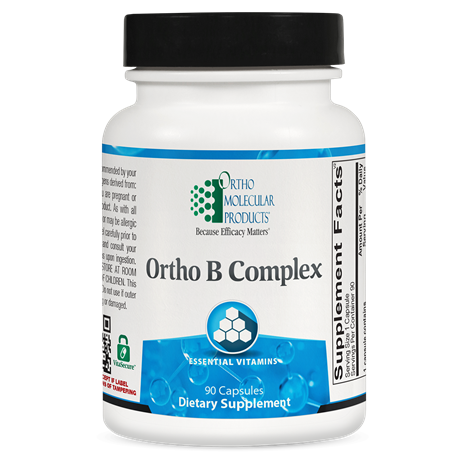
Ortho B Complex by Ortho Molecular Products
90 capsules · 90-day supply
Comprehensive B Vitamin Support for Energy, Mood, and Metabolism$44.34
Purchase options
Practitioner-grade brand3rd-party testedFree shipping $50+
Gluten Free·Yeast Free·Corn Free·Artificial Color Free·Artificial Flavor Free
Ortho Molecular Products Ortho B Complex overview
This fits adults with low or borderline B status on labs like Vitamin B12, Folate, or Homocysteine (an amino acid byproduct linked with vascular risk). It’s practical if you eat little or no animal protein, take metformin or acid-reducing drugs, use oral contraceptives, or drink alcohol frequently. If fatigue or brain fog tracks with a low B12, high MCV (a red cell size clue on a CBC), or high Homocysteine, a vitamin B complex is worth a 4–12 week trial.
The 50 mg doses of B1, B2, B3 (as niacinamide), B6, and pantothenic acid feed your cell’s energy machinery that turns carbs and fats into ATP (your cell’s usable energy). Folate and B12 (here as methylcobalamin) drive methylation, the chemical tagging system the body uses for DNA repair and for converting Homocysteine back to methionine. In practice, these doses often lower Homocysteine and improve low-normal B12 or Folate within 1–3 months.
Start with one capsule in the morning with food to limit nausea and vivid dreams from B6. The label allows one or more daily; most people do well with one. If your labs are meaningfully low, recheck Vitamin B12, Folate, and Homocysteine after 8–12 weeks before increasing. Niacinamide at this dose rarely causes flushing. Hydration and a protein-containing breakfast improve tolerance.
If you have Parkinson’s treated with levodopa without carbidopa, high-dose B6 can reduce the drug’s effect. Biotin can distort some lab tests (thyroid panels, troponin), so stop 24–72 hours before blood draws. Folate can mask B12 deficiency anemia; check Vitamin B12 or Methylmalonic Acid if you have neurologic symptoms. Pregnancy needs folate, but use a prenatal for full coverage; this isn’t one. For known MTHFR variants, you may prefer methylfolate rather than folic acid.
Frequently asked questions
Does a vitamin B complex give you energy?
If you’re low in B vitamins, yes—correcting the deficit can improve fatigue within 2–8 weeks. In people with normal B status, the effect on energy is modest. Use labs like Vitamin B12, Folate, and Homocysteine to guide need.
How long does it take for B complex to work?
Most see changes within 4–12 weeks. Homocysteine often falls over this window, and B12 or Folate levels rise sooner. Symptoms like fatigue or brain fog usually lag behind lab changes by a few weeks.
Is 50 mg of vitamin B6 safe to take daily?
For most adults, 50 mg is generally well tolerated short term. Very high intakes over time can cause nerve symptoms. If you notice tingling or numbness, stop and speak with a clinician and recheck Vitamin B6.
Will this B complex cause niacin flushing?
Unlikely. It uses niacinamide, a form of vitamin B3 that does not cause the warm, red flushing typical of nicotinic acid. At 50 mg, most people have no skin symptoms.
Can I take B complex at night?
You can, but morning is better. B vitamins can feel stimulating and B6 may cause vivid dreams. Taking with breakfast improves tolerance and consistency.
Does biotin in B complex mess up lab tests?
It can. Biotin can interfere with some immunoassays, especially thyroid tests and troponin. Stop all biotin-containing supplements for 24–72 hours before those blood tests, or confirm timing with your lab.
Is B complex okay with metformin or PPIs?
Yes, and it’s often useful. Metformin and acid-reducing drugs can lower B12 over time. Pairing them with periodic Vitamin B12 checks and a B complex is common practice.
Does B complex lower homocysteine?
Often, yes. Folate, B12, and B6 help recycle homocysteine, and levels typically improve within 4–12 weeks. Confirm with a Homocysteine recheck rather than guessing.
How to take it & ingredients
Suggested use: 1 or more capsules per day or as recommended by your health care professional.
Active ingredients
1 capsule per serving · 90 servings
Thiamine (Vitamin B1)
From Thiamine Hydrochloride USP
From Thiamine Hydrochloride USP
50 mg
Riboflavin (Vitamin B2)
USP
USP
50 mg
Niacin
As Niacinamide USP
As Niacinamide USP
50 mg
Vitamin B6
As Pyridoxine Hydrochloride USP
As Pyridoxine Hydrochloride USP
50 mg
Folate
1,360 mcg DFE (800 mcg Folic Acid)
1,360 mcg DFE (800 mcg Folic Acid)
800 mcg
Vitamin B12
As Methylcobalamin
As Methylcobalamin
200 mcg
Biotin
75 mcg
Pantothenic Acid
As d-Calcium Pantothenate USP
As d-Calcium Pantothenate USP
50 mg
Choline
As Choline Bitartrate
As Choline Bitartrate
19 mg
Inositol
NF
NF
50 mg
Certifications
Benefits
Warnings