 Instalab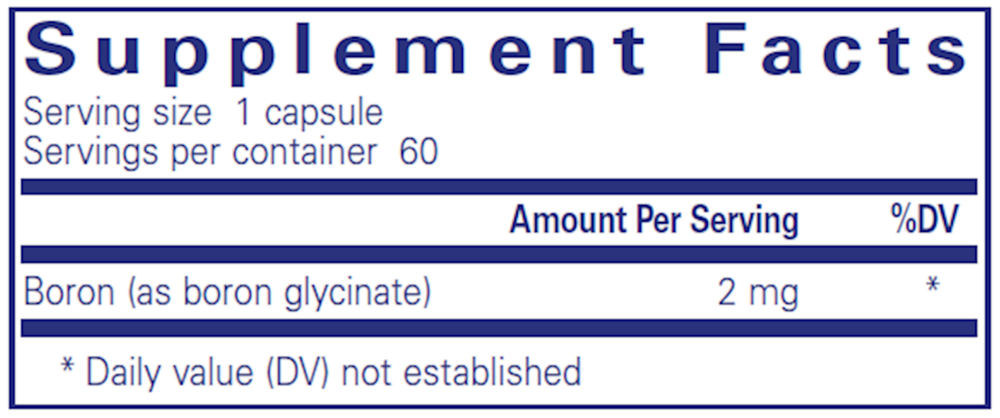


Pure Encapsulations
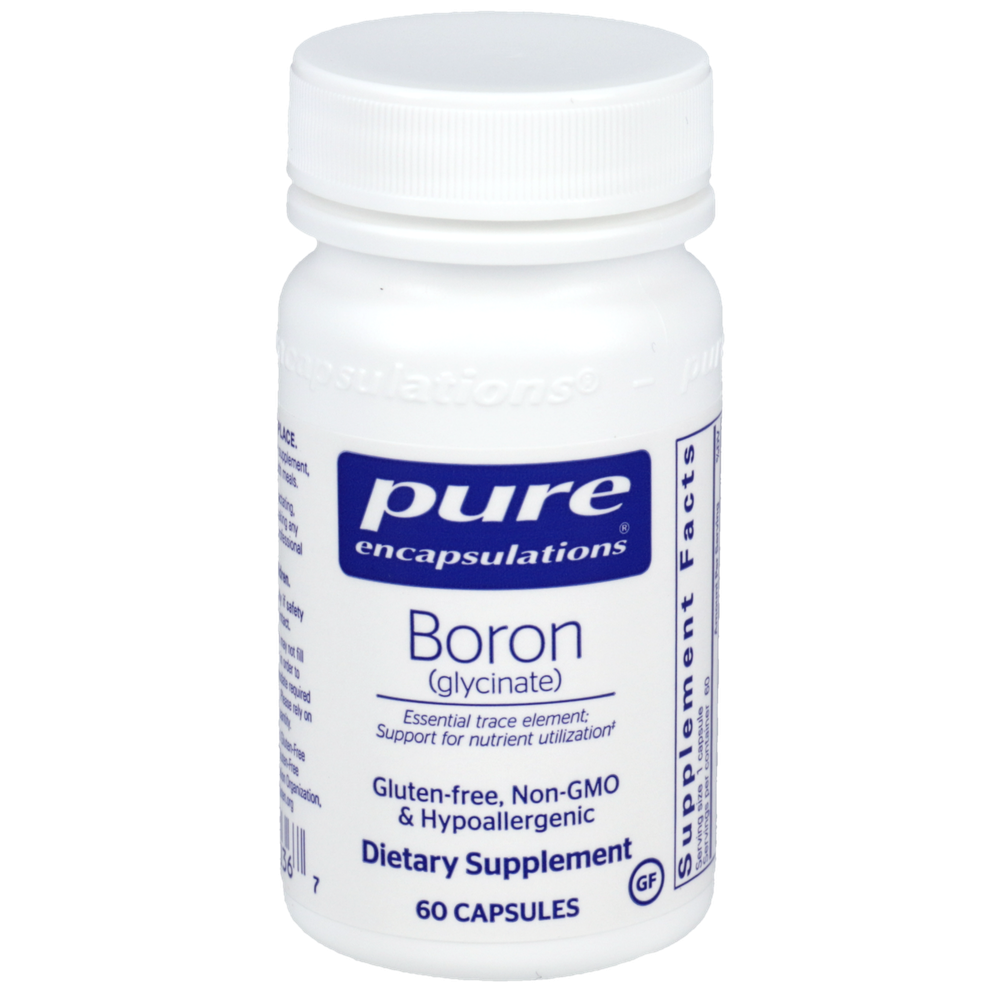
Boron (Glycinate) 2 mg by Pure Encapsulations
60 capsules · 60-day supply
Support for Bone Health and Hormone Balance with Bioavailable Boron$14.00
Purchase options
Practitioner-grade brand3rd-party testedFree shipping $50+
Vegan·Vegetarian·Gluten Free·Egg Free·Artificial Preservative Free·Peanut Free·
Pure Encapsulations Boron (Glycinate) overview
This is a fit if you’re focused on bone density and your Vitamin D, 25-Hydroxy or Magnesium tends to run low-normal despite a decent diet. Boron helps you hang on to calcium and magnesium, which is useful if your Calcium is often at the low end or you lose minerals with high sweat volume. It’s also relevant for joint comfort in midlife, where low dietary boron tracks with higher osteoarthritis rates. Small studies suggest modest boosts in free testosterone and estradiol, so it can matter if your hormone labs are borderline.
Boron influences how your body uses minerals by reducing urinary calcium and magnesium loss and by supporting activation of vitamin D inside tissues. The glycinate form is boron bound to glycine (an amino acid), which tends to be gentle on the gut and well absorbed. In small human trials, boron has lowered hs-CRP (an inflammation marker) and nudged up active sex hormones by slowing their breakdown. The net effect is steadier mineral handling, possible joint symptom relief, and subtle hormone shifts.
Take 1 capsule with meals, 1–3 times daily, for 2–6 mg of boron per day. Most bone and joint data use around 3 mg daily; clinicians sometimes use 6 mg for a trial period, then step down. Expect joint comfort or hormone shifts within 1–4 weeks, while bone markers and Vitamin D, 25-Hydroxy changes take longer, often 8–12 weeks. Pairing with calcium, magnesium, and vitamin D is reasonable if those are low on labs.
Skip supplemental boron if you have significant kidney disease, a history of high calcium or recurrent kidney stones, or sarcoidosis (a condition that can raise active vitamin D). If you have a hormone-sensitive cancer, are on aromatase inhibitors, or on estrogen/testosterone therapy, talk with your clinician since boron can raise active sex hormones. Pregnancy and breastfeeding: stick to food sources unless your clinician advises otherwise.
Frequently asked questions
What does boron do for bones and joints?
Boron helps your body retain calcium and magnesium and supports vitamin D activation, all of which matter for bone density. Observational data and small trials link higher boron intake to fewer joint symptoms, with some people noticing comfort improvements in 2–4 weeks.
How much boron should I take daily?
Most adults use 2–6 mg per day. About 3 mg daily is common for long-term maintenance; 6 mg is a reasonable short trial if you’re targeting joint comfort or borderline hormone labs. The tolerable upper limit for adults is much higher, but more isn’t better for routine use.
How long does boron take to work?
Hormone shifts and joint comfort, if they occur, are usually seen within 1–4 weeks. Changes in bone-related labs, like Vitamin D, 25-Hydroxy or markers of calcium handling, tend to evolve over 8–12 weeks of steady intake.
Can I take boron with vitamin D, calcium, and magnesium?
Yes. Boron complements vitamin D, calcium, and magnesium, and is often taken together with them. If your Calcium or Magnesium is already high, or you’ve had kidney stones, review the combo with a clinician before starting.
Does boron affect testosterone or estrogen?
In small studies, boron modestly increased free testosterone and estradiol by slowing hormone breakdown. The effect is usually subtle. If you have a hormone-sensitive cancer or take hormone therapy, discuss boron with your clinician first.
Is boron safe during pregnancy or breastfeeding?
Stick to food sources in pregnancy and breastfeeding unless your clinician advises otherwise. Supplemental boron hasn’t been well studied in these groups, so routine use isn’t recommended without medical guidance.
Who should avoid taking boron?
Avoid supplemental boron if you have significant kidney disease, a history of high calcium or recurrent kidney stones, or sarcoidosis. People on aromatase inhibitors or with hormone-sensitive cancers should only use it under medical supervision.
Any common side effects with boron glycinate?
At 2–6 mg per day, side effects are uncommon. Occasional users report mild nausea if taken on an empty stomach, which is why meals are recommended. Higher intakes can cause GI upset; reduce the dose or stop if symptoms occur.
How to take it & ingredients
Suggested use: Take 1-3 capsules per day, in divided doses, with meals.
Active ingredients
1 capsule per serving · 60 servings
Boron
As boron glycinate
As boron glycinate
2 mg
Other ingredients: Hypoallergenic Plant Fiber (Cellulose), Vegetarian Capsule (Cellulose, Water)
Certifications
Benefits
Warnings