 Instalab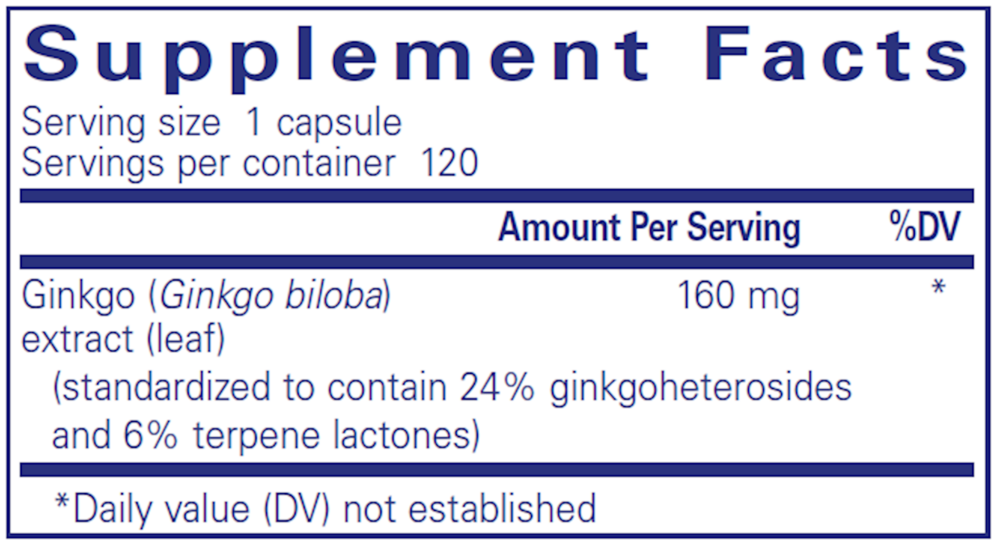
Pure Encapsulations
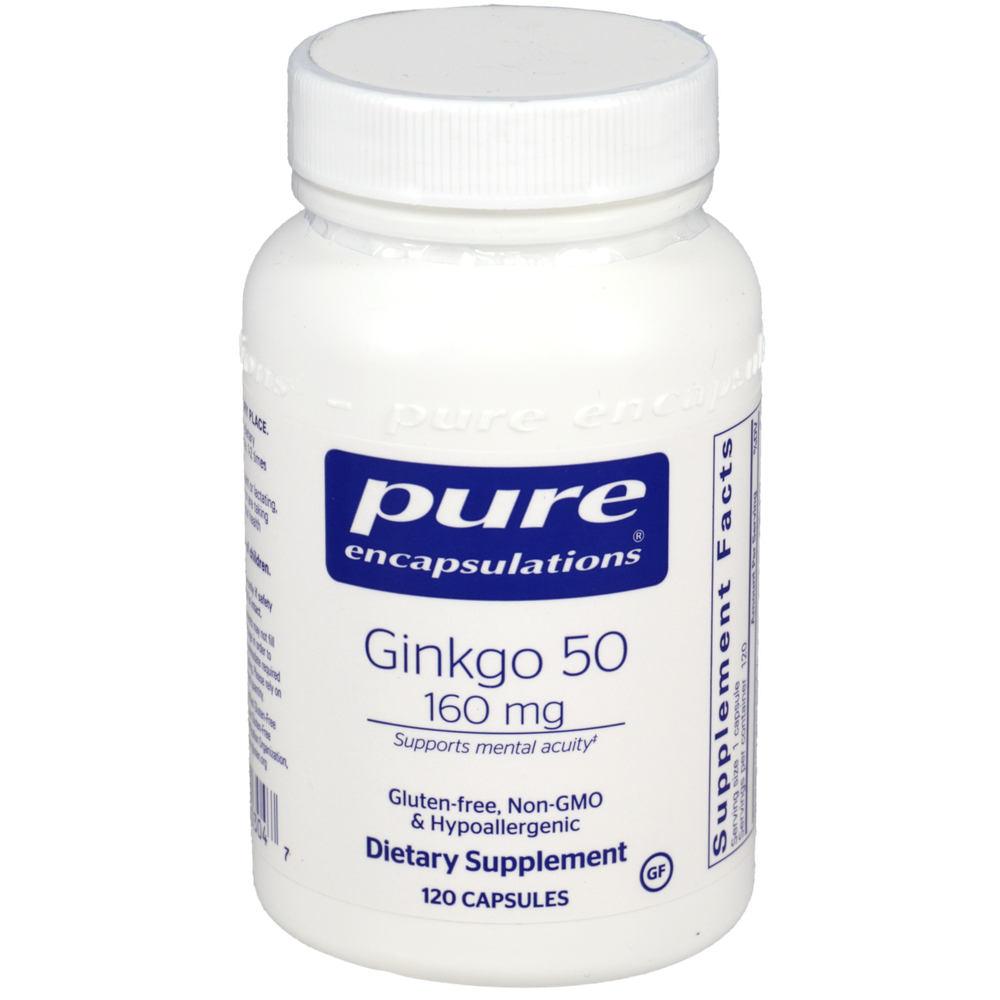
Ginkgo 50 160mg by Pure Encapsulations
120 capsules · 120-day supply
Support Cognitive Function and Circulation with Standardized Ginkgo Extract$79.50
Purchase options
Practitioner-grade brand3rd-party testedFree shipping $50+
Vegan·Vegetarian·Gluten Free·Egg Free·Artificial Preservative Free·Peanut Free·
Pure Encapsulations Ginkgo 50 160mg overview
This fits adults noticing mild memory lapses or slowed thinking who want a trial of ginkgo biloba before prescription options. It’s also reasonable for leg discomfort from walking caused by poor circulation (intermittent claudication) and for cold hands and feet. Evidence is mixed for tinnitus and for preventing dementia, so expectations should be modest. If you need a measurable change, plan a 4 to 12 week trial and track what matters to you, like word recall or walking distance.
Standardized ginkgo biloba leaf extract contains flavone glycosides (antioxidant compounds) and terpene lactones that relax blood vessels and improve microcirculation. It also blocks platelet‑activating factor (a signal that makes platelets clump), which slightly reduces stickiness of blood. In the brain, these compounds help neurons handle oxidative stress (the wear-and-tear from normal metabolism) and may improve signaling efficiency, which is why some people notice clearer recall and mental speed.
The manufacturer suggests 1–2 capsules daily in divided doses between meals. Each capsule provides 160 mg standardized to 24% flavone glycosides and 6% terpene lactones, which aligns with studied ranges of 120–240 mg per day. Take it consistently for at least 8 weeks before judging benefit. If you’re sensitive to stimulants, avoid late-evening doses. Caffeine is fine, but evaluate your focus both with and without it to see what ginkgo contributes.
Skip ginkgo biloba if you take blood thinners or antiplatelet drugs, including warfarin, apixaban, rivaroxaban, clopidogrel, or daily aspirin, or if you have a history of easy bleeding. Stop 7–10 days before surgery or dental procedures. Use caution with NSAIDs like ibuprofen. People with seizure disorders should avoid it. Pregnancy and breastfeeding: avoid. If you’re on multiple medications, ask your clinician to review for interactions.
Frequently asked questions
Does ginkgo biloba really help memory?
For mild memory complaints, some people see small gains in recall or mental speed after 4–12 weeks. It hasn’t shown reliable prevention of dementia in large trials. A time-limited trial with clear goals is the practical way to judge response.
How long does ginkgo biloba take to work?
Give it 8 weeks. Some notice focus or recall changes within 2–4 weeks, while circulation-related benefits, like walking farther with less leg pain, often need 8–12 weeks of steady dosing.
What is the best ginkgo biloba dose?
Most studies use 120–240 mg per day of standardized extract (24% flavone glycosides, 6% terpene lactones). This capsule is 160 mg; 1–2 daily covers that range. Divide the dose morning and mid-day for steadier levels.
Does ginkgo biloba thin your blood?
It can reduce platelet stickiness by blocking platelet-activating factor, which slightly increases bleeding risk. Do not combine with blood thinners or daily aspirin without clinician guidance, and stop before surgery.
What are common side effects of ginkgo biloba?
Most tolerate it well. Possible effects include mild stomach upset, headache, or dizziness. Rarely, increased bruising or nosebleeds occur. If you notice unusual bleeding or new neurologic symptoms, stop and seek care.
Can I take ginkgo biloba with antidepressants or ADHD meds?
Generally, yes, but review with your prescriber. Watch for additive effects on alertness with stimulants. The bigger concern is with blood thinners or NSAIDs, not typical antidepressants.
Is ginkgo biloba good for tinnitus?
Evidence is inconsistent. A few people report improvement after 8–12 weeks, but many do not. It’s reasonable to try a time-limited course, then stop if there’s no change.
Should I take ginkgo biloba with food or on an empty stomach?
This formula is intended between meals. If you get stomach upset, you can take it with a small snack, but keep dosing consistent day to day.
How to take it & ingredients
Suggested use: Take 1-2 capsules per day, in divided doses, between meals.
Active ingredients
1 capsule per serving · 120 servings
ginkgo extract
Ginkgo biloba, leaf, standardized to contain 24% ginkgoheterosides and 6% terpene lactones
Ginkgo biloba, leaf, standardized to contain 24% ginkgoheterosides and 6% terpene lactones
160 mg
Other ingredients: hypo-allergenic plant fiber (cellulose), vegetarian capsule (cellulose, water)
Certifications
Benefits
Warnings