 Instalab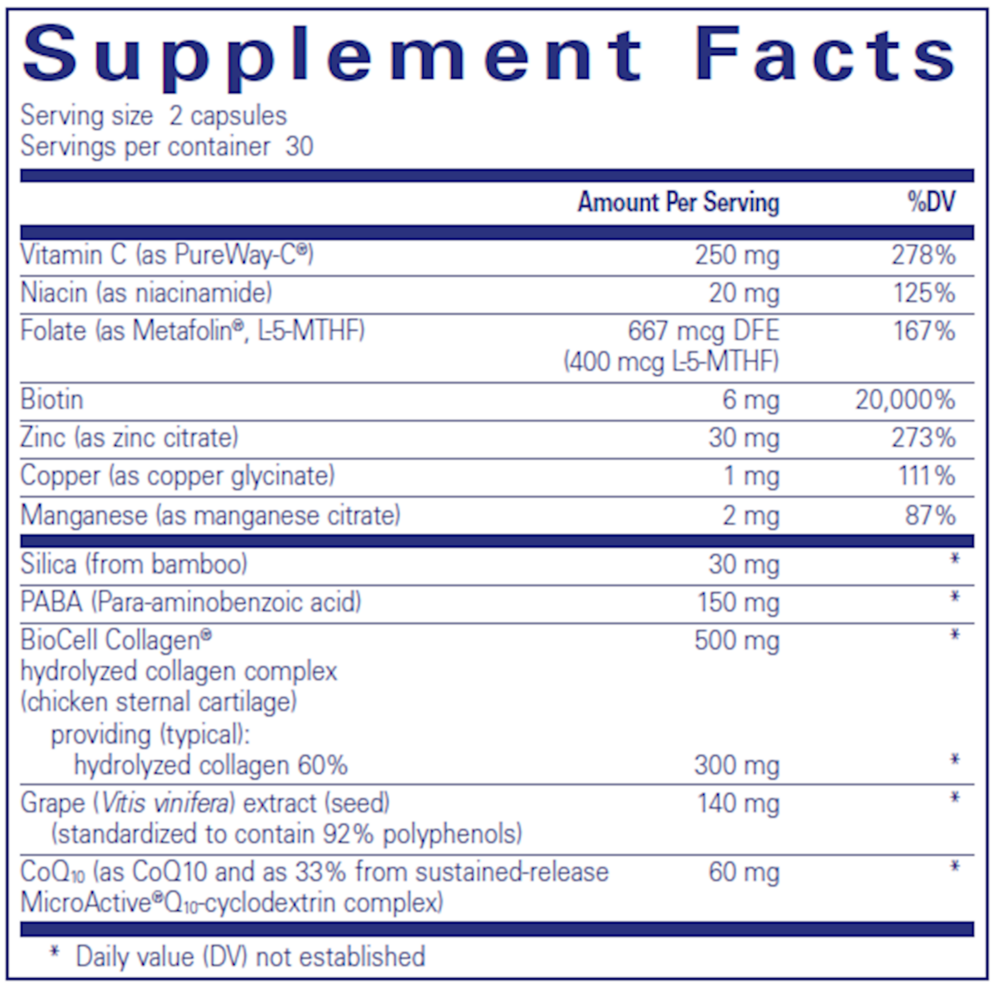

Pure Encapsulations
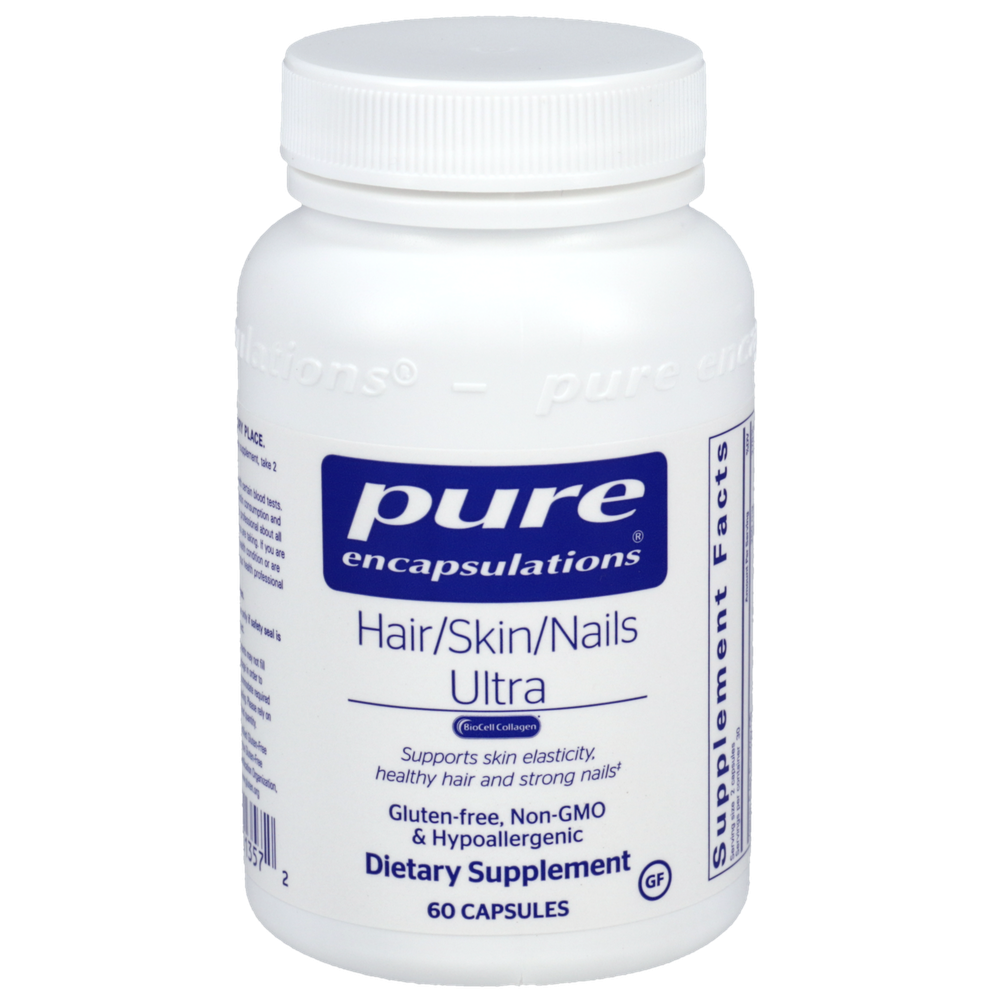
Hair/Skin/Nails Ultra by Pure Encapsulations
60 capsules · 30-day supply
Comprehensive Support for Radiant Hair, Skin, and Nails$51.50
Purchase options
Practitioner-grade brand3rd-party testedFree shipping $50+
Gluten Free·Egg Free·Artificial Preservative Free·Peanut Free·Wheat Free·Artificial Sweetener Free·
Pure Encapsulations Hair/Skin/Nails Ultra overview
If your nails peel, your hair feels thinner after stress or dieting, or your skin looks dull, this hair skin and nails supplement is a practical first step while you check labs. It fits adults with possible low intake of zinc, biotin, or collagen-rich foods. If your Ferritin (iron storage) or thyroid tests (TSH and Free T4) are off, address those causes first, since nutrients alone won’t reverse deficiency, thyroid imbalance, or genetic pattern hair loss.
Biotin helps enzymes that build the keratin structure in hair and nails, and it reliably helps brittle nails in deficiency. Hydrolyzed collagen from BioCell Collagen provides small peptides your skin can use, with human trials showing improved skin elasticity and hydration within 8 to 12 weeks. Zinc supports hair follicle division and wound repair, while L-5-MTHF (the active folate) supports DNA synthesis in fast-growing cells. Grape seed extract delivers polyphenols that slow collagen breakdown, and CoQ10 supports cellular energy in skin.
Take two capsules daily with a meal, ideally one that includes protein and fluids. Consistency matters, because hair and nails grow slowly. Expect nails to feel stronger in 4 to 8 weeks, skin changes by 8 to 12 weeks, and hair changes by 3 to 6 months. If you already take a multivitamin with high zinc or biotin, avoid doubling up without a plan.
High-dose biotin can interfere with common lab tests that use biotin-streptavidin technology, including thyroid panels and troponin (a heart-attack marker). To reduce false results, stop this supplement for at least 48 to 72 hours before bloodwork, or longer if your clinician advises. CoQ10 can lessen warfarin’s effect in some people; if you take warfarin, ask for an extra INR check when starting.
This formula is not vegan, as the collagen is from chicken cartilage. If you have unexplained hair shedding, check Ferritin, TSH, and Vitamin D, 25-Hydroxy first. For established iron deficiency or thyroid disease, correct those directly. Long-term high zinc can lower copper, though 1 mg copper is included here; if you plan to use this beyond 3 to 6 months, discuss monitoring.
Frequently asked questions
How long until a hair skin and nails supplement works?
Nails usually feel less brittle in 4–8 weeks. Skin hydration and elasticity changes tend to show by 8–12 weeks. Hair density or shedding patterns take longer, often 3–6 months, because hair cycles slowly.
Does biotin really help hair growth?
Biotin helps if you’re low, and it reliably helps brittle nails. In people with normal biotin status, hair benefits are modest. More important is fixing low Ferritin, thyroid issues, or crash dieting, which commonly drive shedding.
Can biotin mess up my lab tests?
Yes. High-dose biotin can skew thyroid tests and troponin. Stop biotin-containing supplements for 48–72 hours before labs, and tell your clinician what you take. Some labs or doses may require a longer washout.
Is this hair skin and nails supplement vegan?
No. It contains hydrolyzed collagen derived from chicken sternal cartilage. If you need a plant-based option, look for a biotin, zinc, and silica formula without animal collagen.
Can I take this with a multivitamin or prenatal?
Often yes, but check totals. Many multis already include biotin and zinc. Combining can push zinc or biotin higher than you intend, so compare labels or ask your clinician.
Will this help postpartum hair shedding?
It can support regrowth, but postpartum shedding is hormonal and usually self-limited. Check Ferritin and thyroid, maintain protein intake, and expect improvement over several months.
Can biotin cause acne or breakouts?
Some people notice breakouts with high-dose biotin. If this happens, reduce the dose, increase hydration, and consider spacing it away from other B-vitamins. Stop if acne persists.
Is it safe with blood thinners like warfarin?
CoQ10 can reduce warfarin’s effect in some users. If you take warfarin, involve your prescriber and arrange an extra INR check when starting or changing the dose.
How to take it & ingredients
Suggested use: As a dietary supplement, take 2 capsules daily, with a meal.
Active ingredients
2 capsules per serving · 30 servings
Vitamin C
As ascorbic acid
As ascorbic acid
250 mg
Niacin
As niacinamide
As niacinamide
20 mg
Folate
As Metafolin®, L-5-MTHF, 400 mcg L-5-MTHF
As Metafolin®, L-5-MTHF, 400 mcg L-5-MTHF
667 mcg DFE
Biotin
6000 mcg
Zinc
As zinc citrate
As zinc citrate
30 mg
Copper
As copper glycinate
As copper glycinate
1 mg
Manganese
As manganese citrate
As manganese citrate
2 mg
Silica
From bamboo
From bamboo
30 mg
PABA
Para-aminobenzoic acid
Para-aminobenzoic acid
150 mg
▼
BioCell Collagen® hydrolyzed collagen complex
Chicken sternal cartilage
Chicken sternal cartilage
500 mg
hydrolyzed collagen 60%
300 mg
chondroitin sulfate 20%
100 mg
hyaluronic acid 10%
50 mg
Grape extract
Vitis vinifera, seed, standardized to contain 92% polyphenols
Vitis vinifera, seed, standardized to contain 92% polyphenols
140 mg
CoQ10
As CoQ10 and as 33% from sustained-release MicroActive® Q10-cyclodextrin complex
As CoQ10 and as 33% from sustained-release MicroActive® Q10-cyclodextrin complex
60 mg
Other ingredients: vegetarian capsule (cellulose, water), potato starch, ascorbyl palmitate
Certifications
Benefits
Warnings