 Instalab

Pure Encapsulations
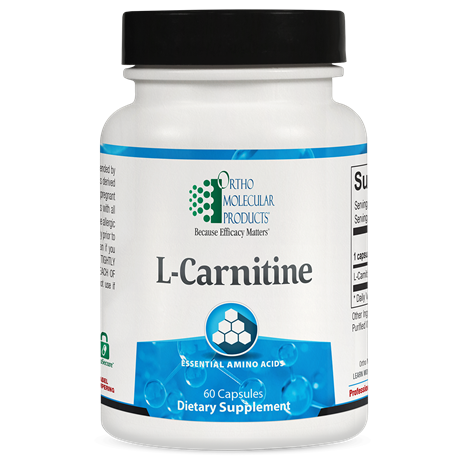
L-Carnitine 340 mg by Pure Encapsulations
120 capsules · 120-day supply
Supports Energy Production and Muscle Recovery for Active Lifestyles$97.00
Purchase options
Practitioner-grade brand3rd-party testedFree shipping $50+
Vegan·Vegetarian·Gluten Free
Pure Encapsulations L-Carnitine overview
This fits vegans and vegetarians, endurance or strength athletes, and adults with low "Carnitine, Total and Free" on labs. Plant-based diets provide little carnitine, and muscle levels often run lower with age. If you’re looking at L-carnitine for fat loss, expect only modest help; use it to improve training capacity and recovery first. For metabolic health, it’s a reasonable add-on if your Triglycerides or ALT (a liver enzyme linked to fatty liver) run high despite diet.
L-carnitine ferries long-chain fatty acids into mitochondria, the cell structures that burn fat for energy. By improving this transport, muscle uses fat more efficiently and accumulates fewer byproducts that contribute to fatigue. The L‑carnitine L‑tartrate form used here is the exercise-recovery form studied to reduce muscle damage markers like creatine kinase (a leakage enzyme after hard workouts) and perceived soreness within weeks.
Take 2–4 capsules daily in divided doses between meals, as the label directs. That delivers roughly 680–1,360 mg of free-form L-carnitine, a practical range for daily maintenance and training recovery. For brain or nerve goals, acetyl‑L‑carnitine is the better-absorbed variant. For aggressive weight targets, carnitine isn’t a standalone; pair with protein adequacy, fiber, and training, then reassess in 4–8 weeks.
Thyroid disease is the main wrinkle: L-carnitine can blunt thyroid hormone entry into cells, so those with low thyroid should monitor symptoms and thyroid labs if starting it. Valproic acid users (a seizure and mood stabilizer) often run low on carnitine and can benefit, but coordinate with your prescriber. If your TMAO (a gut‑derived metabolite linked to cardiovascular risk) has tested high, consider periodic checks after starting.
Skip during pregnancy and breastfeeding unless your clinician recommends it. Post‑surgery or in those with a seizure history, use only with medical guidance. If fishy body odor, nausea, or restlessness show up, lower the dose or stop. For high triglycerides, fish oil with EPA and DHA is more reliable for a 20–30% drop; use carnitine for training and energy, not as your primary lipid tool.
Frequently asked questions
How long does L-carnitine take to work?
For exercise recovery and reduced soreness, expect changes within 2–4 weeks of daily use. For metabolic markers like ALT or triglycerides, plan on 8–12 weeks before rechecking labs.
What’s the best L-carnitine dose?
Most adults do well with 1,000–2,000 mg per day total. This formula provides about 680–1,360 mg when taken as directed. Athletes sometimes use the higher end; start lower if you’re sensitive.
Should I take L-carnitine with or without food?
The label suggests between meals, which many tolerate best. If it upsets your stomach, a small snack is fine. Consistency matters more than timing for results.
Is acetyl-L-carnitine better than L-carnitine?
They’re different tools. Acetyl‑L‑carnitine crosses into the brain more easily and is favored for cognitive or nerve goals. L‑carnitine L‑tartrate is the go‑to for exercise recovery and muscle.
Does L-carnitine help with weight loss?
Effects are modest. It can improve fat use during exercise and training capacity, but meaningful fat loss still depends on diet, protein, fiber, and activity. Use it as an adjunct, not a driver.
Can L-carnitine raise TMAO?
It can in some people, especially omnivores with certain gut bacteria. The clinical importance is debated. If you’ve had high TMAO, consider retesting a few weeks after starting.
What are common L-carnitine side effects?
Mild nausea, stomach upset, restlessness, or a fishy body odor are the most common. These usually improve by lowering the dose or taking with a small snack.
Is L-carnitine vegan?
Yes, supplemental L-carnitine is synthesized and typically vegan-friendly. Capsules here are free of common allergens; check the label for any specific dietary certifications.
How to take it & ingredients
Suggested use: Take 2–4 capsules daily, in divided doses, between meals.
Active ingredients
1 capsule per serving · 120 servings
l-Carnitine
Free-form, from l-carnitine-l-tartrate
Free-form, from l-carnitine-l-tartrate
340 mg
Other ingredients: Hypoallergenic Plant Fiber (Cellulose), Ascorbyl Palmitate, Vegetarian Capsule (Cellulose, Water)
Certifications
Benefits
Warnings