 Instalab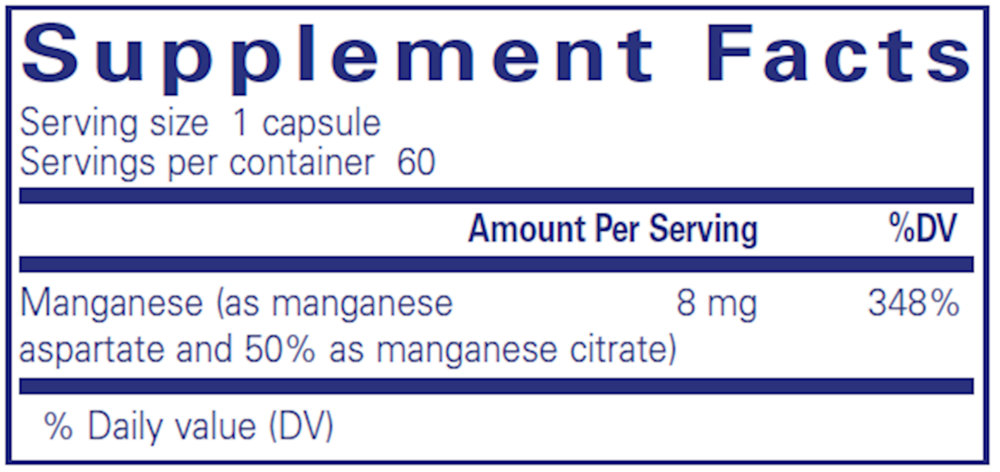

Pure Encapsulations
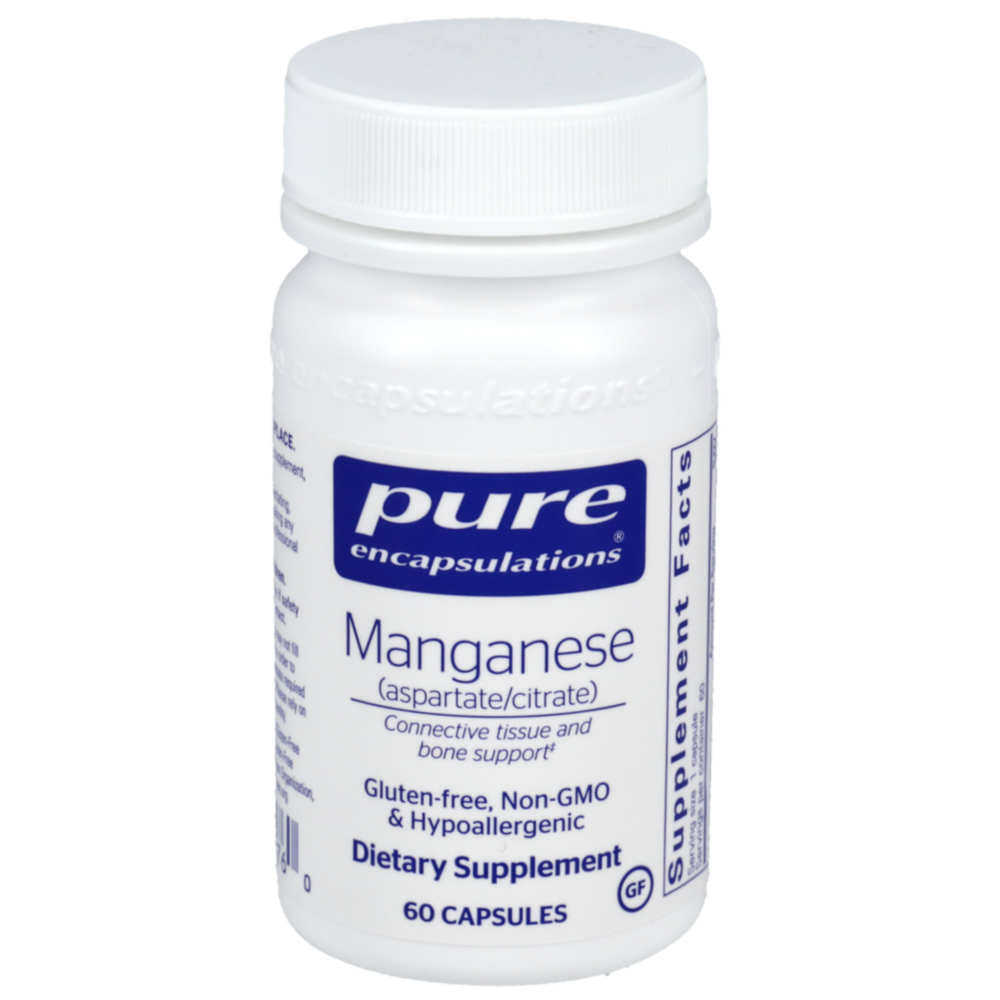
Manganese 8 mg by Pure Encapsulations
60 capsules · 60-day supply
Essential Trace Mineral for Bone and Joint Support$13.00
Purchase options
Practitioner-grade brand3rd-party testedFree shipping $50+
Vegan·Vegetarian·Gluten Free
Pure Encapsulations Manganese overview
If your diet is light on whole grains, legumes, nuts, and tea, a manganese supplement can backfill a common gap. It’s most relevant if you’re focused on bone and cartilage maintenance, or if you’ve had malabsorption (celiac, bariatric surgery) or long-term restrictive eating. If your Ferritin (the protein that reflects iron stores) is low, your gut can over-absorb manganese, so coordinate dosing and recheck needs rather than layering multiple minerals blindly.
Manganese is a cofactor that switches on enzymes that build connective tissue and cartilage, and it’s required for mitochondrial superoxide dismutase (MnSOD, the antioxidant enzyme that protects energy-producing parts of cells). The citrate/aspartate forms are well absorbed compared with oxide. In practice, adequate manganese helps the enzymes that assemble collagen and proteoglycans in joints work efficiently, and it supports normal carbohydrate handling through enzymes in the liver.
Take one capsule daily with a meal, as the manufacturer directs. This 8 mg dose is higher than typical dietary intake, so think of it as a focused repletion or short-term maintenance dose. If you’re aiming for long-term upkeep and your intake is otherwise good, many people step down after 4 to 12 weeks. Consider checking a Manganese, RBC test if you’ve had prolonged deficiency risks.
Separate manganese by at least 2 hours from tetracycline or fluoroquinolone antibiotics, which it can bind and reduce. It competes with iron, zinc, and calcium for absorption, so avoid taking all together. Significant liver disease reduces manganese clearance; use only with clinician guidance. If you develop neurological symptoms like tremor or balance issues, stop and get evaluated promptly.
Frequently asked questions
What does manganese do in the body?
It activates enzymes that build cartilage and connective tissue, and powers MnSOD, the mitochondrial antioxidant enzyme. It also participates in normal carbohydrate and urea metabolism. Adequate intake helps keep joint-building enzymes working as intended.
Is 8 mg of manganese too much?
It’s above typical daily intake but below the adult upper limit for total daily exposure. For most, it’s reasonable short term with meals. If your diet already supplies plenty from whole grains and nuts, consider a lower maintenance dose after 4–12 weeks.
How long does manganese take to work?
For dietary repletion, expect a steady effect over 4 to 12 weeks. Structural tissues like cartilage remodel slowly, so joint-related goals take time. If you’re tracking levels, specialized Manganese, RBC gives a better picture than spot serum tests.
Can I take manganese with iron, zinc, or calcium?
They compete for absorption. If you use multiple minerals, take them at different meals or at least a few hours apart. If your Ferritin is low, prioritize iron repletion first and review manganese timing with your clinician.
Does manganese interact with antibiotics?
Yes. It can bind tetracyclines and fluoroquinolones (like doxycycline or ciprofloxacin) and lower their absorption. Separate doses by at least 2 hours before or 6 hours after these antibiotics.
Who should avoid manganese supplements?
People with significant liver disease, prior manganese toxicity, or unexplained neurological symptoms should avoid or use only under medical supervision. Pregnant or breastfeeding adults should stick to prenatal-level amounts unless advised otherwise.
What are common side effects of manganese?
With meals, most tolerate it well. Empty-stomach dosing can cause nausea. Very high or prolonged intake can lead to neurological symptoms; if you notice tremor, slowness, or balance changes, stop and seek care.
How to take it & ingredients
Suggested use: Take 1 capsule daily, with meals.
Active ingredients
1 capsule per serving · 60 servings
Manganese
As manganese aspartate and 50% as manganese citrate
As manganese aspartate and 50% as manganese citrate
8 mg
Other ingredients: Hypoallergenic plant fiber (cellulose), Vegetarian capsule (cellulose, water)
Certifications
Benefits
Warnings