 Instalab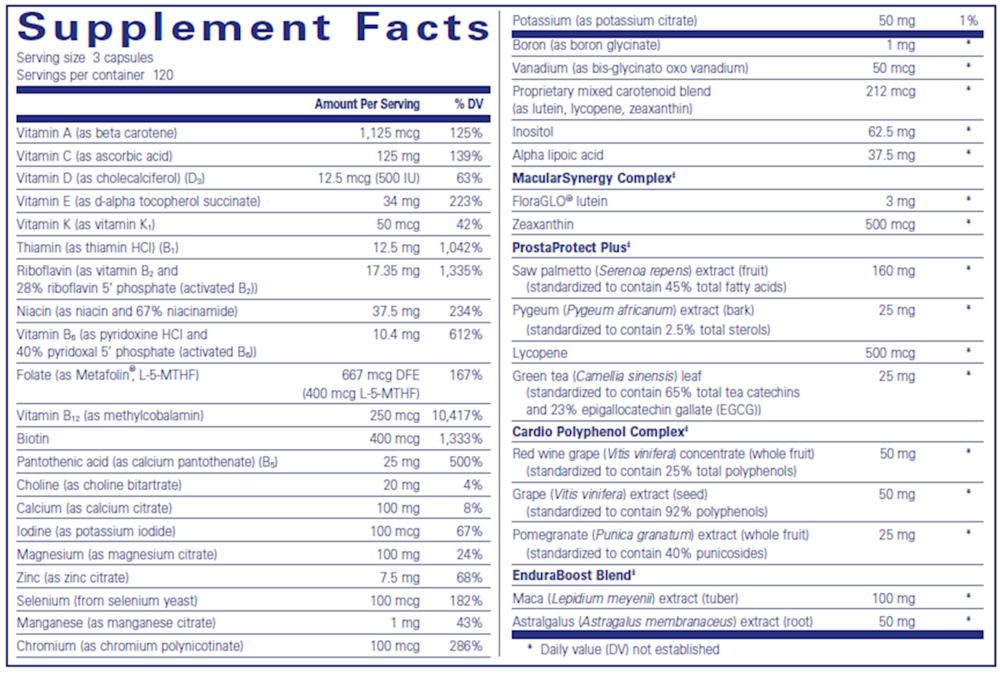
Pure Encapsulations
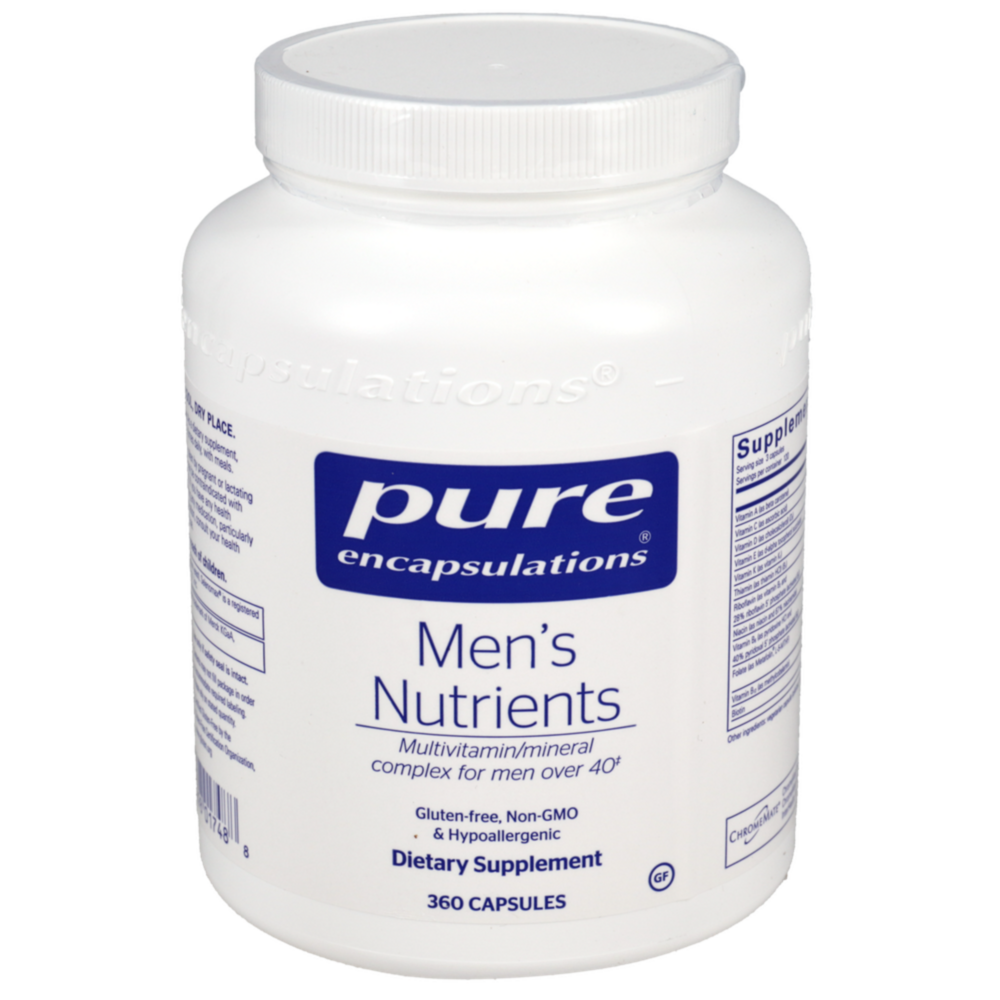
Men's Nutrients by Pure Encapsulations
360 capsules · 120-day supply
Comprehensive Multivitamin Support for Men's Health and Vitality$139.00
Purchase options
Practitioner-grade brand3rd-party testedFree shipping $50+
Vegetarian·Gluten Free
Pure Encapsulations Men's Nutrients overview
If you’re a man in your 40s or 50s with a full schedule and creeping prostate symptoms (nighttime urination, weaker stream), this men’s multivitamin is built for you. It adds saw palmetto and pygeum for prostate comfort, carotenoids for eye health, and methylated B12/folate for energy metabolism. Useful if your Vitamin D, 25-Hydroxy runs low, homocysteine (an amino acid linked to vascular risk) is high-normal, or your diet skimps on fruits, vegetables, and seafood. If you want aggressive repletion of vitamin D or iron, you’ll need targeted dosing guided by labs like Vitamin D, 25-Hydroxy and Ferritin.
Methylcobalamin (B12) and L‑5‑MTHF folate are the active forms your cells use to recycle homocysteine, which supports cardiovascular health and steady energy. Lycopene, plus extra lutein and zeaxanthin, concentrate in the prostate and retina, giving focused prostate and eye support. Saw palmetto and pygeum gently inhibit 5‑alpha‑reductase (the enzyme that turns testosterone into DHT, a driver of prostate growth). Green tea catechins with EGCG (the main antioxidant polyphenol) and grape/pomegranate polyphenols help endothelial function (how well blood vessels relax), with modest effects on markers like hs‑CRP in some users. The vitamin D3 and magnesium are maintenance-level, not high-dose therapy.
Take 3 capsules with a meal, once or twice daily per label. Splitting (breakfast and dinner) improves tolerance and spreads B‑vitamin peaks. Include some fat so carotenoids like lutein, zeaxanthin, and lycopene absorb better. If you already use a separate prostate or polyphenol supplement, consider consolidating to avoid duplication. Expect steadier energy within 2–4 weeks; prostate comfort changes often take 4–12 weeks. Recheck Vitamin D, 25-Hydroxy or homocysteine after 8–12 weeks if those were goals.
Vitamin K1 can counteract warfarin; don’t use with warfarin unless your prescriber adjusts monitoring. Saw palmetto may slightly lower PSA (the prostate cancer screening marker), which can confound testing; tell your clinician. Stop 1–2 weeks before elective surgery due to botanical bleeding concerns. The chromium, vanadium, and alpha‑lipoic acid can lower blood glucose; monitor if you use insulin or diabetes meds. Separate from thyroid hormone by 4 hours. If lower urinary tract symptoms are rapidly worsening, see a urologist rather than self‑titrating supplements.
Frequently asked questions
Is this multivitamin good for men under 40?
You can take it, but it’s built for over‑40 priorities like prostate comfort. If you don’t want prostate botanicals, a simpler men’s multivitamin without saw palmetto and pygeum is often a better fit.
How long until I notice energy or stamina changes?
Most people who respond to the B‑vitamins and minerals notice steadier energy within 2–4 weeks. Prostate comfort typically changes more slowly, often 4–12 weeks of consistent use.
Does saw palmetto affect PSA tests or finasteride?
Saw palmetto can slightly lower PSA, which may confound screening. It also works on the same enzyme targeted by finasteride. Tell your clinician if you take either so they can interpret PSA appropriately.
Can I take this multivitamin with blood thinners?
Avoid with warfarin because vitamin K1 alters INR control. For antiplatelets like aspirin or clopidogrel, botanical bleeding risk is theoretical; discuss with your prescriber before starting.
What time of day should I take it?
Take with meals for absorption and to avoid nausea, either all with breakfast or split breakfast and dinner. Include some dietary fat to improve carotenoid uptake.
Will this raise testosterone?
No. It’s not a testosterone booster. Saw palmetto and pygeum target DHT and prostate comfort, while the B‑vitamins and minerals cover baseline nutrient needs for metabolism.
Is the folate MTHFR-friendly?
Yes. It uses L‑5‑MTHF (Metafolin), the bioactive folate form that bypasses common MTHFR variants. That’s useful if you’ve had high homocysteine or poor response to folic acid.
Does this replace fish oil or magnesium?
No. It’s a foundation. Omega‑3 intake is minimal here, and magnesium is maintenance-level. If your Omega‑3 Index is low or you need higher magnesium, consider separate targeted dosing.
How to take it & ingredients
Suggested use: Take 3 capsules, 1-2 times daily, with meals.
Active ingredients
3 capsules per serving · 120 servings
Vitamin A
As beta carotene
As beta carotene
1125 mcg
Vitamin C
As ascorbic acid
As ascorbic acid
125 mg
Vitamin D
As cholecalciferol (D3)
As cholecalciferol (D3)
12.5 mcg
Vitamin E
As d-alpha tocopherol succinate
As d-alpha tocopherol succinate
34 mg
Vitamin K
As vitamin K1
As vitamin K1
50 mcg
Thiamin
As thiamin HCl (B1)
As thiamin HCl (B1)
12.5 mg
Riboflavin
As vitamin B2 and 28% riboflavin 5' phosphate (activated B2)
As vitamin B2 and 28% riboflavin 5' phosphate (activated B2)
17.4 mg
Niacin
As niacin and 67% niacinamide
As niacin and 67% niacinamide
37.5 mg
Vitamin B6
As pyridoxine HCl and 40% pyridoxal 5' phosphate (activated B6)
As pyridoxine HCl and 40% pyridoxal 5' phosphate (activated B6)
10.4 mg
Folate
As Metafolin®, L-5-MTHF
As Metafolin®, L-5-MTHF
667 mcg DFE
Vitamin B12
As methylcobalamin
As methylcobalamin
250 mcg
Biotin
400 mcg
Pantothenic Acid
As calcium pantothenate (B5)
As calcium pantothenate (B5)
25 mg
Calcium
As calcium citrate
As calcium citrate
100 mg
Iodine
As potassium iodide
As potassium iodide
100 mcg
Magnesium
As magnesium citrate
As magnesium citrate
100 mg
Zinc
As zinc citrate
As zinc citrate
7.5 mg
Selenium
From selenium yeast
From selenium yeast
100 mcg
Manganese
As manganese citrate
As manganese citrate
1 mg
Chromium
As chromium polynicotinate
As chromium polynicotinate
100 mcg
Potassium
As potassium citrate
As potassium citrate
50 mg
Boron
As boron glycinate
As boron glycinate
1 mg
Vanadium
As bis-glycinato oxo vanadium
As bis-glycinato oxo vanadium
50 mcg
Proprietary Mixed Carotenoid Blend
As lutein, lycopene, zeaxanthin
As lutein, lycopene, zeaxanthin
212 mcg
Choline Bitartrate
50 mg
Inositol
62.5 mg
Alpha Lipoic Acid
37.5 mg
Lutein
MacularSynergy Complex
MacularSynergy Complex
3 mg
Zeaxanthin
MacularSynergy Complex
MacularSynergy Complex
500 mcg
Saw Palmetto Extract
ProstaProtect Plus, (serenoa repens)(fruit)(standardized to contain 45% total fatty acids)
ProstaProtect Plus, (serenoa repens)(fruit)(standardized to contain 45% total fatty acids)
160 mg
Pygeum Extract
ProstaProtect Plus, (pygeum africanum)(bark)(standardized to contain 2.5% total sterols)
ProstaProtect Plus, (pygeum africanum)(bark)(standardized to contain 2.5% total sterols)
25 mg
Lycopene
ProstaProtect Plus
ProstaProtect Plus
500 mcg
Green Tea Extract
ProstaProtect Plus, (camellia sinensis)(leaf)(standardized to contain 65% total tea catechins and 23% epigallocatechin (EGCG))
ProstaProtect Plus, (camellia sinensis)(leaf)(standardized to contain 65% total tea catechins and 23% epigallocatechin (EGCG))
25 mg
Red Wine Grape Concentrate
Cardio Polyphenol Complex, (vitis vinifera)(whole fruit)(standardized to contain 25% total polyphenols)
Cardio Polyphenol Complex, (vitis vinifera)(whole fruit)(standardized to contain 25% total polyphenols)
50 mg
Grape Extract
Cardio Polyphenol Complex, (vitis vinifera)(seed)(standardized to contain 92% polyphenols)
Cardio Polyphenol Complex, (vitis vinifera)(seed)(standardized to contain 92% polyphenols)
50 mg
Pomegranate Extract
Cardio Polyphenol Complex, (punica granatum)(whole fruit)(standardized to contain 40% punicosides)
Cardio Polyphenol Complex, (punica granatum)(whole fruit)(standardized to contain 40% punicosides)
25 mg
Maca Extract
EnduraBoost Blend, (lepidium meyenii)(tuber)
EnduraBoost Blend, (lepidium meyenii)(tuber)
100 mg
Astragalus Extract
EnduraBoost Blend, (Astragalus membranaceus)(root)
EnduraBoost Blend, (Astragalus membranaceus)(root)
50 mg
Other ingredients: Vegetarian Capsule, Ascorbyl Palmitate
Certifications
Benefits
Warnings
Customers also considered
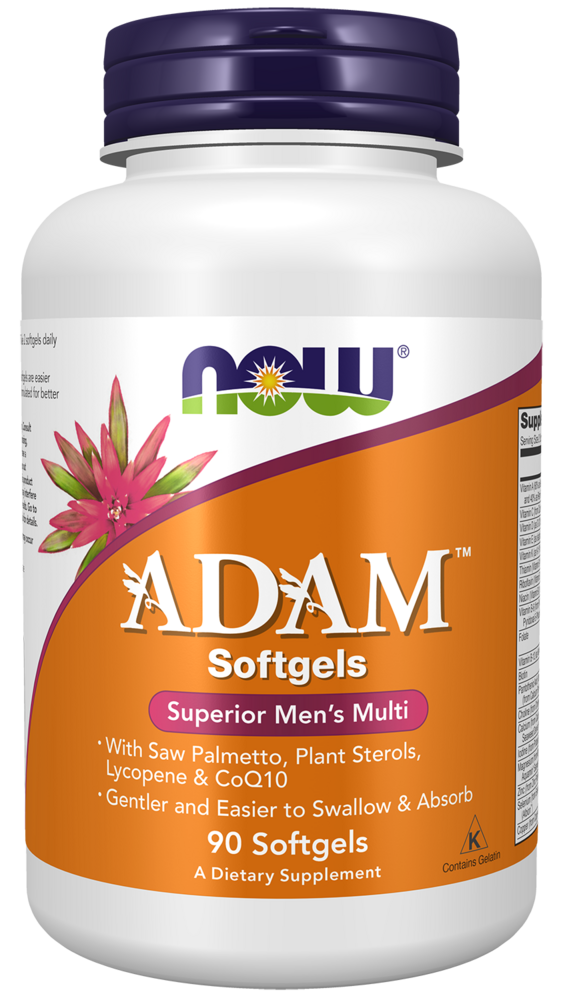
ADAM Superior Men's Multi
Now Foods
90 softgels
$39.99$31.99 with Subscribe & Save
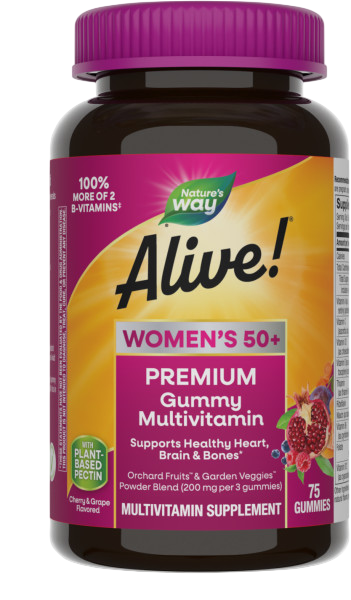
Alive Womens 50+ Premium Gummy Multi-Vitamin
Nature's Way
75 gummies
$22.99$17.99 with Subscribe & Save
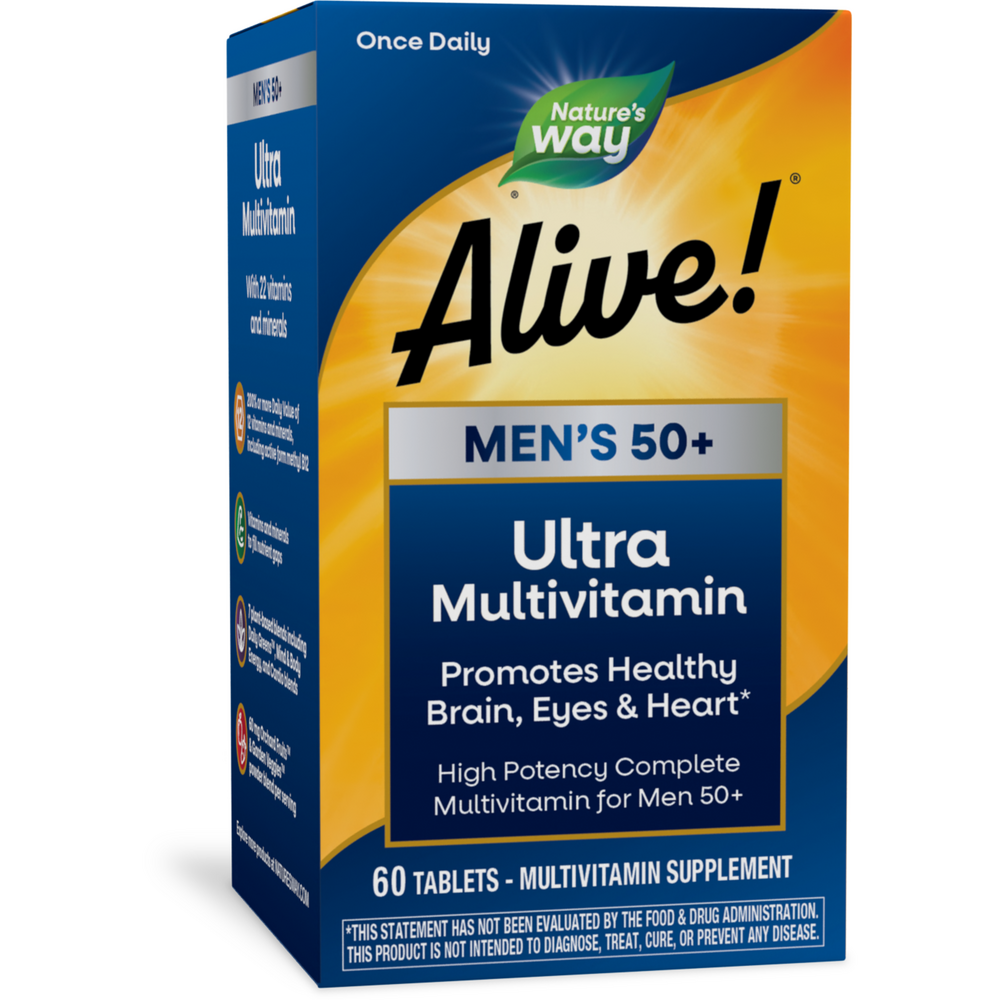
Alive! Men’s 50+ Ultra Potency
Nature’s Way
60 tablets
$29.99$23.99 with Subscribe & Save
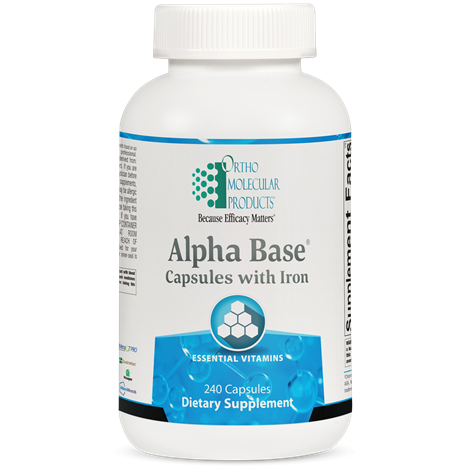
Alpha Base® Capsules with Iron
Ortho Molecular Products
240 capsules
$74.31$66.95 with Subscribe & Save