 Instalab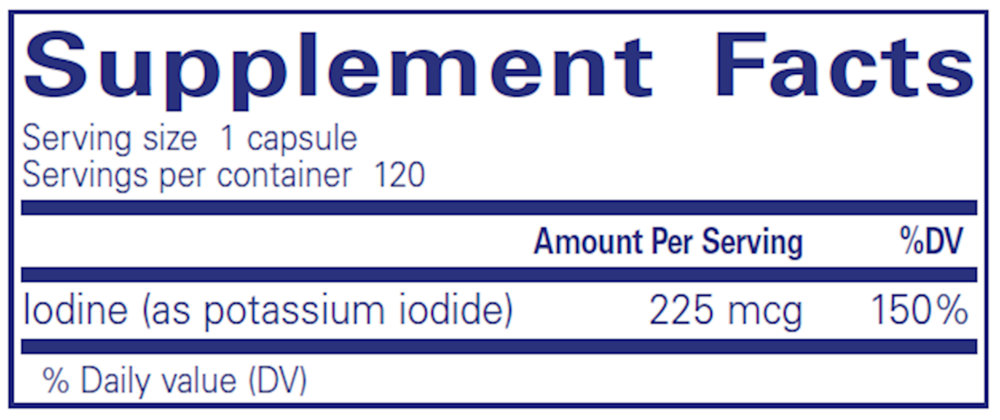
Pure Encapsulations
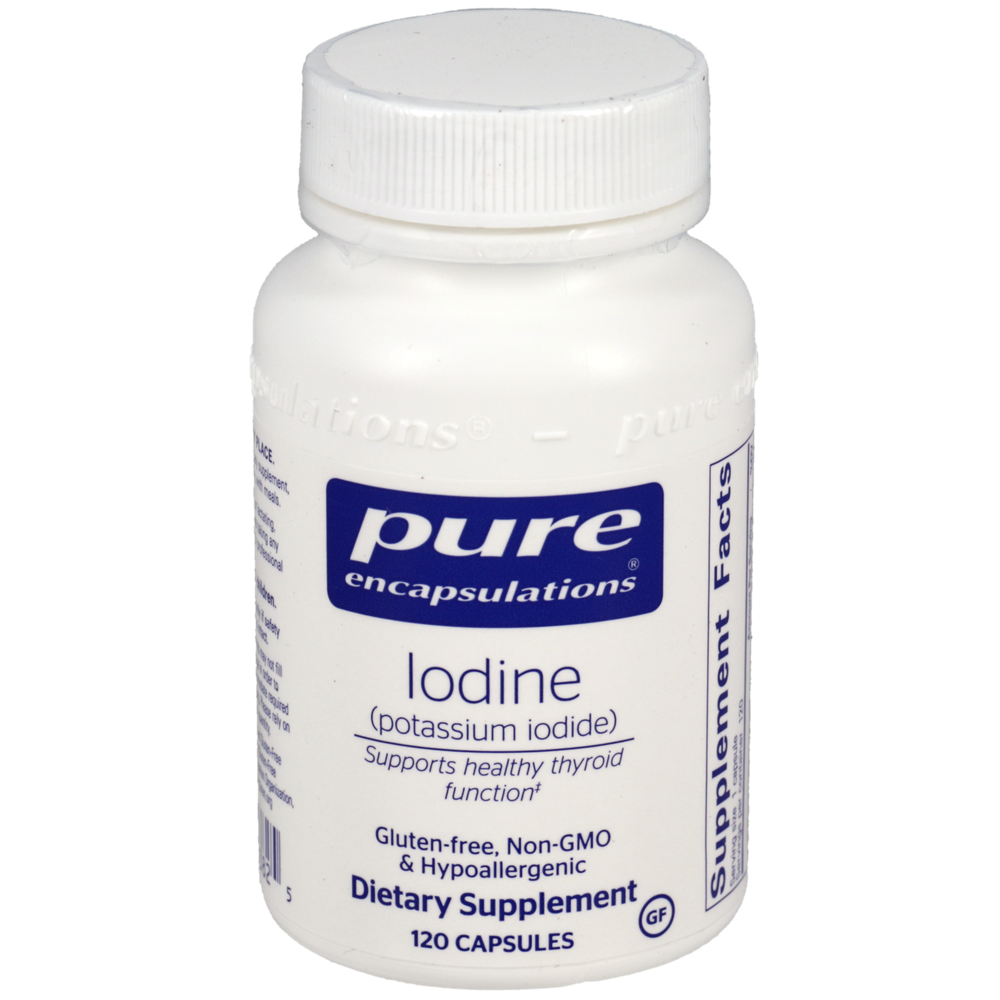
Potassium Iodide 225 mcg by Pure Encapsulations
120 capsules · 120-day supply
Essential Iodine Support for Thyroid Health and Metabolic Function$20.50
Purchase options
Practitioner-grade brand3rd-party testedFree shipping $50+
Vegan·Vegetarian·Gluten Free·Egg Free·Peanut Free·Wheat Free·
Pure Encapsulations Potassium Iodide overview
If you rarely use iodized salt, avoid dairy and eggs, or eat a vegan diet, an iodine supplement can cover a common gap. This dose fits adults with low dietary intake or low Urinary Iodine on testing. It’s also reasonable preconception and in pregnancy when needs rise, under clinician guidance. If your TSH (thyroid‑stimulating hormone, the signal telling the thyroid to work) is high with low Free T4 (the main thyroid hormone), correcting iodine intake sometimes normalizes labs within 6–12 weeks.
Iodine is the raw material your thyroid uses to make T4 and T3 (the hormones that set cellular energy pace). Potassium iodide is a simple, well‑absorbed form the thyroid pulls in through its iodine transporter. Adequate intake lets the gland build hormones consistently; too little limits output. The catch is that excess iodine can overshoot, triggering the Wolff–Chaikoff effect (a temporary shut‑off of hormone making) or, in people with nodular thyroids, episodes of overproduction.
Take 1 capsule with a meal once or twice daily, as the label suggests. One capsule (225 mcg) is a maintenance‑level dose for most adults with low intake; two capsules (450 mcg) edges into repletion territory and is best guided by Urinary Iodine or by thyroid labs (TSH, Free T4, Free T3). Expect any iodine‑related hypothyroid pattern to improve over 4–12 weeks, then re‑test. If you already eat seaweed regularly, stay at the lower end or skip altogether.
Hashimoto’s thyroiditis (autoimmune hypothyroidism) can flare with extra iodine; add only if a clinician advises and monitor Thyroid Peroxidase Antibodies. Graves’ disease, multinodular goiter, or a history of iodine‑induced hyperthyroidism are also reasons to avoid unsupervised use. If you take levothyroxine, changes in iodine intake can alter your dose requirement. Lithium and amiodarone interfere with the thyroid; do not add iodine without medical input. This is not the high‑dose tablet used for nuclear radiation emergencies.
Frequently asked questions
How much iodine should I take for thyroid health?
For most adults with low intake, 150–225 mcg daily is maintenance. Higher repletion should be guided by Urinary Iodine and thyroid labs. Avoid multi‑milligram doses unless a clinician prescribes them for a specific reason.
How long does iodine take to work?
If low iodine is the bottleneck, TSH and Free T4 often improve within 4–12 weeks. Re‑check labs after about 8 weeks to avoid overshooting and to adjust dose if you’re on levothyroxine.
Can I take iodine with thyroid medication like levothyroxine?
Yes, but tell your clinician. Changes in iodine intake can change how much levothyroxine you need. Take levothyroxine on an empty stomach as usual, and take iodine with food later in the day.
Is iodine safe if I have Hashimoto’s?
Be cautious. Added iodine can raise Thyroid Peroxidase Antibodies in some people and worsen hypothyroidism. If used, pair with close lab monitoring and clinician oversight. Many patients do better focusing on consistent, not high, intake.
What side effects should I watch for with iodine?
Too much can cause neck tenderness, palpitations, anxiety, or fatigue from thyroid over‑ or under‑activity. Acne‑like skin changes and a metallic taste are less common. Stop and check labs if symptoms appear.
Is this the same as potassium iodide for radiation emergencies?
No. Radiation tablets contain milligram‑level doses for short‑term thyroid blockade. This supplement provides microgram‑level daily nutrition and should not be used for radiation exposure.
Do I need a test before taking iodine?
Not always, but it helps. Urinary Iodine reflects recent intake, and thyroid labs (TSH, Free T4, Free T3) show function. If you have autoimmune thyroid disease, include Thyroid Peroxidase Antibodies.
Can I just use iodized salt or seaweed instead?
Iodized salt can meet needs if used consistently at home. Seaweed is iodine‑dense, but amounts vary widely and can be excessive. A measured supplement offers predictable intake when diet is inconsistent.
How to take it & ingredients
Suggested use: Take 1–2 capsules daily, in divided doses, with meals.
Active ingredients
1 capsule per serving · 120 servings
Iodine
As potassium iodide
As potassium iodide
225 mcg
Other ingredients: Hypoallergenic plant fiber (cellulose), Vegetarian capsule (cellulose, water)
Certifications
Benefits
Warnings