 Instalab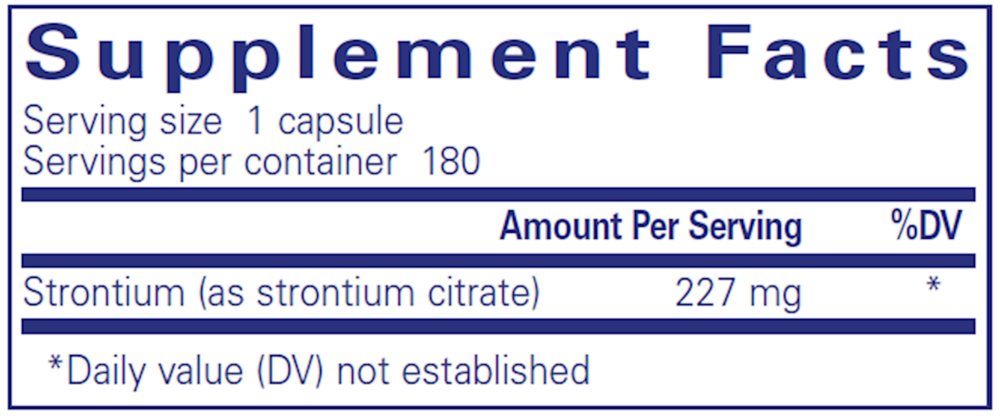

Pure Encapsulations
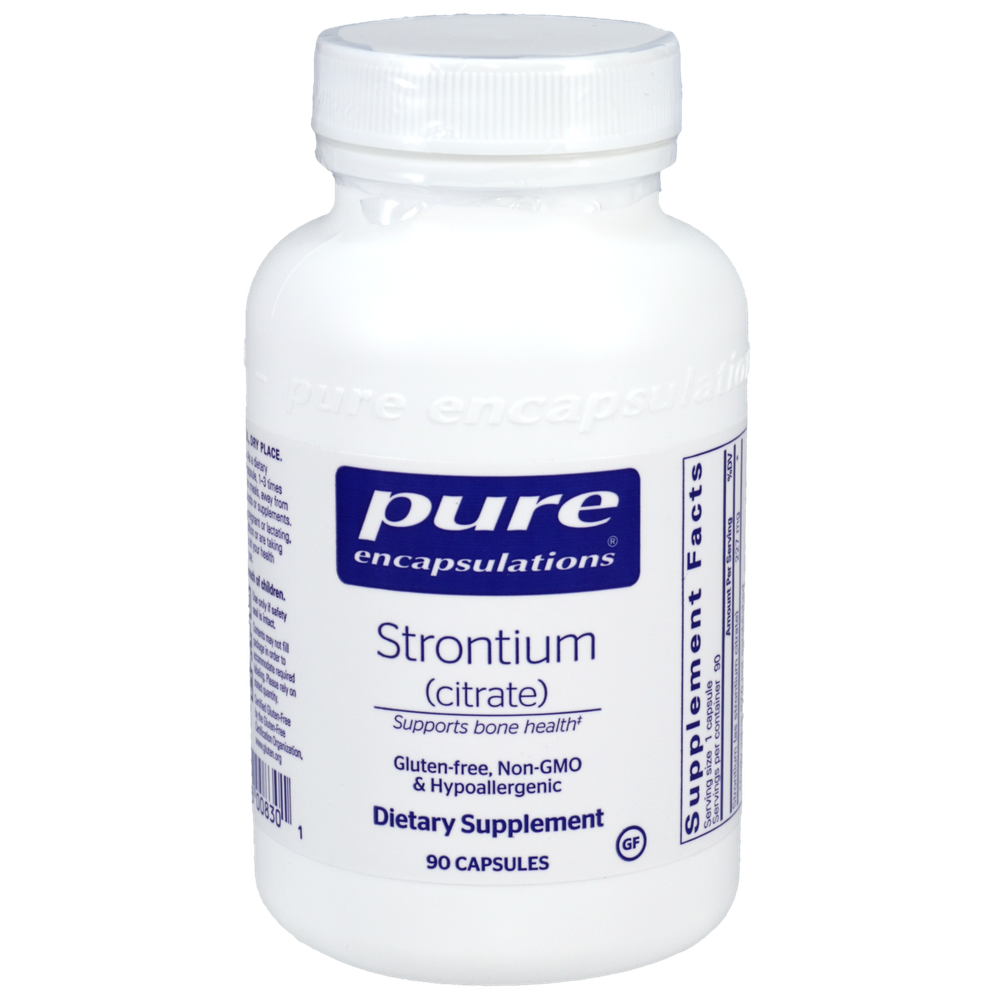
Strontium Citrate 227 mg by Pure Encapsulations
180 capsules · 180-day supply
Support Bone Health and Density with Strontium Citrate$53.00
Purchase options
Practitioner-grade brand3rd-party testedFree shipping $50+
Vegan·Vegetarian·Gluten Free
Pure Encapsulations Strontium Citrate overview
Strontium citrate is worth considering if your DXA scan shows low bone density or your trend is slipping despite adequate calcium and Vitamin D, 25-Hydroxy. It’s a pragmatic option for postmenopausal women, men over 50 with osteopenia, and those who can’t tolerate or won’t use prescription osteoporosis drugs. If you’ve had a recent low-trauma fracture, discuss adding strontium citrate with your clinician alongside lifestyle, calcium, and vitamin D. For established deficiency of vitamin D, correct that first, then layer this in.
Strontium is a calcium-like mineral that gets incorporated into bone crystals and shifts bone turnover toward building. It nudges osteoblasts (the cells that form bone) to be more active and reins in osteoclasts (the cells that break bone down), which can raise measured bone density within a year. The catch is that DXA can overestimate gains because strontium blocks X-rays more than calcium. Track bone turnover markers like P1NP (bone formation) and CTX (bone resorption) to gauge true biology, not just imaging.
Pure Encapsulations provides 227 mg per capsule; most clinical programs use about 680 mg elemental strontium daily, which is three capsules. Take it in divided doses or once at bedtime, away from calcium-containing foods or supplements by at least two hours so it absorbs properly. Keep calcium and vitamin D steady in the background, then recheck DXA after 12–24 months and consider P1NP/CTX at 3–6 months to confirm direction.
Take strontium citrate at least two hours apart from calcium, iron, magnesium, or zinc, and separate it by several hours from levothyroxine and from antibiotics like tetracyclines or quinolones so those drugs absorb. If you have chronic kidney disease, a history of heart attack or stroke, or uncontrolled high blood pressure, review strontium use with your clinician; cardiovascular safety signals came from a prescription form in high-risk patients. Pregnancy and breastfeeding: avoid.
Most people won’t feel anything day to day; this is about long-term structure. P1NP and CTX can shift within 3–6 months, while meaningful DXA changes take 12–24 months. Strontium citrate does not replace calcium or vitamin D, it works alongside them. If your Vitamin D, 25-Hydroxy is low, correct that first so bone-building signals have the raw materials they need.
Frequently asked questions
Does strontium citrate really improve bone density?
It can increase measured bone density within a year, but part of that rise is a DXA artifact because strontium blocks X-rays more than calcium. Use it alongside calcium and vitamin D, and track P1NP/CTX to see real changes in bone turnover.
What dose of strontium citrate should I take?
Most programs aim for about 680 mg elemental strontium daily, which is three 227 mg capsules. The label allows 1–3 capsules. Take it away from calcium so it absorbs, and confirm your plan with your clinician if you have medical conditions.
How long does strontium citrate take to work?
Bone turnover markers (P1NP, CTX) may shift in 3–6 months, but DXA changes usually require 12–24 months. Bone adapts slowly, so think in years, not weeks. Keep calcium and Vitamin D, 25-Hydroxy in a healthy range during that time.
Can I take strontium with calcium or magnesium?
Not at the same time. Strontium competes with other minerals for absorption. Take strontium citrate at least two hours apart from calcium, magnesium, iron, or zinc, and keep your daily calcium intake consistent at other times.
Is strontium citrate safe for heart disease?
Caution is warranted. A prescription form of strontium was linked to higher cardiovascular events in high-risk patients. If you have coronary disease, prior stroke, or uncontrolled hypertension, discuss risks and alternatives with your clinician.
Does strontium mess up DXA scan results?
It can make DXA look better than the true underlying change because strontium attenuates X-rays more than calcium. If you use strontium citrate, interpret DXA cautiously and consider tracking P1NP and CTX to see biologic response.
What medications interact with strontium citrate?
Separate strontium by several hours from levothyroxine and from antibiotics like tetracyclines (e.g., doxycycline) or quinolones (e.g., ciprofloxacin). Also separate from mineral supplements to avoid absorption interference.
What side effects should I watch for?
Most tolerate it well. Possible effects include mild gastrointestinal upset. Rare skin reactions have been reported with prescription strontium; stop and seek care if you develop rash, hives, or facial swelling. Kidney disease requires caution.
How to take it & ingredients
Suggested use: Take 1–3 capsules daily, in divided doses, with or between meals, away from calcium-containing foods or supplements.
Active ingredients
1 capsule per serving · 180 servings
Strontium
Strontium Citrate
Strontium Citrate
227 mg
Other ingredients: Hypoallergenic plant fiber (cellulose), Ascorbyl palmitate, Vegetarian capsule (cellulose, water)
Certifications
Benefits
Warnings