 Instalab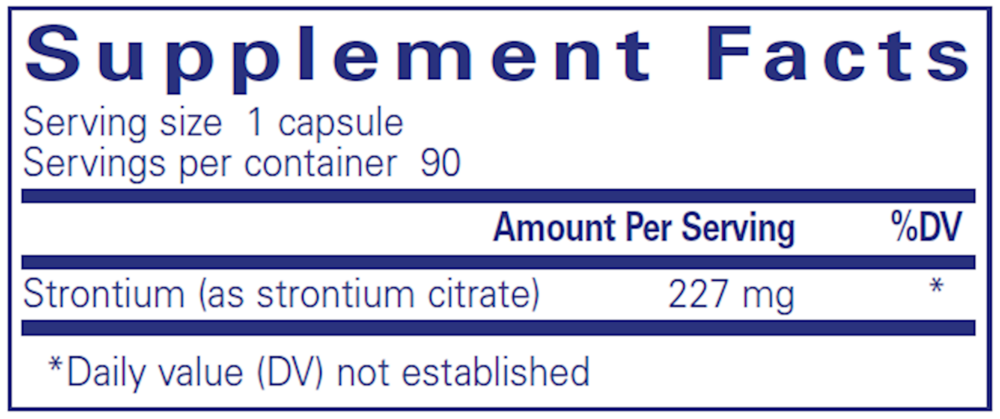
Pure Encapsulations
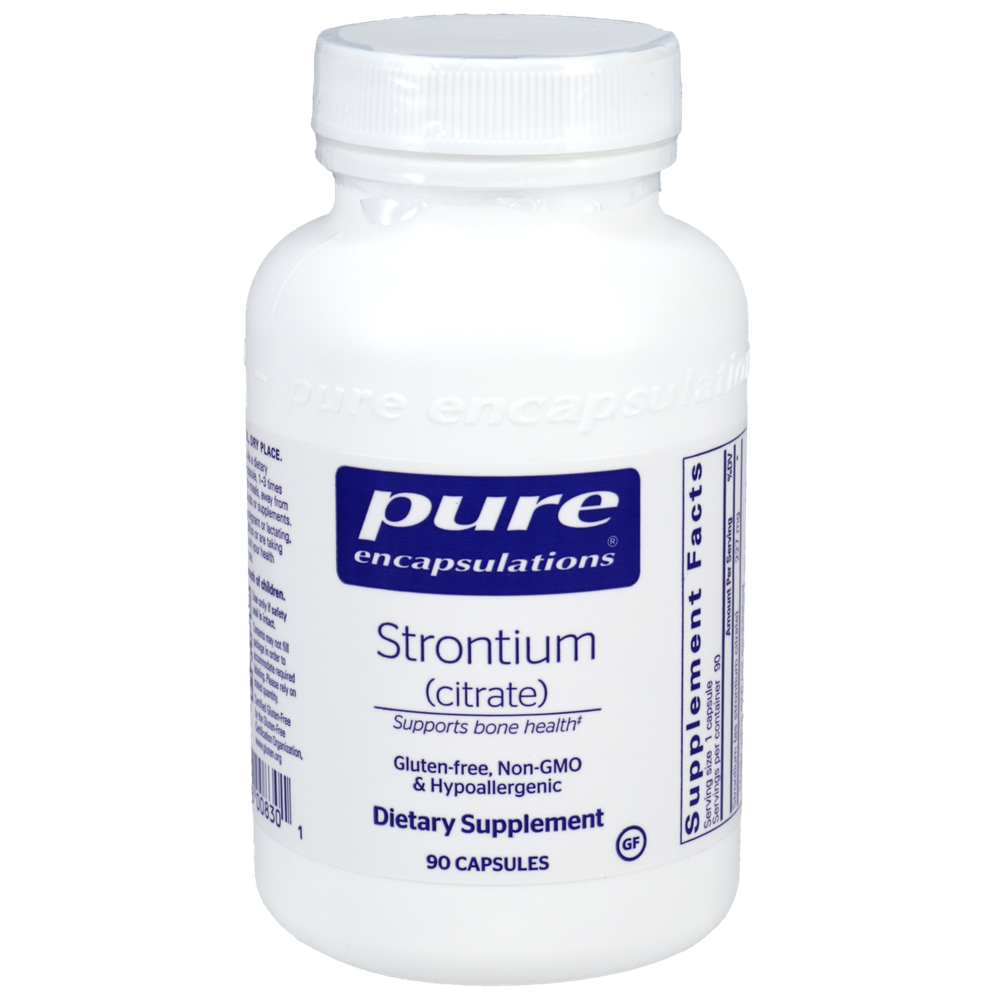
Strontium Citrate 227 mg by Pure Encapsulations
90 capsules · 90-day supply
Supports Bone Health and Density with Strontium Citrate$31.00
Purchase options
Practitioner-grade brand3rd-party testedFree shipping $50+
Vegan·Vegetarian·Gluten Free
Pure Encapsulations Strontium Citrate overview
If you’re searching for strontium citrate for bone density, this fits adults with low bone mass on a DXA scan and a history of fractures or high fracture risk. It’s an option if you can’t tolerate bisphosphonates (the drugs that slow bone breakdown) or want an adjunct while you optimize Vitamin D, 25-Hydroxy and dietary calcium. Pairing it with monitoring of bone turnover markers like P1NP (bone-formation protein) and CTX (bone-resorption fragment) helps track whether it’s doing anything for you.
Strontium sits next to calcium on the periodic table and can be incorporated into bone, where it both slows osteoclasts (the cells that dissolve bone) and encourages osteoblasts (the cells that build bone). That dual action shifts remodeling toward formation, which is why trials with prescription forms showed fewer fractures. One catch: because strontium is heavier than calcium, DXA can overread bone density while you’re taking it, so use P1NP/CTX and clinical events, not just the scan, to judge progress.
Take 1–3 capsules per day in divided doses, away from calcium-containing foods or supplements, as the manufacturer directs. Separating by at least two hours from calcium, magnesium, iron, or zinc improves absorption. Many patients use a bedtime dose if dinner includes dairy. Expect changes in P1NP and CTX within 8–12 weeks; any real-world fracture benefit, if it occurs, is a 6–12 month story. Keep Vitamin D, 25-Hydroxy in a healthy range with D3, taken at a different time of day.
Avoid strontium if you have significant kidney disease, a history of blood clots, or cardiovascular disease—European experience with prescription strontium ranelate linked it to clot and heart risk, and caution carries over. Do not take it with tetracycline or quinolone antibiotics, levothyroxine, or bisphosphonates at the same time, since it can block their absorption; separate by several hours. Pregnancy or breastfeeding: skip. If you form recurrent kidney stones, discuss with your clinician first.
Frequently asked questions
Does strontium citrate really increase bone density?
It can improve bone remodeling biology, but DXA scans often look higher than they truly are because strontium is heavier than calcium. Track P1NP and CTX, symptoms, and fractures over time. Evidence for fracture reduction is strong for prescription forms; data for citrate are more limited.
How long does strontium citrate take to work?
Bone turnover markers like P1NP and CTX often shift within 8–12 weeks. Any meaningful change in fracture risk or clinical outcomes is typically assessed over 6–12 months. Keep Vitamin D, 25-Hydroxy and dietary calcium in a good place during that window.
Should I take strontium with calcium or vitamin D?
Keep taking calcium and vitamin D if you need them, but take strontium at a different time. Calcium taken together competes for absorption. Vitamin D3 can be taken with meals; schedule strontium at least two hours away from calcium-containing foods or supplements.
Does strontium mess up a DXA scan?
Yes. Strontium incorporated into bone makes DXA appear higher than the true mineral content. If you’re on strontium, interpret DXA cautiously and use P1NP and CTX plus clinical history to judge response, not the scan alone.
Is strontium citrate safe for the heart?
Caution is warranted. Prescription strontium ranelate was linked to higher clot and cardiovascular risk, leading to restrictions in Europe. While citrate isn’t the same drug, many clinicians avoid strontium in patients with prior clots or cardiovascular disease.
Can I take strontium with osteoporosis drugs like alendronate or denosumab?
Don’t take it at the same time. Strontium can block oral drug absorption; separate oral agents like alendronate by several hours. Denosumab is an injection and doesn’t have an absorption issue, but coordinate any combination therapy with your clinician.
What are common side effects of strontium citrate?
Most people tolerate it, but some report mild stomach upset, loose stools, or nausea. Taking it away from large meals and separating from minerals can help. Stop and speak with your clinician if you notice swelling, leg pain, chest pain, or shortness of breath.
What’s the difference between strontium citrate and strontium ranelate?
Ranelate is a prescription drug studied for fracture reduction; citrate is a supplement form with less direct fracture data. Both deliver strontium to bone. Safety concerns driving caution—especially around clot and heart risk—come from the ranelate data.
How to take it & ingredients
Suggested use: Take 1–3 capsules daily, in divided doses, with or between meals, away from calcium-containing foods or supplements.
Active ingredients
1 capsule per serving · 90 servings
Strontium
Strontium Citrate
Strontium Citrate
227 mg
Other ingredients: Hypoallergenic plant fiber (cellulose), Ascorbyl palmitate, Vegetarian capsule (cellulose, water)
Certifications
Benefits
Warnings