 Instalab
Quicksilver Scientific
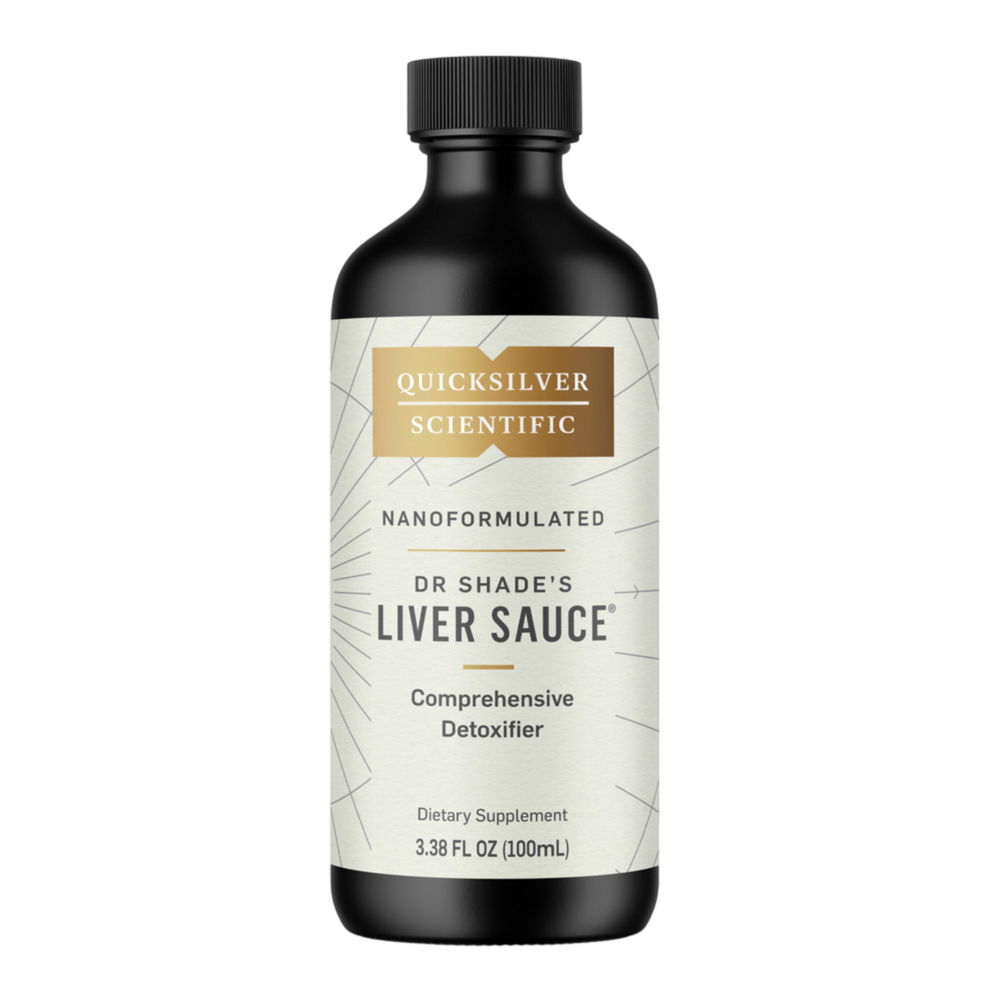
Dr. Shade's Liver Sauce by Quicksilver Scientific
100 milliliters
Advanced Support for Liver Detoxification and Function$73.99
This item is currently out of stockGet notified when this item is back in stock
Practitioner-grade brand3rd-party testedFree shipping $50+
Quicksilver Scientific Dr. Shade's Liver Sauce overview
This fits adults tracking liver labs who want gentle, daily liver support rather than a harsh cleanse. If your ALT and AST (enzymes that rise with liver stress) run high-normal, if GGT (an enzyme tied to alcohol and fatty liver) is up, or if fatty meals leave you heavy, a liver detox supplement can be a practical trial. It’s also reasonable during periods of lower alcohol intake or weight-loss efforts, with repeat labs in 4 to 8 weeks to gauge effect. If your enzymes are markedly elevated or you have jaundice, see a clinician first.
This liquid uses liposomal delivery (phospholipid micro-droplets that improve absorption) to deliver bitter botanicals that nudge bile flow, which helps the liver move waste into the gut and improves fat digestion. Many blends also include flavonoids like quercetin and silymarin from milk thistle, which act as antioxidants in liver cells and modulate CYP enzymes (the liver’s drug-processing machinery). In practice, people notice easier digestion after fatty meals first; any shift in ALT, AST, GGT, or hs-CRP (an inflammation marker) takes weeks and depends on diet and alcohol habits.
The suggested use is 1 to 2 teaspoons daily. Take it on an empty stomach if you can tolerate bitters, or with a small snack if you’re prone to reflux. Start low for 3 to 5 days, then increase as needed. If you use a binder like activated charcoal or a fiber blend, separate it by at least 90 minutes so it doesn’t grab the actives. Recheck a Comprehensive Metabolic Panel (ALT, AST, Bilirubin, Alkaline Phosphatase) and GGT after 4 to 8 weeks.
If you have active gallstones, biliary obstruction, or right-upper-quadrant pain after fatty meals, avoid bitters and see a clinician. Many liver support herbs can alter drug metabolism, so use caution if you take narrow-therapeutic-index meds like warfarin, tacrolimus, cyclosporine, theophylline, or anti-seizure drugs; involve your prescriber and consider extra INR or drug-level checks. Pregnancy and breastfeeding: avoid. If you develop nausea, cramping, or loose stools, reduce the dose or stop.
Frequently asked questions
Does a liver detox supplement actually work?
It can help digestion quickly and, with diet changes, contribute to gradual improvements in ALT, AST, or GGT. It doesn’t “flush toxins” overnight. Track labs after 4–8 weeks and prioritize alcohol reduction, weight loss if needed, and better triglycerides.
How long until I see changes in ALT or AST?
Allow 4 to 8 weeks. Enzymes reflect ongoing liver stress, so improvements show up after sustained changes in alcohol, body weight, and diet. Supplements alone rarely move labs without lifestyle shifts.
Should I take this with food or on an empty stomach?
Empty stomach increases the bitter effect and absorption for some people. If that causes nausea or reflux, take it with a small snack. Avoid taking it alongside binders or medications.
Can I use a liver detox supplement if I drink alcohol?
It’s better used during periods of reduced alcohol. Taking it while drinking heavily won’t protect your liver meaningfully. If you drink, keep it light and alcohol-free days help most.
Will this interact with my medications?
Possibly. Liver-focused herbs can change how the liver’s enzymes process drugs. If you’re on warfarin, tacrolimus, cyclosporine, theophylline, or anti-seizure meds, speak with your prescriber first.
Do I need to pair this with a binder like charcoal?
Not required. Some people add a binder for digestive comfort, but take it 90 minutes away so it doesn’t reduce absorption. Start the liver supplement alone to see how you respond.
What side effects should I watch for?
Bitters can cause nausea, cramping, or loose stools, especially if you have gallbladder issues. Reduce the dose, take with a snack, or stop if symptoms persist.
Which labs should I monitor while using liver support?
Check a Comprehensive Metabolic Panel (ALT, AST, Bilirubin, Alkaline Phosphatase) and GGT. If metabolic health is a goal, also follow Triglycerides and fasting insulin.
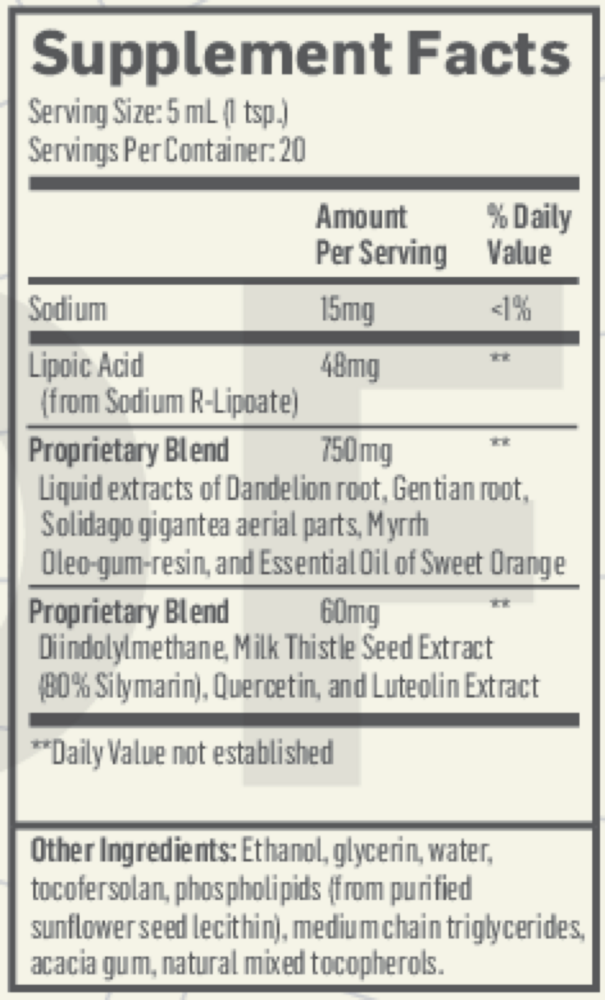
How to take it & ingredients
Suggested use: Adults take 1-2 teaspoons daily, or as directed by your healthcare professional.
Certifications
Benefits
Warnings