 Instalab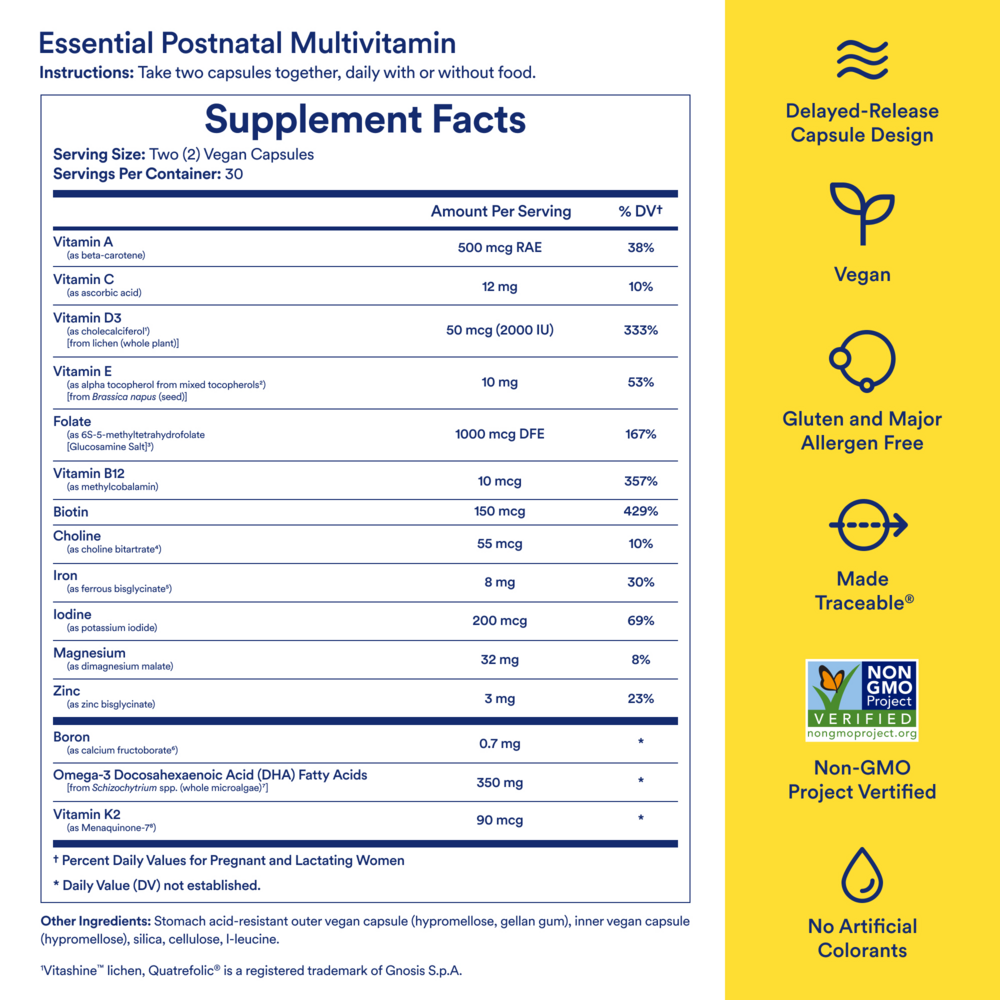

Ritual
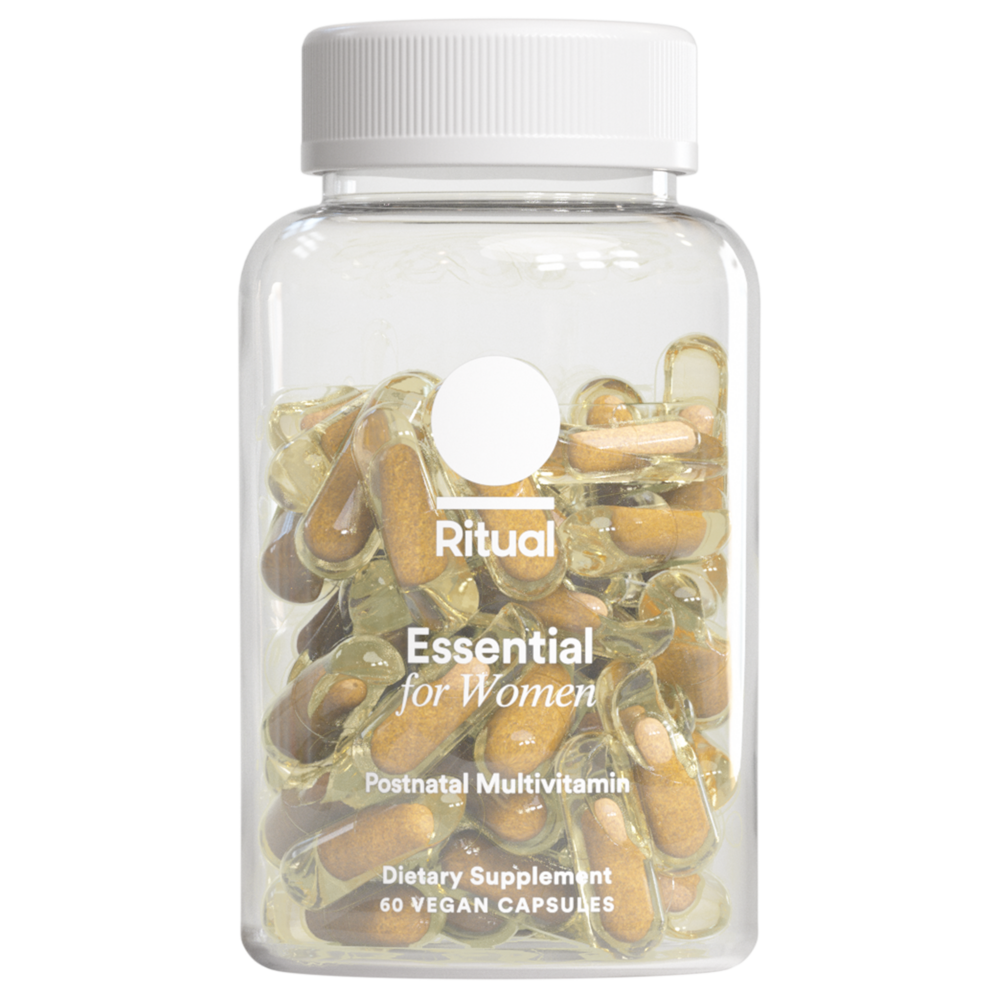
Essential for Women Postnatal Multivitamin - Citrus by Ritual
60 capsules · 30-day supply
Comprehensive Nutritional Support for Postnatal Wellness and Recovery$44.99
Purchase options
Practitioner-grade brand3rd-party testedFree shipping $50+
Vegan·Vegetarian·Gluten Free·Soy Free·Dairy Free·Sugar Free·
Ritual Essential for Women Postnatal Multivitamin - Citrus overview
Early months of breastfeeding draw hard on DHA and micronutrient stores. This postnatal multivitamin with DHA fits nursing parents who eat little seafood, follow vegan diets, or had low Vitamin D, 25-Hydroxy or Ferritin late in pregnancy. The 350 mg algal DHA helps enrich breast milk, and 2,000 IU vitamin D3 suits those in the lower normal range as a maintenance dose. Iron here is modest, useful if your ferritin is low-normal without pushing constipation the way higher-dose iron often does.
Algal DHA is a direct source of the long-chain omega-3 your body and baby use for brain and eye development; it raises milk DHA within 2 to 4 weeks. Methylfolate (the bioactive folate your cells actually use) bypasses common MTHFR enzyme variants and supports red blood cell turnover. Gentle iron bisglycinate is better tolerated than ferrous sulfate. Vitamin D3 and K2 (menaquinone-7) pair to help calcium handling for bones. Iodine repletes thyroid needs in lactation, and methylcobalamin (B12) supports energy metabolism. Choline is present, though the 55 mg is supplemental rather than repletion-level, so plan to get most choline from diet.
Take two capsules together daily. You can take them without food, but absorption of D3, K2, and DHA improves with a meal that contains fat. If you also use a separate iron, space it away from coffee or tea by at least one hour. For higher DHA targets, add a separate omega-3 to reach the intake your clinician recommends and recheck your Omega-3 Index after 8 to 12 weeks.
Warfarin users should skip vitamin K2 unless managed by a clinician, because K directly affects INR (the blood-thinning test). If you take levothyroxine, separate this multi by 4 hours, and know that biotin can distort thyroid labs like TSH (the pituitary signal to the thyroid) for a day or two; pause biotin 48 hours before testing. With known thyroid disease, ask your clinician before taking supplemental iodine. For established vitamin D deficiency or very low ferritin, you’ll likely need targeted doses beyond a multi.
Frequently asked questions
Do I need a postnatal multivitamin while breastfeeding?
It’s helpful for many. Breastfeeding increases needs for DHA, iodine, and several vitamins. A postnatal multi covers baseline gaps, but if labs like Vitamin D, 25-Hydroxy or Ferritin are low, you may still need targeted add-ons.
Is 350 mg DHA enough postpartum?
It meaningfully raises milk DHA within 2–4 weeks, especially if you eat little seafood. If your Omega-3 Index is low or your clinician targets higher DHA, add a separate omega-3 to meet that goal.
Can I take this on an empty stomach?
Yes, but it’s better with a meal that contains fat. Fat improves absorption of DHA, vitamin D3, and K2. If you feel queasy, take it with your largest meal.
Will this affect my thyroid medication or labs?
Separate from levothyroxine by 4 hours. Iodine is included, which some thyroid patients must individualize. Biotin can skew thyroid tests; stop biotin 48 hours before bloodwork if possible.
Is the choline amount enough for breastfeeding?
It’s a modest add-on. Lactation needs are high, so plan to get most choline from diet (eggs, meat, soy) or consider a separate choline supplement if intake is low.
Should I take extra iron with this?
Only if your Ferritin or a clinician’s assessment shows you need it. The 8 mg here is gentle maintenance. For clear deficiency, use a higher-dose iron and recheck labs.
Is algal DHA safe for fish allergies and vegans?
Yes. Algal DHA is produced from microalgae, not fish, and is suitable for vegans and those with fish or shellfish allergies.
How to take it & ingredients
Suggested use: Take two capsules together daily, with or without food.
Active ingredients
2 capsules per serving · 30 servings
Vitamin A
As beta-carotene
As beta-carotene
500 mcg RAE
Vitamin C
As ascorbic acid
As ascorbic acid
12 mg
Vitamin D
As cholecalciferol, from Lichen (whole plant)
As cholecalciferol, from Lichen (whole plant)
50 mcg
Vitamin E
As alpha-tocopherol from mixed tocopherols, from Brassica napus (seed)
As alpha-tocopherol from mixed tocopherols, from Brassica napus (seed)
10 mg
Folate
As 6S-5-methyltetrahydrofolate (glucosamine salt)
As 6S-5-methyltetrahydrofolate (glucosamine salt)
1000 mcg DFE
Vitamin B12
As methylcobalamin
As methylcobalamin
10 mcg
Biotin
150 mcg
Choline
As choline bitartrate
As choline bitartrate
55 mg
Iron
As ferrous bisglycinate
As ferrous bisglycinate
8 mg
Iodine
As potassium iodide
As potassium iodide
200 mcg
Magnesium
As dimagnesium malate
As dimagnesium malate
32 mg
Zinc
As zinc bisglycinate
As zinc bisglycinate
3 mg
Omega-3 Docosahexaenoic Acid (DHA) Fatty Acids
From Schizochytrium sp. (whole microalgae)
From Schizochytrium sp. (whole microalgae)
350 mg
Boron
As calcium fructoborate
As calcium fructoborate
0.7 mg
Vitamin K2
As Menaquinone-7
As Menaquinone-7
90 mcg
Other ingredients: Stomach Acid-Resistant Outer Vegan Capsule (Hypromellose, Gellan Gum), Inner Vegan Capsule (Hypromellose), Silica, Cellulose, L-Leucine
Certifications
Benefits
Warnings
Customers also considered
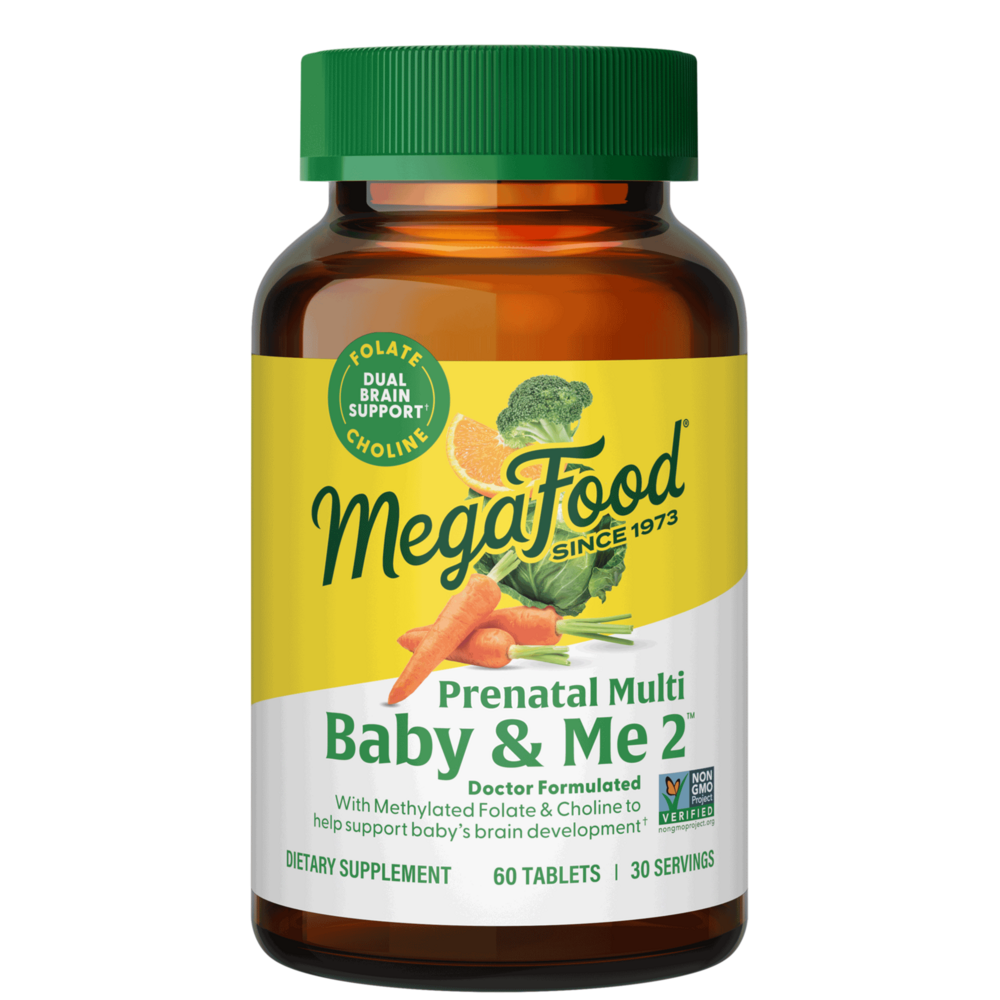
Baby & Me 2
MegaFood
60 tablets
$47.99$37.99 with Subscribe & Save
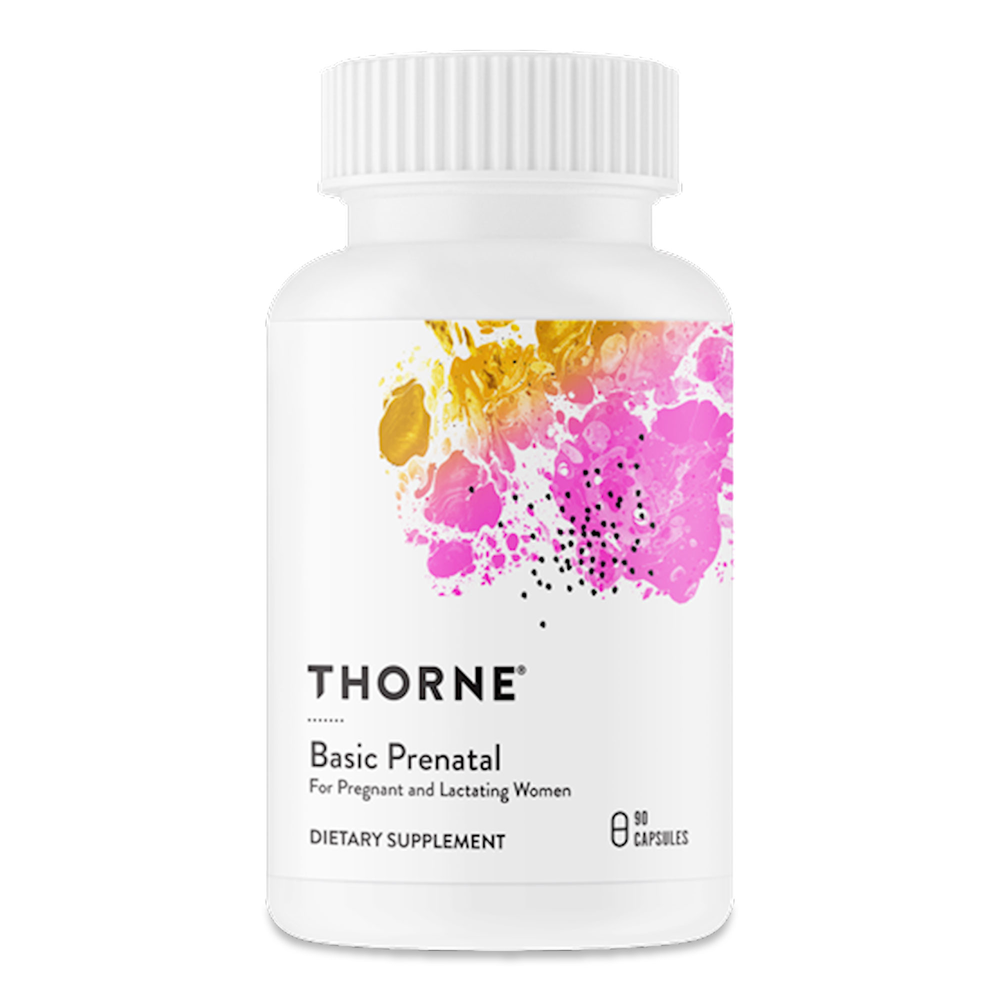
Basic Prenatal
Thorne
90 capsules
$37.00$33.30 with Subscribe & Save
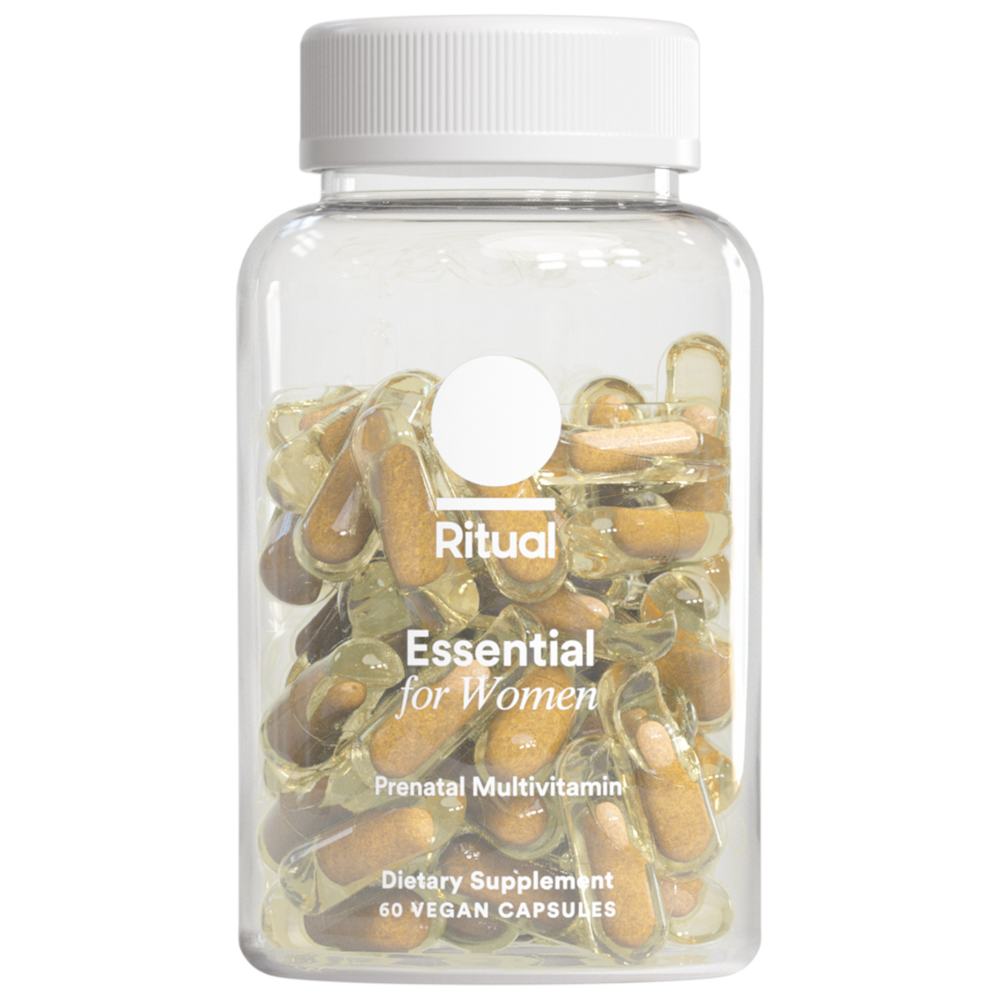
Essential for Women Prenatal Multivitamin - Citrus
Ritual
60 capsules
$44.99$35.99 with Subscribe & Save
Prenatal Complete with DHA
Ortho Molecular Products
6 packs
$89.08$80.25 with Subscribe & Save