 Instalab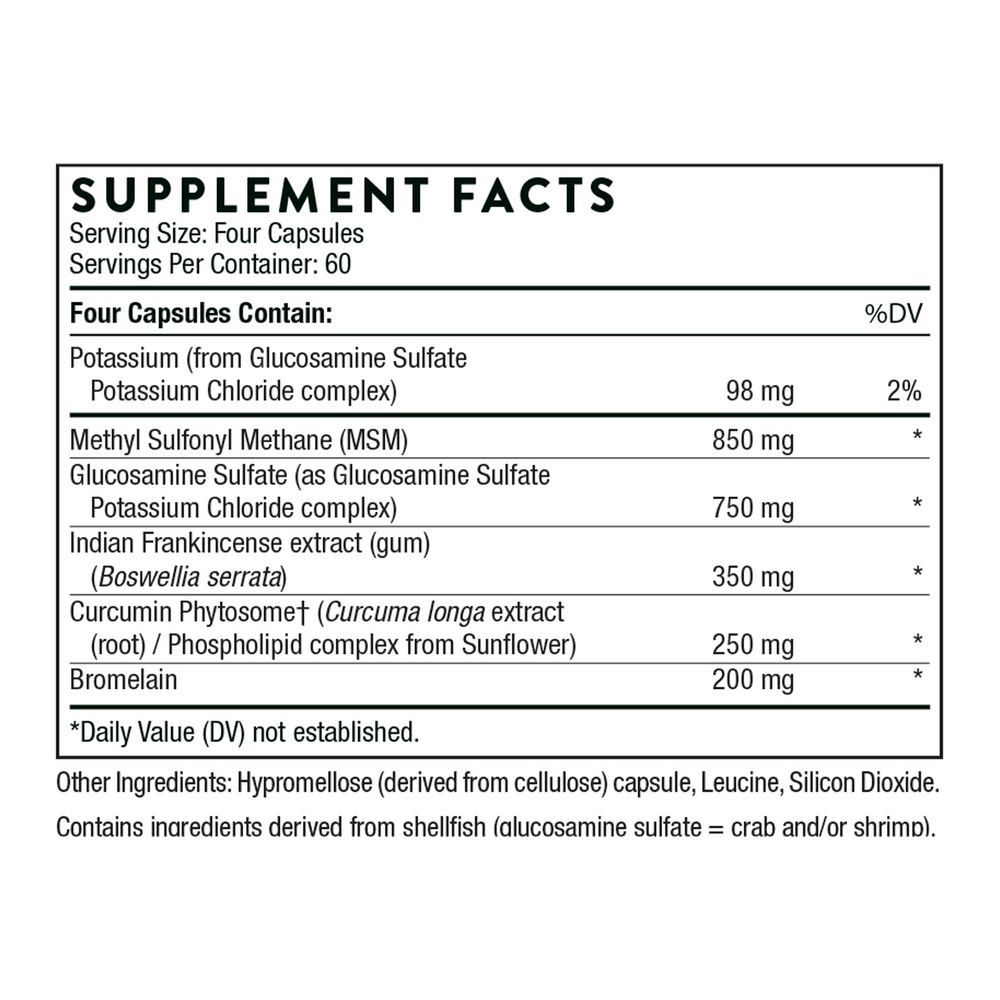

Thorne
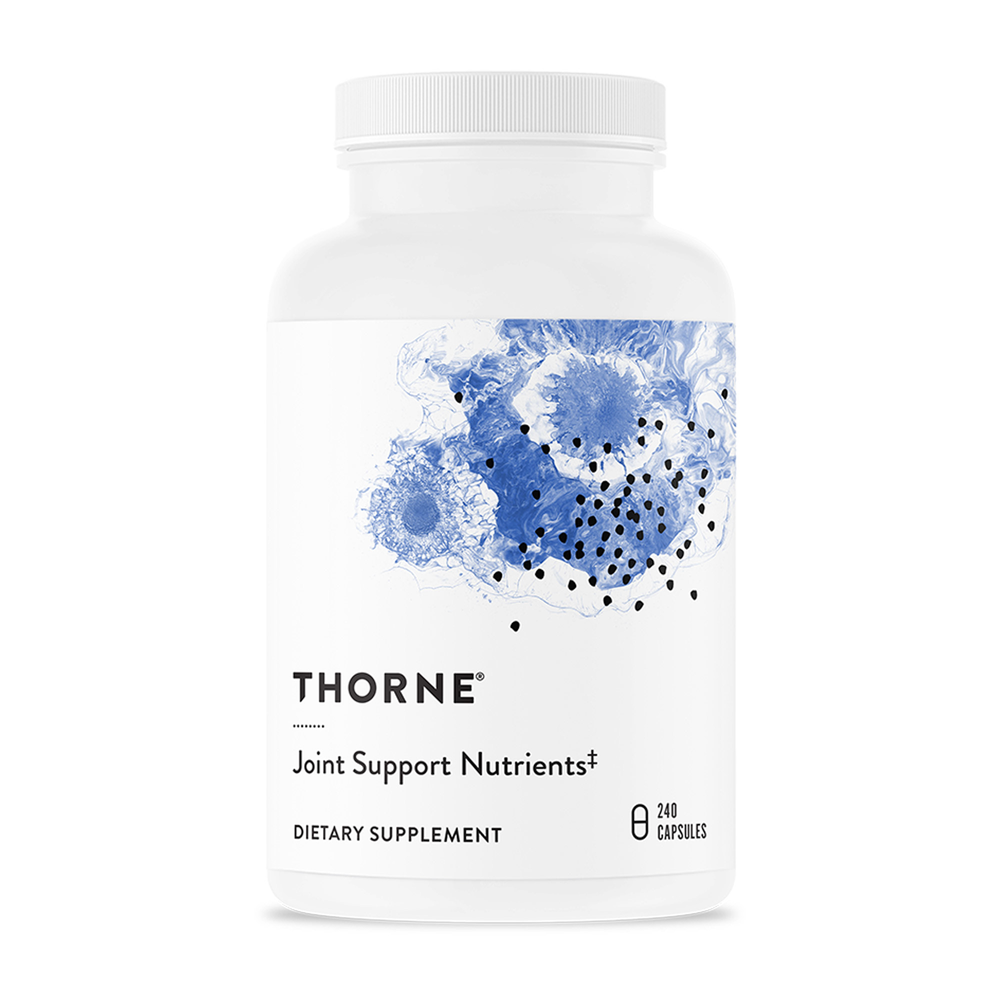
Joint Support Nutrients by Thorne
240 capsules · 60-day supply
Comprehensive Joint Support for Mobility and Comfort$60.00retail
Add to cart for 20% off
Purchase option
20% below MSRP3rd-party tested for purity & potencyFree shipping $50+
Gluten Free·Soy Free·Dairy Free·Milk Free
Thorne Joint Support Nutrients overview
If your knees ache with stairs or runs, this glucosamine-based blend fits the osteoarthritis crowd and high-mileage athletes. Glucosamine sulfate is the form tied to better outcomes for cartilage comfort, and MSM adds sulfur for joint tissues. Curcumin and boswellia calm inflammatory signaling, which you can sometimes see as small drops in hs-CRP (a blood marker of inflammation). Expect gradual change: pain and stiffness often ease over 4 to 8 weeks, faster in some.
Glucosamine sulfate supplies raw material for cartilage’s proteoglycans (the water-holding sponges in joint padding). MSM provides sulfur that cross-links collagen, reinforcing tissue. Curcumin phytosome pairs curcumin with a phospholipid for far better absorption than plain powder, aiding pain scores in trials. Boswellia limits leukotrienes (inflammatory signals that sensitize joints). Bromelain is a proteolytic enzyme that helps with post-activity swelling. Together, people report better function before big structural changes are possible.
Label directions are 4 capsules once or twice daily. In practice, start with 4 capsules twice daily for 2 to 4 weeks, then step down to 4 daily if comfortable. Take with food to minimize stomach upset. If you tolerate it, one dose away from meals can leverage bromelain’s systemic effect. Track pain and function, and consider hs-CRP to watch inflammation trends over time.
Avoid if you have a shellfish allergy unless you’ve confirmed the glucosamine source is shellfish-free. Curcumin, boswellia, and bromelain can increase bleeding risk; use caution with warfarin, apixaban, rivaroxaban, clopidogrel, or daily aspirin, and stop 1 to 2 weeks before surgery. Gallbladder disease or bile duct obstruction is a reason to avoid curcumin. Pregnancy: best to skip combination anti-inflammatories. Diabetes: glucosamine rarely shifts glucose, but monitor if concerned.
Frequently asked questions
How long does glucosamine take to work for knee pain?
Most people need 4 to 8 weeks for noticeable changes in pain and stiffness, with some feeling benefits sooner. Stay consistent daily. If there’s no change by 8 to 12 weeks, it’s reasonable to reassess the plan with your clinician.
Should I take this joint supplement with food or on an empty stomach?
Take it with food to reduce stomach upset. If you tolerate it well, one of the daily doses away from meals can enhance bromelain’s systemic effect, but comfort and consistency matter more than timing.
Does glucosamine raise blood sugar?
At typical doses, glucosamine hasn’t meaningfully raised fasting glucose in controlled studies. If you have diabetes or prediabetes, check Fasting Glucose or HbA1c as usual when starting any new regimen.
Can I take this with ibuprofen or naproxen?
You can, but combining anti-inflammatories raises stomach and bleeding risks. If you use NSAIDs regularly, discuss with your clinician and consider using the supplement consistently while minimizing NSAID dose.
Does curcumin or bromelain thin your blood?
They can increase bleeding tendency, especially when combined with anticoagulants or antiplatelets. If you’re on warfarin, apixaban, rivaroxaban, clopidogrel, or daily aspirin, get medical advice before starting.
Is this safe if I have a shellfish allergy?
Many glucosamine sulfate products are derived from shellfish. If your allergy is significant, avoid unless you confirm a shellfish-free source from the manufacturer. Consider shellfish-free glucosamine alternatives.
What labs can track inflammation or progress?
Hs-CRP is a practical blood marker for whole-body inflammation. It won’t diagnose arthritis, but trending down alongside better pain and function suggests you’re on the right track. Clinical symptoms still matter most.
Can I use this during pregnancy or breastfeeding?
Best to avoid in pregnancy and to use caution while breastfeeding. Curcumin and boswellia aren’t well studied for these periods. Discuss safer, single-ingredient options with your obstetric clinician.
How to take it & ingredients
Suggested use: Take 4 capsules one to two times daily or as recommended by your health professional.
Active ingredients
4 capsules per serving · 60 servings
Indian Frankincense extract
Boswellia serrata
Boswellia serrata
350 mg
Bromelain
200 mg
Curcumin Phytosome
Curcuma longa extract / Phospholipid complex from Sunflower
Curcuma longa extract / Phospholipid complex from Sunflower
250 mg
Glucosamine Sulfate
Glucosamine sulfate (Potassium chloride)
Glucosamine sulfate (Potassium chloride)
750 mg
Methyl Sulfonyl Methane (MSM)
850 mg
Potassium
Glucosamine Sulfate Potassium Chloride Complex
Glucosamine Sulfate Potassium Chloride Complex
98 mg
Other ingredients: Hypromellose Capsule, Leucine, Silicon Dioxide
Certifications
Benefits
Warnings