 Instalab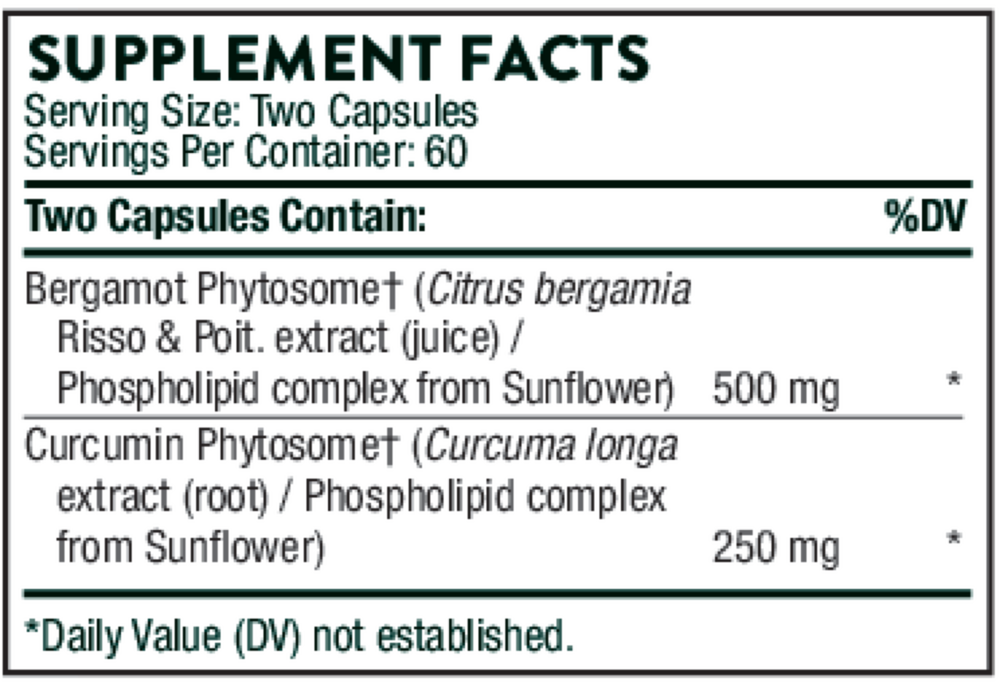

Thorne
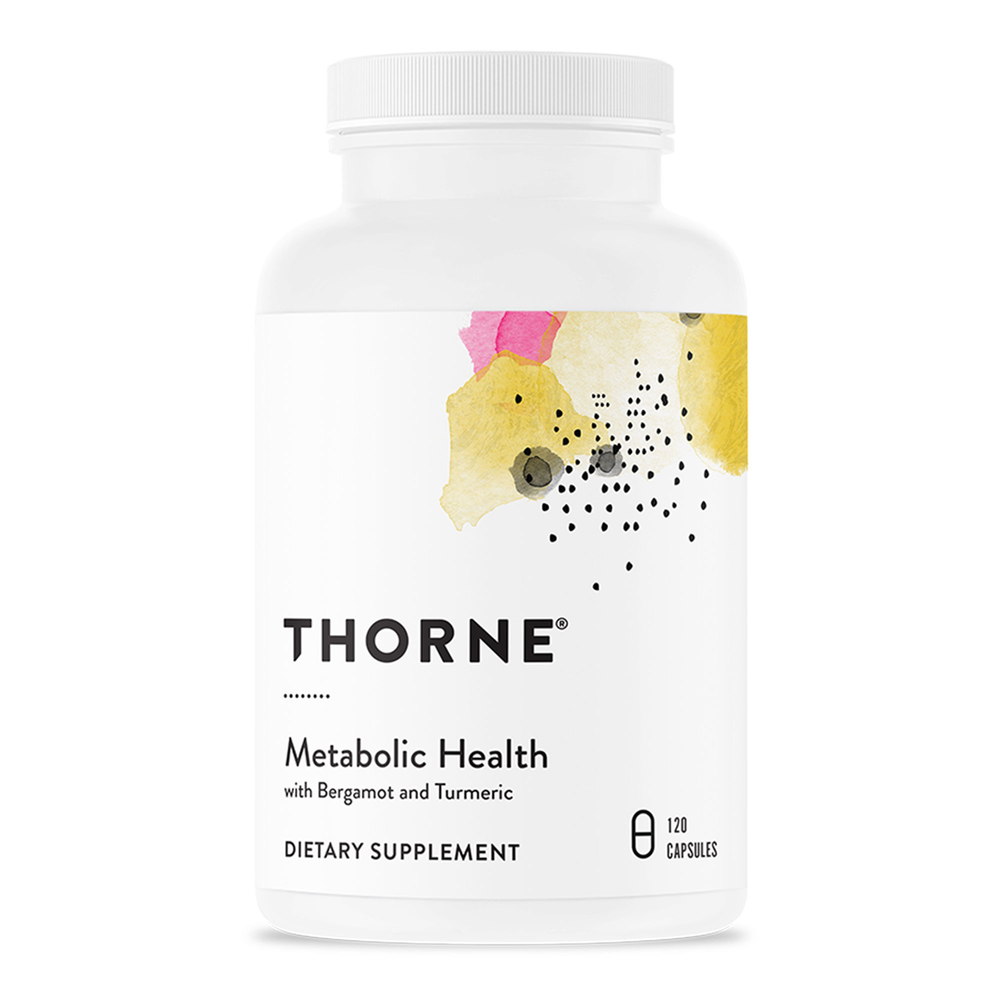
Metabolic Health by Thorne
120 capsules · 60-day supply
Support Healthy Metabolism with Bergamot and Curcumin$XX.XX$60.00retail
Purchase option
20% below MSRP3rd-party tested for purity & potencyFree shipping $50+
Gluten Free·Soy Free·Dairy Free·Milk Free
Thorne Metabolic Health overview
If your Lipid Panel shows elevated LDL cholesterol or triglycerides, bergamot for cholesterol is a reasonable non-statin option, and it also plays well as an add-on if you’re on a low or moderate statin but still want better numbers. It’s a fit if ApoB (the particle count behind risk) or non‑HDL cholesterol are high, or if triglycerides run up with a high‑carb diet. Curcumin helps here too if your hs-CRP (a liver-made inflammation marker) sits high-normal. Expect to recheck lipids and hs-CRP within 8 to 12 weeks.
Bergamot polyphenols signal your liver to make less cholesterol and package less fat into VLDL particles (the carriers that show up as triglycerides). Trials show reductions in LDL, non-HDL, triglycerides, and sometimes ApoB, with a shift away from small, dense LDL. This formula uses a bergamot phytosome (Vazguard) to improve absorption. Curcumin phytosome (Meriva) is absorbed far better than plain turmeric; it turns down NF-κB signaling (a switch for inflammation) and often nudges hs-CRP lower while modestly improving insulin sensitivity.
The suggested use is two capsules twice daily. Take with meals that include some fat to maximize curcumin absorption and reduce reflux. If you’re prone to heartburn, start at half-dose for a week, then advance. Most lipid changes appear by week 8 to 12; glucose markers like fasting insulin or HbA1c move more slowly, so reassess those after 12 weeks or longer.
Bergamot can interact with drugs processed by CYP3A4 (the same enzyme affected by grapefruit). If you take statins, calcium‑channel blockers, or certain immunosuppressants, involve your clinician and monitor. Curcumin can increase bleeding tendency; use caution with anticoagulants or daily aspirin. Avoid curcumin with active gallbladder disease or bile duct obstruction, and reconsider in pregnancy or while breastfeeding. If you use glucose‑lowering drugs, watch for lower readings as your diet and labs improve.
Frequently asked questions
How long does bergamot take to lower cholesterol?
Most people see changes on a Lipid Panel within 8 to 12 weeks. Triglycerides often move first, with LDL and non-HDL following. Re-test after 2 to 3 months to gauge response and adjust.
Can I take bergamot with a statin?
Yes, many use bergamot alongside a statin to improve LDL, triglycerides, or ApoB. Because bergamot can affect the same liver enzyme as grapefruit, coordinate with your clinician and monitor for muscle symptoms.
Does curcumin thin your blood?
Curcumin can increase bleeding risk. If you take warfarin, DOACs (blood thinners), clopidogrel, or daily aspirin, talk with your clinician and watch for bruising or nosebleeds.
Should I take bergamot and curcumin with food?
Yes, take with a meal that contains some fat to improve absorption and reduce reflux. Splitting the dose twice daily is easier on the stomach and keeps blood levels steadier.
Which labs should I track on this?
Track a Lipid Panel (LDL, non-HDL, triglycerides), ApoB if available, hs-CRP for inflammation, and fasting glucose or HbA1c for metabolic changes. Consider ALT if you have fatty liver concerns.
What side effects should I watch for?
The most common are mild stomach upset or reflux, especially on an empty stomach. Rarely, loose stools or headache. Stop and seek care for severe muscle aches (especially if on a statin) or unusual bleeding.
Is bergamot safe if I have fatty liver?
Evidence suggests bergamot can lower triglycerides and may modestly improve liver enzymes like ALT in fatty liver. Still, pair it with diet changes and follow labs with your clinician.
Can this help if my triglycerides are high from carbs or alcohol?
It can help lower triglycerides, but results are best when you also cut refined carbs and limit alcohol. Expect a 4 to 12 week window to see the effect on your panel.
How to take it & ingredients
Suggested use: Take 2 capsules two times daily or as recommended by your health care practitioner.
Active ingredients
2 capsules per serving · 60 servings
Bergamot Phytosome
Vazguard
Vazguard
500 mg
Curcumin Phytosome
Meriva
Meriva
250 mg
Other ingredients: Calcium Laurate, Hypromellose Capsule, Silicon Dioxide
Certifications
Benefits
Warnings