
Does the Shingles Vaccine Really Lower Dementia Risk?
If you're 50 or older and haven't finished your Shingrix doses, the newest evidence gives you a second reason to schedule them. A 2026 study of more than half a million older adults ties the shot to fewer dementia diagnoses over four years, and it fits a pattern already seen in Wales, Australia, Canada, and several US cohorts. This isn't proof the vaccine prevents dementia, and the headline study was funded by GSK, which makes Shingrix. But the shingles protection alone already justified getting it. The cognitive signal is now hard to wave off.


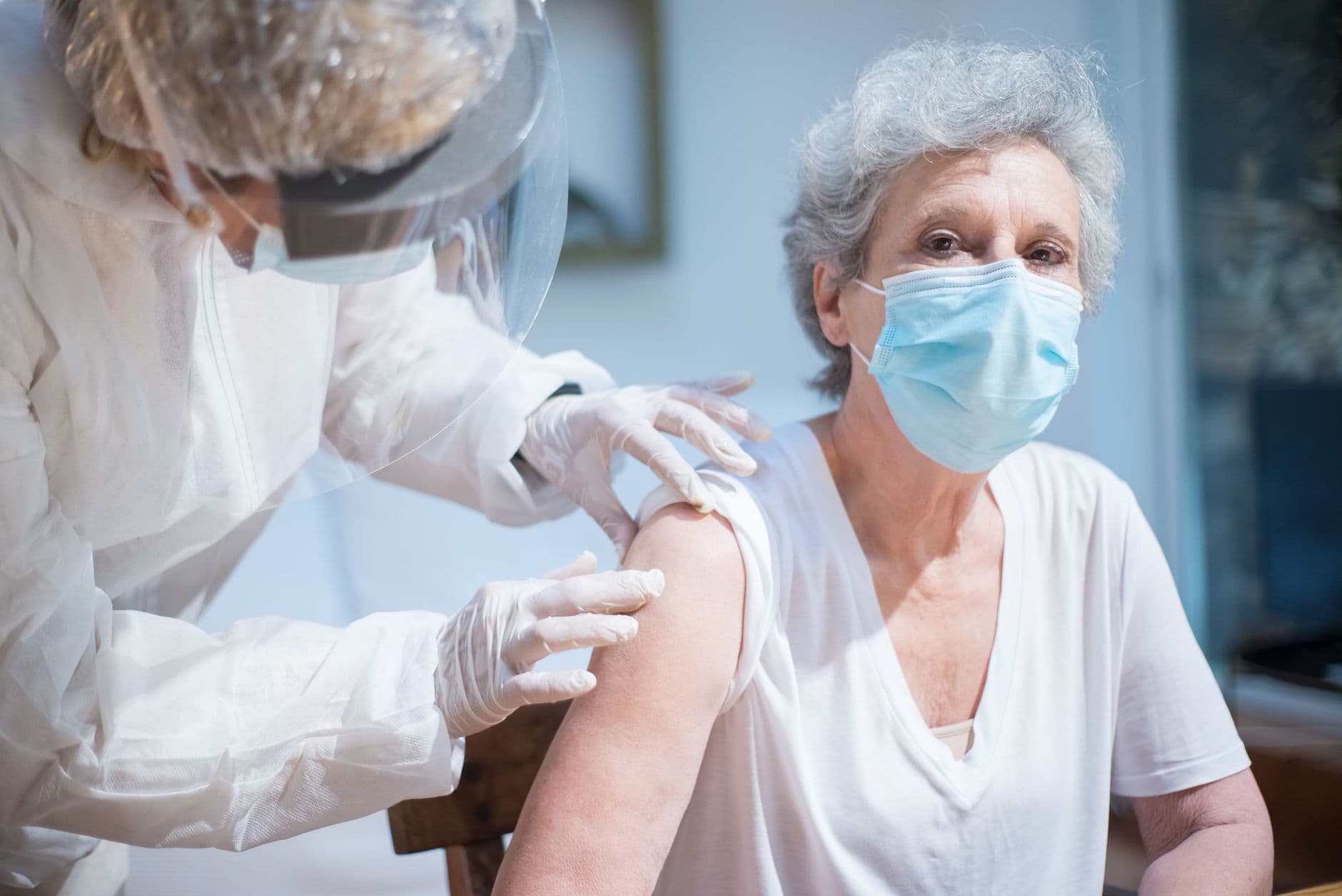
The headline study, published in Annals of Internal Medicine, used Medicare data on 509,926 older adults with a recent skilled-nursing stay. Researchers at Brown compared those who got at least one dose of Shingrix within a year of eligibility to those who didn't. Four years later, about 19% of the vaccinated group had a dementia diagnosis versus about 25% of the unvaccinated. That's roughly a quarter lower relative risk, and one extra dementia-free person for every 17 vaccinated.
Two caveats sit on top of that number. GSK funded the work, and only 1.73% of the cohort was actually vaccinated. The authors' own negative-control checks suggested some residual confounding remained even after adjustment. So the natural question is whether healthier people simply get their shots, and the whole signal is a mirage.
Why this design is stronger than a plain cohort
Target trial emulation borrows the structure of a randomized trial and applies it to routine health data. You define eligibility, assign an intervention window, and compare outcomes as if enrollment happened at time zero. It doesn't undo the fact that healthier people tend to get vaccinated, but it strips out many of the informal shortcuts that make plain vaccinated-versus-unvaccinated comparisons look better than they are. The question is whether that shortcut is still doing the work. Increasingly, the answer is no.
The signal keeps showing up
What makes this finding land is that it fits with independent evidence from three other countries plus multiple US cohorts. In Wales, vaccine eligibility flipped on and off with a person's date of birth, giving researchers two near-identical groups distinguished mainly by whether they could get the shot. Australia and Canada ran the same experiment.
Those quasi-experiments all tested the older live vaccine, Zostavax, not Shingrix. But large US claims analyses of Shingrix, a head-to-head against the live vaccine, and a Kaiser cohort matched to unvaccinated and Tdap-only comparators all point the same direction. Different countries, different vaccines, different designs, same result.
| Study & design | Vaccine | Population & size | Reported reduction | Follow-up |
|---|---|---|---|---|
| Hayes 2026 (target trial emulation, Annals) | Shingrix | US skilled-nursing residents, 509,926 | About 6 percentage points lower dementia (19% vs 25%) | 4 years |
| Eyting 2025 (Wales birth-date experiment, Nature) | Zostavax | Older adults in Wales | About 3.5 percentage points lower, roughly one-fifth in relative terms | 7 years |
| Pomirchy 2025 (Australia birth-date experiment, JAMA) | Zostavax | 101,219 general-practice patients | About 1.8 percentage points lower among those eligible for the vaccine | 7.4 years |
| Pomirchy 2026 (Canada natural experiment, Lancet Neurology) | Zostavax | 232,124 Ontario residents | About 2 percentage points lower | 5.5 years |
| Taquet 2024 (Shingrix vs Zostavax, Nature Medicine) | Shingrix vs Zostavax | US electronic records, >200,000 vaccinated | Shingrix recipients gained about 164 extra dementia-free days | 6 years |
| Rayens 2026 (Kaiser matched cohort, Nat Communications) | Shingrix | 65,800 vaccinated + 263,200 unvaccinated | About half the dementia risk of unvaccinated; roughly a quarter lower than Tdap-only | Up to 6 years |
How firm is the link?
No randomized trial has tested Shingrix for dementia prevention, so the ceiling on this evidence is strongly suggestive, not proven. The main worry has always been the healthy-vaccinee effect: people who show up for shots are, on average, healthier to start with. The birth-date experiments and the direct Shingrix-versus-Zostavax comparison were built to strip that out, and both still find a benefit.
The biology is a plausible hypothesis, not proven causation. Varicella zoster virus lies dormant in nerve tissue and reactivates quietly with age; reactivation has been linked to low-grade neuroinflammation and vascular injury, and vaccination cuts reactivation. The AS01 adjuvant in Shingrix may also modulate immune aging directly, a mechanistic idea that fits the data but hasn't been proven. The same lower-dementia signal has been reported for the AS01-adjuvanted RSV vaccine, which is consistent with an adjuvant effect but doesn't confirm one.
What this changes for you
If you've been putting off the second dose, this shifts the math. ACIP recommends two doses of Shingrix for immunocompetent adults 50 and up, and for immunocompromised adults 19 and up. The interval is 2 to 6 months for immunocompetent adults, and can be shortened to 1 to 2 months if you're immunocompromised. The vaccine independently prevents shingles and postherpetic neuralgia.
Reactogenicity is common: a sore arm, a day or two of fatigue and headache. Serious events in trials matched placebo, and post-marketing data suggest roughly 3 excess Guillain-Barré cases per million doses in adults 65 and older, small enough that FDA still judges the benefits to outweigh the risks. Under the Inflation Reduction Act, Medicare Part D covers Shingrix at no out-of-pocket cost in 2026. The cognitive data don't have to clear the bar of a new drug, because the shot is already indicated, already safe enough for routine use, and now essentially free for most older Americans.
None of this replaces the levers with the strongest causal evidence for lowering dementia risk: blood pressure, hearing, physical activity, sleep, alcohol, metabolic health, and staying socially and cognitively engaged. Shingrix isn't a substitute for any of them. What would change the picture on the vaccine itself is a randomized trial with cognitive outcomes, or a natural experiment showing the signal vanishes once healthy-vaccinee bias is fully addressed. Until then, five years of converging evidence stacked on top of a shot you were already supposed to get is enough to stop waiting.