 Instalab


Allergy Research Group
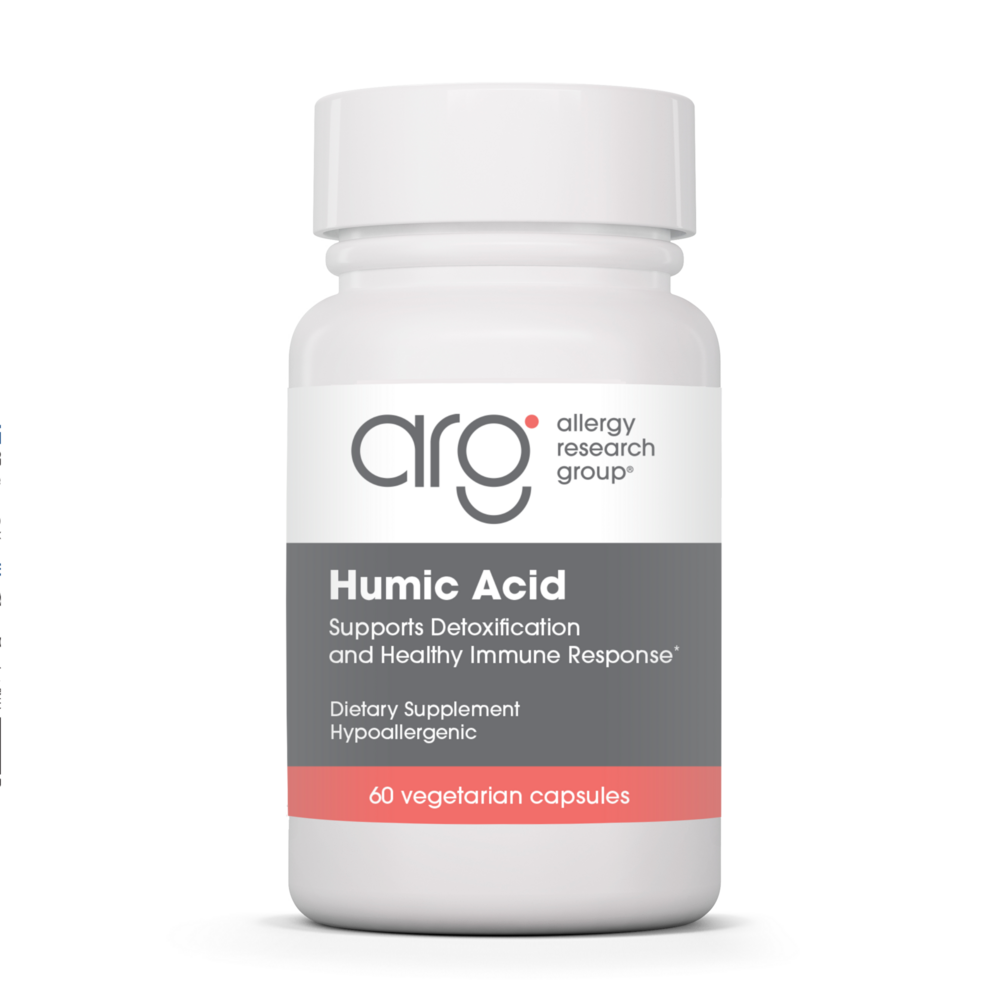
Humic Acid 750mg by Allergy Research Group
60 capsules · 30-day supply
Single-Ingredient Humic Acid for Immune and Detox Support$55.99
Purchase options
Practitioner-grade brand3rd-party testedFree shipping $50+
Vegetarian
Allergy Research Group Humic Acid 750mg overview
Humic acid is a niche supplement. It suits adults who want a single-ingredient product during seasons when their immune system is under more strain, or who are following a clinician-guided detoxification plan that calls for a binder. No lab marker shows a need for it and research in people is limited, so it makes most sense as a short trial with a clear goal. If immune resilience is the aim, correcting a low Vitamin D (25-hydroxy) or Zinc level rests on firmer evidence.
Humic acid is a mixture of large, carbon-rich molecules formed as plant matter breaks down in soil and peat. The molecules carry many charged sites, so they bind readily to metals and other compounds. In laboratory studies, humic substances attach to the surface of some viruses and make it harder for them to latch onto cells. Most of this evidence comes from test-tube and animal work; human trials are few and small, so the immune and detoxification uses are plausible but not established.
The label directs 2 capsules daily, which together provide 750 mg of humic acid. The capsules are vegetarian. Take them with a full glass of water. Because humic acid binds other compounds, a sensible precaution is to take it about 2 hours apart from prescription medicines and from mineral supplements such as iron, zinc and magnesium. The label gives no time limit, so ask your clinician how long to take it.
The label carries a California Proposition 65 warning: consuming this product can expose you to lead, which is known to cause birth defects or other reproductive harm. Humic substances come from natural deposits, which can hold trace minerals. The label says to consult your practitioner before use if you are pregnant or lactating; given the lead warning, the cautious course is to avoid it then and not to give it to children. Stay within the label's 2 capsules daily, and check with your clinician first if you have a health condition or take prescription medicines.
Do not expect a noticeable day-to-day effect. There is little data on how quickly humic acid works or on long-term daily use, so a reasonable approach is a defined trial of a few weeks, then a pause to judge whether anything changed. Stop and check with your clinician if you notice stomach upset or anything unexpected. Fulvic acid, often sold alongside it, is the smaller fraction of the same family of soil compounds; the two are not interchangeable.
Frequently asked questions
What is humic acid?
Humic acid is a mixture of large organic molecules that forms as plant matter decomposes in soil and peat. It binds readily to metals and other compounds. This product provides 750 mg of humic acid per 2-capsule serving.
What is humic acid used for?
People take it for immune support and as a binder in detoxification plans. The label describes it as supporting detoxification and a healthy immune response. Most of the research is from laboratory and animal studies, and evidence in people is limited.
How much humic acid is in each serving?
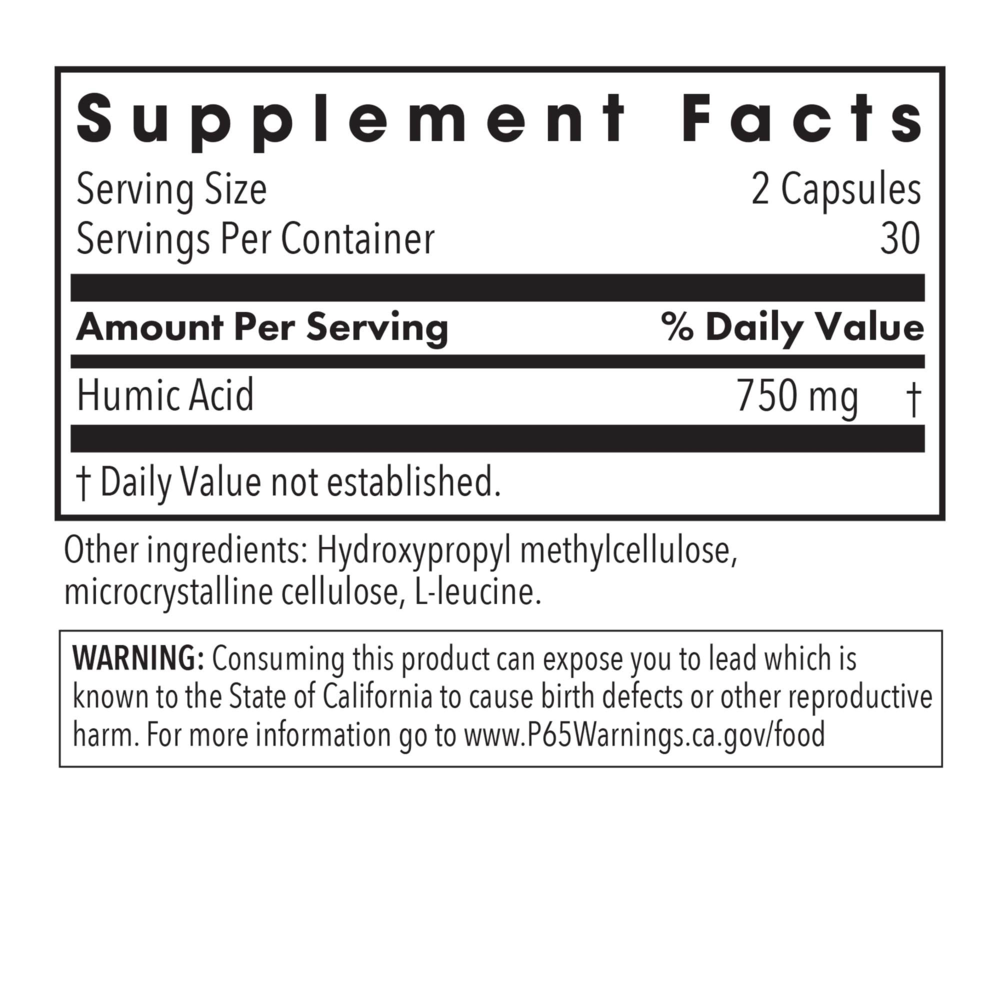
The Supplement Facts panel lists 750 mg of humic acid per serving, and a serving is 2 capsules. The 750 mg in the product name refers to the 2-capsule serving, not to a single capsule. The bottle holds 60 capsules, which is 30 servings.
When should I take humic acid?
The label directs 2 capsules daily and does not name a time of day. Take them with a full glass of water. Because humic acid binds other compounds, a sensible precaution is to keep it about 2 hours apart from prescription medicines and mineral supplements.
Why does the humic acid label have a lead warning?
The label carries a California Proposition 65 warning that the product can expose you to lead. Humic substances come from natural deposits, which can hold trace minerals. Stay within the label's 2 capsules daily, and avoid it in pregnancy, while nursing and for children.
Can I take humic acid while pregnant or breastfeeding?
The label says to consult your healthcare practitioner first, and it also warns that the product can expose you to lead, which is known to cause birth defects or other reproductive harm. Humic acid has not been studied in pregnancy or nursing, so the cautious choice is to avoid it.
Does humic acid interact with medications?
No specific drug interactions are well documented, but humic acid binds many compounds, so it could lower the absorption of medicines taken at the same moment. Take it about 2 hours apart, and check with your prescriber or pharmacist before starting.
What is the difference between humic acid and fulvic acid?
Both come from the same family of soil compounds. Fulvic acid is the smaller, more water-soluble fraction; humic acid is the larger one. They are sold for similar uses, but they are not the same substance and one does not stand in for the other.
How to take it & ingredients
Suggested use: As a dietary supplement, take 2 capsules daily, or as directed by a healthcare practitioner.
Active ingredients
2 capsules per serving · 30 servings
Humic Powder
Humic Acid
Humic Acid
750 mg
Other ingredients: Hydroxypropyl methylcellulose, Microcrystalline cellulose, L-leucine
Certifications
Benefits
Warnings