 Instalab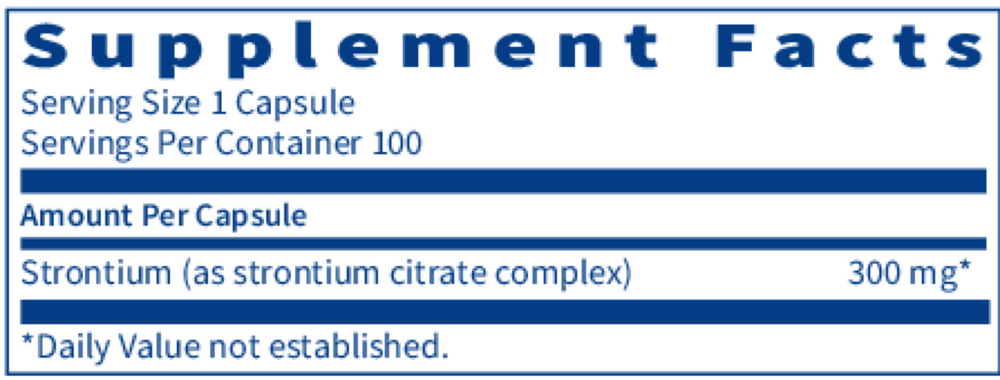
Klaire Labs/SFI Health
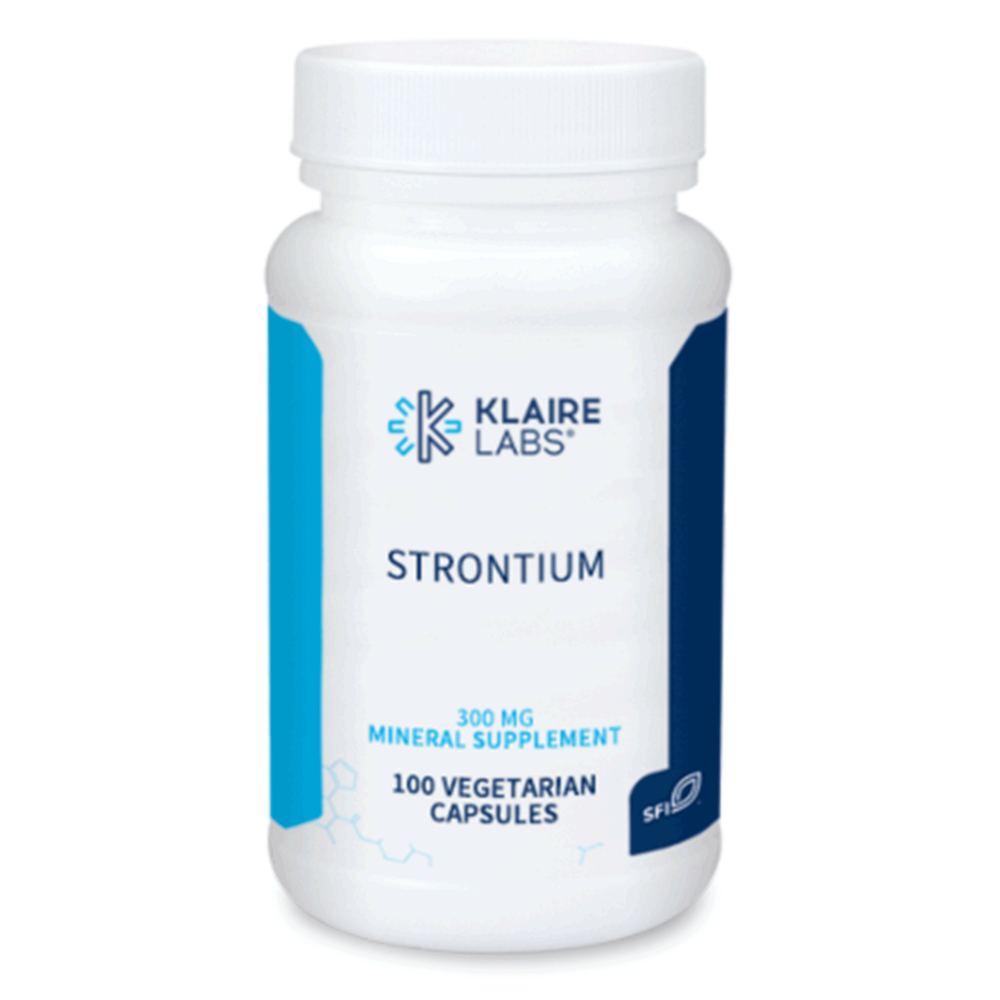
Strontium 300 mg by Klaire Labs/SFI Health
100 capsules · 100-day supply
Support Bone Health and Density with Strontium Citrate Complex$XX.XX$24.99retail
This item is currently out of stockGet notified when this item is back in stock
20% below MSRP3rd-party testedFree shipping $50+
Gluten Free·Soy Free·Egg Free·Tree Nut Free·Fish Free·Peanut Free·
Klaire Labs/SFI Health Strontium overview
If you’re looking at strontium citrate for bone density because your DEXA scan shows low bone mass, this is the use-case. It’s most relevant for post‑menopausal women and older men with low bone density who already have their basics in place. Check Vitamin D, 25-Hydroxy and Calcium first and correct if low, since strontium is an add‑on, not a replacement for calcium, vitamin D, and weight‑bearing exercise. If your eGFR (kidney function estimate) is reduced, talk to your clinician before starting.
Strontium is a mineral that sits next to calcium on the periodic table, so it can swap into bone mineral and make the crystal lattice more resistant to breakdown. In cells, it nudges osteoblasts (the cells that build bone) to be more active and slows osteoclasts (the cells that resorb bone). That dual effect is why some people see favorable shifts in bone turnover markers like P1NP (formation) and CTX (resorption) within months. The catch is that DEXA overreads when strontium is present, so reported bone density can look higher than the true calcium-based density.
Take one capsule once or twice daily, away from calcium-containing foods or supplements. Strontium and calcium compete for the same transport, so separate them by at least two hours; bedtime on an empty stomach is practical for many. One capsule supplies 300 mg elemental strontium; two daily brings you near the 600–700 mg range commonly used in studies. Expect bone marker changes within 3–6 months and any DEXA changes at 6–12 months.
Avoid strontium if you have significant kidney disease, are pregnant or breastfeeding, or have a history of blood clots or uncontrolled cardiovascular disease. A prescription-only strontium salt (ranelate) showed higher cardiovascular events in high‑risk patients; while citrate is a supplement, the signal makes caution sensible. Separate by several hours from tetracycline or fluoroquinolone antibiotics and from levothyroxine, as strontium can bind these and block absorption. Tell your clinician you’re taking it before a follow‑up DEXA.
Will it replace calcium? No—keep dietary calcium steady and take calcium at a different time of day. Does it inflate DEXA? Yes, strontium in bone makes DEXA read higher, so interpret follow‑ups with that in mind. Can you track response sooner? Bone turnover labs like P1NP and CTX can show direction of change months before a scan. Should vegans use it? Possibly, but fix Vitamin D, 25‑Hydroxy and dietary calcium first.
Frequently asked questions
Does strontium citrate really help bone density?
It can improve bone strength by reducing breakdown and modestly increasing formation. DEXA scans can overestimate gains because strontium boosts X‑ray absorption, so pair scans with bone turnover markers (P1NP, CTX) and clinical risk assessment.
How long does strontium take to work?
Bone turnover markers often shift within 3–6 months, while meaningful DEXA changes are assessed at 6–12 months. Keep calcium, vitamin D, and exercise consistent during that period for a fair read on effect.
Can I take strontium with calcium or magnesium?
Not at the same time. Strontium competes with divalent minerals for absorption. Separate strontium from calcium, magnesium, iron, and zinc by at least two hours to avoid blocking each other.
Is strontium safe for the heart?
Caution is warranted if you have cardiovascular disease. A prescription form (strontium ranelate) was linked to higher cardiovascular events in high‑risk patients. Discuss with your clinician if you have clotting history, heart disease, or multiple risk factors.
Does strontium interfere with DEXA scans?
Yes. Because strontium absorbs X‑rays more than calcium, it can make DEXA bone mineral density read higher than true calcium content. Tell your imaging center you take strontium and interpret trends with that caveat.
What drugs interact with strontium?
Separate it from tetracycline and fluoroquinolone antibiotics, and from levothyroxine, because strontium can bind these and block absorption. Space by several hours and confirm with your pharmacist.
What dose of strontium citrate should I take?
Common supplemental intake is 300–600 mg elemental strontium daily. This capsule provides 300 mg; many use two daily to mirror research ranges. Start low if you have a sensitive stomach and always separate from calcium.
Do men benefit from strontium too?
Yes. While most data involve postmenopausal women, men with low bone density or long-term steroid use may also benefit as part of a broader plan that includes adequate calcium, Vitamin D, and resistance training.
How to take it & ingredients
Suggested use: Take one capsule one to two times daily, with or between meals, away from calcium-containing foods or supplements, or as directed by a healthcare professional.
Active ingredients
1 capsule per serving · 100 servings
Strontium
Strontium Citrate Complex
Strontium Citrate Complex
300 mg
Other ingredients: Vegetarian capsule (hydroxypropyl methylcellulose, water), Ascorbyl palmitate, Microcrystalline cellulose, Silicon dioxide
Certifications
Benefits
Warnings