 Instalab

Metagenics
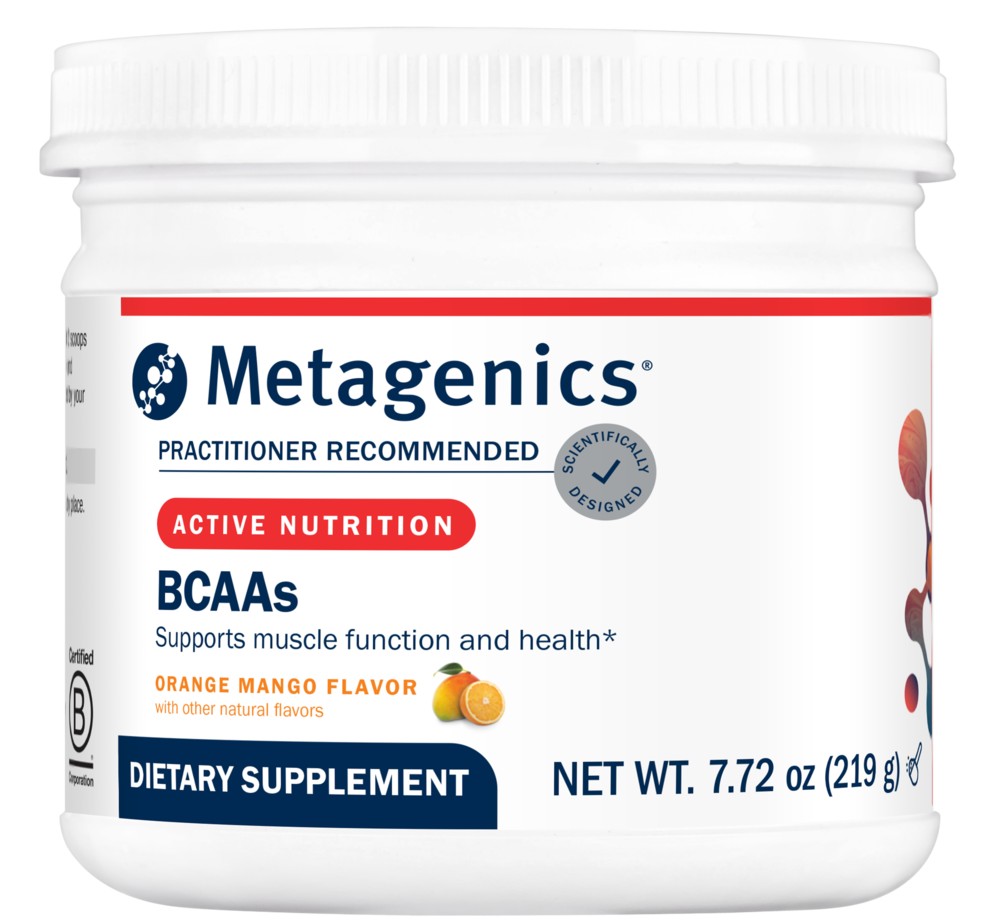
BCAAs Orange Mango by Metagenics
219 grams · 30-day supply
Support Muscle Recovery and Performance with Essential Amino Acids$49.99
This item is currently out of stockGet notified when this item is back in stock
Practitioner-grade brand3rd-party testedFree shipping $50+
Vegetarian·Gluten Free
Metagenics BCAAs Orange Mango overview
If you train hard but sometimes lift or do intervals on an empty stomach, a BCAA powder can cover the gap until your next full meal. It also fits athletes cutting calories, vegans who struggle to hit leucine targets from food, and anyone whose post-workout window is irregular. If you already eat enough high-quality protein daily, BCAAs help with soreness, but they won’t build as much muscle as a complete protein.
Leucine, isoleucine, and valine are branched-chain amino acids that muscle uses directly for energy and repair. Leucine flips on mTOR (the cell’s “build muscle now” switch), while the trio provides fuel during long or fasted sessions, which can blunt breakdown. Even so, BCAAs lack the other essential amino acids needed for full muscle protein synthesis, so they’re best as a bridge around workouts, not a replacement for whey or a protein-rich meal.
Mix two scoops in cold water before training if you’re fasted, or sip during longer sessions; another serving after is reasonable when a meal isn’t coming soon. This delivers 3 g leucine with 1.5 g each isoleucine and valine (the clinically used 2:1:1 ratio). If you already hit a protein shake or a high-protein meal within an hour post-workout, you don’t need a second BCAA dose.
If your daily protein is solid (roughly 1.6–2.2 g/kg from food or whey), BCAAs rarely move the needle for muscle gain beyond small soreness reductions. Skip around levodopa for Parkinson’s disease, since large neutral amino acids can reduce its absorption. Use caution with poorly controlled insulin resistance, as high BCAA intake has been linked to higher fasting insulin in some studies. Pregnancy and breastfeeding: stick to food protein unless your clinician advises otherwise.
Most people notice less delayed-onset muscle soreness within 24–48 hours and better tolerance of fasted or two-a-day training within the first week. For muscle gain, BCAAs alone underperform a complete protein like whey because they lack the full essential amino acid profile. Metagenics BCAAs Orange Mango uses the 2:1:1 ratio studied in athletes for recovery and perceived fatigue during prolonged sessions.
Frequently asked questions
Do BCAAs actually help build muscle?
They help trigger muscle building (via leucine) but lack the other essential amino acids to finish the job. You’ll gain more lean mass from a complete protein (e.g., whey) meeting your daily protein target, with BCAAs used as a pre/during-workout bridge.
BCAA vs whey protein—which is better?
For muscle growth and recovery, whey wins because it provides all essential amino acids plus 2–3 g leucine per scoop. BCAAs are useful during fasted training or when you can’t get a full protein dose soon after exercise.
Should I take BCAAs before or after workout?
Before or during is best if you train fasted or go long. After is reasonable when a meal or shake won’t happen for an hour or more. If you already have a protein-rich meal or whey after, you usually don’t need extra BCAAs.
How long do BCAAs take to work?
For soreness and perceived fatigue, effects often show within 24–48 hours of training sessions. There’s no loading phase. For body composition, the main driver remains total daily protein, calories, and your program.
Do BCAAs break a fast?
Yes for a strict fast, because they provide calories and stimulate insulin slightly. For “training fasted,” many athletes still use BCAAs since they don’t feel heavy and help protect muscle during the session.
Are there side effects from BCAAs?
They’re generally well tolerated. Occasional nausea or bloating can occur if taken too concentrated; dilute in more water. If you have advanced liver disease or maple syrup urine disease, avoid unless your specialist approves.
Can I take BCAAs with creatine or electrolytes?
Yes. Creatine, electrolytes, and BCAAs can be mixed for training. If you also use whey post-workout, you usually don’t need another BCAA serving because whey already covers leucine and the full amino acid profile.
Do BCAAs affect blood sugar?
They can cause a small insulin response. In most active people this isn’t an issue, but if you have insulin resistance or diabetes, monitor your response and prioritize complete protein at meals.
How to take it & ingredients
Suggested use: Blend, shake, or briskly stir 2 scoops (7.3 g) into 8 oz of chilled water before and after exercise or with a meal as directed by your healthcare practitioner.
Active ingredients
2 scoops = 7.3g per serving · 30 servings
L-Leucine
3000 mg
L-Isoleucine
1500 mg
L-Valine
1500 mg
Other ingredients: Natural Flavors, Citric Acid, Malic Acid, Rebaudioside A (from Stevia rebaudiana leaf extract), Silica
Certifications
Benefits
Warnings