 Instalab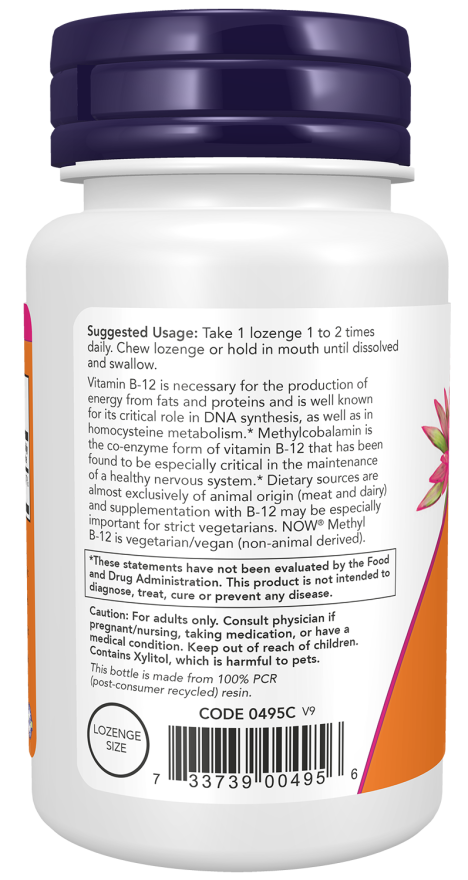

NOW Foods
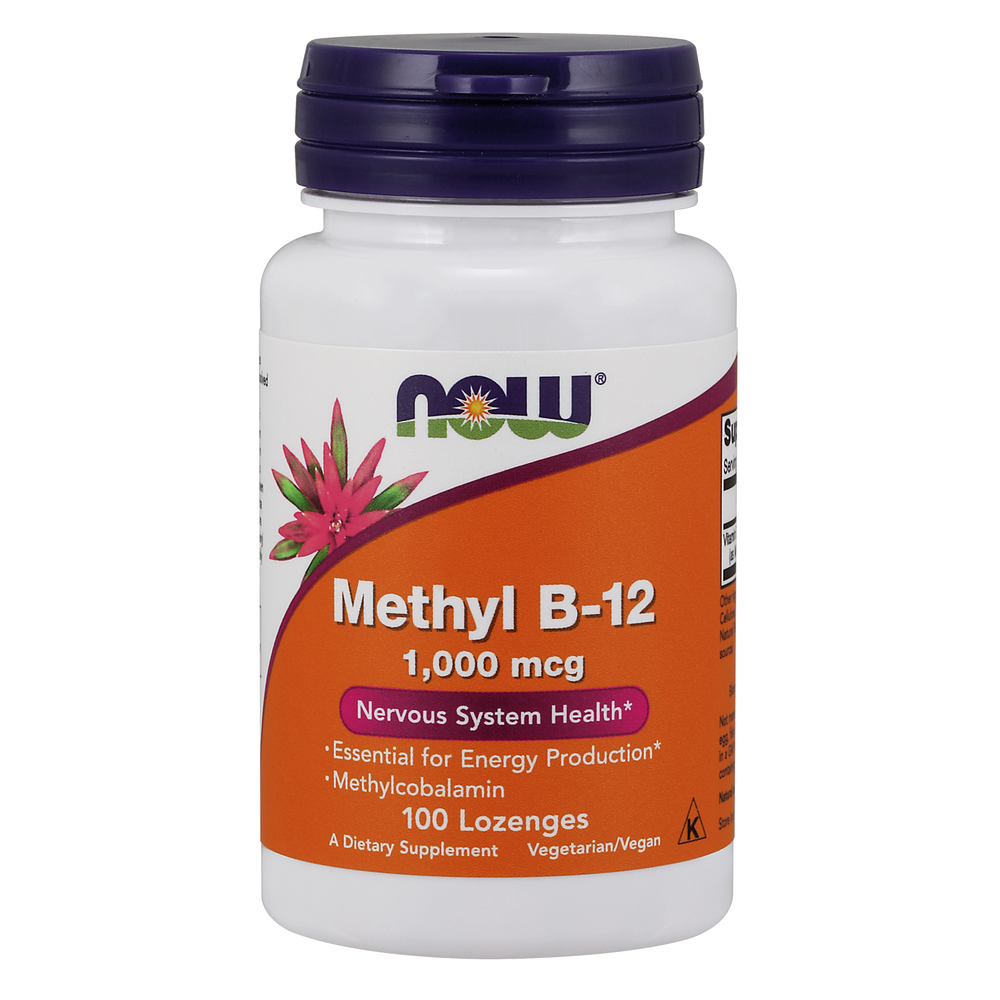
Methyl B-12 1000 mcg by NOW Foods
100 lozenges · 100-day supply
Essential Vitamin B12 for Energy, Mood, and Cognitive Support$12.99
Purchase options
Practitioner-grade brand3rd-party testedFree shipping $50+
Vegan·Vegetarian·Halal Certified·Kosher·Gluten Free·Soy Free·
NOW Foods Methyl B-12 overview
If you’re looking for methyl B12 1000 mcg because your Vitamin B12 or Methylmalonic Acid (MMA, a functional marker of B12 status) came back off, this fits as a daily repletion-to-maintenance dose. It’s a strong pick for vegans and vegetarians, adults on metformin or acid‑reducing meds, those after bariatric surgery, and older adults with lower stomach acid. If your deficiency is established or you have neurologic symptoms, you’ll likely need higher-dose oral therapy or injections with follow‑up labs (Vitamin B12, MMA, homocysteine) and then step down.
Methylcobalamin is an active form of vitamin B12 your cells use for methylation, the tiny “methyl tag” transfers that turn genes and enzymes on and off. In this role it drives methionine synthase, which lowers homocysteine (an amino acid linked to vascular risk) and helps make neurotransmitters. B12 also supports myelin (the insulation around nerves) via pathways that keep MMA low, which is why numbness or tingling can improve as levels normalize. Cyanocobalamin works too, but methyl B12 skips a conversion step and is well‑tolerated in lozenge form.
Take one lozenge daily, or twice daily if advised, letting it dissolve in your mouth before swallowing. You can take methyl B12 with or without food, morning or early afternoon if you’re sensitivity‑prone to a later energy lift. Expect hematologic changes within a few weeks and MMA or homocysteine to improve over 4–12 weeks. For those with very low levels or neurologic symptoms, clinicians often use higher oral doses or injections initially, then shift to 1,000 mcg for maintenance once labs stabilize.
Metformin and proton‑pump inhibitors can lower B12 over time, so pairing them with methyl B12 and monitoring Vitamin B12, MMA, and homocysteine makes sense. Nitrous oxide exposure (dental anesthesia or recreational use) inactivates B12—seek medical care if symptoms follow. Rarely, high‑dose B12 can worsen acne or rosacea. Skip high‑dose B12 if you have an inherited optic nerve condition, and use caution with cobalt allergy. Chloramphenicol can blunt the blood response to B12; coordinate with your clinician.
Frequently asked questions
Is methyl B12 better than cyanocobalamin?
Both correct deficiency. Methyl B12 is an active coenzyme form and is well-suited for lozenges, while cyanocobalamin is stable and inexpensive. The key is dose and adherence; monitor Vitamin B12, MMA, and homocysteine to confirm response.
How long does methyl B12 take to increase energy?
If low B12 is the cause, some people feel better in 1–3 weeks. Objective markers like MMA and homocysteine usually improve within 4–12 weeks. If energy doesn’t change, recheck labs and look for other causes like iron, thyroid, or sleep issues.
Can I take methyl B12 at night?
You can, but some notice it feels stimulating. If sleep is light or restless, move it to morning or midday. It absorbs with or without food; letting the lozenge dissolve slowly is the main technique point.
What labs should I check while taking B12?
Vitamin B12 plus Methylmalonic Acid (MMA) and homocysteine give the clearest picture. If your baseline was low, recheck in 4–12 weeks. Folate is worth checking too, as low folate can keep homocysteine high despite B12.
Do vegans need methyl B12 supplements?
Almost always, yes. Plant foods lack reliable B12. A daily methyl B12 lozenge or a higher weekly dose keeps Vitamin B12 and MMA in range. Regular lab checks help you tailor the dose rather than guessing.
Can methyl B12 cause acne or rash?
Occasionally, high-dose B12 is linked to acne or rosacea flares. If that happens, reduce the dose, switch forms, or pause and reassess labs. True cobalt allergy is rare but would be a reason to avoid B12 supplements.
Is sublingual methyl B12 better absorbed?
Lozenges work well, but studies suggest overall absorption is similar to swallowed tablets at high doses. The advantage is convenience if intrinsic factor is low; the bottom line is dose consistency and lab-confirmed response.
How to take it & ingredients
Suggested use: Take one lozenge one to two times daily. Chew or hold in mouth until dissolved, then swallow.
Active ingredients
1 lozenge per serving · 100 servings
Vitamin B12
Methylcobalamin
Methylcobalamin
1000 mcg
Other ingredients: Fructose, Sorbitol, Cellulose, Stearic acid (vegetable source), Citric acid, Natural flavors, Magnesium stearate (vegetable source)
Certifications
Benefits
Warnings