 Instalab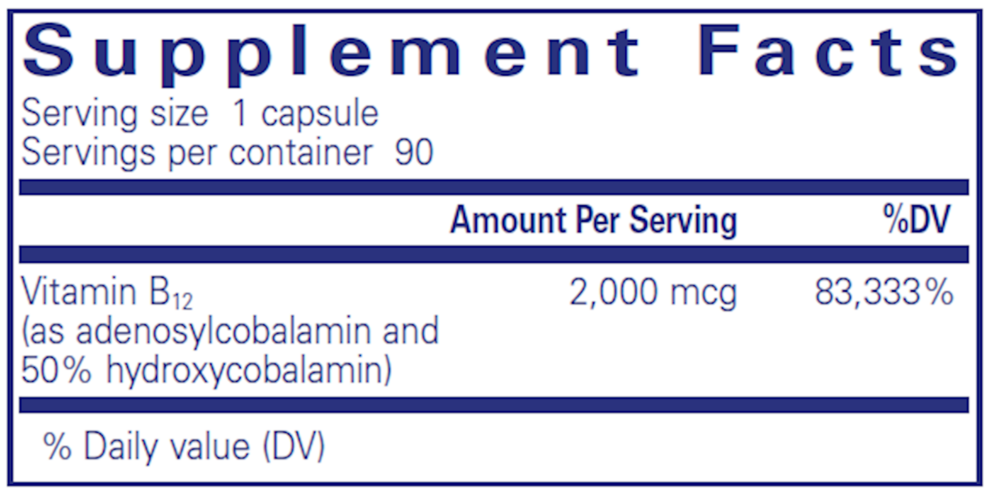

Pure Encapsulations
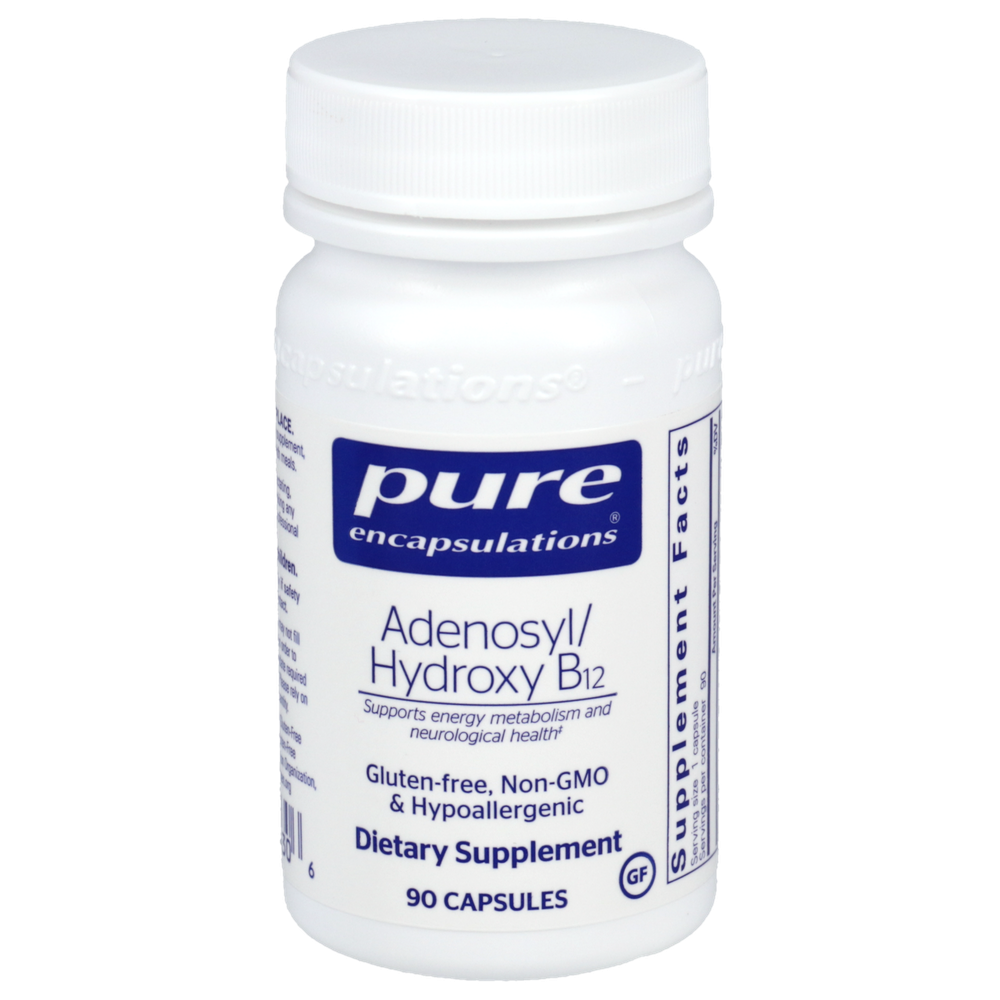
Adenosyl/Hydroxy B12 2000 mcg by Pure Encapsulations
90 capsules · 90-day supply
Bioactive Vitamin B12 for Energy, Metabolism & Nerve Health$31.00
Purchase options
Practitioner-grade brand3rd-party testedFree shipping $50+
Vegan·Vegetarian·Gluten Free·Egg Free·Peanut Free·Wheat Free·
Pure Encapsulations Adenosyl/Hydroxy B12 overview
Hydroxy B12 is a smart pick if your Vitamin B12, Serum is low, your Methylmalonic Acid is high (a sign your cells are short on B12), or Homocysteine is elevated (an amino acid tied to B12 and folate status). Vegans, long‑term metformin users, people on acid blockers, and those after gastric bypass are the usual suspects. If methyl B12 makes you wired, this gentler form often lands better.
This formula pairs hydroxycobalamin (hydroxy B12) with adenosylcobalamin (adenosyl B12). Hydroxy B12 is a precursor your body converts to methylcobalamin and adenosylcobalamin, so it can both lower homocysteine and refill cellular stores. Adenosyl B12 is the mitochondrial form, used by an enzyme that clears odd-chain fats and certain amino acids; when it’s low, Methylmalonic Acid rises and energy production can lag.
Each capsule delivers 2,000 mcg of vitamin B12, which is a repletion-level dose. Take one capsule with a meal, once daily to start; some clinicians use twice daily for established deficiency, then step down after labs improve. Morning is best if you’re sensitive to energizing vitamins. For long-term maintenance once levels normalize, most people can use a lower daily dose or take this less often.
Skip high-dose vitamin B12 if you’ve had acne or rosacea flare-ups from B12 before, a cobalt allergy, or Leber’s hereditary optic neuropathy. Smokers should avoid chronic megadoses; observational data link very high long-term B12 and lung cancer risk in smokers. If you have true pernicious anemia, you still need medical evaluation. Pairing B12 with folate is common, but don’t self-treat unexplained anemia without labs.
Frequently asked questions
Is hydroxy B12 better than methyl B12?
Neither is “better” for everyone. Hydroxy B12 is a precursor that your body converts to both methyl and adenosyl forms, and it’s often better tolerated if methyl donors make you jittery. Methyl B12 directly lowers homocysteine. Many use hydroxy when sensitive or when they want broader coverage.
How long does vitamin B12 take to work?
Energy and mood changes, if you’re low, often show within 1–4 weeks. Lab markers like Vitamin B12, Serum and Methylmalonic Acid usually improve within 4–12 weeks. Nerve issues can take months. Recheck labs after 8–12 weeks to decide whether to continue, taper, or switch dose.
Can I take vitamin B12 with metformin or acid reducers?
Yes, and you probably should. Metformin and acid-suppressing drugs reduce B12 absorption over time. High-dose oral vitamin B12 uses passive absorption that bypasses this. Still, test Vitamin B12, Serum and Methylmalonic Acid periodically if you stay on those medications.
Do I need folate with this B12?
Often, yes. Folate and vitamin B12 work together to keep Homocysteine in range and build red blood cells. If your folate is low or you use methylfolate, pairing it with B12 is standard. Check Homocysteine to see if folate or B6 is also needed.
Can high-dose B12 cause side effects?
It’s usually well tolerated. A small number get acne or rosacea flares, restlessness, or headaches. Taking it in the morning with food helps. If you’re prone to stimulation on methyl B12, hydroxy B12 is typically calmer. Stop and reassess if skin issues appear.
Is oral B12 as effective as injections?
For most people, high-dose oral vitamin B12 works as well because a small percentage is absorbed without intrinsic factor. Injections are useful when absorption is severely impaired or adherence is an issue. Track Methylmalonic Acid and Homocysteine to confirm response.
Which labs should I check while taking B12?
Use Vitamin B12, Serum plus Methylmalonic Acid for cellular status. Homocysteine helps assess methylation balance with folate and B6. In anemia or neuropathy, a complete blood count and, if indicated, intrinsic factor antibodies guide care.
How to take it & ingredients
Suggested use: Take one capsule one to three times daily with meals.
Active ingredients
1 capsule per serving · 90 servings
▼
Vitamin B12
Adenosylcobalamin and Hydroxycobalamin
Adenosylcobalamin and Hydroxycobalamin
2000 mcg
Adenosylcobalamin
1000 mcg
Hydroxycobalamin
1000 mcg
Other ingredients: Hypoallergenic plant fiber, Vegetarian capsule (cellulose, water)
Certifications
Benefits
Warnings