 Instalab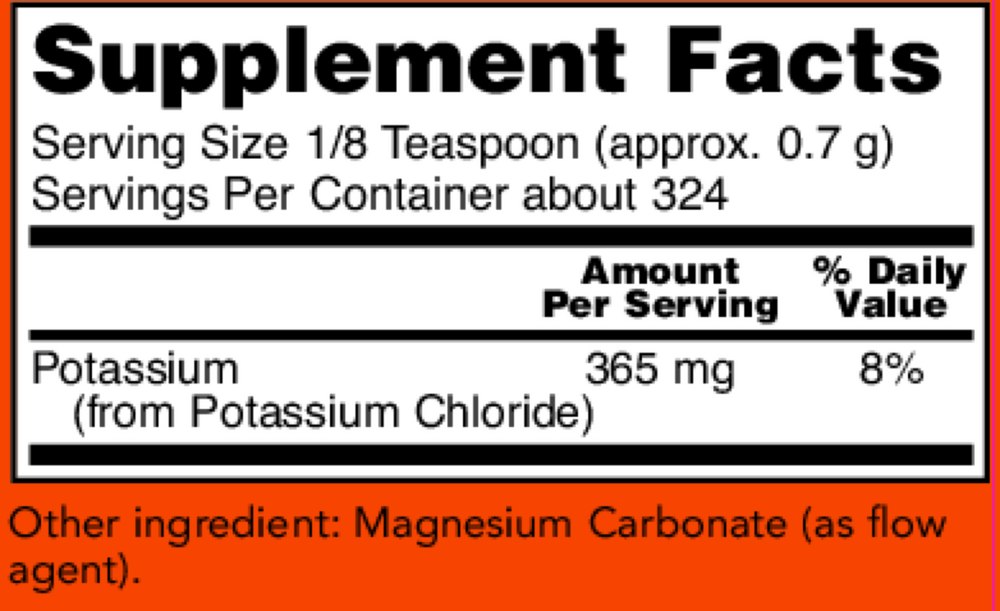


NOW
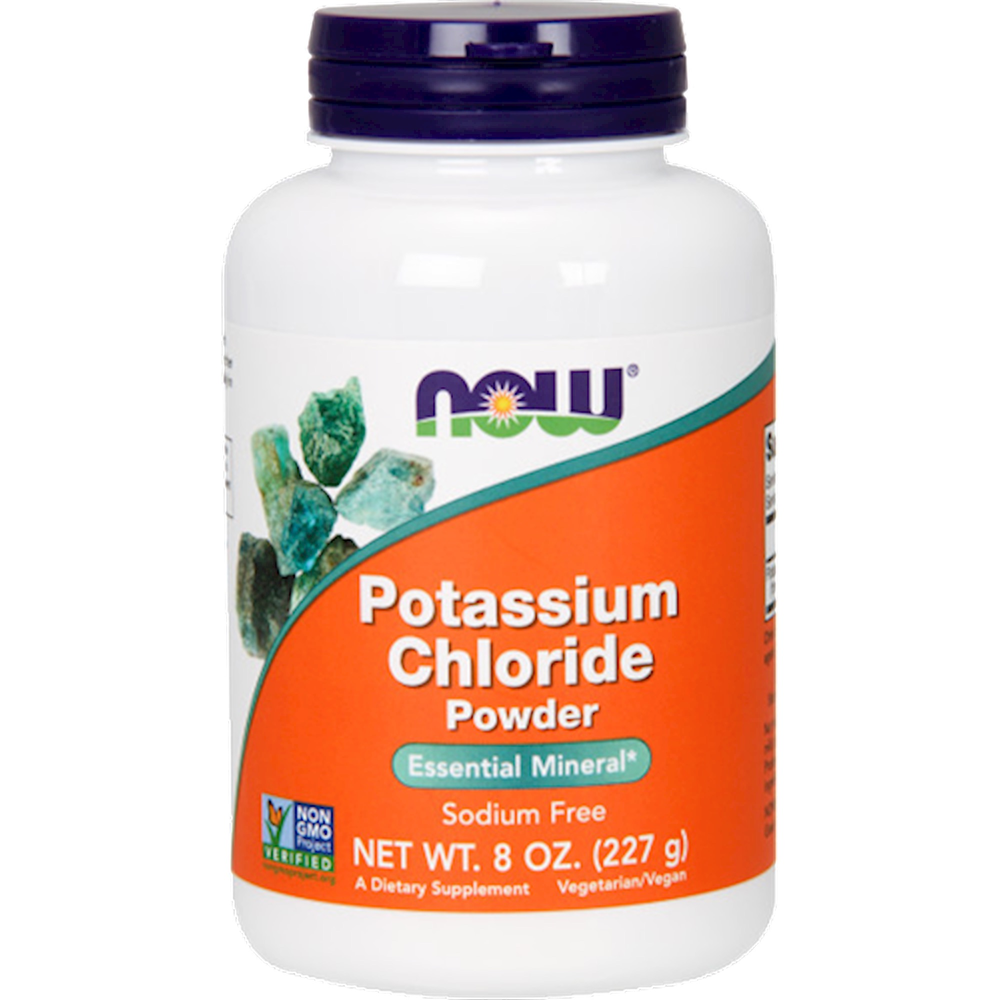
Potassium Chloride 365 mg by NOW
227 grams · 324-day supply
Essential Mineral for Electrolyte Balance and Muscle Function$XX.XX$9.99retail
Purchase option
20% below MSRP3rd-party tested for purity & potencyFree shipping $50+
Gluten Free·Soy Free·Dairy Free·Milk Free·Tree Nut Free·Fish Free·
NOW Potassium Chloride overview
If your Potassium on a CMP/BMP tends to run low or low‑normal, potassium chloride is a straightforward way to top up. It’s useful during low‑carb phases, heavy sweating, frequent sauna use, or long training blocks when you’re losing salt and water and feel cramp‑prone or fatigued. People on thiazide or loop diuretics often need more potassium, but should coordinate with their prescriber. If your level is meaningfully low or you have kidney issues, get clinician guidance rather than self‑treat.
Potassium is the main positive ion inside your cells, and it sets the electrical charge that lets nerves fire and muscles contract. The chloride here pairs with potassium to replace chloride losses from sweating or diuretics, helping maintain acid‑base balance (your body’s pH control). When potassium intake improves, many people notice steadier energy and fewer muscle cramps; blood pressure can edge down in salt‑sensitive adults. If your Magnesium is low, repletion is harder, so check that lab too.
Mix 1/8 teaspoon (365 mg potassium) with food and at least 8 oz of water, one to three times daily as tolerated. Spreading doses reduces stomach upset and smooths blood level swings; most see changes on labs within days to a week. This is a practical dose for maintenance. For established deficiency or ongoing diuretic therapy, your clinician may target higher total daily potassium using diet plus supplements and will recheck Potassium on follow‑up labs.
Skip over‑the‑counter potassium if you have kidney disease, poorly controlled diabetes with low kidney function, or Addison’s disease, unless your clinician directs it. Drugs that raise potassium can turn a normal dose into too much: ACE inhibitors, ARBs, aliskiren, potassium‑sparing diuretics (spironolactone, eplerenone, amiloride), NSAIDs, trimethoprim, and cyclosporine. Take with plenty of water to reduce stomach irritation, and avoid combining with salt substitutes that also contain potassium chloride.
Frequently asked questions
What does potassium chloride do for the body?
It restores potassium, the main inside‑the‑cell mineral that controls nerve signaling and muscle contraction, and chloride, which helps maintain acid‑base balance. Together they support steady heart rhythm, muscle function, and fluid balance, especially when you’ve lost electrolytes through sweat or diuretics.
How long does potassium chloride take to work?
Serum Potassium usually responds within hours to a few days. Symptoms like fatigue or cramping often improve within a week if they were due to low intake. Your clinician may recheck Potassium on a BMP/CMP after 3–7 days when adjusting doses.
Is potassium chloride better than potassium citrate?
They serve different needs. Potassium chloride is ideal when you’re replacing both potassium and chloride (sweat or diuretic losses). Potassium citrate is preferred when you need alkalinization, like some kidney stone prevention plans. Your labs and goals decide the pick.
Can I take potassium chloride with blood pressure meds?
Be careful. ACE inhibitors, ARBs, aliskiren, and potassium‑sparing diuretics already raise potassium, and combining them can push levels too high. If you take these, only use potassium under clinician guidance with periodic Potassium lab checks.
Does potassium help with leg cramps?
If cramps are from low potassium or overall electrolyte loss, repleting potassium can help within days. Cramps also relate to low Magnesium or overuse, so consider checking Magnesium and hydration, and address training load and sodium intake.
How much potassium chloride should I take daily?
For general maintenance, 365 mg per serving once or twice daily is common with food and water. Do not exceed the labeled three servings without medical advice. For deficiency or diuretic therapy, dosing should be individualized and monitored with labs.
What are the side effects of potassium chloride?
The most common are stomach upset, nausea, or loose stools, especially if taken without enough water. Very high potassium can cause weakness or heart rhythm changes, which is why kidney disease and certain medications require caution and lab monitoring.
Can I use potassium chloride as a salt substitute?
Yes, it tastes salty and many salt substitutes use potassium chloride. If you do this, account for the total potassium you’re getting and avoid it if you’re on medications that raise potassium or have reduced kidney function without medical supervision.
How to take it & ingredients
Suggested use: Take 1/8 teaspoon with food. Take with at least 8 oz. of water or other beverage. Can be taken 1 to 3 times daily in separate servings. Do not exceed 3 servings per day.
Active ingredients
1/8 teaspoon (0.7 g) per serving · 324 servings
Potassium
Potassium Chloride
Potassium Chloride
365 mg
Other ingredients: Magnesium Carbonate (as flow agent)
Certifications
Benefits
Warnings