 Instalab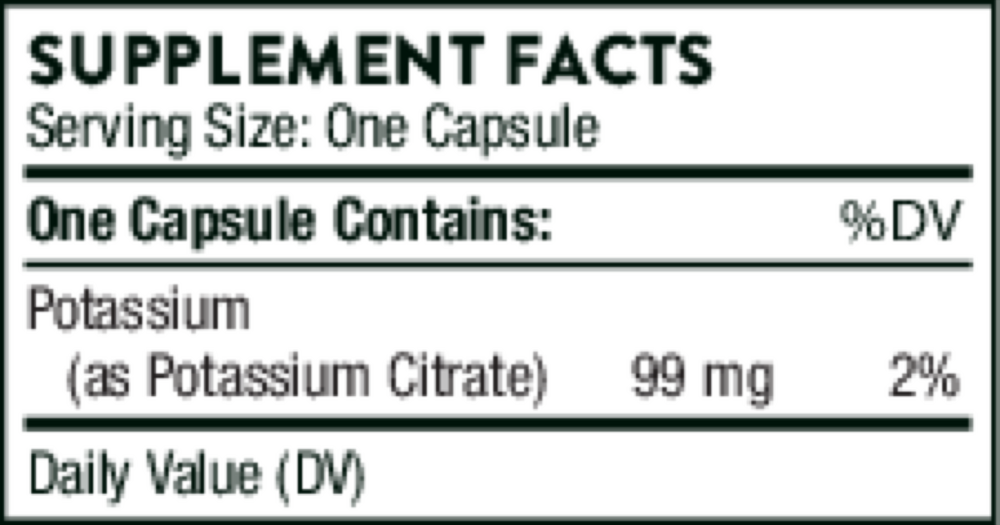



Thorne
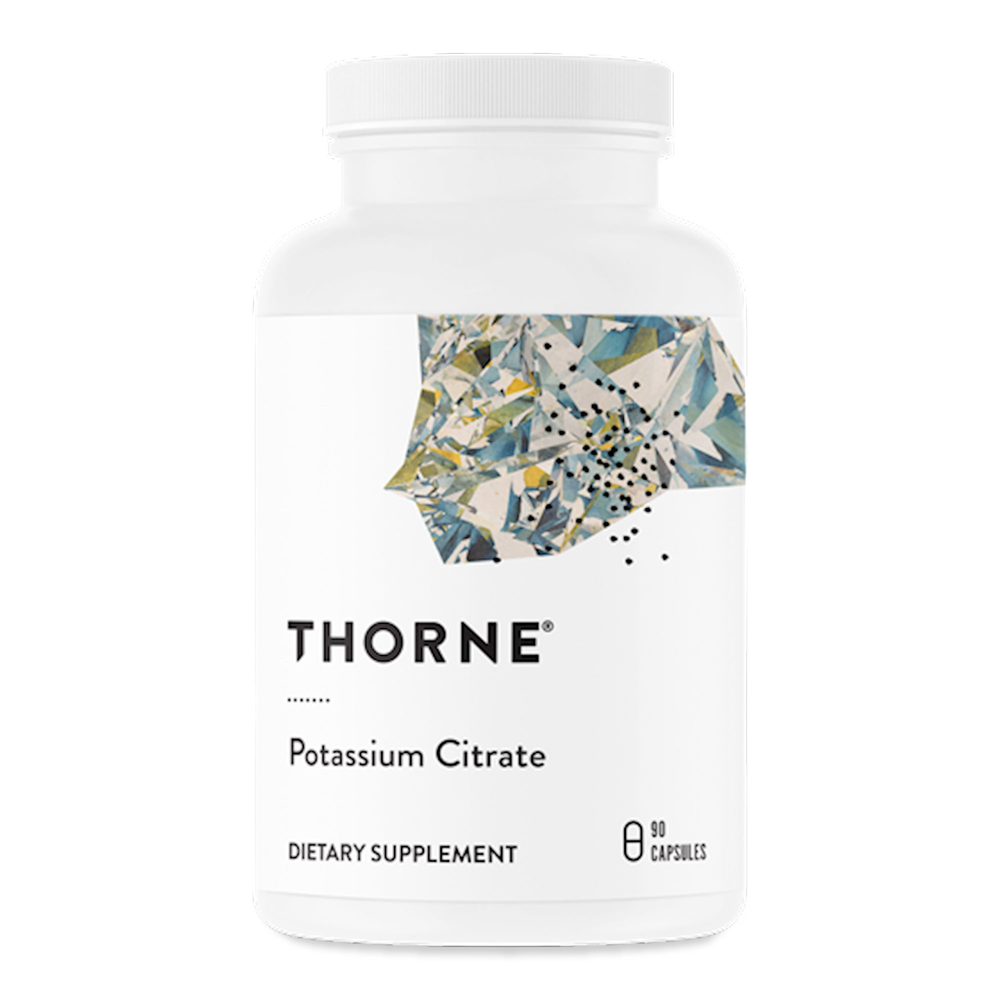
Potassium Citrate 99 mg by Thorne
90 capsules · 90-day supply
Essential Potassium for Electrolyte Balance and Muscle Function$17.00
Purchase options
Practitioner-grade brand3rd-party testedFree shipping $50+
Gluten Free·Soy Free·Dairy Free·Milk Free
Thorne Potassium Citrate overview
If your diet is light on fruits and vegetables, you train hard and sweat a lot, or you take a potassium‑wasting diuretic like hydrochlorothiazide, a potassium citrate supplement can help close a common electrolyte gap. It’s a maintenance‑level dose that fits people with low‑normal Serum Potassium, muscle cramping during exercise, or higher sodium intake. It also suits low‑carb eaters who lose minerals early in ketosis. For recurrent kidney stones, clinical prevention usually needs much higher, prescription‑strength potassium citrate; this 99 mg capsule is for everyday upkeep, not stone therapy.
Potassium is the main inside‑the‑cell electrolyte that stabilizes the electrical signals nerves and muscles use to fire. When potassium is low relative to sodium, cramps, fatigue, and higher blood pressure are more likely. The citrate form adds a base, which buffers acid load from high‑protein or low‑veg diets and raises urine citrate, a natural calcium binder that makes certain kidney stones less likely. Compared with potassium chloride, potassium citrate is gentler on the stomach and more effective for urine alkalinization (a shift to less acidic urine).
Take one capsule with meals, one to three times daily, and spread doses through the day if you’re active or sweat heavily. Food reduces stomach upset. If you track labs, look for steady Serum Potassium and stable CO2 (bicarbonate, your blood’s acid–base marker) within 1–2 weeks. For blood pressure, pair potassium citrate with cutting back sodium and recheck readings in 2–4 weeks. If you need more than small maintenance doses, discuss higher‑potency options with your clinician.
Skip potassium citrate unless cleared by your clinician if you have chronic kidney disease (reduced eGFR), take ACE inhibitors (lisinopril), ARBs (losartan), potassium‑sparing diuretics (spironolactone, eplerenone, amiloride, triamterene), or the antibiotic trimethoprim—these raise potassium and can cause dangerous levels. Also use caution with NSAIDs, heparin, and calcineurin inhibitors (tacrolimus). If you form calcium phosphate stones or have consistently high Serum Potassium, this isn’t the right pick. Stop and get labs if you notice weakness, palpitations, or tingling.
Frequently asked questions
Is potassium citrate good for kidney stones?
Yes, potassium citrate raises urine citrate and alkalinizes urine, which lowers risk of certain stones. The catch is dose: prevention typically uses prescription‑strength amounts. A 99 mg capsule is for maintenance, not for treating or preventing recurrent stones on its own.
Is 99 mg of potassium citrate enough?
It’s enough for routine electrolyte maintenance if your diet is short on potassium‑rich produce. For low Serum Potassium or clinical goals like stone prevention or diuretic replacement, higher doses are usually required under medical supervision.
How long does potassium citrate take to work?
Electrolyte effects are rapid—many notice steadier energy or fewer cramps within days. Lab changes in Serum Potassium and CO2 (bicarbonate) typically show within 1–2 weeks. Blood pressure changes, if you’re also reducing sodium, can appear over 2–4 weeks.
Can I take potassium citrate with ACE inhibitors or spironolactone?
Generally no without medical guidance. ACE inhibitors, ARBs, and potassium‑sparing diuretics already raise potassium. Adding more can cause dangerous hyperkalemia. If these are prescribed, ask your clinician before using any potassium supplement.
Should I take potassium citrate with food or on an empty stomach?
Take it with food. Meals improve tolerance and spread absorption, which is helpful for electrolytes. Split doses across the day if you’re active or in hot weather.
What’s the difference between potassium citrate and potassium chloride?
Both provide potassium, but citrate also provides a base that alkalinizes urine and increases urine citrate, useful for specific stone profiles and acid load. Chloride doesn’t do that and can be harsher on the stomach.
What labs should I check while taking potassium citrate?
Serum Potassium to confirm you’re in range, CO2 (bicarbonate) for acid–base status, and eGFR for kidney function. If you have stone history, consider 24‑hour urine citrate and urine pH with your clinician.
How to take it & ingredients
Suggested use: Take 1 capsule one to three times daily or as recommended by your health professional.
Active ingredients
1 capsule per serving · 90 servings
Potassium
Potassium Citrate
Potassium Citrate
99 mg
Other ingredients: Hypromellose Capsule, Leucine, Microcrystalline Cellulose, Silicon Dioxide
Certifications
Benefits
Warnings