
 Instalab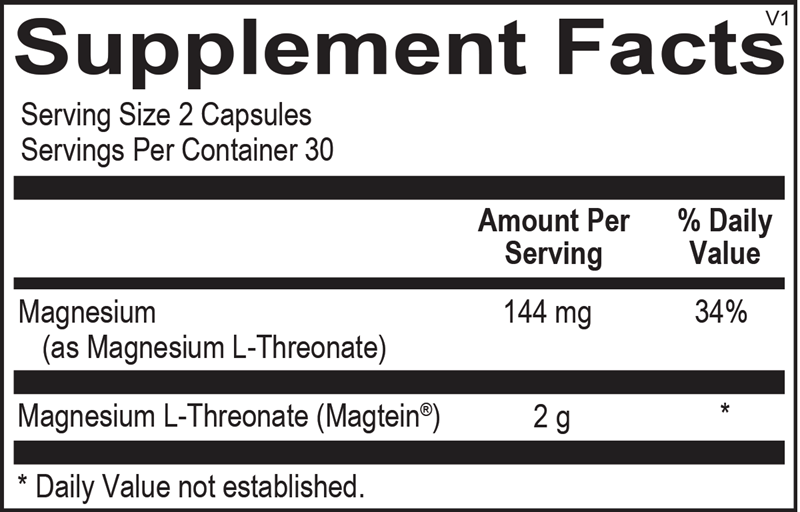

Ortho Molecular Products
Mag Threonate by Ortho Molecular Products
60 capsules · 30-day supply
Support Cognitive Function and Relaxation with Magnesium L-Threonate$78.64
Purchase options
Practitioner-grade brand3rd-party testedFree shipping $50+
Gluten Free·Corn Free·Yeast Free·Artificial Color Free·Artificial Flavor Free
Ortho Molecular Products Mag Threonate overview
Light sleepers, stressed professionals, and older adults noticing word-finding or focus lapses tend to be the real responders to magnesium threonate. If your Magnesium, RBC is in the lower part of the normal range or you rely on caffeine and intense training, this form is a gentle way to raise magnesium without bowel looseness. It’s not ideal if you need a laxative effect or big muscle-cramp dosing; citrate or glycinate are better for that.
Magnesium L-threonate (the Magtein form here) is designed to cross the blood–brain barrier more efficiently than other salts, modestly raising brain magnesium. Magnesium helps calm NMDA receptors (the brain’s “accelerator” signals) and supports GABA activity (the brain’s “brake”), which explains reports of easier sleep onset and steadier mood. Small human trials in adults with cognitive complaints show improved executive function and working memory within 6 to 12 weeks.
The suggested use is two capsules daily, with or without food. Many take one in late afternoon and one in the evening for sleep and calm; consistent daily use matters more than exact timing. Separate from levothyroxine, tetracyclines, fluoroquinolones, and bisphosphonates by at least 2 hours to avoid binding in the gut. Expect sleep and stress changes within 1 to 2 weeks, cognitive effects by 6 to 12 weeks.
Skip or get supervision if you have significant kidney disease, since magnesium is cleared by the kidneys. For constipation or frequent leg cramps, the elemental dose here (144 mg) is usually too low; magnesium citrate or magnesium glycinate at higher elemental doses is more practical. Pregnancy and breastfeeding: use only with clinician guidance and favor standard dietary magnesium targets.
Magnesium reduces absorption of levothyroxine, tetracycline and fluoroquinolone antibiotics, and oral bisphosphonates; separate by 2 to 4 hours. Acid-reducing drugs like PPIs can lower magnesium over time, which may increase your need. Combining with other magnesium products is fine, but track total elemental magnesium to avoid loose stools. No direct interaction with SSRIs or SNRIs, though sedation can feel additive at bedtime.
Frequently asked questions
Does magnesium threonate help with sleep?
Often, yes. By calming excitatory brain signaling, many people fall asleep faster and wake less. Effects usually show within 1–2 weeks. If you mainly need a laxative effect, citrate works better than threonate.
How long does magnesium threonate take to work?
For sleep and “calm,” give it 1–2 weeks of daily use. For focus and working memory in adults with complaints, allow 6–12 weeks. Consistent timing matters more than taking it with or without food.
What time of day should I take magnesium threonate?
Late afternoon and evening dosing is popular for relaxation and sleep. If daytime grogginess occurs, shift the entire dose to evening. Separate by 2+ hours from thyroid meds, antibiotics, or osteoporosis pills.
Can I take magnesium threonate with antidepressants?
Generally yes, there’s no known direct interaction with SSRIs or SNRIs. Some people feel a touch more drowsy at night, which is usually welcome. Always review combinations with your clinician if you’re on multiple meds.
Is magnesium threonate good for constipation or muscle cramps?
Not usually. The elemental magnesium is modest, and threonate is gentle on the gut. For constipation or higher-dose cramp protocols, magnesium citrate or magnesium glycinate are better options.
Can I take magnesium threonate with food?
Yes. It absorbs well with or without food. If you’re sensitive, a small snack can reduce mild stomach upset. Just keep it 2–4 hours apart from thyroid meds, certain antibiotics, and bisphosphonates.
Who should avoid magnesium threonate?
People with significant kidney disease should avoid unsupervised magnesium due to risk of accumulation. In pregnancy or breastfeeding, stick to dietary magnesium targets unless your clinician recommends supplementation.
What side effects should I watch for?
Most tolerate it well. Possible effects include drowsiness, vivid dreams, headache, or mild nausea. Loose stools are less common than with oxide or citrate. Reduce the dose or move to evening if daytime sleepiness occurs.
How to take it & ingredients
Suggested use: 2 capsules per day or as recommended by your health care professional.
Active ingredients
2 capsules per serving · 30 servings
Magnesium
As Magnesium L-Threonate (Magtein®)
As Magnesium L-Threonate (Magtein®)
144 mg
Magnesium L-Threonate
Magtein®
Magtein®
2000 mg
Other ingredients: Hypromellose (Natural Vegetable Capsules), Magnesium Stearate
Certifications
Benefits
Warnings
Customers also considered

CereMag
Ortho Molecular Products
99 grams
$77.76$70.05 with Subscribe & Save

Dr. Formulated Magnesium Raspberry
Garden of Life
197.4 grams
$24.99$19.99 with Subscribe & Save

Dual-Mag Complex
Natura Health Products
90 capsules
$22.99$17.99 with Subscribe & Save

MagSRT
Jigsaw Health
120 tablets
$27.99$21.99 with Subscribe & Save