 Instalab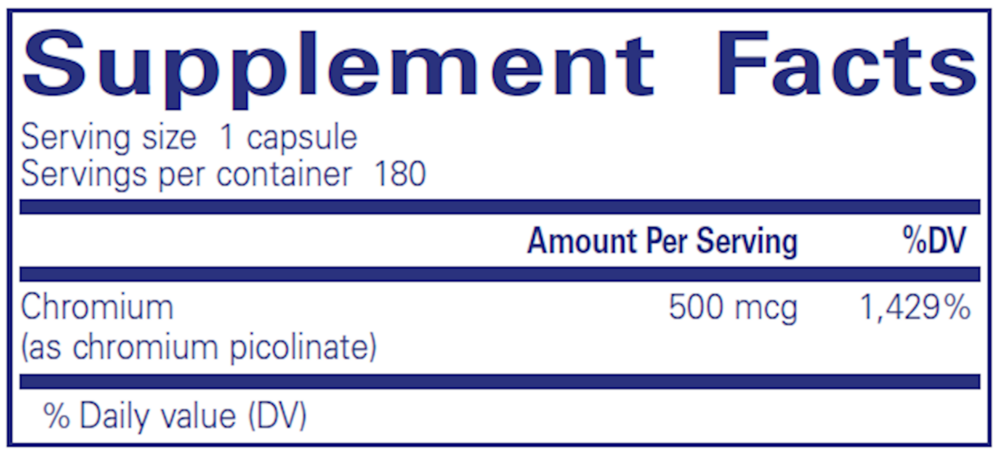


Pure Encapsulations
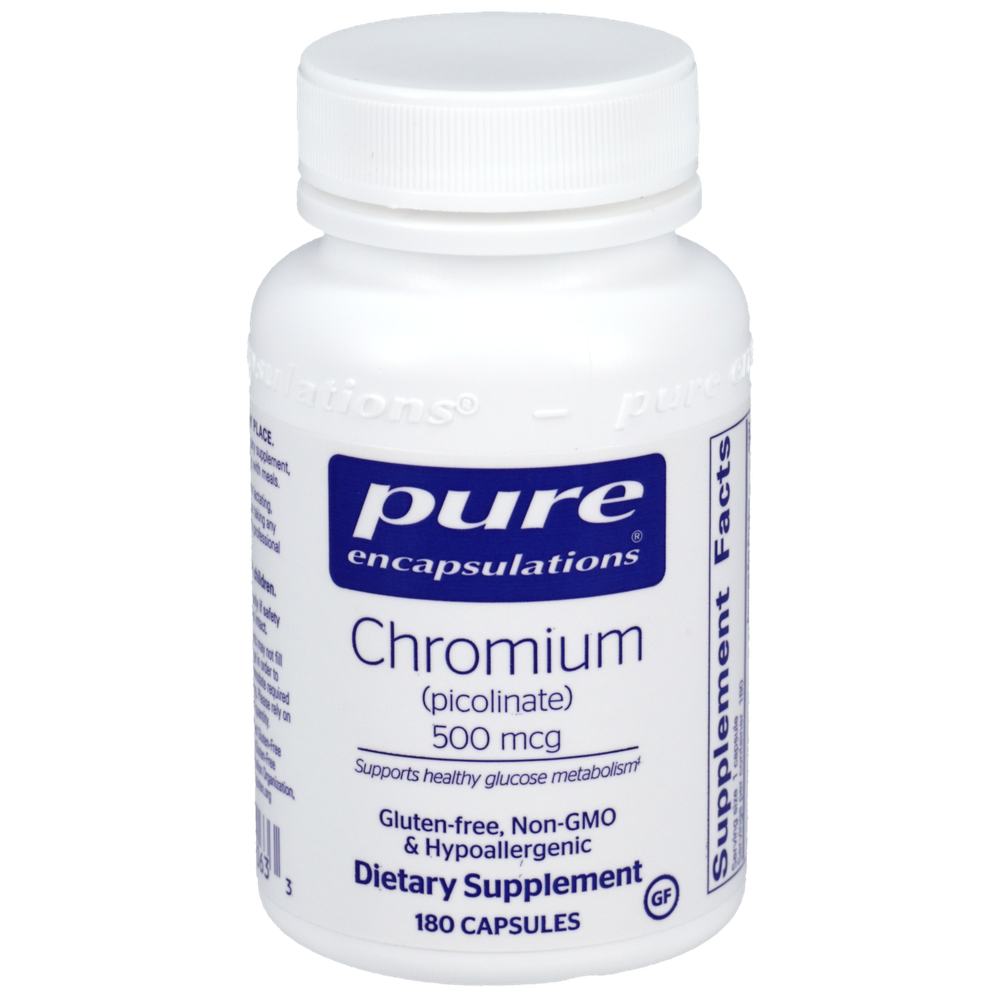
Chromium Picolinate 500mcg by Pure Encapsulations
180 capsules · 180-day supply
Supports Healthy Blood Sugar Levels and Metabolic Function$50.50
Purchase options
Practitioner-grade brand3rd-party testedFree shipping $50+
Vegan·Vegetarian·Gluten Free·Egg Free·Peanut Free·Wheat Free·
Pure Encapsulations Chromium Picolinate 500mcg overview
If you’re searching for chromium picolinate for blood sugar, this 500 mcg dose fits adults with higher-carb diets, fluctuating energy after meals, or lab drift in fasting glucose, Hemoglobin A1c, or fasting insulin. It’s most relevant if your A1c is edging up or you have a family history of elevated blood sugar. Effects in adults without elevated blood sugar are modest; in those with impaired glucose control, benefits are more noticeable over consistent use.
Chromium picolinate is a well-absorbed form of chromium that helps insulin work more effectively. Better insulin sensitivity means your cells respond to insulin’s signal to move glucose out of the bloodstream and into muscle. Over weeks, that can lower fasting glucose and A1c, and sometimes trim triglycerides if they’re elevated. Expect small-to-moderate changes, not a drug-level effect; it’s a nutrition lever, not a substitute for diet or exercise.
Take 1 capsule with a meal once or twice daily, matching the manufacturer’s guidance to divide doses with food. With meals is practical because chromium influences how you handle the carbs you just ate. Most studies use 200–1,000 mcg per day; 500 mcg is a solid single dose. Look for changes in fasting glucose within 4–8 weeks and in Hemoglobin A1c within 8–16 weeks, then retest to calibrate.
If you use insulin or sulfonylureas (blood sugar–lowering drugs like glipizide), adding chromium picolinate can increase the chance of low blood sugar, so monitor closely and loop in your clinician. Separate from levothyroxine (thyroid hormone) by at least 3–4 hours, since minerals can reduce its absorption. People with kidney or liver disease, and dialysis patients, should avoid unless supervised.
Chromium picolinate won’t erase a high-sugar diet, but it can tighten post‑meal glucose handling when paired with protein and fiber. Some report fewer carb cravings; that tends to track with improved glucose control rather than a direct appetite effect. If your labs are already excellent, you’re unlikely to see much movement—save this for when trends are heading the wrong direction.
Frequently asked questions
Does chromium picolinate really lower blood sugar?
Yes, but modestly. In people with impaired glucose control, it can reduce fasting glucose and Hemoglobin A1c over 8–16 weeks. In healthy adults with normal labs, the effect is small to none.
How long does chromium picolinate take to work?
You may see changes in fasting glucose within 4–8 weeks. Hemoglobin A1c, which reflects 2–3 months of blood sugar, typically shifts after 8–16 weeks of steady use. Recheck labs to confirm response.
Is 500 mcg of chromium picolinate safe to take daily?
For most adults, 500 mcg daily is within common study doses. Mild stomach upset or headache can occur. Avoid if you have kidney or liver disease unless your clinician approves, and monitor if on glucose‑lowering drugs.
Can I take chromium picolinate with metformin or insulin?
It’s generally fine with metformin. With insulin or sulfonylureas, it can increase the risk of low blood sugar, so monitor closely and coordinate any dose changes with your prescriber.
When should I take chromium picolinate, with or without food?
Take it with meals. That timing pairs chromium’s effect on insulin action with the carbs you’re eating and reduces the chance of stomach upset.
Does chromium picolinate help with weight loss or carb cravings?
Weight effects are small. Some people report fewer carb cravings, likely because of steadier post‑meal glucose. Treat any weight change as a bonus, not the primary reason to take it.
Can I take chromium picolinate with thyroid medication?
Yes, but separate doses. Take levothyroxine at least 3–4 hours apart from chromium, since minerals can reduce thyroid hormone absorption.
How to take it & ingredients
Suggested use: Take 1-2 capsules daily, in divided doses, with meals, or as directed by your physician.
Active ingredients
1 capsule per serving · 180 servings
Chromium
Chromium Picolinate
Chromium Picolinate
500 mcg
Other ingredients: Hypoallergenic Plant Fiber (Cellulose), Vegetarian Capsule (Cellulose, Water)
Certifications
Benefits
Warnings