 Instalab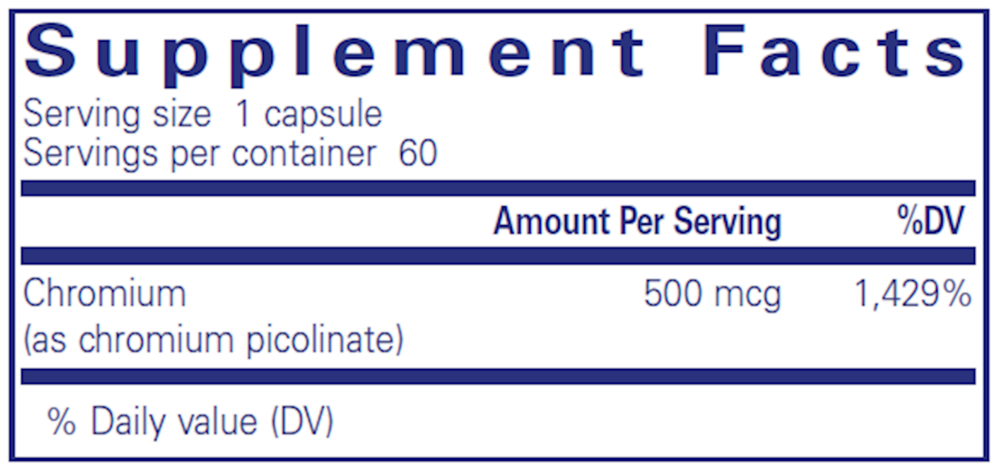


Pure Encapsulations
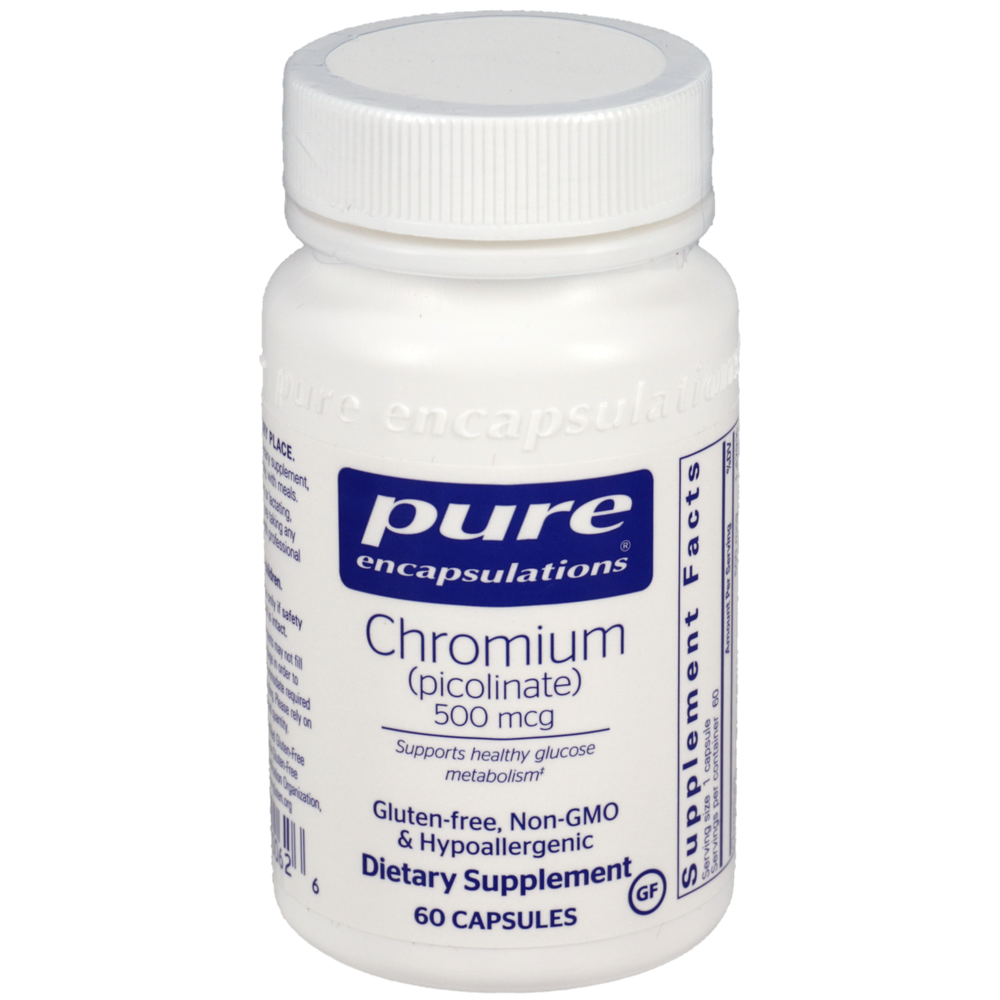
Chromium Picolinate 500mcg by Pure Encapsulations
60 capsules · 60-day supply
Supports Healthy Blood Sugar Levels and Metabolic Function$19.50
Purchase options
Practitioner-grade brand3rd-party testedFree shipping $50+
Vegan·Vegetarian·Gluten Free·Egg Free·Peanut Free·Wheat Free·
Pure Encapsulations Chromium Picolinate 500mcg overview
Chromium picolinate 500 mcg is for adults watching blood sugar who want a simple, once- or twice-daily dose with meals. It’s most relevant if your Hemoglobin A1c (three‑month average blood sugar) or fasting glucose runs high, or if fasting insulin (the hormone that moves glucose into cells) is elevated. People with cravings for refined carbs sometimes report steadier appetite on chromium. If your labs are already well controlled and your diet is balanced, benefits tend to be modest.
Chromium is a trace mineral that helps insulin signal more effectively at the cell surface, so muscles and liver take up glucose with less effort. The picolinate form is well absorbed compared with chromium chloride or nicotinate. In trials, chromium picolinate has produced small improvements in fasting glucose and Hemoglobin A1c within 8 to 12 weeks, especially when insulin signaling is reduced. Weight loss effects are inconsistent, so it shouldn’t be your primary fat‑loss tool.
Take one capsule with a meal, once or twice daily, as Pure Encapsulations suggests. Meals improve tolerance and fit the way chromium picolinate acts alongside insulin. If you’re targeting measurable changes in A1c, give it 8 to 12 weeks, then recheck labs. If you already take 200 mcg chromium from a multivitamin, one 500 mcg capsule daily is usually sufficient rather than splitting the dose.
If you take prescription glucose-lowering medications such as metformin or insulin, monitor for low blood sugar when starting chromium picolinate and discuss dose changes with your clinician. Separate it from levothyroxine (thyroid hormone) by at least 4 hours to avoid absorption issues. Skip high‑dose chromium if you have kidney or liver disease, are pregnant, or have a history of bipolar disorder. Nausea or headache are the most common mild side effects.
Most people who respond notice steadier post‑meal glucose within 4 to 8 weeks; A1c shifts, if any, show up after about 3 months. Chromium status is hard to measure, so clinicians track outcomes with Hemoglobin A1c, fasting glucose, and sometimes fasting insulin. If triglycerides are elevated alongside reduced insulin sensitivity, any improvement generally parallels better glucose control rather than a direct lipid effect.
Frequently asked questions
Does chromium picolinate help with weight loss?
Not reliably. Studies show little to modest weight change, and effects, when present, tend to be small. Use it for insulin efficiency and pair it with protein-forward meals, fiber, resistance training, and sleep if fat loss is the goal.
How long does chromium picolinate 500 mcg take to work?
Give it 4–8 weeks for changes in fasting glucose, and a full 8–12 weeks to see any impact on Hemoglobin A1c. Re-test labs after three months to judge effect alongside diet and exercise.
Can I take chromium picolinate with metformin or insulin?
Yes, but monitor closely. Chromium can make insulin signaling more efficient, which can lower glucose further. Check sugars more often when you start and ask your clinician if medication doses need adjustment.
Is chromium picolinate safe for the kidneys or liver?
At typical doses it’s well tolerated, but avoid high-dose chromium if you have kidney or liver disease. There are rare case reports of injury with prolonged high intake. Use only under clinician supervision in these settings.
What time of day should I take chromium picolinate?
Take it with meals, once or twice daily. Taking it with food improves tolerance and aligns with insulin’s action after eating. Consistency matters more than the exact meal you choose.
Does chromium picolinate interact with thyroid medication?
Yes, minerals can bind levothyroxine and reduce absorption. Separate chromium picolinate and levothyroxine by at least 4 hours to keep thyroid levels stable.
Which form of chromium is best?
Chromium picolinate is among the better-absorbed forms compared with chromium chloride. Clinical trials examining blood sugar most often use the picolinate form, typically 200–1,000 mcg daily.
How to take it & ingredients
Suggested use: Take 1-2 capsules daily, in divided doses, with meals, or as directed by your physician.
Active ingredients
1 capsule per serving · 60 servings
Chromium
Chromium Picolinate
Chromium Picolinate
500 mcg
Other ingredients: Hypoallergenic Plant Fiber (Cellulose), Vegetarian Capsule (Cellulose, Water)
Certifications
Benefits
Warnings