
 Instalab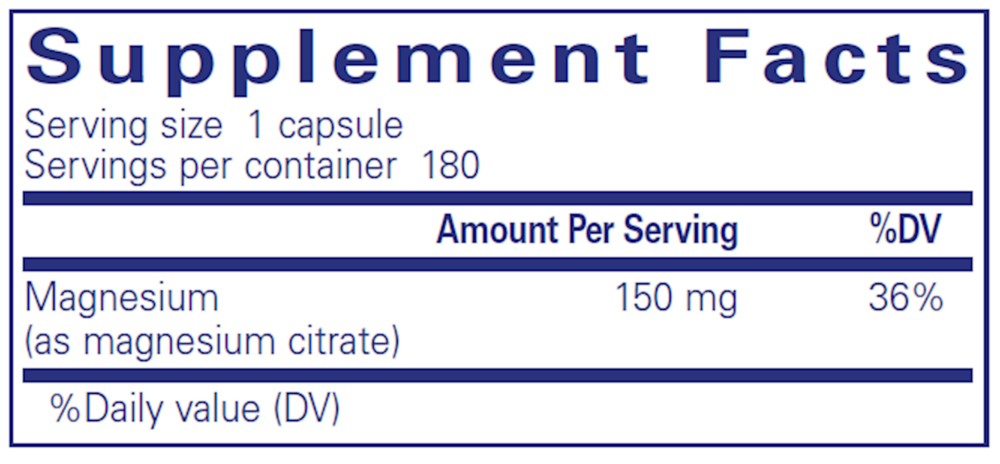

Pure Encapsulations
Magnesium Citrate 150 mg by Pure Encapsulations
180 capsules · 180-day supply
Supports Muscle Function, Bone Health, and Relaxation$33.99retail
Add to cart for 21% off
Purchase option
21% below MSRP3rd-party tested for purity & potencyFree shipping $50+
Vegan·Vegetarian·Gluten Free
Pure Encapsulations Magnesium Citrate overview
If you get calf cramps at night, have low intake of nuts/greens, or want gentler regularity, magnesium citrate is a practical pick. It’s well suited if your Serum Magnesium or RBC Magnesium is low or low-normal, you’re an endurance athlete losing minerals in sweat, or you’ve been on long-term acid-reducing meds and suspect depletion. Compared with other forms, this one often helps with constipation while you replete stores.
Magnesium is a cofactor for hundreds of enzymes that turn food into ATP (the cell’s energy currency) and regulate nerve signaling and muscle contraction. The citrate form dissolves easily in water, which improves absorption versus oxide. In the gut, unabsorbed citrate holds water, softening stools; in muscle and nerves, adequate magnesium steadies excitability, which is why cramps and twitching often ease as levels normalize.
Each capsule provides 150 mg. Most adults use 1–3 capsules daily with food, split morning and evening to improve absorption and reduce GI upset. For relaxation or nighttime cramps, take part of the dose in the evening. Bowel regularity usually shifts within 24–48 hours; tissue repletion and cramp improvement take 2–4 weeks, with lab changes in 4–8 weeks. If loose stools occur, lower the dose or switch to magnesium glycinate.
Magnesium binds certain drugs and blocks their absorption. Separate by at least 2–4 hours from levothyroxine, tetracycline or quinolone antibiotics, and oral bisphosphonates. It can also reduce absorption of some iron supplements—take them at different times. If you use other laxatives, additive effects can cause diarrhea and dehydration, so adjust thoughtfully.
Avoid magnesium citrate with significant kidney disease or if you’ve had high magnesium on labs. If you have a sensitive gut, frequent loose stools, or active diarrhea, choose magnesium glycinate, which is less laxative. For migraine prevention or sleep where GI tolerance matters, glycinate or threonate are often better fits. In pregnancy, ask your clinician before using laxative-leaning forms.
Frequently asked questions
What is magnesium citrate used for?
It’s used to raise magnesium levels, ease muscle cramps and twitching, and gently improve bowel regularity. It absorbs better than magnesium oxide and is handy when you want both repletion and softer stools, but it’s not the top choice if you’re prone to diarrhea.
How long does magnesium citrate take to work for constipation?
Most people notice softer stools within 24–48 hours at a dose their gut tolerates. If nothing changes, increase gradually within the label range. If stools become too loose, back down or switch to magnesium glycinate, which is less laxative.
What time of day should I take magnesium citrate?
Any time with food is fine. Split doses (morning and evening) often absorb better. If you’re aiming for relaxation or nighttime cramp relief, take part of the dose in the evening. Separate it 2–4 hours from thyroid meds, antibiotics, or bisphosphonates.
How much magnesium citrate should I take daily?
The label suggests 1–3 capsules daily (150 mg each). Many adults feel best at 150–300 mg, while some need 450 mg for repletion. Match the dose to your bowels and labs, and step down once Serum Magnesium or RBC Magnesium improves.
What’s the difference between magnesium citrate and glycinate?
Citrate is highly soluble, well absorbed, and more likely to loosen stools. Glycinate is also well absorbed but gentler on the gut, so it’s preferred for sleep, migraine prevention, or anyone prone to diarrhea. Choose based on your bowels and goals.
Which medications should not be taken with magnesium citrate?
Don’t take it at the same time as levothyroxine, tetracycline or quinolone antibiotics, or oral bisphosphonates; separate by 2–4 hours. Stagger it away from iron to avoid reduced absorption. If you’re on diuretics, ask your clinician about monitoring.
Is magnesium citrate safe for kidneys?
If your kidneys work normally, typical doses are safe. With chronic kidney disease, magnesium can accumulate and become dangerous. Avoid unless your nephrologist approves and monitors levels.
Which lab tests track magnesium status best?
Serum Magnesium is the most common but can look normal despite low stores. RBC Magnesium better reflects tissue levels. Check again after 4–8 weeks of steady dosing to confirm repletion.
How to take it & ingredients
Suggested use: Adults take 1 to 3 capsules daily or as directed by a healthcare practitioner.
Active ingredients
1 capsule per serving · 180 servings
Magnesium
Magnesium Citrate
Magnesium Citrate
150 mg
Other ingredients: Ascorbyl palmitate, Vegetarian capsule (hypromellose, water)
Certifications
Benefits
Warnings
Customers also considered

AlgaeCal Inc.
AlgaeCal Plus
120 capsules
$80.99
Add to cart for lower price

New Chapter
Bone Strength Take Care
60 tablets
$40.99
Add to cart for lower price

Ortho Molecular Products
OsteoBase
90 capsules
$39.68
Add to cart for lower price

Ortho Molecular Products
OsteoPrev®
120 capsules
$86.19
Add to cart for lower price