 Instalab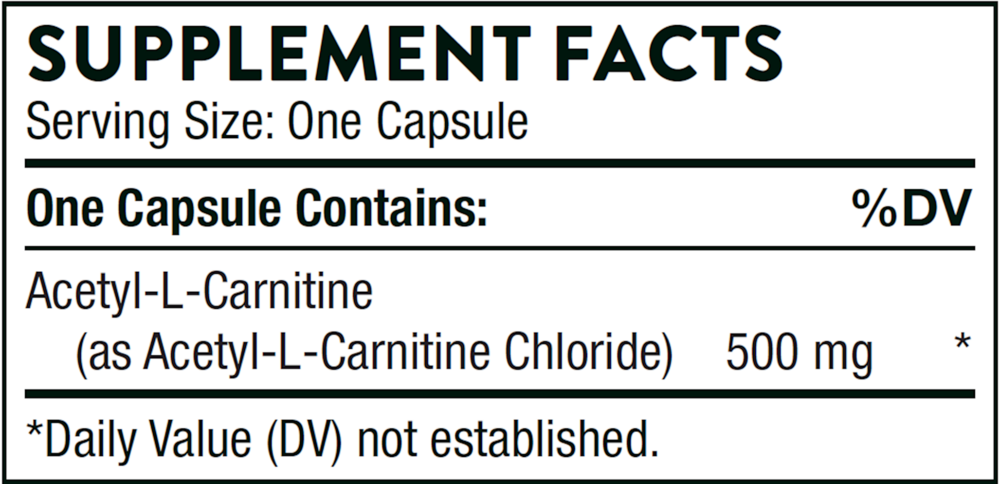


Thorne
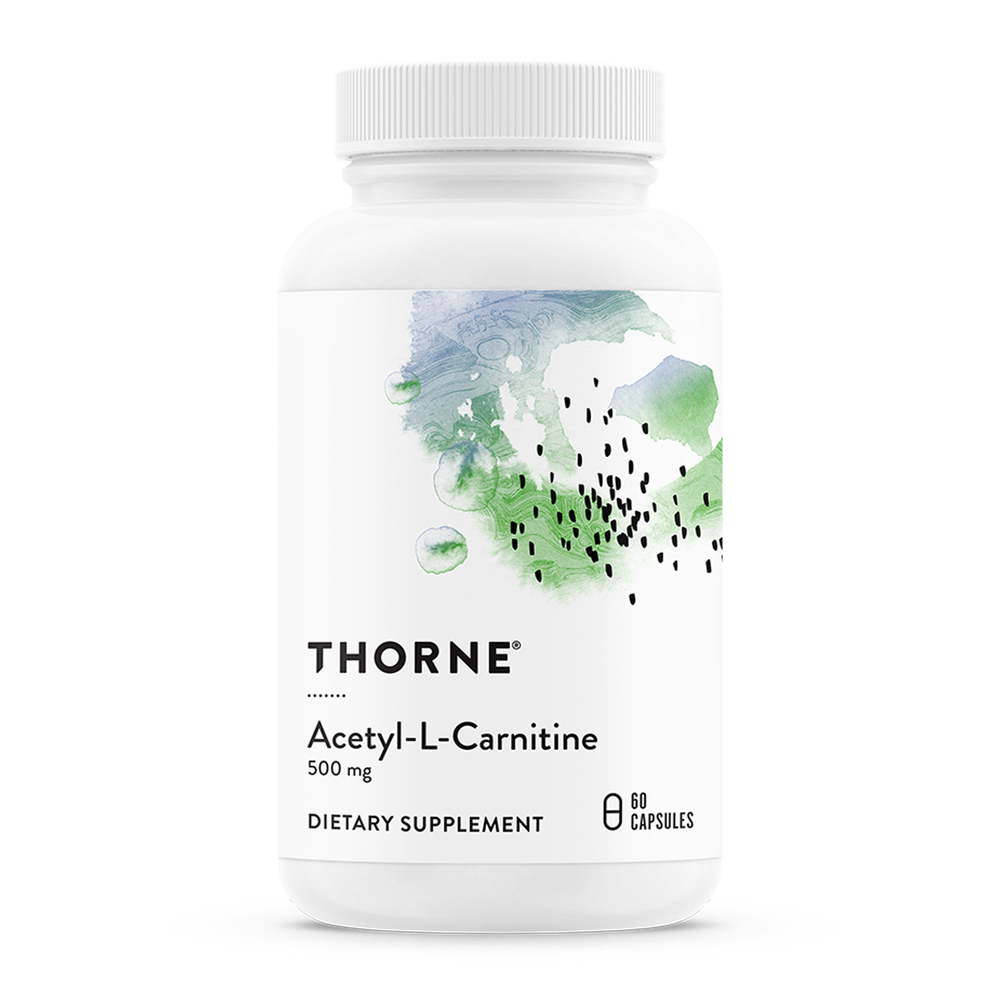
Acetyl-L-Carnitine 500 mg by Thorne
60 capsules · 60-day supply
Supports Energy Production and Cognitive Function$32.00
Purchase options
Practitioner-grade brand3rd-party testedFree shipping $50+
Gluten Free·Soy Free·Dairy Free·Milk Free
Thorne Acetyl-L-Carnitine overview
If you’re searching for acetyl-L-carnitine for low energy or mental fatigue, this fits adults who want measurable help with focus and stamina. It’s useful if your Carnitine, Free and Total is low, you eat little animal protein (strict vegans), you’re on valproate (a seizure and mood drug that depletes carnitine), or you’re an older adult noticing slower recovery. It can complement workups for Vitamin B12 and Thyroid Stimulating Hormone (the pituitary signal that directs thyroid output) when fatigue has multiple drivers.
Acetyl-L-carnitine shuttles fatty acids into mitochondria, the parts of cells that make ATP (your chemical energy), so muscles and brain cells burn fuel more efficiently. The acetyl group also helps your neurons make acetylcholine (the memory and attention neurotransmitter). This form crosses the blood–brain barrier better than plain L-carnitine, which is why users feel clearer thinking. In clinical practice, energy and concentration often improve within 1 to 4 weeks; nerve discomfort, when it responds, takes longer.
Thorne’s capsule delivers 500 mg; most adults take one capsule two to three times daily, ideally on an empty stomach for better uptake. Start with one daily for 3 to 5 days, then add a second dose, and a third if you still need it. Avoid evening dosing if it feels stimulating. Some pair it with alpha-lipoic acid for nerve health, or use L-carnitine tartrate around workouts for muscle recovery.
Separate from thyroid medication by at least 4 hours because carnitine can blunt thyroid hormone entry into cells; keep an eye on TSH and symptoms. If you take valproate, acetyl-L-carnitine is often helpful, but coordinate with your prescriber. Sensitive users can feel jittery or irritable at higher doses, so titrate slowly. Carnitine is converted by gut bacteria to TMAO (a metabolite linked to heart risk in some studies); if you track TMAO, recheck after 4 to 8 weeks.
Frequently asked questions
What does acetyl-L-carnitine do, in plain English?
It helps your cells move fat into mitochondria to make ATP (usable energy) and gives your brain an acetyl group to make acetylcholine, the neurotransmitter for memory and attention. That’s why people notice better energy, mental clarity, and sometimes less nerve discomfort.
How long does acetyl-L-carnitine take to work?
For energy and focus, most notice an effect within 1–4 weeks. For nerve symptoms, allow 8–12 weeks to judge. If nothing changes by then at 1–1.5 grams per day, it’s reasonable to stop and reassess other causes like Vitamin B12 or thyroid.
What’s the best time of day to take acetyl-L-carnitine?
Take it in the morning and midday, ideally on an empty stomach. It can feel stimulating for some, so avoid taking it late in the day until you know your response. Split dosing keeps levels steadier than one large dose.
Acetyl-L-carnitine vs L-carnitine tartrate: which should I choose?
Acetyl-L-carnitine crosses into the brain better and is favored for cognition and nerve health. L-carnitine tartrate is often used around training for muscle recovery. If focus and fatigue are your targets, start with acetyl-L-carnitine.
Does acetyl-L-carnitine help with weight loss?
It’s not a weight-loss drug. By improving fat transport into mitochondria, it can make exercise feel easier and reduce fatigue, which indirectly helps activity and adherence. On its own, weight changes are usually modest.
Is acetyl-L-carnitine safe to take long term?
It’s generally well tolerated for months to years. Common issues are mild nausea or restlessness at higher doses. If you track TMAO (a gut-derived metabolite tied to heart risk), consider rechecking after starting to see how you personally respond.
Can I take acetyl-L-carnitine with thyroid medication?
Yes, but separate by at least 4 hours. Carnitine can reduce thyroid hormone entry into cells, which is helpful in hyperthyroid states but not desired if you’re replacing low thyroid. Monitor TSH and how you feel when adding it.
How to take it & ingredients
Suggested use: Take 1 capsule two to three times daily or as recommended by your health professional.
Active ingredients
1 capsule per serving · 60 servings
Acetyl-L-Carnitine
As Acetyl-L-Carnitine Chloride
As Acetyl-L-Carnitine Chloride
500 mg
Other ingredients: Hypromellose Capsule, Leucine, Microcrystalline Cellulose, Silicon Dioxide
Certifications
Benefits
Warnings