 Instalab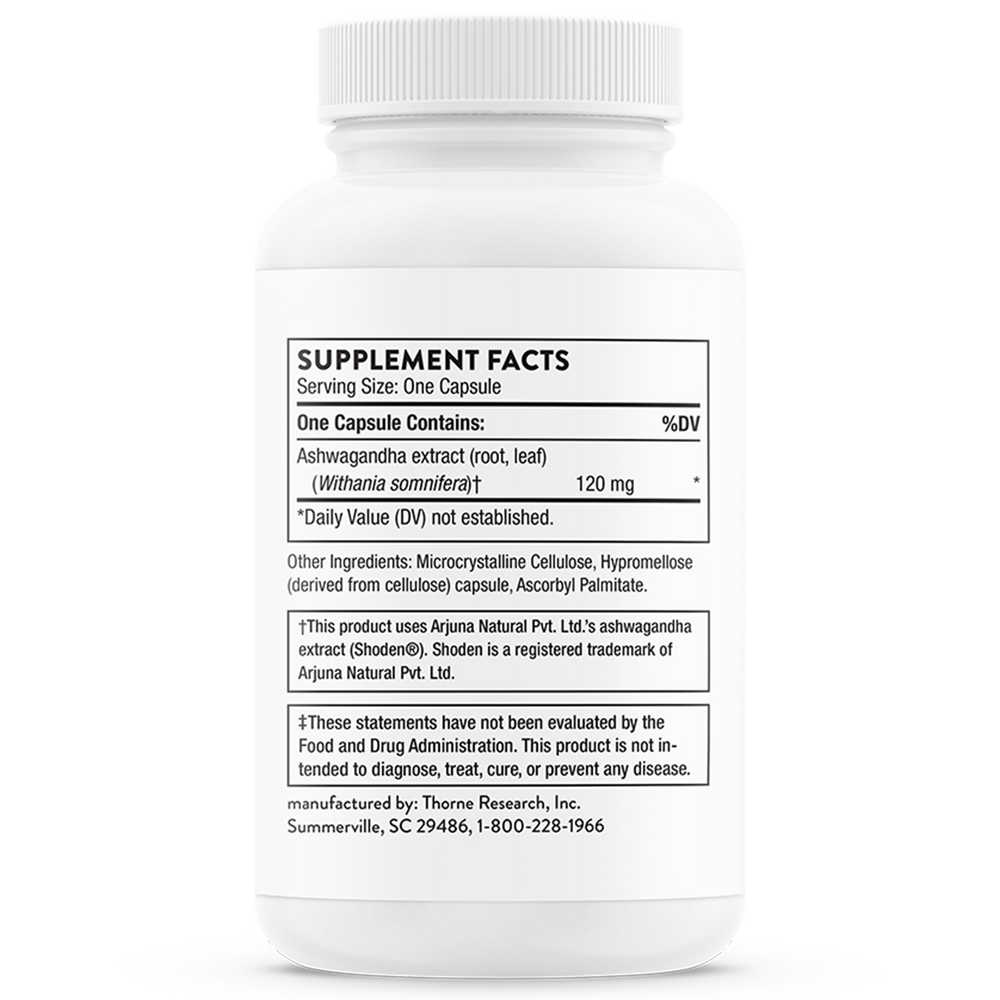


Thorne
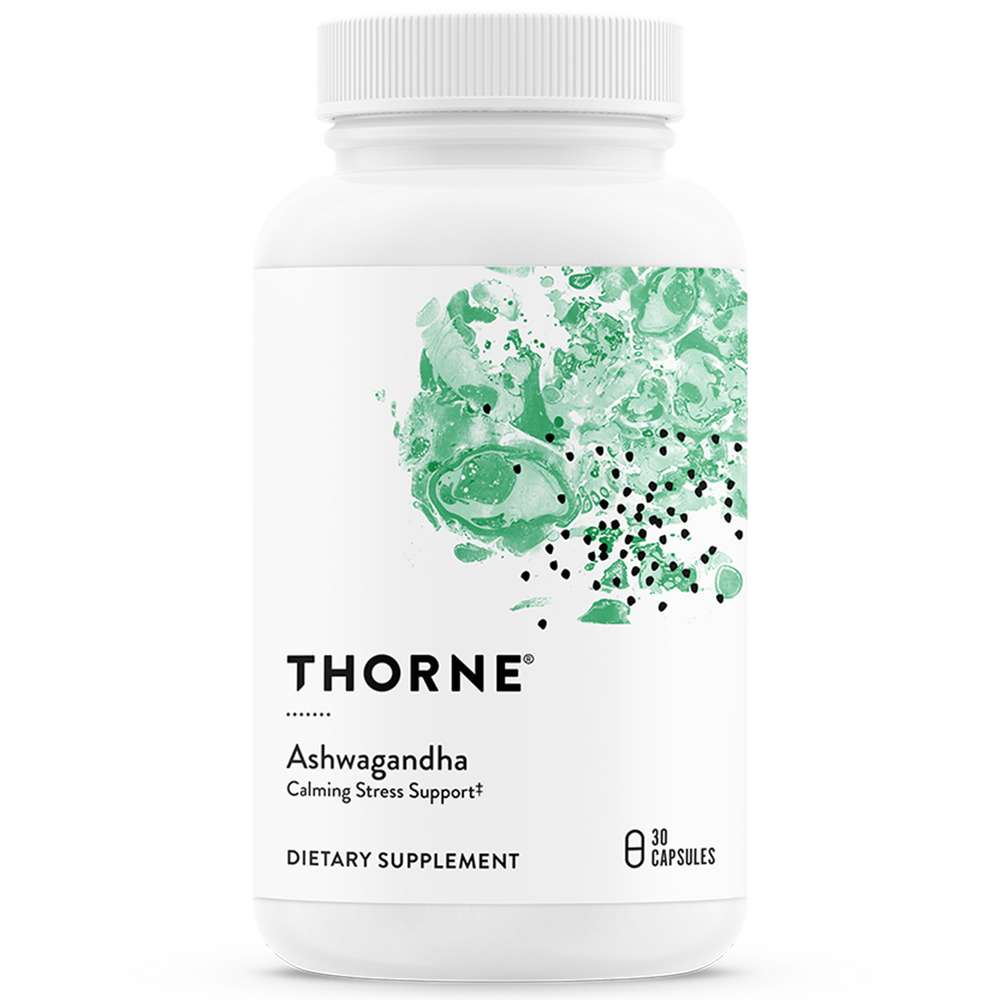
Ashwagandha 120 mg by Thorne
30 capsules · 30-day supply
Adaptogenic Support for Stress Relief and Mental Clarity$22.00
Purchase options
Practitioner-grade brand3rd-party testedFree shipping $50+
Gluten Free
Thorne Ashwagandha overview
If your days feel wired and your nights feel restless, ashwagandha for stress is a practical first step. It fits adults with high job load, new parents running on light sleep, and athletes during heavy training blocks. If your Cortisol, AM runs high or your sleep tracker shows poor sleep efficiency, this low-dose, high-potency extract is a match. It is also reasonable if your hs-CRP (an inflammation marker) is mildly elevated and you want a non-sedating calming agent before looking at prescriptions.
This formula uses Shoden ashwagandha, standardized to 35% withanolide glycosides, the compounds that drive most effects. These signal the HPA axis (the stress-control loop between brain and adrenals) to temper cortisol output, which is why many users feel calmer within 2 to 4 weeks. Ashwagandha also nudges GABA signaling (the brain’s main calming pathway) and, in some trials, improved sleep latency and efficiency. Small studies show modest drops in hs-CRP in responders. A minority see higher thyroid output, so monitor TSH and Free T4 if you have thyroid disease.
One capsule daily is the manufacturer’s guidance. Take with food if you have a sensitive stomach; take in the evening if your main goal is sleep. Shoden is concentrated, so 120 mg here is not a “micro” dose; it approximates typical effects seen with 300–600 mg of conventional root extracts. Expect stress and mood changes within 2 to 4 weeks and sleep gains by 4 to 8 weeks. Reassess at 8 to 12 weeks with your Cortisol, AM or a simple sleep log.
Skip ashwagandha if you are pregnant or breastfeeding. Use caution with thyroid medication, since ashwagandha can slightly raise thyroid hormone in some people; check TSH and Free T4 within 6 to 8 weeks. Sedatives and alcohol can have additive calming effects. Rare liver irritation has been reported; if you have liver disease or elevated ALT, discuss with your clinician and monitor. Autoimmune conditions or use of immunosuppressants warrant a case-by-case call rather than self-directed use.
Frequently asked questions
How long does ashwagandha take to work?
Most people notice calmer mood or less reactivity within 2 to 4 weeks. Sleep onset and sleep efficiency improvements usually show up by 4 to 8 weeks. Give it a full 8 weeks before judging.
What time of day should I take ashwagandha?
Take it when it matches your goal. Evening is best if you want help with sleep. Morning can work if you’re using it for daytime stress. If it makes you drowsy, move it later; if it feels too calming, take earlier.
Is 120 mg of ashwagandha enough?
With Shoden’s 35% withanolide glycosides, 120 mg is a clinically active dose. It delivers similar actives to 300–600 mg of many standard root extracts. If you need more, discuss titration rather than doubling blindly.
Does ashwagandha lower cortisol?
It can moderate cortisol in people with stress-related elevations. If you track Cortisol, AM, look for changes after 4 to 8 weeks. It is not a blunt suppressor and will not replace medical treatment for adrenal disorders.
Can I take ashwagandha with antidepressants or anxiety meds?
Use caution. Ashwagandha has calming effects and can add to sedation from benzodiazepines or sleep aids. For SSRIs or SNRIs, there’s no clear harmful interaction, but coordinate with your prescriber and start low.
Does ashwagandha affect thyroid levels?
In some users, it slightly raises thyroid hormone. If you have hypothyroidism on medication or a history of thyroid disease, monitor TSH and Free T4 within 6–8 weeks and adjust therapy with your clinician.
What side effects should I watch for?
Mild GI upset, loose stools, or drowsiness are the most common. Stop and seek care if you develop jaundice, dark urine, or severe fatigue, which can signal liver irritation. Rare allergic reactions can occur.
Is ashwagandha safe to use daily long term?
Short trials up to 12 weeks look safe in healthy adults. For longer use, take periodic breaks and recheck goals and labs like Cortisol, AM or TSH if relevant. Avoid during pregnancy and breastfeeding.
How to take it & ingredients
Suggested use: Adults take one capsule daily, or as directed by your healthcare professional.
Active ingredients
1 capsule per serving · 30 servings
Ashwagandha extract (root, leaf)
Withania somnifera
Withania somnifera
120 mg
Other ingredients: Microcrystalline Cellulose, Hypromellose (derived from cellulose) capsule, Ascorbyl Palmitate
Certifications
Benefits
Warnings