 Instalab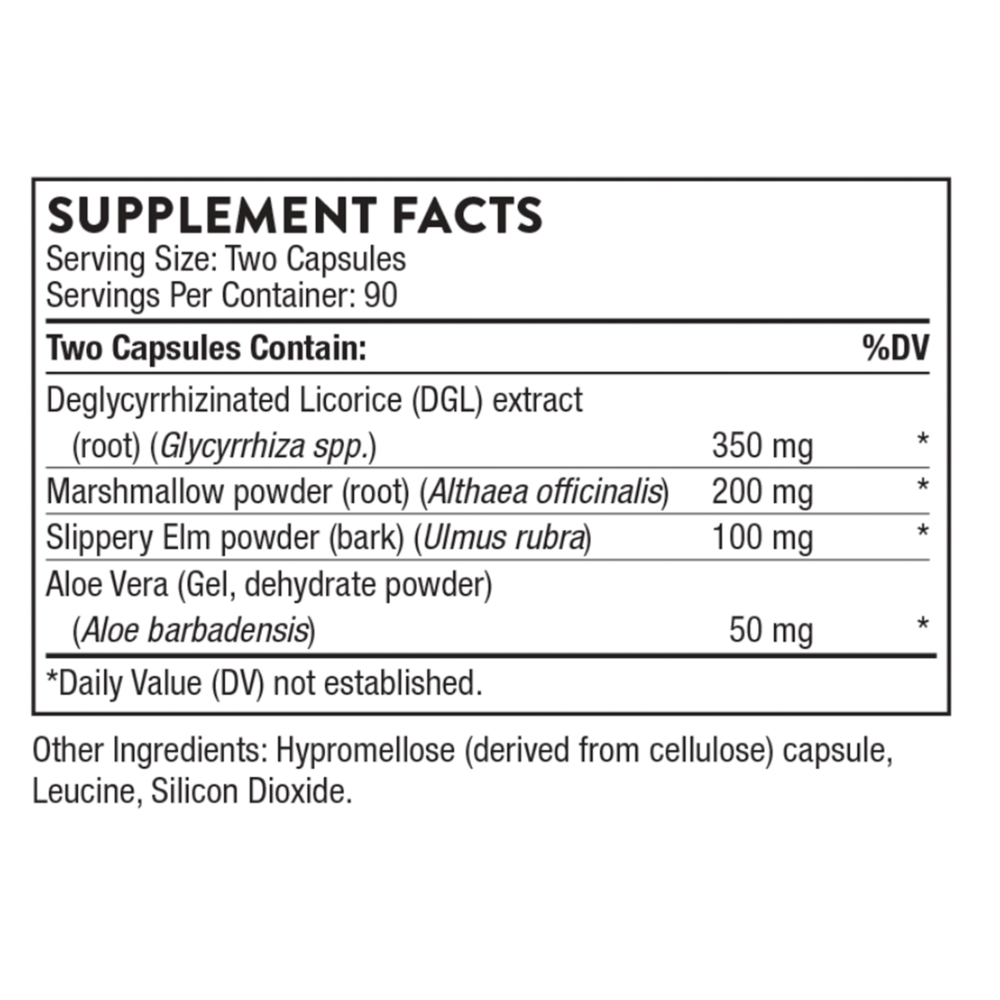

Thorne
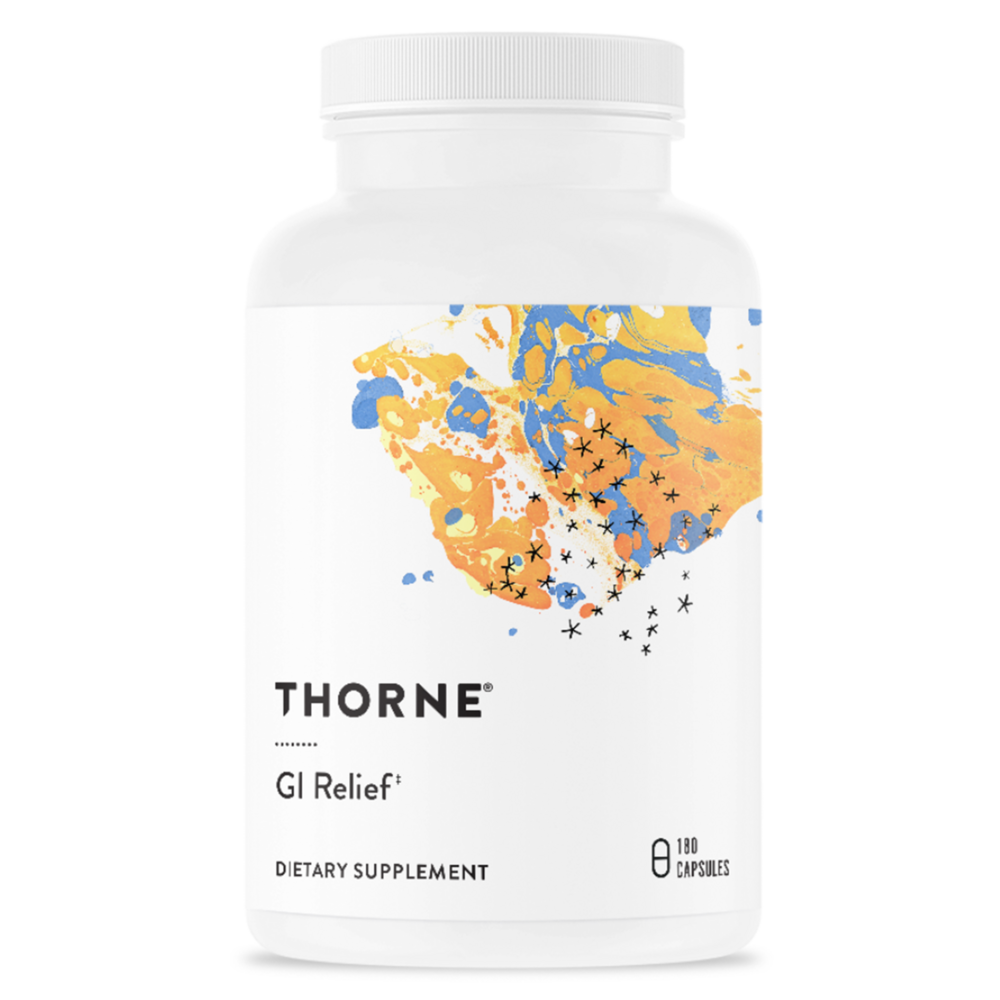
GI Relief by Thorne
180 capsules · 90-day supply
Herbal Support for Digestive Comfort and Gut Health$41.00
Purchase options
Practitioner-grade brand3rd-party testedFree shipping $50+
Gluten Free·Soy Free·Dairy Free·Milk Free
Thorne GI Relief overview
If you’re looking for DGL licorice for acid reflux, this blend is built for the common “sour stomach” after meals, episodic heartburn, or upper‑abdominal burn from spicy food, alcohol, or NSAIDs. It’s a good fit if you want fewer antacids and prefer botanicals that coat the stomach. If symptoms are frequent or waking you at night, get evaluated and consider tests like an H. pylori breath or stool antigen; use this as comfort care, not as your only plan.
DGL licorice (deglycyrrhizinated, so it doesn’t raise blood pressure) signals the stomach to make more protective mucus. Marshmallow root and slippery elm are rich in mucilage, a gel-like fiber that forms a soothing coating on the esophagus and stomach. The aloe here is inner fillet powder, which provides calming polysaccharides without the laxative anthraquinones. Together they buffer acid contact, which is why many notice gentler meals and less after-meal burn.
Take 1–2 capsules with each meal, as directed. Coating herbs work best at mealtime when acid is highest; some people feel relief within 30–60 minutes, with steadier comfort over 2–4 weeks of consistent use. Because mucilage can slow absorption, take prescription drugs and minerals two hours apart. If nighttime symptoms are your main issue, the last dose with dinner often matters most.
Skip self-treating and see a clinician if you have difficulty swallowing, black stools, vomiting blood, unintentional weight loss, or chest pain. Pregnancy and breastfeeding: avoid unless your clinician approves, as aloe and slippery elm are traditionally cautioned. If you’re on multiple daily medications, separate dosing by two hours. If your Ferritin is low or you’re on iron, separate by at least two hours to avoid impaired absorption.
Frequently asked questions
Does DGL licorice actually help acid reflux?
Often, yes. DGL encourages protective stomach mucus, and paired with marshmallow, slippery elm, and inner‑fillet aloe it can reduce after‑meal burn. It’s symptom relief, not a cure for chronic reflux or H. pylori, so persistent symptoms need evaluation.
How long does GI Relief take to work?
Coating herbs can feel soothing within 30–60 minutes of a meal. More consistent improvement typically shows over 2–4 weeks of taking it with meals. If you need frequent daily antacids after that, check in with a clinician.
Will DGL licorice raise my blood pressure?
No, not this form. It’s deglycyrrhizinated, removing glycyrrhizin, the compound that can raise blood pressure and lower potassium. If you have hard‑to‑control hypertension, monitor as usual and discuss any new supplement with your clinician.
Can I take this with omeprazole or famotidine?
Yes. It can be used alongside acid‑suppressing drugs. Take this with meals, and keep your prescribed drug schedule. Separate other medications by two hours because mucilage can slow absorption.
Does aloe in this cause diarrhea?
Unlikely at this dose. It uses inner fillet aloe, which lacks the laxative anthraquinones found in aloe latex. A small minority still report looser stools; if that happens, reduce the dose or stop.
Is it safe in pregnancy or while breastfeeding?
Best to avoid unless your obstetric clinician approves. Aloe and slippery elm are traditionally cautioned in pregnancy. For persistent heartburn in pregnancy, discuss safer first‑line options with your clinician.
Can I open the capsule if I can’t swallow pills?
Yes, most people can open herbal capsules and mix the contents in a small amount of water. The taste is earthy. Take with meals to maximize the coating effect.
When should I test for H. pylori?
If heartburn is frequent, you have upper‑abdominal pain unrelated to meals, or symptoms return quickly off acid‑suppressing drugs, ask about an H. pylori breath test or stool antigen. Treating an infection is more effective than layering supplements.
How to take it & ingredients
Suggested use: Take 1 to 2 capsules with each meal or as recommended by your health professional.
Active ingredients
2 capsules per serving · 90 servings
Deglycyrrhizinated Licorice
DGL root extract (Glycyrrhiza spp.)
DGL root extract (Glycyrrhiza spp.)
350 mg
Marshmallow Root
Althaea officinalis root
Althaea officinalis root
200 mg
Slippery Elm
Slippery Elm bark powder (Ulmus rubra)
Slippery Elm bark powder (Ulmus rubra)
100 mg
Aloe Vera
Aloe vera gel dehydrated powder (Aloe barbadensis)
Aloe vera gel dehydrated powder (Aloe barbadensis)
50 mg
Other ingredients: Hypromellose Capsule, Leucine, Silicon Dioxide
Certifications
Benefits
Warnings
Customers also considered
Advanced Testosterone Support
Thorne
60 capsules
$43.00$38.70 with Subscribe & Save
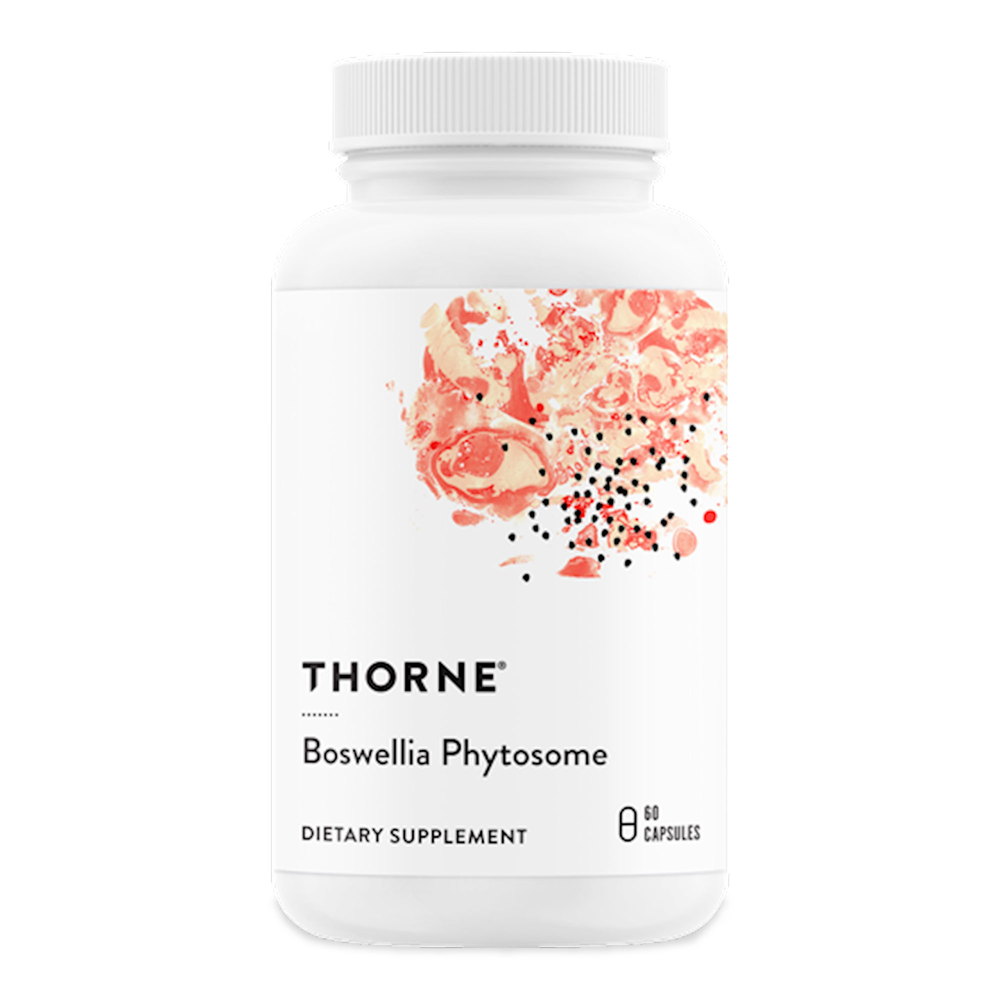
Boswellia Phytosome
Thorne
60 capsules
$59.00$53.10 with Subscribe & Save
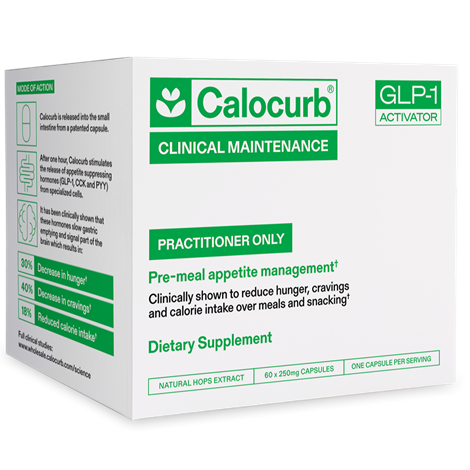
Calocurb® Clinical Maintenance Pack
Ortho Molecular Products
60 capsules
$142.90$128.74 with Subscribe & Save
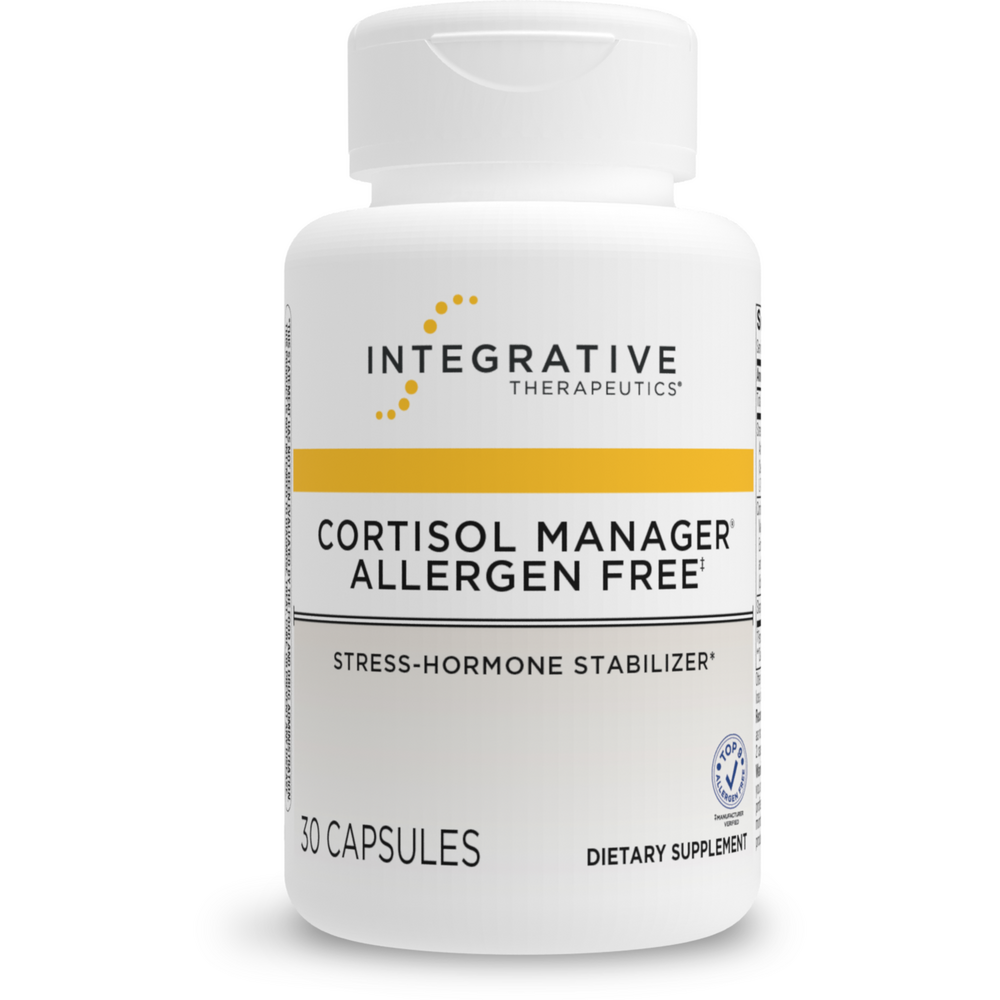
Cortisol Manager Allergen Free
Integrative Therapeutics
30 capsules
$28.99$22.99 with Subscribe & Save