 Instalab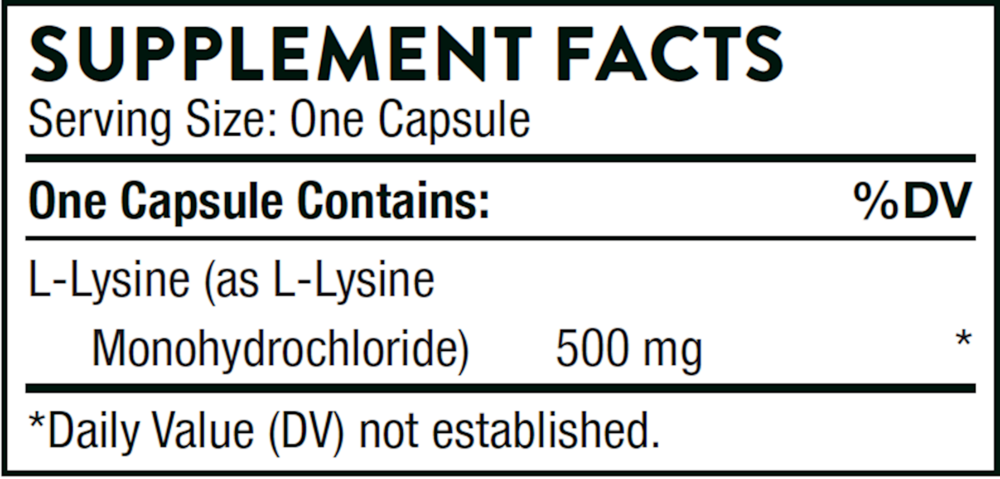
Thorne
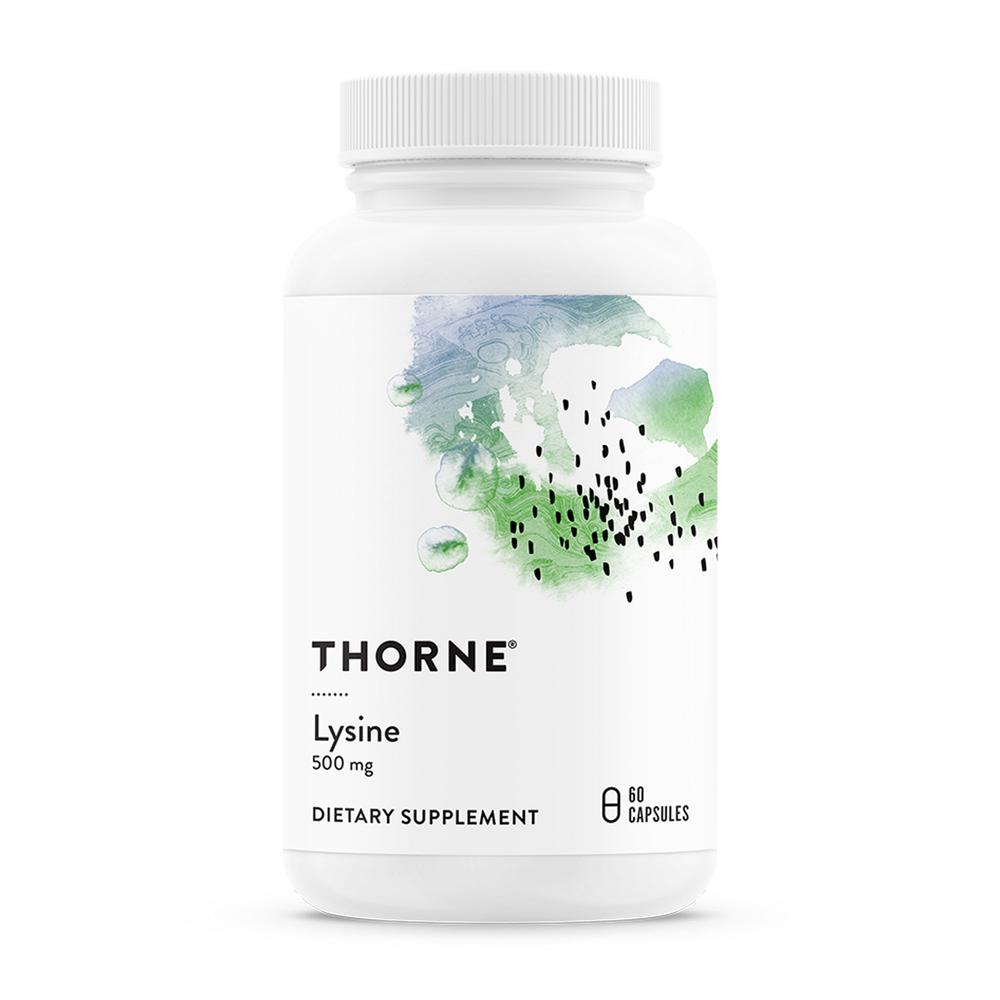
Lysine 500 mg by Thorne
60 capsules · 60-day supply
Essential Amino Acid for Immune Support and Muscle Health$15.00
Purchase options
Practitioner-grade brand3rd-party testedFree shipping $50+
Gluten Free·Soy Free·Dairy Free·Milk Free
Thorne Lysine overview
If you Google lysine for cold sores, you’re in the right aisle. This essential amino acid fits adults with frequent herpes simplex outbreaks, plant-based eaters relying on grains and legumes where lysine is the limiting amino acid, and anyone with low total protein intake. Athletes during heavy training and older adults who struggle to hit protein targets also use lysine for tissue repair and recovery. If your diet already includes ample dairy, eggs, fish, or meat, you may not notice much from a low dose.
Lysine competes with arginine (another amino acid many viruses depend on) for transport into cells. Raising the lysine-to-arginine ratio is the rationale behind its use in cold sore prevention. Beyond that, lysine is required to build collagen, the structural protein in skin and tendons, and it is a precursor for carnitine, which helps mitochondria burn fat for energy. It also increases calcium absorption from the gut, a small but relevant effect if you take calcium.
Take one 500 mg capsule two to three times daily, with or without food. For recurrent cold sores, clinicians often use 1,000–3,000 mg per day for prevention, and short bursts at the higher end at the first tingle, then step back to maintenance once stable. Pairing lysine with lower-arginine eating during flares is common practice. Expect any effect on outbreak frequency within 4 to 12 weeks.
If you supplement arginine or use arginine-heavy pre-workouts, taking them alongside lysine works against your goal; separate them or reconsider. Use caution if you have kidney or liver disease, very high calcium levels, or a history of recurrent kidney stones. Pregnancy and breastfeeding are likely fine at dietary levels, but higher-dose supplementation should be cleared with your clinician. Mild nausea or stomach upset is the most common side effect.
Frequently asked questions
Does lysine actually help cold sores?
Often, yes for prevention. Studies suggest higher daily lysine reduces how often outbreaks occur and may shorten healing time if started at the first tingle. It’s less reliable as a stand‑alone treatment for severe flares; antivirals remain first line.
How much lysine should I take per day?
For general maintenance, 500 mg two or three times daily is common. For prevention of frequent cold sores, clinicians often use 1–3 grams daily. For an active flare, short-term higher dosing is used under guidance.
How long does lysine take to work for cold sores?
For prevention, give it 4 to 12 weeks to judge changes in outbreak frequency. For an oncoming sore, starting higher doses at the first tingle can help within days, though results vary person to person.
Can I take lysine with arginine or a pre-workout?
Not ideal for cold sore goals. Arginine can counter lysine’s effect because herpes viruses use arginine. If you use arginine for workouts, separate timing and reassess priorities with your clinician.
Is lysine safe to take long term?
Generally yes at typical doses in healthy adults. The main side effects are mild stomach upset. If you have kidney or liver disease, or high calcium, get medical advice before long-term use.
Should I take lysine with food or on an empty stomach?
Either is fine. Taking lysine with a snack can reduce any nausea. Consistent daily timing matters more than being fasted or fed.
Can I combine lysine with antiviral medicines like valacyclovir?
Yes. There’s no known harmful interaction, and many people use lysine alongside prescription antivirals. If you need frequent antivirals, discuss dosing strategy with your clinician.
Do vegans need a lysine supplement?
Not always, but lysine can be low on grain-heavy vegan diets. Emphasize legumes, tofu, and seitan made with added lysine. Supplement if intake is low or if you’re managing recurrent cold sores.
How to take it & ingredients
Suggested use: Take 1 capsule two to three times daily or as recommended by your health professional.
Active ingredients
1 capsule per serving · 60 servings
L-Lysine
As L-Lysine Monohydrochloride
As L-Lysine Monohydrochloride
500 mg
Other ingredients: Calcium Laurate, Hypromellose Capsule, Leucine, Silicon Dioxide
Certifications
Benefits
Warnings