
 Instalab


Vital Nutrients
B-12/Methyl Folate 1000mcg/800mcg by Vital Nutrients
100 capsules · 100-day supply
Active B12 and Methylfolate for Red Blood Cells and Nerves$29.99
Purchase options
Practitioner-grade brand3rd-party testedFree shipping $50+
Vegan·Gluten Free·Soy Free·Dairy Free·Peanut Free·Tree Nut Free·
Vital Nutrients B-12/Methyl Folate 1000mcg/800mcg overview
This pairing is for people whose Vitamin B12 is low or low-normal, whose Methylmalonic Acid or Homocysteine runs high, or whose RBC Folate is low. The people who most often run short of B12 are vegans and vegetarians, older adults, anyone on metformin or long-term acid reducers, and those who have had stomach or bowel surgery. If your levels sit comfortably in range and you eat animal foods, you probably do not need 1,000 mcg of B12 a day.
Both vitamins come in methylated, ready-to-use forms. Methylcobalamin is one of the forms of B12 the body uses directly, and calcium L-5-methyltetrahydrofolate (Metafolin) is the form of folate that circulates in blood, so it does not rely on the MTHFR enzyme for activation. The two work as a pair: together they recycle homocysteine back to methionine, and both are needed to build DNA for new red blood cells. Pairing them also avoids a known trap, where folate alone improves the blood count while a B12 shortfall goes unnoticed.
Each capsule provides 1,000 mcg of vitamin B12 and 1,360 mcg DFE of folate, which the label also gives as 800 mcg. The suggested use is 1 capsule daily with food, or as your clinician directs. Only a small fraction of a large oral dose of B12 is absorbed, which is why the amount looks so high next to the daily requirement. That is expected, and it is how oral B12 repletion works.
Folate can interfere with methotrexate: if you take it for cancer, do not add folate without your oncologist, and if you take it for arthritis or psoriasis, let your prescriber set your folate dose. Folate can also lower blood levels of some anti-seizure medicines, phenytoin among them, so check before starting. If you have numbness, tingling, balance trouble or memory changes, see your clinician before supplementing on your own, because B12 deficiency that affects nerves sometimes needs injections. If you are pregnant or nursing, use the prenatal your clinician recommends.
Blood levels of B12 rise within weeks. Retest Vitamin B12, Methylmalonic Acid and Homocysteine after 8 to 12 weeks, then step down to a maintenance dose once you are in range. Energy and concentration improve only if a shortfall was the cause, and nerve symptoms recover more slowly, over months. Compared with cyanocobalamin and folic acid, the standard forms, these are already active. Both kinds raise blood levels, and for most people the practical difference is small.
Frequently asked questions
What is the difference between methylfolate and folic acid?
Folic acid is the synthetic form and must be converted in several steps, the last by the MTHFR enzyme, before the body can use it. Methylfolate (L-5-methyltetrahydrofolate) is the finished form that circulates in blood. Both raise folate levels; methylfolate skips the conversion.
How much B12 and folate are in each capsule?
Each vegan capsule provides 1,000 mcg of vitamin B12 as methylcobalamin and 1,360 mcg DFE of folate as calcium L-5-methyltetrahydrofolate (Metafolin). The label also states the folate amount as 800 mcg.
Is 1,000 mcg of vitamin B12 too much?
No upper limit has been set for B12, and the body absorbs only a small fraction of a large oral dose. 1,000 mcg a day is a common amount for bringing a low level up. Once your Vitamin B12 is back in range, a lower maintenance dose is usually enough.
Why take B12 and folate together?
They depend on each other. Both are needed to recycle homocysteine and to make new red blood cells, and folate taken alone can improve the blood count while a B12 deficiency continues to affect nerves. Taking them together covers both.
Should I take methylfolate if I have an MTHFR variant?
It is a reasonable choice, since methylfolate does not need the MTHFR enzyme. An MTHFR Genotype result alone does not tell you whether you need more folate, though. Homocysteine and RBC Folate show how you are actually doing and are the better guide to dosing.
When is the best time to take B12 and methylfolate?
The suggested use is 1 capsule daily with food. Morning or midday suits most people, because B vitamins feel mildly stimulating to some. Taking it at the same time each day matters more than the exact hour.
How long does it take for B12 and folate levels to improve?
Vitamin B12 and RBC Folate usually rise within 4 to 8 weeks, and Homocysteine and Methylmalonic Acid fall over a similar period. Retest after 8 to 12 weeks. If numbers have not moved, ask your clinician about absorption and whether B12 injections make more sense.
Can I take B12 and folate with metformin or methotrexate?
With metformin, yes, and it is often sensible because metformin lowers B12 absorption over time. With methotrexate, ask your prescriber first: folate can interfere with it, and the right folate dose depends on why you take it.
How to take it & ingredients
Suggested use: Take 1 vegan capsule daily with food, or as directed by your healthcare professional.
Active ingredients
1 vegan capsule per serving · 100 servings
Folate
Calcium L-5-methyltetrahydrofolate, Metafolin®
Calcium L-5-methyltetrahydrofolate, Metafolin®
1360 mcg DFE, 800 mcg
Vitamin B12
Methylcobalamin
Methylcobalamin
1000 mcg
Other ingredients: Cellulose, Hypromellose, Tapioca Powder, Ascorbyl Palmitate
Certifications
Benefits
Warnings
Customers also considered
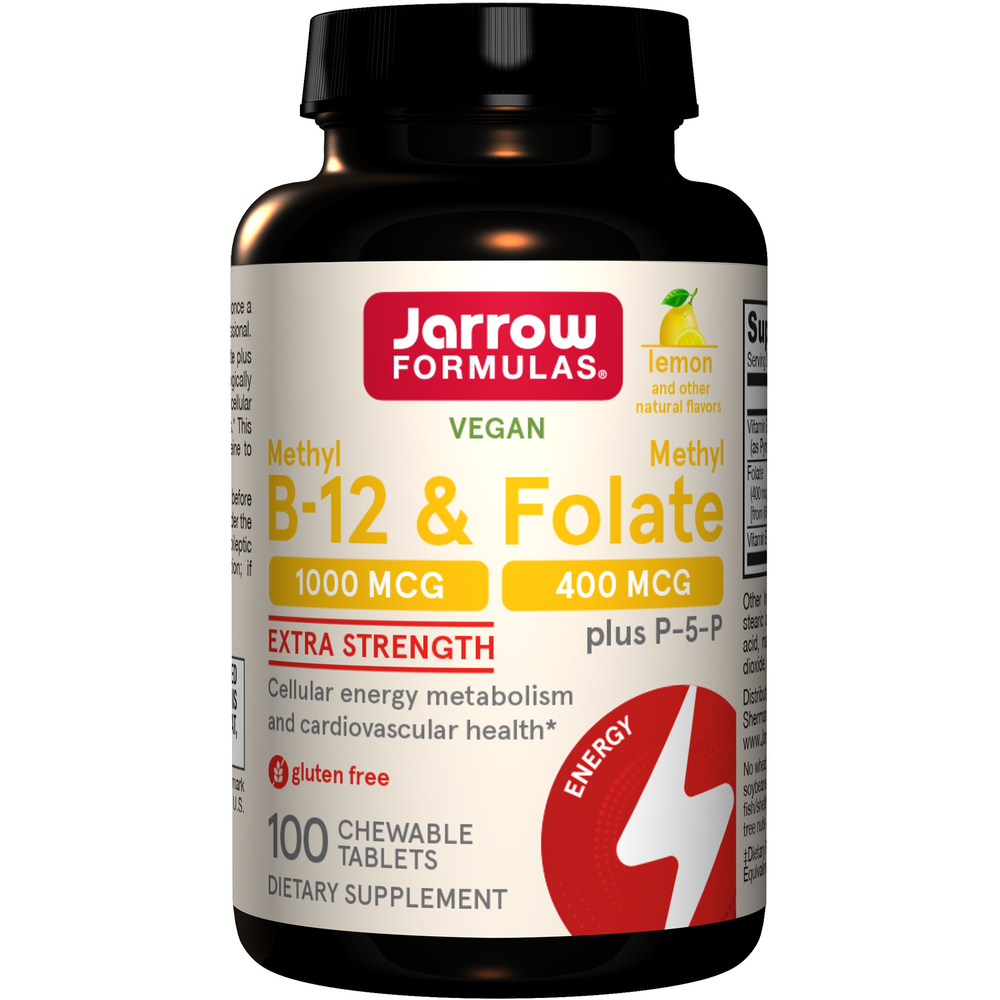
B-12 & Folate Extra Strength Lemon
Jarrow Formulas
100 chewables
$23.99$18.99 with Subscribe & Save
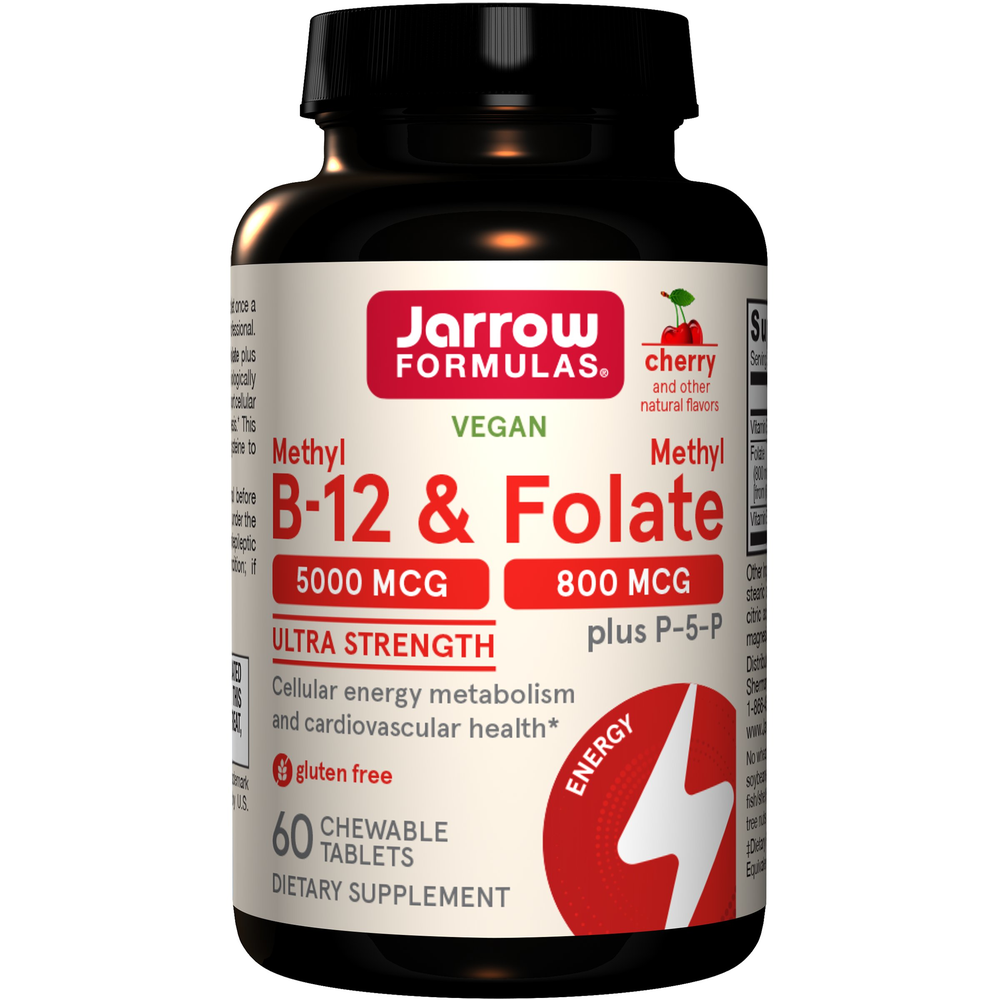
B-12 & Folate Ultra Strength Cherry
Jarrow Formulas
60 chewables
$47.99$37.99 with Subscribe & Save
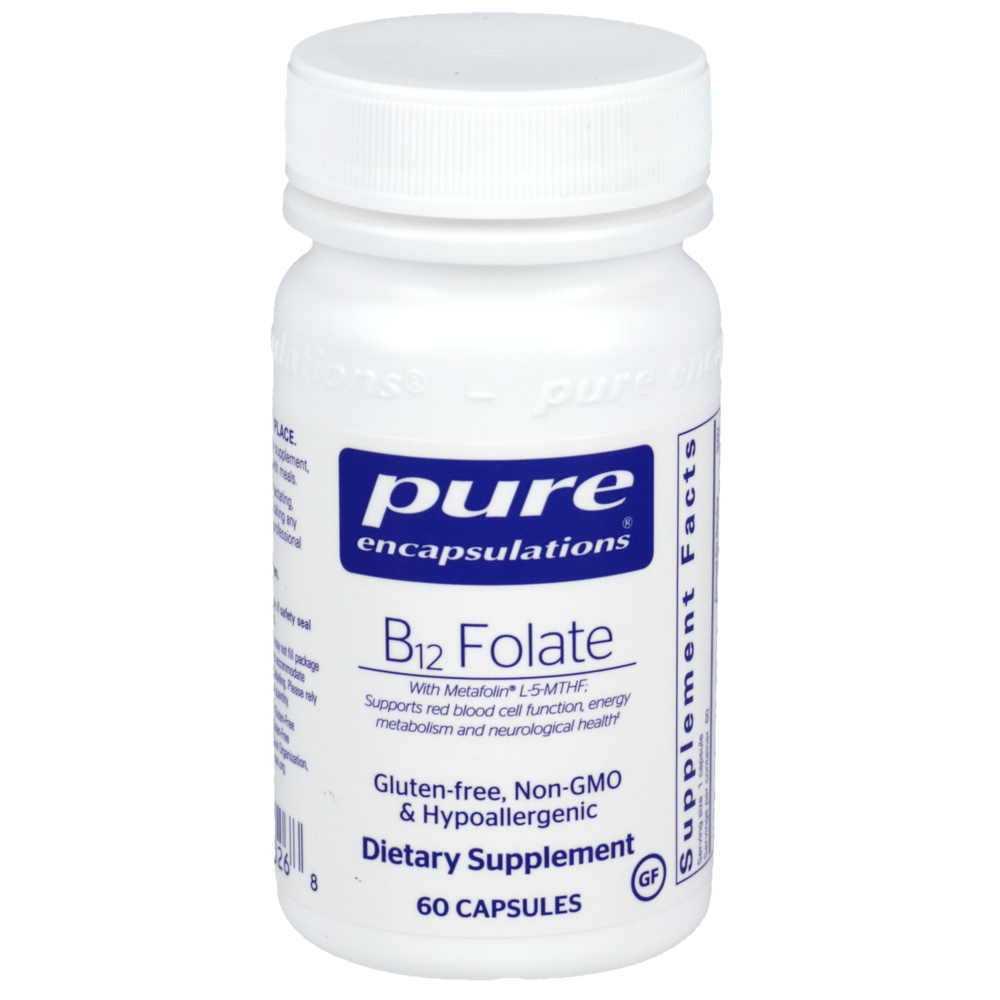
B12 Folate
Pure Encapsulations
60 capsules
$22.50$17.99 with Subscribe & Save
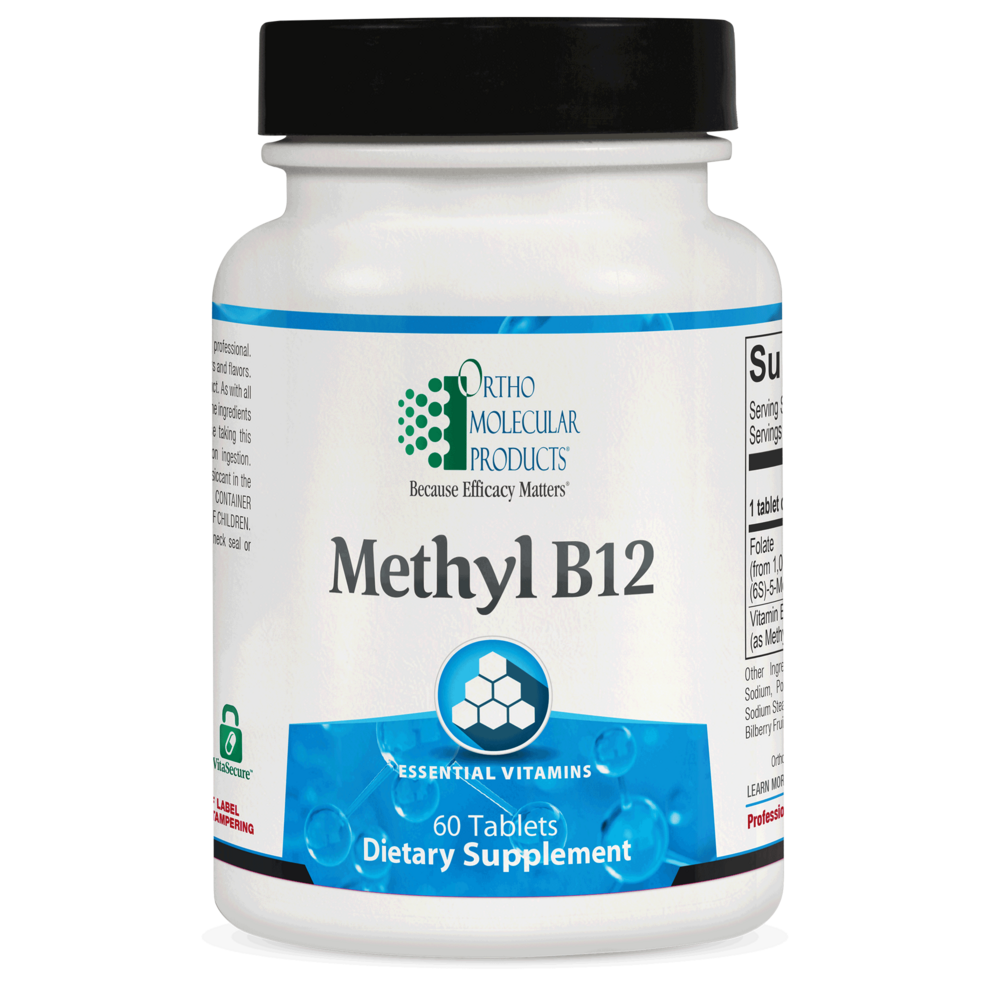
Methyl B12
Ortho Molecular Products
60 tablets
$46.90$42.25 with Subscribe & Save